




Gjør som tusenvis av andre bokelskere
Abonner på vårt nyhetsbrev og få rabatter og inspirasjon til din neste leseopplevelse.
Ved å abonnere godtar du vår personvernerklæring.Du kan når som helst melde deg av våre nyhetsbrev.

'This fascinating collection offers systematic analysis of partition in India and Palestine as processes connected through supranational politics, international law, and transnational networks. Thought provoking, often harrowing and always original, the essays collected here make essential reading for anyone interested in where partitions fit within global decolonisation.' Martin Thomas, University of Exeter 'This is an original book on the momentous years of 1947 and 1948 in the Indian subcontinent and Palestine. By showing how partition failed to resolve the nationality "problems" it was designed to solve, the multi-scalar analyses demonstrate how the seeds were sown for the illiberal majoritarian democracies in these places today.' A. Dirk Moses, City College of New York The breakup of India and Palestine is the first study of political and legal thinking about the partitions of India and Palestine in 1947. It explains how these two formative moments collectively contributed to the disintegration of the European colonial empires, and unleashed political forces whose legacies continue to shape the modern politics of the Middle East and South Asia. With contributions from leading scholars of partition, the volume draws attention to the pathways of peoples, geographic spaces, colonial policies, laws and institutions from the vantage point of those most engaged in the process: political actors, party activists, jurists, diplomats, writers and international representatives from the Middle East, South Asia and beyond. The book investigates some of the underlying causes of partition in both places, such as the hardening of religious fault-lines, majoritarian politics and the failure to construct viable forms of government in deeply divided societies. It analyses why, even 75 years after partition, the two regions have not been able to address some of the pertinent historical, political and social debates of the colonial years. The volume moves the debate about partition away from the imperial centre, by focusing on ground-level arguments about the future of post-colonial India and Palestine and the still unfolding repercussions of those debates.
In the 1980s, Britain actively engaged with China in order to promote globalisation and manage Hong Kong's decolonisation. Influenced by neoliberalism, Margaret Thatcher saw Britain as a global trading nation, which was well placed to serve China's economic reform. With her conviction in free-market capitalism, Thatcher was eager to extend British rule in Hong Kong beyond 1997. During the 1982-84 negotiations, British diplomats aimed to 'educate' China about how capitalist Hong Kong worked. Nevertheless, Deng Xiaoping held an alternative vision of globalisation, one that privileged sovereignty and socialism over market liberalism and democracy. Drawing extensively upon the declassified British archives and Chinese sources, the book recounts how Britain and China negotiated for Hong Kong's future, culminating in the signing of the Joint Declaration on its retrocession in 1997. It explores how Anglo-Chinese relations flourished after the Hong Kong agreement but suffered a setback as a result of the 1989 Tiananmen Square crackdown. This original and comprehensive study argues that Thatcher was a pragmatic neoliberal, and the British diplomacy of 'educating' China in global free trade and democracy yielded mixed results. By examining Britain-China-Hong Kong relations from multiple perspectives, this book will be of interest to scholars and students in the fields of diplomatic, imperial, and global history.
[Not final] Intimate afterlives of empire is the first comprehensive study of post-imperial autobiography as an important genre of cultural memory. investigate the relationship between individual and cultural memory at the end of empire as voiced through the practice of autobiographical writing. Through close readings of more than a dozen autobiographies and memoirs/Through close readings of almost twenty autobiographies written after the break-up of the British Empire, it examines how individuals engage with the changing narrative landscape brought about by decolonisation/ it examines how changes to cultural narratives about the imperial past manifest themselves in personal life stories. . It argues that individuals navigate the changing narrative landscape of decolonisation by way of personal memory work, repositioning themselves in relation to a contemporary audience. The book conceives of decolonisation as a narrative shift, though not a total break, from the logics of the colonial era. /The narrative changes brought about by decolonisation has previously been studied at the level of collective or national memory. Intimate afterlives of empire is the first book to examine how individuals have responded to this changing narrative landscape. It argues that authors are at once affected by and seek to affect cultural memories of the colonial past. /It argues that authors respond dialogically to shifts in the cultural memories of empire, inserting themselves in a wider narrative. As decolonisation brought changes to the narrative landscape, individual writers ... Studying the dialogues between individual and cultural memory, the book argues that autobiographers are at once influenced by and seek to influence the cultural memory of empire and its legacies (and the authors' own position in both)/ trace the responses to the moment of decolonisation as a narrative eventEach chapter focuses on one trope and one autobiographical sub-genre so that the result is an anatomy of the genre of the end of empire autobiography as a whole.
[Not final]This book emerged from two key questions: Did British imperialism "end" at decolonisation or did it merely adapt to changing circumstances? And why has ethnonationalism become so powerful in so many post-colonial states? It argues that British colonial officials in London and on-the-spot formed a tacit preference for Burmese ethnonationalism to combat the more revolutionary trends within Burmese politics. The relationship between imperialists and ethnonationalists may at first seem paradoxical: ethnonationalists, by definition, demand political independence. But formal rule was often the least of British imperialists' concerns, a "burden" even. The far more important end was the preservation of the foothold of British capital and geo-strategic operations in the long term. This argument has very important implications for the study of both modern imperialism and ethnonationalist politics. In expanding scholarly understanding of modern imperialism, the book bridges the gap between colonial "divide-and-rule" policies and neo-colonial "Containment" policies during the Cold War, demonstrating the continuity between these phenomena. It also provides a key case study for how imperialists - and authoritarian states in general - utilise ethnonationalist politics as a force of passive revolution: providing the aesthetics of revolution while preventing real social and economic transformation. In Burma/Myanmar itself, it identifies the origins of the military junta's present-day racial regime that scapegoats Burmese Indians and Muslims as foreign invaders. The present-day Rohingya genocide is a result of the persistence of this racial regime. Ultimately, this book uncovers the relationship between imperialism, capitalism, and ethnonationalism, a relationship that is disturbingly symbiotic and mutually-reinforcing.
[Not final] Proxy wars systematically dismantle the foundations of the states they target, leaving a legacy of violence, fractured governance, and eroded sovereignty. This book introduces the concept of "state-wrecking" to explain how external interventions--through support for insurgent actors--undermine political legitimacy, intensify violence, disrupt territorial control, and entrench cycles of instability. Using Afghanistan as a case study, the book offers a detailed exploration of how proxy wars devastate fragile states and obstruct state-building and statehood in the target county.The book moves beyond traditional studies of proxy wars that focus on global and regional power competition. Instead, it focuses on the procedural dynamics of proxy wars and highlights the internal consequences of these conflicts for the target state. Through a combination of innovative theoretical insights and comprehensive empirical research, it examines Pakistan's role in supporting the Taliban in the war in Afghanistan, the limitations of U.S.-led counterinsurgency efforts, and the broader implications for Afghanistan's sovereignty and political cohesion. Drawing on interviews, archival evidence, and conflict analysis, the book reveals how proxy wars dismantle state institutions and deepen social and political divisions.By reframing proxy wars as tools of state fragmentation rather than mere instruments of geopolitical strategy, the book sheds light on their long-term impact. It highlights the role of external actors in entrenching violence and governance failures, complicating peacebuilding efforts.Rigorously argued and deeply insightful, this book makes a significant contribution to understanding the intersections of modern warfare, state fragility, and international security. It offers an essential framework for scholars, policymakers, and readers seeking to address the enduring challenges of fragile states and conflict-ridden regions.
[Not final] A Grand Strategy for Peace is the first extended account of Britain's role in the creation of the United Nations Organization during the Second World War. As a work of traditional diplomatic history that brings in elements of intellectual history, the book describes how British officials, diplomats, politicians, and writers - previously seen to be secondary actors to the United States in this period - thought about, planned for, and helped to establish a future international order. While in the present day, many scholars and analysts have returned to the origins of the post-1945 international system, this book offers a detailed account of how the statesmen and more importantly, the officials working below the statesmen, actually conceived of and worked to establish a post-war world order.
The twentieth century witnessed the end of traditional empire.The impact of nationalism brought down many empires to disintegration. Yet, there were variations. Some empires retained their domains longer by changing their cloaks. This book compares how Russia and China survived. They both maneuvered nationalism through communist revolutions. In form, the Bolsheviks transformed the Tsarist domain into a union of multiple nation-states, while the Chinese revolutionaries re-integrated the Qing territories into one nation-state with autonomous units for ethnic minorities. To understand such divergence underneath convergence, this book compares the leading elites of the two revolutions. In comparison with the USSR-founding Bolsheviks, the Chinese communists were ethnically more homogeneous but less international. Their outlook was to establish an enclosed polity rather than a union institutionally open to incorporate new member-states. Through a protracted war the Chinese communists developed skills of reconciling the traditional "China" with revolutionary values. This rendered the Bolshevik way of entirely dissolving "Russia" in "Soviet" unnecessary. Moreover, the Chinese communists were weaker at borderlands vis-a-vis their rivalries. They were thus more cautious, rejecting the Bolshevik strategy of weaponizing "national self-determination". This book highlights the crucial features of the Chinese communist revolution and shows how they affected China's transition to nation-state: geographical isolation buffering external interference, bottom-up mass mobilization in a protracted course, and the longtime position of being the weak side of confrontation. The book will be useful to scholar interested in revolution, empire, nationalism, comparative historical sociology, and the biographies of communist leaders in Russia and China.
[Not final] Southern Interregnum maps and analyzes the ruptures and mutations that are currently reshaping the political economy of the global South. The contemporary global South, the book proposes, is in the throes of an interregnum - a period, as Gramsci put it in his reflections on the inter-war era, in which the old is dying and the new cannot be born. Crafted around a comparative conjunctural analysis of Brazil, India, South Africa, and China, and set against the backdrop of deep geopolitical transformations, the book explores how governing elites across the global South work to remake hegemony in the face of deep disjunctures between accumulation and legitimation. In contexts where neoliberalization has generated perverse inequalities and rampant precarity, popular protests have unsettled hegemonic configurations and thrown up a conjuncture of durable crisis across Asia, Latin America, and Africa. This book explores how dominant classes and governing elites across four emerging powers have attempted to navigate this interregnum. Focusing on the trajectories of hegemonic projects centred on distinctive ideologies, institutions, and practices - a new authoritarianism in Brazil; neoliberal Hindu nationalism in India; a patronage-violence complex in South Africa; digital accumulation and global expansion in China - Southern Interregnum proposes a novel critical reading of the convulsions that are currently reshaping the political economy of the global South and reordering the vectors of economic and political power in the world-system in the early twenty-first century.
Matters of ancestry, race and racism endure within Heathenry, a diversly constituted new religious movement drawing inspiration from the pre-Christian religions of northern Europe. Most Heathens, termed 'inclusivist' or 'universalist', welcome all with a spiritual interest in the ancient heathen past, regardless of ethnicity, sexuality or gender. But a 'folkish' Heathen minority, often identifying as Odinist, centre their thinking around ethnocentricity and heterosexist values. Racist Heathenry requires scrutiny as it has been influential in recent terrorist incidents in the UK, Norway, USA and New Zealand. Faith, folk and the far right offers the first detailed examination of extremist Heathenry and occultism in the UK and how anti-racist Heathens act to counter this discourse.Part I explores the spectrum of Heathen practice today and the historical origins of racist Heathenry in nineteenth century Germanic romanticism and twentieth century folkish nationalism. The three main extremist Heathen organisations in the UK, the Odinic Rite, the Odinist Fellowship and Woden's Folk, and their claims to the 'authentic' 'folk-religion' of the 'ancestral' English, are examined. The book extends its discussion to the neo-Nazi occult organization the Order of the Nine Angles (O9A), and the wider racist Heathen cultural scene in Black Metal and Dark Folk music. Part II analyses how anti-racist Heathens are countering racist discourse, including 'Declaration 127' which opposes Heathen hate groups, protests by inclusivist Heathens at far-right rallies, inter-faith forums and an active presence on social media platforms.Faith, folk and the far right makes an important contribution to understanding the intersecting fields of new religious movements, nationalist history and racist politics.
Contemporary narratives of humanitarianism portray this field as distinct in its value-orientation and, subsequently, as cohesive and egalitarian. Although very diverse in their practices and mandates, all humanitarian actors position themselves as "do-gooders" who alleviate the suffering that others - the "bad" ones - have caused. Recent calls to decolonialise humanitarianism and scandals about racist and sexual abuses however reveal a more disturbing story: the one of a sector shaped by hierarchies, dominance patterns and power relationships. The many types of hierarchical relations in the humanitarian arena, leading to the inclusion of some actors into powerful circles and the exclusion of others from such circles, form the point of departure of this edited volume. The goal of this edited volume is to move away from the glossy images of the humanitarian gesture to analyse how hierarchies, power asymmetries and exclusion emerge, are maintained and can be ultimately challenged in the humanitarian arena. It does so by gathering leading scholars on humanitarianism coming from a variety of disciplinary fields such as international relations, philosophy, organizational science and management, and sociology. Contributors analyse exclusion dynamics at the individual, organizational and structural levels combining data from ethnography, historical analysis interviews, survey and statistical analysis. Hierarchies and exclusion not only analyses hierarchies in global governance but also inform current efforts to strengthen inclusiveness and equity in humanitarianism.
[Not final] On 9 October 1934, a terrorist gunman assassinated King Aleksandar I of Yugoslavia before a crowd of hundreds of onlookers in Marseille. The Croatian ultranationalist Ustashe was responsible for the murder. The Ustashe hoped that the king's death would cause the collapse of Yugoslavia and the liberation of the Croat people. This book examines the circumstances, processes, and trajectories that shaped the Ustashe terrorists and their attack in Marseille. Its focus is historical, yet it maintains an eye on approaches to the study of contemporary terrorism and how recent manifestations of the phenomenon may inform understandings of past political violence, and vice versa. The book poses questions that transcend chronological boundaries: what prompts people to join terrorist organisations? How are these people 'radicalised' to commit violence? Are processes of 'radicalisation' generalisable across time? How do terrorists understand, explain, and justify their actions? What roles do women play in terrorism? Which factors, internal and external to a terrorist act, facilitate its success? Can states give terrorists a fair trial? In responding to these questions, Murder in Marseille bridges the scholarly gap between historical and contemporary terrorism, paying attention to, and often guided by, current concerns, ideas, theories, and notions about such violence while remaining firmly rooted in the history of early twentieth-century Europe.
Conservatism, Christian Democracy and the dynamics of transformation explores the traditions, cooperation, and influence of centre-right politics in northern and western Europe across the second half of the twentieth century. It analyses the ideological and political affinities between Conservatism and Christian Democracy within an ambitious transnational and comparative framework and examines how centre-right parties and intellectuals influenced each other and built networks, organisations, and institutions in the pursuit of a transnational Conservatism. The book addresses the dearth of historical analysis on the centre-right that goes beyond national narratives or official histories of single parties. It offers a rare up to date insight for international readers into the often-overlooked history of the Conservative parties in the Nordic countries and brings Nordic Conservatism into the larger narrative on European Conservatism and Christian Democracy. Focusing on the dynamics of transformation of these political traditions, it shows how the centre-right parties constantly adapted their politics to changing social, political, and cultural circumstances. It investigates the nebulous connections between the Conservative and Christian Democrat acceptance of the welfare state and state intervention in the economy in the decades immediately after 1945 and those neoliberal influences that did much to shape Conservatism and Christian Democracy from the 1970s. The book contributes to a deeper understanding of the crisis of the centre-right today by showing the composite and contested nature of Conservative and Christian Democratic politics in the latter half of the twentieth century.
[Not final] The Global 1923 looks at Treaty of Lausanne, one of the twentieth century's most controversial international agreements, that settled the long great war of the Eastern Mediterranean. Drawing upon extensive research on British, French, Italian, Turkish, Greek, American, Armenian, and other archival material, The Global 1923 demonstrates the importance of reconsidering the peace settlement in Lausanne within the evolving global and regional power contexts. The findings call attention to diverging peace aims within the so-called united allied front and underscore the degree to which the negotiators themselves considered the Eastern Question as the framework to shape the settlement. In doing so, the role of the alliances, the military might, the strive for winning the public opinion, and the business elites are being foregrounded. The book discusses the role of imperialism and the Eastern Question discourse at the Lausanne Peace Conference. The Global 1923 reassesses the different strategies pursued by the delegations involved in the 1923 conference. Though the Soviets were only allowed to be part in settling only one issue at the Conference, the Global 1923 highlights the Turco-Soviet relations that shaped the settlement. In similar vein, the Kurdish, Armenian and Arab grievances that sprouted out of the Great War and were neglected at Lausanne constitute some of the contested and intricate issues in the Middle Eastern politics. The American influence, even if the US delegation had only an observer status, is addressed in a broader political economical setting. Finally, the Global 1923 reveals how the entanglement and the contestation at Lausanne continues to inform our contemporary politics today.
What went wrong with Britain? presents a comprehensive account of the devastating legacy left by the Conservative government. Shining a light into every dark corner, the book exposes the full extent of the damage inflicted on the country's economy, social fabric and political integrity. When the Conservatives were voted out of government in July 2024, they left behind a miserable record of rising poverty, inequality and division. This book reveals the forces that have driven the country to the point of crisis, from austerity and economic mismanagement to sheer political dysfunction. Each chapter offers new insights into the far-reaching consequences of government policies that prioritised ideology, personal ambition and party politics over the public good. Examining the rise of populism, the politics of Brexit, the UK's response to the pandemic and the steady erosion of public trust, this shocking account of the legacy of Conservative government from 2010 to 2024 is a must-read for anyone who wants to understand exactly what went wrong with Britain.
In May 2019, Narendra Modi won the world's largest election. Defying expectations, he led his Bharatiya Janata Party to a resounding victory, with the highest vote share for any party in thirty years, and was re-elected as India's Prime Minister. What accounts for the scale of Modi's win? Why, despite economic hardship and social strife, did Indians vote so overwhelmingly for him and the BJP? This book explains the economic, social and cultural processes that shaped political passions in India during the spring and summer of 2019. It takes an interdisciplinary approach, bringing together a stellar team of economists, political scientists, sociologists, historians and geographers to explain Modi's win. Together, the contributors compel us to take seriously the 'structures of feeling' in politics. Love him or hate him, Modi secured for himself a decisive re-election as India's Prime Minister. Passionate politics is essential reading for anyone who wants to understand how that happened.
Though its legal mandate to act in the field of health is limited, the European Union (EU) has a vast and important health policy. Focusing on the EU's health objectives and how they are pursued, this book documents the varied and dynamic governance of health in the EU. It offers a detailed overview of the development of EU health policy, and five in-depth case studies of specific policy fields. These reveal the enduring effectiveness of soft law initiatives, as well as the proliferation of hard law instruments. Post-COVID innovations - namely the European Health Union and the Recovery and Resilience Facility - continue these dynamics and are accompanied by a remarkable, if delicate, political commitment to strengthening the EU's role in health. Assessing these developments in the context of longer-term governance trends, the book argues that contemporary EU health policy remains vulnerable to political re-prioritisation, reliant on policy entrepreneurialism, and in want of a coherent central strategy. In exploring its substance and governance, the book illustrates the scope and influence of EU health policy, the book illustrates, and informs critique of the EU's significant role in shaping health policies - and therefore health outcomes - within its member states and beyond.
The first systematic application of Marx's value theory to animal labour within the context of capitalist food systems
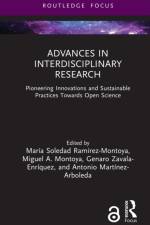
This book explores methodologies and strategies for enhancing educational practices through interdisciplinary research and open science. Featuring global contributions, it shows how integrating diverse disciplines can drive innovation, improve teaching, and tackle modern educational challenges.
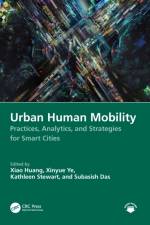
This comprehensive handbook covers human mobility within urban contexts, integrating academic theories with pragmatic insights offering a detailed analysis of the diverse facets of human mobility and its substantial impact on the urban landscape, economy, and societal structures.
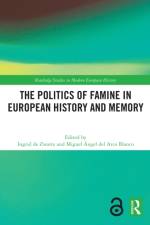
This is the first book to bring together groundbreaking scholarship focusing on the various ways in which famines result from political decision-making, and how the threat, occurrence, relief, or memory of famine are instrumentalized as a political and military tool.
This book applies perspectives of hope to understand the precariousness, suffering and agency of people seeking asylum.
In June 1983 Margaret Thatcher won the biggest increase in a government's Parliamentary majority in British electoral history. Over the next four years, as Charles Moore relates in this central volume of his uniquely authoritative biography, Britain's first woman prime minister changed the course of her country's history and that of the world, often by sheer force of will.The book reveals as never before how she faced down the Miners' Strike, transformed relations with Europe, privatized the commanding heights of British industry and continued the reinvigoration of the British economy. It describes her role on the world stage with dramatic immediacy, identifying Mikhail Gorbachev as 'a man to do business with' before he became leader of the Soviet Union, and then persistently pushing him and Ronald Reagan, her great ideological soulmate, to order world affairs according to her vision. For the only time since Churchill, she ensured that Britain had a central place in dealings between the superpowers.But even at her zenith she was beset by difficulties. The beloved Reagan two-timed her during the US invasion of Grenada. She lost the minister to whom she was personally closest to scandal and almost had to resign as a result of the Westland affair. She found herself isolated within her own government over Europe. She was at odds with the Queen over the Commonwealth and South Africa. She bullied senior colleagues and she set in motion the poll tax. Both these last would later return to wound her, fatally.In all this, Charles Moore has had unprecedented access to all Mrs Thatcher's private and government papers. The participants in the events described have been so frank in interview that we feel we are eavesdropping on their conversations as they pass. We look over Mrs Thatcher's shoulder as she vigorously annotates documents, so seeing her views on many particular issues in detail, and we understand for the first time how closely she relied on a handful of trusted advisors to help shape her views and carry out her will. We see her as a public performer, an often anxious mother, a workaholic and the first woman in western democratic history who truly came to dominate her country in her time.In the early hours of 12 October 1984, during the Conservative party conference in Brighton, the IRA attempted to assassinate her. She carried on within hours to give her leader's speech at the conference (and later went on to sign the Anglo-Irish agreement). One of her many left-wing critics, watching her that day, said 'I don't approve of her as Prime Minister, but by God she's a great tank commander.' This titanic figure, with all her capacities and all her flaws, storms from these pages as from no other book.
“A splendid narrative about political power and mercy.” —David Grann, #1 best-selling author of The Wager The power of the presidential pardon has our national attention now more than ever before. In The Pardon, New York Times bestselling author and CNN legal commentator Jeffrey Toobin provides a timely and compelling narrative of the most controversial presidential pardon in American history—Gerald Ford’s pardon of Richard Nixon, revealing the profound implications for our current political landscape, and how it is already affecting the legacies of both Presidents Biden and Trump.In this deeply reported book, Toobin explores why the Founding Fathers gave the power of pardon to the President and recreates the behind-the-scenes political melodrama during the tumultuous period around Nixon’s resignation. The story features a rich cast of characters, including Alexander Haig, Nixon’s last chief of staff, who pushed for the pardon, and a young Justice Department lawyer named Antonin Scalia, who provided the legal justification. Ford’s shocking decision to pardon Nixon was widely criticized at the time, yet it has since been reevaluated as a healing gesture for a divided country. But Toobin argues that Ford’s pardon was an unwise gift to an undeserving recipient and an unsettling political precedent. The Pardon explores those that followed: Jimmy Carter’s amnesty for Vietnam draft resisters, Bill Clinton’s pardon of Marc Rich, and the extraordinary story of Trump’s unprecedented pardons at the end of his first term. The Pardon is a must-read for anyone interested in American history, the complex dynamics of power within the highest office in the nation, and the implications of presidential mercy.
For fans of Hidden Figures and The Immortal Life of Henrietta LacksThe kind of history I wish I learned as a child dreaming of the stage! MISTY COPELANDVibrant, propulsive and inspiring TIA WILLIAMSHarlem 1969; its the height of the Civil Rights era and the community is still reeling from the assassination of Martin Luther King. Arthur Mitchell, the first Black principal dancer at the New York City Ballet, takes his protest to the stage and establishes the Dance Theatre of Harlem. Here begins the story of the five extraordinary women at the heart of this book. Both a group biography and a story of a particular time, this is a book about ballet, the enduring allure of ballet for young girls, and about how these pioneers broke into a world that was closed to them and changed ideas of what a classical dancer could be. It is about the heart-breaking impact of the AIDS epidemic which claimed the lives of so many of the male dancers. Its about racism and activism through art. And its about the eternal glamour of ballet; these swans appeared at the grandest opera houses and theatres, dancing at the White House, and even for the Queen. Their fans included Mick Jagger and they performed alongside the likes of Michael Jackson and Josephine Baker. But most importantly it tells the universal story of female friendship, and in particular how these five young women formed a bond - while experimenting with different ways of dying ballet shoes and tights to match their skin tones - which still endures many decades later.
As one of the most influential ideas in modern European history, democracy has fundamentally reshaped not only the landscape of governance, but also social and political thought throughout the world. Democracy in Modern Europe surveys the conceptual history of democracy in modern Europe, from the Industrial Revolutions of the nineteenth century through both world wars and the rise of welfare states to the present era of the European Union. Exploring individual countries as well as regional dynamics, this volume comprises a tightly organized, comprehensive, and thoroughly up-to-date exploration of a foundational issue in European political and intellectual history.
How have secrets changed over the generations, and what does that tell us about ourselves, society and secrecy itself? In her groundbreaking new book, bestselling social historian Juliet Nicolson cracks open a subject close to all our hearts. According to a leading American psychotherapist most of us are keeping an average of thirteen secrets at any one time. Secrets can thrill, but they are just as likely to torment; and the deepest ones travel down the generations, wrapped in shame, guilt and dread.The secrets we keep inside reflect the outside world: they open a uniquely revealing window onto the times we live in. The position of women at the heart of family life has often made them society's secret-keepers, so they hold a special key. By looking at women and their secrets over the past three generations, The Book of Revelations unlocks a period of significant transformation - and one of the most fundamental but hidden aspects of being human.Bringing together social history, intimate personal stories, long-buried memories and the healing of sharing, Juliet Nicolson explores the private and public freedoms that have come with the breaking of successive taboos. Things her mother's generation did not dare speak about became for hers the things they must not repress. But in today's polarised culture, are our daughters and granddaughters once again in danger of being curtailed by censure, caution and fear?
Abonner på vårt nyhetsbrev og få rabatter og inspirasjon til din neste leseopplevelse.
Ved å abonnere godtar du vår personvernerklæring.