











Gjør som tusenvis av andre bokelskere
Abonner på vårt nyhetsbrev og få rabatter og inspirasjon til din neste leseopplevelse.
Ved å abonnere godtar du vår personvernerklæring.Du kan når som helst melde deg av våre nyhetsbrev.

The Cold War Past and Present (1987) analyses the generally antagonistic postwar relations between the Soviet Union and the West, particularly America. Following the uneasy wartime alliance, Russia's tightening grip on Eastern Europe and the Berlin Blockade ushered in the first of the several 'cold wars'.
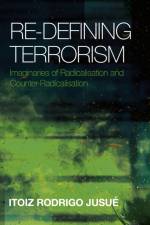
Re-Defining Terrorism examines the emergence of the counter-radicalisation agenda in the UK and internationally. Itoiz Rodrigo Jusué offers a complete and innovative examination of the development of counter-radicalisation discourses and policies.
Transnational solidarity excavates the forgotten histories of solidarity that were vital to radical political imaginaries during the 'long' 1960s. It decentres the conventional Western focus of this critical historical moment by foregrounding transnational solidarity with, and across, anticolonial and anti-imperialist liberation struggles. The book traces the ways in which solidarity was conceived, imagined and enacted in the border crossings -- of nation, race and class -- made by grassroots activists. This diverse collection draws links between exiled revolutionaries in Uruguay, post-colonial immigrants in Britain, and Greek communist refugees in East Germany who campaigned for their respective causes from afar while identifying and linking up with wider liberation struggles. Meanwhile, Arab immigrants in France, Pakistani volunteers and Iraqi artists found myriad ways to express solidarity with the Palestinian cause. Neglected archives also reveal Tricontinental Cuban-based genealogies of artistic militancy, as well as transnational activist networks against Portuguese colonial rule in Africa. Bringing together original research with contributions from veteran activists and artists, this interdisciplinary volume explores how transnational solidarity was expressed in and carried through the itineraries of migrants and revolutionaries, film and print cultures, art and sport, political campaigns and armed struggle. It presents a novel perspective on radical politics of the global sixties which remains crucial to understanding anti-racist solidarity today.
Based on award-winning research, Love and revolution brings classical and contemporary anarchist thought into a mutually beneficial dialogue with a global cross-section of ecological, anti-capitalist, feminist and anti-racist activists - discussing real-life examples of the loving-caring relations that underpin many contemporary struggles. Such a (r)evolutionary love is revealed to be a common embodied experience among the activists contributing to this collective vision, manifested as a radical solidarity, as political direct action, as long-term processes of struggle, and as a deeply relational more-than-human ethics. The theory developed in this book is brought to life through the voices of Tom at the G20 protests in Toronto, Maria and her permaculture community in Mexico, Hassan on the streets in Syria, Angelo and his comrades occupying squares in Brazil, Dembe and his affinity group in Kampala, and many more. Love and revolution provides an essential resource for all those interested in building a free society grounded in solidarity and care, and offers a timely contribution to contemporary movement discourse.
'In the growing literature on the far right and the environment, too few works centre the visual politics that are so integral to extremist appeals. Forchtner and his collaborators work to address this lacuna. Novel in its focus, global in its scope and rigorous in its analysis, Visualising far-right environments makes a necessary and compelling contribution to our understanding of the far right today.' >'A welcome, timely and original contribution. This set of diverse global case studies richly analyses the evergreen appeal of environmental and ecological claims - and their visual representations - to burgeoning far-right movements around the world. An essential read.' >From smiling faces in the nation's scenic landscape to the ridiculing of environmental activists and beyond, images play a crucial role in the far right's politics of nature. This book examines representations of natural environments and environmentalism by the far right around the world, scrutinising its implications for humans and nature. Visualising far-right environments approaches the visual as a key means of (re)producing identities and 'doing politics'. Images are not simply pervasive in our increasingly visual culture, but particularly persuasive in proposing worlds to viewers. In response, this book makes a first, concerted effort to put visuality centre-stage in the analysis of environmental communication by the far right. From the countryside to climate change, covering political parties and non-party actors from around the world, the volume demonstrates various ways in which the far right articulates natural environments and the rampant environmental crises of the twenty-first century. It provides a crucial insight into the multifaceted politics of nature.
Abonner på vårt nyhetsbrev og få rabatter og inspirasjon til din neste leseopplevelse.
Ved å abonnere godtar du vår personvernerklæring.