




















Gjør som tusenvis av andre bokelskere
Abonner på vårt nyhetsbrev og få rabatter og inspirasjon til din neste leseopplevelse.
Ved å abonnere godtar du vår personvernerklæring.Du kan når som helst melde deg av våre nyhetsbrev.

This open access book explores law, politics, and inequality in fights against infectious diseases. Guided by a theoretical framework called "governing through contagion", the studies in this book analyse how past and present governments have tried to combat contagious diseases, such as the bubonic plague, cholera, HIV/AIDS, and COVID-19. They examine how these governments used law and other technologies, including waste management, mask-wearing, quarantine stations, house inspections, and the burning of entire neighbourhoods, to achieve their aims of protecting populations and ensuring productivity. Although the studies recognise the power of the state, they simultaneously emphasise the active roles of technologies and creatures, drawing attention to the often-taken-for-granted workings of the non-human in public health governance. They also consider the implications of strategies of control on marginalised communities and democratic politics. Collectively, the studies in this book bring attention to the connections between COVID-19 responses by governments and their historical antecedents, shedding light on the role of capitalism, colonialism, and geopolitics in circulating contagions and the strategies used to control them.The ebook editions of this book are available open access under a CC BY-NC-ND 4.0 licence on bloomsburycollections.com.
Covers documents from the life and career of James Madison from 1 April 1807 to 30 September 1807.
A searing insight into the radicalization of Silicon Valley, from Elon Musk to Peter Thiel, David Sacks and Donald Trump, and how it will affect the future of all our lives.
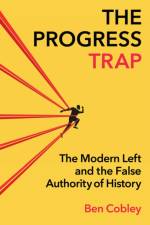
The idea of progress, one of the animating ideas of Western civilization, has now gone global. From Marxism and neoliberalism to today's mutant identity politics, it offers a framework of knowledge and confidence: an assurance that things will get better and that history is on our side. However, in doing this it creates a form of authority that is simultaneously imaginary and dishonest, resting on confidence in a future that is really contingent and unknowable. In The Progress Trap, Ben Cobley looks at this progressive mindset as a form of power, conferring a right to act and control others. 'Change', 'transformation' and the 'new' are the superior values, meaning destruction of the old: people, cultures and nature. It is a trap into which nearly all of us fall at times, so attractive are its stories and familiar its techniques. Hard-hitting but thoughtful, the book is a meditation on the sinister consequences of the progressive way of being: for ourselves, for our democracy, for our art and for the pursuit of real knowledge.
Navalny. Lenin. Pugachev. The Russian rebel - in his epic battle against the Leviathan of the Russian state - has enthralled readers and writers for decades. The rebel's story is almost always a sad one that ends in exile, imprisonment, or martyrdom, leaving but a seed for the future reform of the Leviathan which he or she had taken on. Why do revolts - from the Decembrist uprising to the Snow Revolution that brought Alexei Navalny to the forefront of contemporary Russian politics - seem to end up failing or producing an even worse form of despotism? In reality, the brave words and deeds of dissidents have shaped the course of Russian history more often than we might think. Through the stories of prominent rebels from the time of Ivan the Terrible to the present day, as well as her own experiences reporting on her country's decent into authoritarianism, Russian-American journalist Anna Arutunyan explores how the rebel and the Tsar defined each other through a centuries-long dance of dissent and repression. These characters and their lives not only reveal the true nature of the Russian state, they also offer hope for a future Russian democracy.
In a world of increasingly fractious debate and seemingly irreconcilable differences, whether at the level of public political discourse or in the much-reported culture wars, this book makes an unheard case for argument as a force for good. Daniel Taub was a lead negotiator in the Israel-Palestine peace process and then served as Israel's ambassador to the UK, and in this new book he pulls together telling insights from being at the table for some of the world's most fraught negotiations, applied hints and tips from the lectures and Difficult Conversations labs he now presents at universities and businesses in Israel, the US and the UK. This is all underpinned by a deep understanding of Jewish thought which, he argues, holds the key to a completely different understanding of how a good argument should develop the thinking of all those involved, and can lead to harmony rather than discord. This is an intriguing popular non-fiction title with much for all of us to learn from Daniel's diplomatic and political insights, his negotiation techniques, and from his repackaging of ancient wisdom presented in a readily comprehensible form. Comparisons include Jonathan Haidt, Simon Sinek, David Brooks.
Timeless Turmoil offers a comprehensive historical and comparative analysis of recent conflicts in Kosovo, Abkhazia, and the Tskhinvali region, examining their geopolitical dynamics from ancient times to the present. With a focus on post-Soviet transitions, noted Georgian international relations scholar Kakhaber Kalichava explores Russia's role in shaping these conflicts, particularly how Russia has strategically exploited them to maintain influence in post-Soviet space. The book also assesses Western recognition of Kosovo's declaration of independence in 2008 and how it has been leveraged by Russia to support its narrative of the recent Georgian conflicts. As the first book to locate comparisons of Kosovo and Georgia's breakaway regions, Timeless Turmoil reveals both shared and distinct characteristics of those conflicts, fresh insights into the geopolitical landscape of the Balkans and the Caucasus, and a balanced and scholarly perspective on some of the most significant conflicts of our era.
Why the World Doesn’t Make Sense: Reclaiming the Liberty You Didn’t Know You Lost by Christine Menedis is a provocative call to action, challenging readers to confront the forces shaping our future and reclaim their freedom and independence in a rapidly changing world.Why the World Doesn’t Make Sense is a compelling exploration of the hidden forces undermining personal freedom and sovereignty in today’s world. Christine Menedis, an early bitcoiner and veteran entrepreneur, reveals how ordinary citizens are unknowingly surrendering control over their lives to an intricate web of government systems, financial institutions, and global organizations. In a world that increasingly values conformity over independence, Menedis challenges readers to question the status quo and regain the liberty they may not even realize has slipped away. With deep historical insights and thoughtful guidance, Menedis examines how global powers wield influence through money, digital tools, and media narratives. She explores the subtle yet powerful forces that shape our economic and political systems, drawing connections between the rise of centralized control and the erosion of strong individuals. She breaks down complex issues in an accessible way, from the evolution of money to the steady creep of surveillance, giving readers the tools to understand and resist these trends. Grounded in both philosophy and modern-day realities, Why the World Doesn’t Make Sense is both a wake-up call and a road map for readers who feel disoriented in a world of contradictions. Menedis’s call to action empowers readers to reclaim their independence, challenge centralized power, and defend their own sense of liberty in an era of unprecedented global influence.
A contemporary exploration of peace and conflict studies that is both broad and critical.
Dictating the Agenda examines how contemporary authoritarian regimes are undermining the global influence of Western democratic liberal ideas and advocacy. They achieve this by projecting their agendas into global arenas often considered "non-political," such as consumer boycotts, global media, transnational higher education, and international sports. While globalization-marked by economic exchange, technological innovation, and consumerism-was once believed to inevitably spread US-style liberalism worldwide, the past decade has proven otherwise. Authoritarian governments in Russia, China, and Saudi Arabia are now exploiting these very tools to discredit liberal activism, diminish the significance of liberal values in global governance, and advance their autocratic ideologies and agendas.
Abonner på vårt nyhetsbrev og få rabatter og inspirasjon til din neste leseopplevelse.
Ved å abonnere godtar du vår personvernerklæring.