














Gjør som tusenvis av andre bokelskere
Abonner på vårt nyhetsbrev og få rabatter og inspirasjon til din neste leseopplevelse.
Ved å abonnere godtar du vår personvernerklæring.Du kan når som helst melde deg av våre nyhetsbrev.

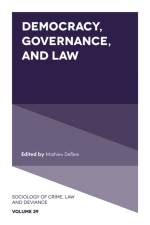
This new volume traces the history of gendered policing back to its emergence from the patriarchal household. It describes how a recognisable form of gendered policing emerged from practices of local government by patriarchs.
Provides the first detailed examination of rank-and-file communist party activism as an element of governance in the Soviet system, offering an empirical account of the bottom level of the apparatus of the Soviet Communist Party in its formative years.
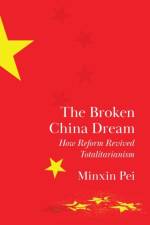
A provocative book that demystifies China’s great democratic leap backward under Xi Jinping, revealing why the country’s embrace of capitalism has given rise to hard authoritarianism, mass surveillance, and one-man rule instead of democracy as many in the West had hopedWhen China embarked on its transformative journey of modernization in 1979, many believed the country’s turn toward capitalism would put its totalitarian past to rest and mark the birth of a democratic, open society. Instead, China reverted to a neo-totalitarian state, one backed by one of the fastest-growing, most formidable economies on earth. The Broken China Dream pulls back the curtain on the regime of strongman Xi Jinping, revealing why the reforms of the post-Mao era have been reversed on nearly every front—and why the world failed to see it coming.Exposing the truth behind China’s economic ascendency after the Cultural Revolution, Minxin Pei shows how, following Mao’s death in 1976, Deng Xiaoping strategically deployed the tools of capitalism to preserve the Chinese Communist Party. Deng kept intact the institutional foundations of totalitarianism even as he unleashed private entrepreneurship and courted foreign investment, giving China’s one-party state control of a vast repressive apparatus and the most critical sectors of the economy. Only a fragile balance of power among dueling factions prevented the rise of a totalitarian leader in the two decades after the Tiananmen crackdown in 1989—but this temporary equilibrium collapsed.Essential to understanding today’s China, this meticulously researched book is a sobering account of why the country’s reformers and institutions could not stop a shrewd and ruthless politician like Xi from resurrecting dormant totalitarian practices that, for the foreseeable future, have spelled the end of China’s dream of a free and prosperous society.
Migration in the Americas continues unabated. Seeking to improve understanding of the complexity of this phenomenon, this book presents different approaches that are at the root of an immigrant-entrepreneur's decision-making and the implementation of entrepreneurial activity in North and South America.
This book shows that state elites decide to allocate land and natural resource rights to Indigenous people not as a response to human rights activism or democratic pressure, but to build an institutional apparatus that facilitates control over vulnerable territories in remote regions. By titling Indigenous lands, state elites create new institutional arrangements in property that allows for the subordination, monitoring, and management of Indigenous society.
Abonner på vårt nyhetsbrev og få rabatter og inspirasjon til din neste leseopplevelse.
Ved å abonnere godtar du vår personvernerklæring.