




Gjør som tusenvis av andre bokelskere
Abonner på vårt nyhetsbrev og få rabatter og inspirasjon til din neste leseopplevelse.
Ved å abonnere godtar du vår personvernerklæring.Du kan når som helst melde deg av våre nyhetsbrev.

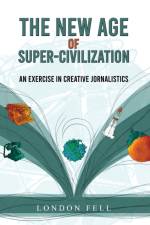
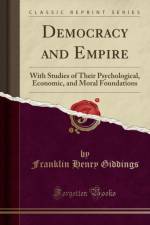
As we entered the year 2000, America and the world stood at a great crossroads. At the threshold of the third millennium, a new age of Super Civilization was emerging. A contemporary civilization had successfully arrived at the long-awaited gateway of the year 2000, having overcome potential apocalyptic obstacles along the way. The journey ahead into the future, far beyond the Y2K takeoff, seemed bright with promise and hope, yet great challenges lay ahead.Three roads stretch forth into the future from the past, along routes already ventured upon, but now requiring a renewed sense of direction and destination. Especially important today are: creating global powerhouses in diverse ways, elevating national politics in America and around the world, and enlightening the public mind in spiritual, cosmological, and political contexts. The people of America and the world today can help those of tomorrow ensure the survival and progress of planet Earth and secure its universal destiny.
Why do recordings of speakers engaging in reported speech at British Prime Minister's Questions from the 1970s-80s sound so distant to us? This cutting-edge study explores how the practices of quoting have changed at parliamentary question time in light of changing conventions and an evolving media landscape. Comparing data from authentic audio and video recordings from 1978-1988 and 2003-2013, it provides evidence for qualitative and quantitative changes at the micro level (e.g., grammaticalisation processes in the reporting clause) and in more global structures (e.g., rhetorical patterns, and activities). These analytic findings contribute to the theoretical modelling of evidentiality in English, our understanding of constructions, interaction, and change, and of PMQs as an evolving community of practice. One of the first large-scale studies of recent change in an interactional genre of English, this ground-breaking monograph offers a framework for a diachronic interactional sociolinguistic research programme.
Desert islands are the focus of intense geopolitical tensions in East Asia today, but they are also sites of nature conservation. In this global environmental history, Paul Kreitman explores how the politics of conservation and sovereignty have entangled on islands from Hawai'i to the South China Sea, from the mid-nineteenth century till today.
This book examines the judicial review systems in the four areas of Greater China - China, Taiwan, Hong Kong and Macau - and uncovers judicial review activities of the apex courts of each region. It provides a comparative assessment of judicial activism and deference.
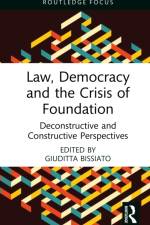
This book addresses the crisis of the juridical-political foundation within contemporary democracies.
First published in 1984, This Mighty Dream traces and interprets the development of popular movements for social change in the United States.
First published in 1985, Ethnic Groups and the State examines the effects of the state, its official ideologies, its structural forms and its specific policies upon the formation of ethnic identity.
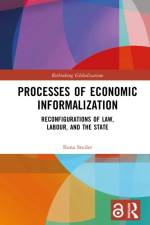
Grounded on an analysis of informalized labour in the urban economy of Dar es Salaam, Processes of Economic Informalization explores the conceptual politics involved in the political construction of the informal economy - diverse economic activities that are not regulated or protected by the state.
Order and Rivalry traces the formation and development of multilateral trade structures in the aftermath of the First World War in response to the marginalization of Europe in global markets, the use of private commerce as a tool of military power and the collapse of empires in Central and Eastern Europe.
This important volume provides the first comprehensive historical discussion of the institutional dimension of G. W. F. Hegel's political thought. It also provides an accessible entry point into the Philosophy of Right and sheds new light on the history of democratic theory in early nineteenth-century Europe.
Abonner på vårt nyhetsbrev og få rabatter og inspirasjon til din neste leseopplevelse.
Ved å abonnere godtar du vår personvernerklæring.