






Gjør som tusenvis av andre bokelskere
Abonner på vårt nyhetsbrev og få rabatter og inspirasjon til din neste leseopplevelse.
Ved å abonnere godtar du vår personvernerklæring.Du kan når som helst melde deg av våre nyhetsbrev.

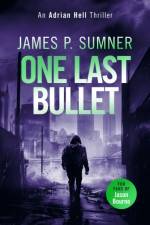
A lethal assassin seeks peace, but first, he must confront the ghosts of his past and the man who shattered his world. Adrian Hell, a hitman haunted by tragedy, believes his time in the underworld is coming to an end. But before he can find solace, he must embark on a bloody crusade against Wilson Trent-a powerful crime boss responsible for the deaths of Adrian's wife and daughter. With his loyal friend, Josh Winters, by his side, Adrian tears through the criminal underworld, dismantling Trent's empire piece by piece. But as his quest for vengeance takes him to darker places, Josh begins to question whether Adrian truly seeks closure or if he's lost himself to the abyss of his own pain. In this gritty tale paying homage to Kill Bill and John Wick, international bestseller James P. Sumner explores the depths of one man's anguish and the lengths he'll go to for justice. Can Adrian find peace after exacting revenge, or will his pursuit of retribution consume him, leaving only ashes in its wake?_____________________________________________________GENRE: Action ThrillerKEY THEMES: Assassins, Organized Crime, Terrorism, Vigilante Justice_____________________________________________________Praise for the Adrian Hell series5.0 out of 5 stars - Hell -- ohhh! Non-stop action infused with sarcastic humor and a gloriously unrepentant hero-killer made this a terrific read. 5.0 out of 5 stars - Can't say edge of my seat; more like edge of a nonstop blockbuster! Fantastic read! With more twists and turns than a Fall Corn Maze. A definite MUST read. 5.0 out of 5 stars - Oh, this book was SO MUCH FUN!!5.0 out of 5 stars - From the first page it was one of the best nooks I've ever read. 5.0 out of 5 stars - Fast paced and ferocious. Hell rocks! I absolutely loved this book.
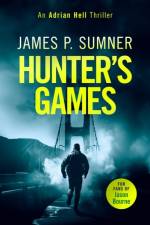
Two deadly killers are on a collision course, and San Francisco is their battleground. The city is under siege, held hostage by a dangerous psychopath with only one demand:Bring me Adrian Hell. It's been a year since the explosive events in Nevada. Adrian has kept a low profile, continuing to build his reputation and earn good money killing bad people. But a simple contract in San Francisco is about to turn his world upside down...His unseen adversary is like no one he's encountered before. Surrounded by dangerous enemies and unlikely allies, he must risk everything to prevent a terrorist attack that will bring the country to its knees. This hi-octane thriller is filled with blockbuster action and sharp dialogue, with a complex hero at its core. This is a must-read for fans of Jason Bourne and John Wick. Welcome to the ride of your life. _____________________________________________________GENRE: Action ThrillerKEY THEMES: Assassins, Organized Crime, Terrorism, Vigilante Justice_____________________________________________________Praise for the Adrian Hell series5.0 out of 5 stars - Hell -- ohhh! Non-stop action infused with sarcastic humor and a gloriously unrepentant hero-killer made this a terrific read. 5.0 out of 5 stars - Can't say edge of my seat; more like edge of a nonstop blockbuster! Fantastic read! With more twists and turns than a Fall Corn Maze. A definite MUST read. 5.0 out of 5 stars - Oh, this book was SO MUCH FUN!!5.0 out of 5 stars - From the first page it was one of the best nooks I've ever re ad. 5.0 out of 5 stars - Fast paced and ferocious. Hell rocks! I absolutely loved this book.
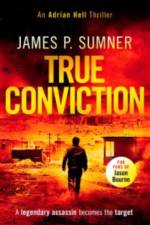
In a world on the brink of a new Cold War, a legendary assassin becomes the hunted. Adrian Hell, a master of his craft, accepts a contract to eliminate a corrupt businessman. But as he delves deeper into his target's life, he realizes that the truth is more sinister than he ever imagined. With each revelation, he finds himself drawn into a deadly game of cat and mouse, where the lines between predator and prey blur. Caught in the crosshairs of two powerful enemies, Adrian must rely on his lethal skills to survive. In a world where the only choices are kill or be killed, can Adrian Hell outmaneuver his enemies and emerge victorious, or will he become another casualty in a war he never asked to fight?A gripping thriller delivering a pulse-pounding journey that fans of Jason Bourne and John Wick will devour. _____________________________________________________GENRE: Action ThrillerKEY THEMES: Assassins, Organized Crime, Terrorism, Vigilante Justice_____________________________________________________Praise for the Adrian Hell series5.0 out of 5 stars - Hell -- ohhh! Non-stop action infused with sarcastic humor and a gloriously unrepentant hero-killer made this a terrific read. 5.0 out of 5 stars - Can't say edge of my seat; more like edge of a nonstop blockbuster! Fantastic read! With more twists and turns than a Fall Corn Maze. A definite MUST read. 5.0 out of 5 stars - Oh, this book was SO MUCH FUN!!5.0 out of 5 stars - From the first page it was one of the best nooks I've ever re ad. 5.0 out of 5 stars - Fast paced and ferocious. Hell rocks! I absolutely loved this book.
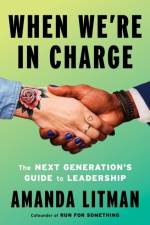
A first-of-its-kind practical manual for millennials and Gen Zers taking on positions of power, from Amanda Litman, cofounder of Run for Something. "A refreshingly candid, delightfully irreverent guide to leadership for the next generation. Amanda Litman busts some major myths about how to succeed at the helm. Get ready to rethink some of your basic assumptions about authenticity, productivity, and professionalism." --Adam Grant, #1 New York Times bestselling author of Hidden Potential and Think Again, and host of the podcast Re: Thinking Most leadership books treat millennials and Gen Z like nuisances to manage around, focusing on how leaders from older generations can fit young people into their existing corporate cultures. Not this one. When We're In Charge is a no-bullshit guide for the next generation of leaders on how to show up differently, break the cycle of bad boomer leadership, and navigate the changing demands of those in power and the evolving expectations people have of their workplace. Based on author Amanda Litman's experience as a founder and executive (and mom of two who's trying desperately to have a life outside of work), and informed by conversations with more than 100 next-gen leaders across politics, business, media, tech, education, and more -- and including people like Versha Sharma, editor-in-chief of Teen Vogue; Maxwell Frost, first Gen Z member of Congress; and Evan Spiegel, CEO of Snap Inc -- this book is a vital resource for new leaders trying to figure out how to get stuff done without making your team or yourself miserable. When We're in Charge offers solutions for sticky challenges like how to be yourself without giving your full self to your role; how to think about social media when your team sees what you post; and how to set up guardrails for work-life balance.Litman also offers arguments on why a four-day work week is the future; why transparency is a powerful tool that can do real damage if not wielded with intention; and why it matters for you, the boss, to both provide and take family leave. A necessary read for all who occupy or aspire to leadership roles, When We're in Charge is a vision for a future where leaders at work, in communities, and across the country are compassionate, genuine, and effective.
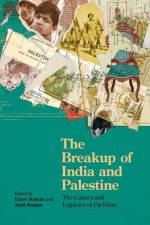
It analyses why, even 75 years after partition, the two regions have not been able to address some of the pertinent historical, political and social debates of the colonial years.
Were British Intelligence chiefs gullible or sensible to recruit an astrologer to assist in the war effort against Nazi Germany? And was the astrologer genuine or a charlatan?
Handcrafted textiles hold a central place in humanitarian aesthetics, ethics, and campaigning, from Oxfam projects to refugee workshops. These crafts evoke images of creativity and resilience but also stand as symbols of labour exploitation. Textile production, particularly in piecework and 'sweated industries, ' has long been a site of protest against poor pay, exploitation, and the erosion of traditional skills. Despite this dual significance, the history of philanthropic interventions in textile craft remains underexplored. This book delves into the intricate connections between craft, labour, and humanitarianism, examining the historical role of textiles in European and imperial humanitarian efforts. Through a series of case studies, it explores how philanthropic organisations and individuals have engaged with handicrafts to address social and economic challenges. Crucially, the book interrogates the complexities of humanitarian craftwork, balancing narratives of empowerment with critical analyses of control, agency, and commodification. Engaging with contemporary socially-engaged textile artists, the contributors reflect on how knowledge of craft practice can reshape historical understandings of humanitarianism. In doing so, it bridges past and present, showing how historical processes become materialised in modern craftwork. This is an essential contribution to the history of labour, material culture, and humanitarian practice, offering fresh perspectives on the intersections of craft and care.
This book offers a micro-global history of humanitarianism and medical care during the 'long' Second World War, which challenges the traditional and Eurocentric chronological boundaries of 1939/1945. It takes as its starting point the Japanese invasion of Manchuria in 1931, which led to the progressive dislocation of the League of Nations, with the Japanese, German and Soviet departures in the 1930s. It ends with the termination of the Korean War in 1953, and the subsequent dismantlement of the first United Coalition and UN Peace enforcement operation. It considers the slow, messy and ambivalent transformation of humanitarian actors' relations to the suffering of distant others through a study of humanitarian encounters, practices, spaces and affects. Paying close attention to a variety of actors, such as French colonial doctors, Swiss ICRC delegates, Egyptian relief workers, Chinese-style physicians, Peruvian and Ecuadorian nurses or American member of the Unitarian Service Committee, the book provides a more holistic story of humanitarianism.
Selective Persecution: The Legalization of American Fascism explains how the infrastructure of fascism has already taken hold in the United States.
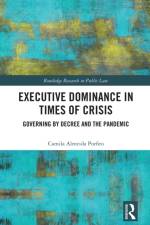
This book argues that the frequent use of unilateral acts by the executive, exacerbated in times of emergency, can lead to a process of serious democratic erosion. It holds that the unlimited expansion of unilateral action is incompatible with the principle of separation of powers and the basic elements of a constitutional democracy.
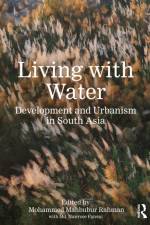
Explores dynamics of water and the built environment in the urban and ecological landscapes of South Asia. Case studies from Bangladesh, India, Pakistan, and Sri Lanka offer guidance to improve climate resilience through water-sensitive development, integrated urban design, and resource management in cities, wetlands and ecosystems.
This book offers a comprehensive analysis of the complex drivers of violent extremism, along with recommendations for strengthening social and institutional resilience through peacebuilding and development efforts.
This book provides a critical analysis of the political and conflict impacts of 'good governance' public finance reforms, showing how unintended distributional outcomes can undermine broader state-building goals.
This book will be of value to students and researchers in the fields of international law, international investment law, international relations, and political science. It will also be of particular interest to students and researchers interested in Asia because it examines the impact of international treaties on governance in Asia.
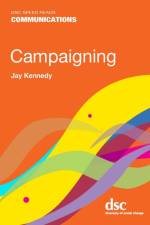
This book is a short introduction to campaigning in its many different forms, and is for those who have little or no experience of the subject, who want to understand the key terminology and be inspired to make an impact.
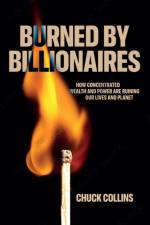
An exposé of the hidden impact of America's überwealthy on the country's economy, environmental health, housing market, and political system Even if you don't begrudge the ultrarich their multiple vacation homes, yachts, and private jets, Burned by Billionaires chronicles how the actions of the top .01% have severe consequences for the rest of us. In chapters including "Road Map to Richistan" and "Extractavism," upper-class traitor Chuck Collins takes down the "myth of meritocracy," showing how the rich rig the game in their favor, resulting in an increasing concentration of wealth in the hands of a tiny (but growing) class of billionaires. In a wholly original argument, Collins shows the impact the ultrawealthy have on the rest of us: increasing the tax burden on ordinary working people; reducing public funding for schools, roads, and other essential infrastructure; shrinking the pool of affordable housing; and accelerating climate change with outsize emissions from superpollutant yachts and private jets. Perhaps worst of all, the concentration of wealth and power is leading to political capture, undermining the democratic principle that our votes matter equally. Lively chapters feature charts, graphs, political cartoons, and more. A final chapter on "Reining in the Billionaires" offers concrete prescriptions for taking power back from the billionaire class.
A master class in social change--how a coalition of parents, activists, and prison officials brought a racist and destructive institution to its knees Over the past twenty years, one state after another has shuttered its youth prisons and stopped trying kids as adults, slashing the number of children locked in cages by a stunning 75 percent. How did this remarkable change come about? In the sequel to her 2014 award-winning book Burning Down the House, journalist Nell Bernstein dissects the forces that converged to move us from a moral panic about "juvenile superpredators" to a time in which the youth prison is rapidly fading from view. In Our Future, We Are Free begins and ends with the imprisoned youth who took a leading role in their own liberation. Through vivid profiles, Bernstein chronicles the tireless work of mothers, activists, litigators, researchers, and journalists to expose and challenge the racist brutality of youth prisons--as well as the surprising story of prison officials who worked from the inside to close their institutions for good. The descriptions of how communities are pursuing safety, rehabilitation, and accountability outside of locked institutions offers a model for how we might overcome our addiction to incarceration writ large. In Our Future, We Are Free is essential reading for anyone wanting to understand how large-scale social change happens.
Abonner på vårt nyhetsbrev og få rabatter og inspirasjon til din neste leseopplevelse.
Ved å abonnere godtar du vår personvernerklæring.