








Gjør som tusenvis av andre bokelskere
Abonner på vårt nyhetsbrev og få rabatter og inspirasjon til din neste leseopplevelse.
Ved å abonnere godtar du vår personvernerklæring.Du kan når som helst melde deg av våre nyhetsbrev.

A vital account of fifteen speeches and orators - from Benjamin Franklin to Barack Obama - that tells the story of the United States as a battle over what it means to be an American, from a New York Times bestselling author and former presidential speechwriterWhat does it mean to be an American? Since the Founding, Americans have been having an intense debate over this deceptively simple question which has spawned Constitutional crises, civil war, populism, mass migrations, reform movements - and their inevitable backlash. The history of this debate over who and what makes an American, Ben Rhodes argues, is essential to understanding how the United States has evolved as a nation and the intensity of their divisions today. In this book, Rhodes tells the story of fifteen essential speeches - some famous, some obscure - that, together, offer a fresh and revealing portrait of the United States as an ongoing contest over what it means to be American. With rare insight into the power and purpose of political rhetoric, Rhodes illuminates how each speech reflects the nature of American identity at a particular historical moment, with riveting portraits of the people, movements, and social conditions that produced pivotal oratory. Rhode also establishes the unique role of speaking as an act of American political persuasion - from Franklin's case for compromise at the Constitutional convention to Alexander Stephen's case for white supremacy as the cornerstone of the Confederacy; or, in social movements, from Martin Luther King's demand for racial equality at the march on Washington, to Pat Buchanan's 'culture war' speech to the 1992 Republican convention which foreshadowed Donald Trump. For a country that values individualism, self-invention, and mass media, Rhodes reminds us that speeches have occupied an out-sized space in the American national imagination: the lone voice before a crowd, bending history to its will. At a time when what it means to be an American is a matter of intense debate and division, Ben Rhodes offers rare insight into the gap between who we say we are, and who we want to be.
Revised edition of the author's Global entrepreneurship, 2014.
This book offers a critical contribution to feminist peace and disaster research by challenging the successful disaster recovery narrative of the Kachchh 2001 earthquake in Gujarat, India.
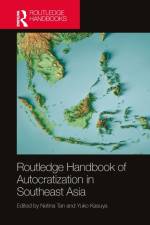
The Routledge Handbook of Autocratization in Southeast Asia examines how global and domestic forces of autocratization affect regional and local politics.
To help managers navigate dualities and contradictions in their organizations, Management, Organizations, and Paradoxes presents a comprehensive overview of implementing the paradox theory from a distinct organizational standpoint in the Central and Eastern European (CEE) context.
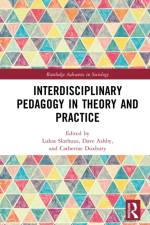
Based around pedagogical theory and concrete practical examples and experiences from the classroom, the book contributes with a multiplicity of knowledge to the growing appetite for interdisciplinary initiatives at universities.
We often think of 'making a difference' as an individual endeavour, a hero's journey. Popular movements and protests have proliferated in the many crises of the last few years. Some expressions of change are deemed too weak, others too disruptive: from Instagram tiles to orange spray paint. This book spends time with three prominent movements across environmental justice, land reform, and a fight for rent controls, seeking to recalibrate activist thinking from the individual responsibility to the collective by asking, truly: how does change happen?
'Can a planet have legal rights? Could it be defended in a court of law?' A revolution is taking place. Around the world, ordinary people are turning to courts seeking justice for environmental damage. At the forefront of this movement, pioneering barrister Monica Feria-Tinta advocates not only for the people fighting for their homes and livelihoods, but also for those who have no voice: for rivers, forests and endangered species. In A Barrister for the Earth, Monica takes us behind the scenes of ten real cases - as she argues against the destruction of cloud forests in the world's first Rights of Nature case, to holding Sovereign states to account for inaction in addressing climate change in a landmark win for the Torres Strait Islanders. Each of these hopeful stories are landmarks signalling that we are at an important juncture, in which the law can be a powerful tool for the lasting change that we need.
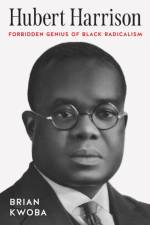
The significance of Hubert Henry Harrison (1883-1927)--as a journalist, activist, and educator--lies in his innovation of radical solutions to grave injustices, especially the staggering luxury for the few alongside the crushing poverty for the many in the first few decades of the twentieth century. White mob violence continually haunted African American communities, while imperial conquest and world wars wrought wanton destruction upon entire nations of people. These conditions sparked a global political awakening to which Harrison gave voice as a leading figure in cutting-edge struggles for socialism, in the free love movement, and in the Harlem Renaissance. He also played a pivotal role in the rise of Marcus Garvey and the establishment of the largest international organization of Black people in modern history. Because of his fierce and fearless radicalism, however, he has been erased from popular memory.Hubert Harrison presents a historical restoration of Harrison's numerous intellectual and political breakthroughs. Offering a fresh interpretation of his contributions to social movements for economic, racial, and sexual liberation, Brian Kwoba's richly textured narrative highlights the startling and continued relevance of Harrison's visionary thinking across generations.
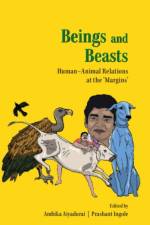
While, a lot has been written about the need to 'decolonize' animal studies and wildlife conservation, there is no discussion or attempt to 'de-brahminize' animal studies and conservation science in India. Similarly, some animals and birds are positioned as superior in the Brahmanical social order, others seem to be subordinated and are associated with certain 'inferior' caste groups. Beings and Beasts discusses the relations between humans and animals of marginalized societies, especially of Dalits and Tribals. It analyses the various ways of perceiving the 'conjoint' living and examines it from multiple perspectives and disciplinary lenses.
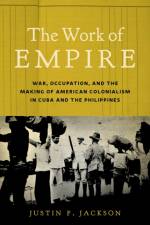
In 1898, on the eve of the Spanish-American War, the US Army seemed minuscule and ill-equipped for global conflict. Yet over the next fifteen years, its soldiers defeated Spain and pacified nationalist insurgencies in both Cuba and the Philippines. Despite their lack of experience in colonial administration, American troops also ruled and transformed the daily lives of the 8 million people who inhabited these tropical islands.How was this relatively small and inexperienced army able to wage wars in Cuba and the Philippines and occupy them? American soldiers depended on tens of thousands of Cubans and Filipinos, both for military operations and civil government. Whether compelled to labor for free or voluntarily working for wages, Cubans and Filipinos, suspended between civilian and soldier status, enabled the making of a new US overseas empire by interpreting, guiding, building, selling sex, and many other kinds of work for American troops. In The Work of Empire, Justin Jackson reveals how their labor forged the politics, economics, and culture of American colonialism in Cuba and the Philippines and left an enduring imprint on these islands and the US Army itself. Jackson offers new ways to understand the rise of American military might and how it influenced a globalizing imperial world.
This richly textured book helps students and scholars of religion and politics to understand the surprising ways in which conflict and conciliation can renew grassroots democracy. It appraises contemporary discussions of democratic pluralism in religious and ethical theory while advancing a bold new account of conflict's religious significance.
Abonner på vårt nyhetsbrev og få rabatter og inspirasjon til din neste leseopplevelse.
Ved å abonnere godtar du vår personvernerklæring.