
















Gjør som tusenvis av andre bokelskere
Abonner på vårt nyhetsbrev og få rabatter og inspirasjon til din neste leseopplevelse.
Ved å abonnere godtar du vår personvernerklæring.Du kan når som helst melde deg av våre nyhetsbrev.

A personal memoir of deployment with the strike cell that hunted America's enemies in Iraq using cutting-edge technology.
A compelling collection of personal essays that reminds us of the power of love and writing to connect us, despite the forces that seek to keep us separate.“What if we survive by converting what we get into what we need?” asks Jennifer Bowen Hicks in a series of linked essays that offer care and attention as balm for our contemporary loneliness. The founding director of one of the most groundbreaking prison writing workshops in the United States, she has seen firsthand the effects of absence and isolation. Reading and writing, she posits, can be radically connective acts—proof, finally, that we’re not alone. Written during a time when division is constantly being sown between us, The Book of Kin argues powerfully for our need to understand ourselves and each other as full, complex beings worthy of love.From the unexpectedly salvific attentions of a cow to the time-bending drama of watching a child grow into an adult, and from pastoral carceral settings to the spectacle of an antiquated prison rodeo, Bowen Hicks examines a wild spectrum of shapes that care can take—and what happens when its absence is marked. These unflinching, surprisingly funny, and emotionally vulnerable essays are driven by a curiosity to uncover what might be gleaned from various separations, or vanishments, in her own life—from the shadow of her own father to disappeared backyard chickens—and in American life writ large, where “harm is shared, and healing is too.” The Book of Kin is a rhapsodic debut that explores the beautiful, determined ways we imperfectly care for one another and how we might keep trying, despite it all.
[Not final] This edited volume explores the international relations of the Middle East region in a multipolar world.The book provides a unique engagement with the concept of multipolarity and its different meanings. Using a wide range of theories and methodologies, contributors engage with the different facets of multipolarity and its effects on the region. Regional dynamics, the role of external powers and relations with neighbouring regions all contribute to shape the Multipolar Middle East. Through its combination of theoretical and empirical analyses, this volume makes a timely and important intervention in debates about the present and future of international relations within the Middle East, and about the region's place in a shifting world order.
From ingredients and recipes to meals and menus across time and space, this highly engaging overview illustrates the important roles that anthropology and anthropologists play in understanding food and its key place in the study of culture.The new edition, now in full colour, introduces discussions about nomadism, commercializing food, food security, and ethical consumption, including treatment of animals and the long-term environmental and health consequences of meat consumption. New feature boxes offer case studies and exercises to help highlight anthropological methods and approaches, and each chapter includes a further reading section. By considering the concept of cuisine and public discourse, Eating Culture brings order and insight to our changing relationship with food.
This book argues that consequentialism and non-consequentialism are false because they face metaphysical and intuitional problems. The two theories exhaust the theories of the right, so there is no rightness. This result matters because it requires us to give up beliefs regarding knowledge, moral responsibility, and reasons for action.
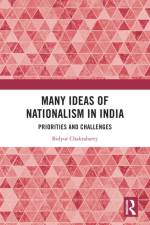
This book is a comprehensive analysis of the many visions of nationalism and nationalist leadership that emerged during India's struggle for independence.
This book examines how thinking towards the international relations of political leaders, researchers, the media and the public is fundamentally metaphorical in nature: the abstract and far away constantly made concrete and familiar through the imaginative rationality of metaphors.
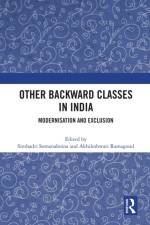
This handbook presents an authoritative account of the development of movements, thoughts, and policies of OBCs (Other Backward Classes) in India. it is a comprehensive work on the politics of identity and plurality of experiences of OBCs in India, featuring many eminent scholars working in the field of social justice and social exclusion.
Immanuel Kant influenced a large and productive group of political philosophers in the 1790s. This volume argues that they brought out more fully the egalitarian principles of Kantian republicanism.
Charting the life and writings of W¿adys¿aw Bie¿kowski, a leading politician and writer in communist Poland and sometime right hand man and ideologue of the Polish leader W¿adys¿aw Gomüka, this book outlines the shifts in the nature of communism in Poland throughout the period of communist rule.
This book investigates the impact of Christian nationalism on democracy in Ghana, arguing that proponents of a specific Christian worldview seek to remake the country according to their values and beliefs. This book will interest researchers of religion and politics in Africa, with Ghana serving as an important case study.
This topical book explores the phenomenon of when and why people protest. Based in social and political psychology, the book takes a comparative approach across cultures and examines how human motivation and political and cultural contexts affects protests.
This topical book explores the phenomenon of when and why people protest. Based in social and political psychology, the book takes a comparative approach across cultures and examines how human motivation and political and cultural contexts affects protests.
This book tries to understand Sardar Patel not from the traditional approach of viewing him just as an integrator of princely states or Iron Man but investigate the different dimensions of Patel's thinking towards India.
Identity politics has widened representation for the marginalised groups in democracies, while neoliberalism has deepened inequality. This volume finds answers to the paradox of widening representation and worsening inequality especially in India exploring the themes of development and identity in recent times.
This handbook provides a comprehensive study of India's maritime heritage. It presents perspectives on India's maritime history, territorial concerns, bilateral and multilateral engagements, traditional and non-traditional threats, maritime management and development, as well as climate change and its implications.
Abonner på vårt nyhetsbrev og få rabatter og inspirasjon til din neste leseopplevelse.
Ved å abonnere godtar du vår personvernerklæring.