
















Gjør som tusenvis av andre bokelskere
Abonner på vårt nyhetsbrev og få rabatter og inspirasjon til din neste leseopplevelse.
Ved å abonnere godtar du vår personvernerklæring.Du kan når som helst melde deg av våre nyhetsbrev.

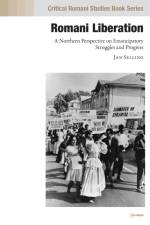
Centered on the trajectory of the emancipation of Roma people in Scandinavia, Romani Liberation is a powerful challenge to the stereotype describing Romani as passive and incapable of responsibility and agency. The author also criticizes benevolent but paternalistic attitudes that center on Romani victimhood. The first part of the book offers a comprehensive overview of the chronological phases of Romani emancipation in Sweden and other countries. Underscoring the significance of Roma activism in this process, Jan Selling profiles sixty Romani activists and protagonists, including numerous original photos. The narrative is followed by an analysis of the concepts of historical justice and of the process of decolonizing Romani Studies. Selling highlights the impact of the historical contexts that have enabled or impeded the success of the struggles against discrimination and for equal rights, emphasizing Romani activism as a precondition for liberation.The particular Swedish framework is accentuated by a stimulating preface by the international activist Nicoleta Bitu, and afterwords by two prominent Romani advocates, the politician Soraya Post and the singer, author, and elder Hans Caldaras.
The Roma issue is generally treated as a European matter. Indeed, the Roma are the largest European minority¿their presence outside of Europe is a result of various waves of migration over the past four hundred years. Likewise, the stereotypes associated with the Romäthe problematized, stigmatized status of a ¿Gypsy¿ as well as the historical and contemporary manifestations of antigypsyism¿are also of European origin. This book claims, however, that the perception of Roma being strictly a European issue is flawed, and that re-connecting the Roma issue globally represents an important learning experience and an added value.The book offers a critical exploration of Romani political activism in Colombia and Argentina, and compares it to that in Spain, narrated from the intimate perspective of Romani actors themselves. By outlining parallel lineages of Romani activism in three countries and on two continents, the author arrives at broad conclusions regarding the nature of ethnic mobilization. Mirga-Kruszelnicka proposes a new synergetic conceptualization of this multidirectional concept as an interplay between political opportunities, mobilizing structures, and frames of identity. Contributing to the vivid debate about the relationship between the researcher and the researched, the book also includes an original discussion of the positionality of scholars of Romani background.
The Lower Danube¿the stretch of Europe¿s second longest river between the Romanian-Serbian border and the confluence to the Black Seäwas effectively transformed during the late eighteenth and nineteenth centuries. In describing this lengthy undertaking, Luminita Gatejel proposes that remaking two key stretches¿the Iron Gates and the deltänot only physically altered the river but also redefined it in a legal and political sense. Since the late eighteenth century, military conflicts and peace treaties changed the nature of sovereignty over the area, as the expansionist tendencies of the Habsburg and British Empires encountered rival Ottoman and Russian imperial plans. The inconvenience that the river¿s physical shape obstructed free navigation and the growth of commercial traffic, was an increasing concern to all parties. This book shows that alongside imperial aspirations, transnational actors like engineers, commissioners and entrepreneurs were the driving force behind the river regulation. In this highly original, deeply researched, and carefully crafted study, Gatejel explores the formation of international cooperation, the emergence of technical expertise and the emergence of engineering as a profession. This constellation turned the Lower Danube into a laboratory for experimenting with new forms of international cooperation, economic integration, and nature transformation.
In this book, six researchers from different professional backgrounds examine the dynamics of the development and reproduction of an authoritarian system. The chapters empirically show how the authoritarian system gradually captures -- and diffuses into -- the society's and the economy's subsystems; describe how it captures the national, intermediate, and micro level sub-structures and reproduces itself as it expands. It empirically analyzes the mechanisms, instruments, and institutions of political capture. The authors distinguish between and explore welfare, development, and recombinant projects and their interrelationships. They study the existence of political favoritism in the case the politically connected enterprises based on an analysis of the corruption risk of 242,183 public tenders. They detail the crony system's functioning and political connections' network aspects in the rapid enrichment of politically connected enterprises. The book exemplifies the vulnerability of democratic institutions to authoritarian and populist regimes, including the tendency for institutionalized corruption to develop systemically, its destructive power in the public and business sectors, and the built and natural environment.
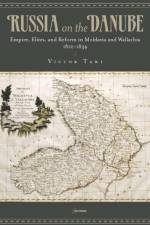
One of the goals of Russiäs Eastern policy was to turn Moldavia and Wallachia, the two Romanian principalities north of the Danube, from Ottoman vassals into a controllable buffer zone and a springboard for future military operations against Constantinople. Russia on the Danube describes the divergent interests and uneasy cooperation between the Russian officials and the Moldavian and Wallachian nobility in a key period between 1812 and 1834. Victor Taki¿s meticulous examination of the plans and memoranda composed by Russian administrators and the Romanian elite underlines the crucial consequences of this encounter. The Moldavian and Wallachian nobility used the Russian-Ottoman rivalry in order to preserve and expand their traditional autonomy. The comprehensive institutional reforms born out of their interaction with the tsar¿s officials consolidated territorial statehood on the lower Danube, providing the building blocks of a nation state. The main conclusion of the book is that although Russian policy was driven by self-interest, and despite the Russophobia among a great part of the Romanian intellectuals, this turbulent period significantly contributed to the emergence, several decades later, of modern Romania.
Distinguished scholars from both Europe and North America explore various aspects of nationalism and shed light on current theories in this area of crucial importance to an understanding of world politics today.
Exploring theater practices in communist and post-communist Hungary, Romania and Bulgaria, this book analyzes intertextuality or "inter-theatricality" as a political strategy, designed to criticize contemporary political conditions while at the same time trying to circumvent censorship.
Turning Prayers into Protests is comparative study of grass-roots religious activity in Slovakia and East Germany prior to 1989.
Examines the impact of the Czechoslovak and East German uranium industries on local politics and on societies. This book contains an introduction that discusses the silver-mining industries in the Erzgebirge region and outlines the fate of this region, including the various political pressures and medical problems its inhabitants came under.
Describes Dan Bar-On's method of using storytelling as both a qualitative biographical research method and as an intervention, to bring people from opposite sides of an abyss to a dialogue. Such work needs slow pace and long-term commitment, with a special combination of a scientific rigorous analysis with a sensitive approach toward the people one approaches.
Three portraits of men who were at the very center of governance in thirteenth-century France.
Secrets and Truth offers a rare insider's look into Secret Police's actions in Romania.
The book is comprised of the four major debates on modern Bulgarian history from Independence in 1878 to the fall of communism in 1989.
A unique contribution by combining eye witness experience with the best of current scholarship on one of the most serious ethical issues of the day, namely, responding to criminal behavior of a national regime.
The inheritance of the east-European autocratic system frozen up by the communist state was thawed after the peaceful regime change. This book contains the analysis required for the portrayal of the features of conservatism, its strategic vision, conceptual system, argumentation, assessment criteria and values.
Explores and illustrates how domestic and international factors shape the direction of democratization process with special reference to constitution making process in Turkey. This book describes how all five Turkish constitutions were, by and large, the products of indigenous effort, although borrowing could be felt in certain limited areas.
This book examines constitutional adjudication in the Visegrad Four: Poland, Hungary, the Czech Republic and Slovakia. The creation of constitutional courts was one of major milestones in the re-creation of the democratic system in these countries.
Abonner på vårt nyhetsbrev og få rabatter og inspirasjon til din neste leseopplevelse.
Ved å abonnere godtar du vår personvernerklæring.