











Gjør som tusenvis av andre bokelskere
Abonner på vårt nyhetsbrev og få rabatter og inspirasjon til din neste leseopplevelse.
Ved å abonnere godtar du vår personvernerklæring.Du kan når som helst melde deg av våre nyhetsbrev.

The Gospel of Luke has long been known for its variation between good, educated Greek and Semitic influences. In the last century, five theories have attempted to explain the Semitic influence: Semitic sources; imitation of the Greek Bible; the Greek of the ancient synagogue; literary code-switching between standard Greek and semitized Greek; and the social background of bilingualism. Albert Hogeterp and Adelbert Denaux revisit Luke's Greek and evaluate which alleged Semitisms of vocabulary and syntax are tenable in light of comparative investigation across corpora of Greek, Hebrew, and Aramaic, literary as well as documentary, texts. They contend that Semitisms in Luke's Greek are only fully understood in light of a complementarity of linguistic backgrounds, and evaluate them in diachronic respect of Synoptic comparison and in synchronic respect of their place in Luke's narrative style and communicative strategy.
Patricia A. Duncan examines the fourth-century Christian novel traditionally known as the Pseudo-Clementine Homilies (but here referred to as the Klementia) in order to show how the lengthy and complex narrative coheres as a rhetorical whole and works to initiate the reader into a revised, esoteric vision of the origins of Christianity. The novel is well known for its distinctive doctrine of "false pericopes" in the scriptures of the Jews, but equally important is the way it capitalizes on its narrative genre to correct false pericopes in the Gospels of the New Testament. Key to the novel's project is a construction of the apostle Peter as the chief tradent and the fully authorized interpreter of the words and deeds of the True Prophet Jesus. This Peter offers up of a law-abiding, monotheistic "Christianity" that is fully continuous with the religion of the followers of Moses.
In this work, Andrei A. Orlov examines Jewish apocalyptic traditions about the angel Yahoel, tracing their conceptual impact on the development of later rabbinic and Hekhalot beliefs concerning the supreme angel Metatron. The author argues that the figure Yahoel, who became associated in Jewish apocalypticism with the distinctive aural ideology of the divine Name, provides an important conceptual key not only for elucidating the evolution of the Metatron tradition, but also for understanding the origins of the distinctive aural ideology prominent in early Jewish mystical accounts. Andrei A. Orlov suggests that the aural mould of Jewish apocalypticism exercised a decisive and formative influence on the development of early Jewish mysticism.
The impetus for this collection of essays on canonical and non-canonical Acts is to honor the scholarly achievements of Richard I. Pervo. Pervo pioneered the view that canonical Acts is comparable to ancient fiction - the various episodes about Peter, Paul, and the other apostles composed to entertain, even as they inform. In the spirit of this work, contributors prod and provoke readers, traveling at different speeds and with notable variation from the center of the broad orbit of canonical Acts. The hope is that the essays foster conversation about the things discussed, offering no small measure of delight along the way. Contributors:Harold W. Attridge, Clayton N. Jefford, Amy-Jill Levine, Dennis R. MacDonald, Troy W. Martin, Shelly Matthews, David Moessner, Mikeal C. Parsons, Mark Reasoner, Clare K. Rothschild, Melissa Harl Sellew, Janet E. Spittler, Angela Standhartinger
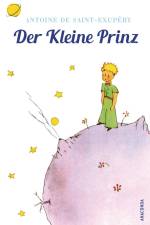
Excerpt from Das Kind in Brauch und Sitte der Völker: Anthropologische StudienAls ich vor nicht allzu langer Zeit meine Studien über das bei vielen Völkern heimische Gehabten mit dem Kinde veröffentlichte, konnte ich nicht ahnen, dass bereits jetzt schon mein Buch in neuer Au¿age erscheinen müsste. Es. Erwarb sich schnell mehr Freunde, als ich vermuthet hatte. Jedenfalls war es der Gegen stand selbst, welcher für das Publikum einen gewissen Reiz ent faltete. Denn das Kind und Alles, was mit ihm zusammenhängt, bietet ja so mannichfaches Interesse dar. Ebenso wenig aber hatte ich geglaubt, dass mir im Verlaufe weniger jahre wiederum ein so reicher Stoff zufliessen würde, der es mir ermöglichte, in vorliegen. Der Au¿age überall den Inhalt wesentlich zu erweitern und sogar mehrere vollständig neue Kapitel hinzuzufügen. Ganz von selbst bot sich meinen fortgesetzten Forschungen eine überraschende Be reicherung der Kenntnisse über die Sitten und Gebräuche auf einem Gebiete dar, auf welchem fort und fort von Reisenden und Anthro pologen Neues berichtet und besprochen wird.About the PublisherForgotten Books publishes hundreds of thousands of rare and classic books. Find more at www.forgottenbooks.comThis book is a reproduction of an important historical work. Forgotten Books uses state-of-the-art technology to digitally reconstruct the work, preserving the original format whilst repairing imperfections present in the aged copy. In rare cases, an imperfection in the original, such as a blemish or missing page, may be replicated in our edition. We do, however, repair the vast majority of imperfections successfully; any imperfections that remain are intentionally left to preserve the state of such historical works.
Brian B. Schmidt presents five case studies in which architectural spaces, artifacts, epigraphs, images and biblical manuscripts corroborate the existence of a robust daimonic realm in late pre-exilic Israel, along with an embryonic pandemonium. The material and epigraphic data from Kuntillet Ajrud, Ketef Hinnom, and Khirbet el-Qom, along with the manuscript evidence from Deut 32 and 1 Sam 28, indicate that pandemonium members wreaked havoc on the living and the dead. The same data also preserve a countervailing realm of apotropaism over which YHWH and Asherah, portrayed as the quintessential protective deities Bes and Beset, governed. In addition to Asherah's role in this realm as YHWH's mediatrix, various other material media including amulets, inscribed blessings, decorated jars served to convey apotropaism's empowerment to humanity.
In this study, Jonathan S. Milgram demonstrates that the transformation of inheritance law from the biblical to the tannaitic period is best explained against the backdrop of the legal and social contexts in which the tannaitic laws were formulated. Employing text and source critical methods, he argues that, in the absence of the hermeneutic underpinnings for tannaitic innovations, the laws were not the result of the rabbinic imagination and its penchant for inventive interpretation of Scripture. Turning to the rich repositories in biblical, ancient near eastern, Second Temple, Greek, Elephantine, Judean desert, and Roman sources, the author searches for conceptual parallels and antecedents as well as formulae and terminology adopted and adapted by the tannaim. Since the tannaitic traditions reflect the social and economic contexts of the tannaitic period - the nuclear family on privatized landholdings in urban centers - the author also considers the degree to which tannaitic inheritance laws may have emerged out of these contexts.
Covenant and election are two theological concepts that dominate the landscape of the Hebrew Bible. If they became the main structuring concepts of the Hebrew Bible, they were not so from the beginning. Their centrality was the result of their utilization by exilic and post-exilic scribes and tradents to focus Israel's traditions into a coherent structure as fitted the revelation of one God. The essays in this collection examine covenant and election across the biblical literature, from the priestly document through Deuteronomy to Jeremiah and the book of Chronicles. They show how the ideas were shaped and refined under the conditions of national disaster and rebuilding.
Daniele Pevarello analyzes the Sentences of Sextus, a second century collection of Greek aphorisms compiled by Sextus, an otherwise unknown Christian author. The specific character of Sextus' collection lies in the fact that the Sentences are a Christian rewriting of Hellenistic sayings, some of which are still preserved in pagan gnomologies and in Porphyry. Pevarello investigates the problem of continuity and discontinuity between the ascetic tendencies of the Christian compiler and aphorisms promoting self-control in his pagan sources. In particular, he shows how some aspects of the Stoic, Cynic, Platonic and Pythagorean moral traditions, such as sexual restraint, voluntary poverty, the practice of silence and of a secluded life were creatively combined with Sextus' ascetic agenda against the background of the biblical tradition. Drawing on this adoption of Hellenistic moral traditions, Pevarello shows how great a part the moral tradition of Greek paideia played in the shaping and development of self-restraint among early Christian ascetics.
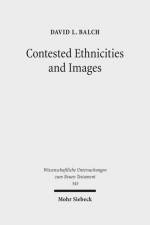
Ethnic values changed as Imperial Rome expanded, challenging ethnocentric values in Rome itself, as well as in Greece and Judea. Rhetorically, Roman, Greek, and Judean writers who eulogized their cities all claimed they would receive foreigners. Further, Greco-Roman narratives of urban tensions between rich and poor, proud and humble, promoted reconciliation and fellowship between social classes. Luke wrote Acts in this ethnic, economic, political context, narrating Jesus as a founder who changed laws to encourage receiving foreigners, which promoted civic, missionary growth and legitimated interests of the poor and humble. David L. Balch relates Roman art to early Christianity and introduces famous, pre-Roman Corinthian artists. He shows women visually represented as priests, compares Dionysian and Corinthian charismatic speech and argues that larger assemblies of the earliest, Pauline believers "sat" (1 Cor 14.30) in taverns. Also, the author demonstrates that the image of a pregnant woman in Revelation 12 subverts imperial claims to the divine origin of the emperor, before finally suggesting that visual representations by Roman domestic artists of "a category of women who upset expected forms of conduct" (Bergmann) encouraged early Christian women like Thecla, Perpetua and Felicitas to move beyond gender stereotypes of being victims. Balch concludes with two book reviews, one of Nicolas Wiater's book on the Greek biographer and historian Dionysius, who was a model for both Josephus and Luke-Acts, the second of a book by Frederick Brenk on Hellenistic philosophy and mystery religion in relation to earliest Christianity.
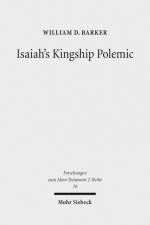
William D. Barker analyzes a wide array of possible ancient Near Eastern backgrounds to Isaiah 24-27. He finds that there is a uniquely Ugaritic background to the chapters, with evidence of a literary framework and narrative progression that has been intentionally adopted and creatively adapted from either the Ba'al Myth (KTU 1.1-1.6) itself or a shared tradition between ancient Ugarit and ancient Israel. Barker also closely examines Isaiah 24-27 in the light of the Ugaritic material and thereby contributes to the resolution of some of the historic questions about the interpretation, genre, dating, and function of Isaiah 24-27. A new epithet for the chapters is also proposed.
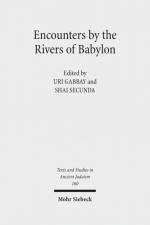
This volume presents a group of articles that deal with connections between ancient Babylonian, Iranian and Jewish communities in Mesopotamia under Neo-Babylonian, Achaemenid, and Sasanian rule. The studies, written by leading scholars in the fields of Assyriology, Iranian studies and Jewish studies, examine various modes of cultural connections between these societies, such as historical, social, legal, and exegetical intersections. The various Mesopotamian connections, often neglected in the study of ancient Judaism, are the focus of this truly interdisciplinary collection. Contributors:Jonathan Ben-Dov, Yaakov Elman, Irving Finkel, James Nathan Ford, Eckart Frahm, Uri Gabbay, Yishai Kiel, Reuven Kiperwasser, Maria Macuch, Shai Secunda, Dan D. Y. Shapira, Prods Oktor Skjærvø, Caroline Waerzeggers, Nathan Wasserman, Abraham Winitzer, Ran Zadok
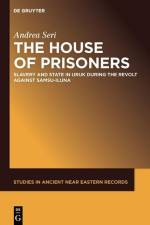
This book deals with the house of prisoners (bit asiri ) at the city of Uruk during the revolt against king Samsu-iluna of Babylon, Hammurabi¿s son. The political history of this brief period (ca. 1741¿1739 BC) is not widely known and until now there has been no comprehensive treatment of the bit asiri. This book includes autograph copies, transliterations, and translations of 42 unpublished cuneiform tablets from various collections, collations, and detailed tables and catalogues. The analysis comprises some 410 documents dated or attributable to king Rim-Anum, one of the insurgents who attained relative independence as the ruler of Uruk. The study of this corpus reveals details about diplomatic dealings between the central power and rebel rulers, about the functioning of the house of prisoners of war, and about the individuals who participated in different echelons of the local administration. This monograph investigates what kind of organization ¿the house of prisoners¿ was, how it worked, how it interacted with other institutions, the composition of its labor force, and state management of captive and enslaved individuals.
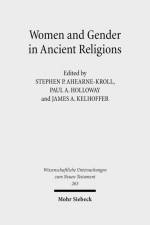
Following a scholarly conference given in honor of Adela Yarbro Collins, this collection of essays offers focused studies on the wide range of ways that women and gender contribute to the religious landscape of the ancient world. Experts in Greek and Roman religions, Early Christianity, Ancient Judaism, and Ancient Christianity engage in literary, social, historical, and cultural analysis of various ancient texts, inscriptions, social phenomena, and cultic activity. These studies continue the welcomed trend in scholarship that expands the social location of women in ancient Mediterranean religion to include the public sphere and consciousness. The result is an important and lively book that deepens the understanding of ancient religion as a whole. With contributions by:Patricia D. Ahearne-Kroll, Loveday Alexander, Mary Rose D'Angelo, Stephen J. Davis, Robert Doran, Radcliffe G. Edmonds III, Carin M. C. Green, Fritz Graf, Jan Willem van Henten, Paul A. Holloway, Annette B. Huizenga, Jeremy F. Hultin, Sarah Iles Johnston, James A. Kelhoffer, Judith L. Kovacs, Outi Lehtipuu, Matt Jackson-McCabe, Candida R. Moss, Christopher N. Mount, Susan E. Myers, Clare K. Rothschild, Turid Karlsen Seim
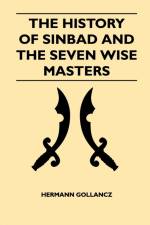
This classic tale of Arabian hero and adventurer Sinbad, is a translation of the original Arabic tale. With a brief description of the history and meaning of the tale, from a member of the folklore society. Many of the earliest books, particularly those dating back to the 1900's and before, are now extremely scarce and increasingly expensive. We are republishing these classic works in affordable, high quality, modern editions, using the original text and artwork.
This fascinating book delves into old records to uncover the true extent of demonology and witchcraft in Scotland. This is a must read for anybody interested in an incredible chapter in Scottish history. Many of the earliest books, particularly those dating back to the 1900's and before, are now extremely scarce and increasingly expensive. We are republishing these classic works in affordable, high quality, modern editions, using the original text and artwork.
The religious history of Palestine has not yet been studied as that of an ordinary, Roman province. Until now, scholars have mainly highlighted the two, monotheistic religions, Judaism and Christianism. If Palestinian uniqueness comes actually from them, pagan Palestine little differed from the rest of the Roman - especially eastern - world and was in fact a real religious mix due to its history in the Hellenistic and Roman periods. Nicole Belayche examines the pagan part, quantitatively the majority, of the Palestinian population between 135 and the fourth century. As a consequence of the two revolts of 66-70 and 132-135, pagan peoples had been settled all over the territory and pagan cults - avodah zarah to speak as a Mishnah - spread with them. Data of various natures and religious origins allow one to reconstruct the ritual aspects of the pagan cults. The collection of gods is varied and their origins recall local history, Semitic but above all Graeco-Hellenistic and then Roman. They prove the adherence of the province to the main religious trends of the imperial, Graeco-eastern ensemble. The pagan religious life is studied for itself and in the relationship of the pagans to the Jewish population, since monotheistic and polytheistic communities did not live in closed worlds. The general plan of the book follows them city by city in order to respect the juridical status of the communities and their cultural personality. Second to fourth century Judaea-Palestine offers a good short cut to the religious procedures at work in the already Hellenized Roman provinces, perhaps the best one due to local history. The mechanics of cohabitation in the system of Graeco-Roman cultural representation functioned here as elsewhere because the monotheistic communities, Jewish then Christian, from the third century on, did not risk intermixing. As in the rest of the Empire, Constantine's reign was not an effective turning point and pagan cults still flourished until the end of the fourth century at least.
The gods are not beyond making mistakes. Their creation of Pandora and the box laid the foundation for the destruction of Atlantis and possibly the gods themselves.When Apollo falls in love with Pandora, he disguises himself to win her heart without his position as a god to influence her. His plan goes well until Hades, God of the Underworld, entices Pandora into his temple and tempts her to open the box gifted to her by Zeus. The box holds an untold power that Hades wants to harness for his own selfish purposes.Hades tests Apollo and Pandora's love by manipulating circumstances until neither of them trust or believe in the other. On a clifftop above Atlantis, with a storm raging all around, Pandora must choose between love or power, not realizing her decision could destroy Atlantis and the gods forever.Reincarnated into present day as different people with no memory of their past, Pandora and Apollo must relive buried emotions and right the wrongs of long ago. Drawn together into a dangerous situation, their guides, Poseidon and Athena, help them rekindle their love. Learning to trust and believe in each other is the key to opening the box and letting out the hope trapped within.
En un pueblo llamado Wirple, la prueba llamada la Encrucijada te marca el destino. Destellan las espadas contra los reinos, los dioses pautan el día a día de los hombres y un niño camina en pos de su trayectoria. ¿Héroe? ¿Villano? Una decisión lo cambiará todo.
The Immortal Lazarus is on a quest to find an ancient artefact that will grant him the one thing he seeks most in life, death. After finding the artefact in Northern Ireland he is ambushed and along with his immortal cohorts, a group of vampires, he is trapped for centuries underground. He emerges in a totalitarian future, one where vampires now rule. Hunted by monsters old and new, Lazarus sets out to uncover the mysteries of this new world and find the redemption that he so desperately seeks.
Abonner på vårt nyhetsbrev og få rabatter og inspirasjon til din neste leseopplevelse.
Ved å abonnere godtar du vår personvernerklæring.