






Gjør som tusenvis av andre bokelskere
Abonner på vårt nyhetsbrev og få rabatter og inspirasjon til din neste leseopplevelse.
Ved å abonnere godtar du vår personvernerklæring.Du kan når som helst melde deg av våre nyhetsbrev.

Esther de Waal, one of Celtic Christianity's preeminent scholars, shows how this tradition of worship draws on both the pre-Christian past and on the fullness of the Gospel. It is also an enlightening glimpse at the history, folklore, and liturgy of the Celtic people.Esther de Waal introduces readers to monastic prayer and praise (the foundation stone of Celtic Christianity), early Irish litanies, medieval Welsh praise poems, and the wealth of blessings derived from an oral tradition that made prayer a part of daily life. Through this invigorating book, readers enter a world in which ritual and rhythm, nature and seasons, images and symbols play an essential role. A welcome contrast to modern worship, Celtic prayer is liberating and, like a living spring, forever fresh.
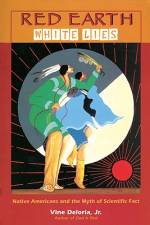
Vine Deloria, Jr., leading Native American scholar and author of the best-selling God is Red, addresses the conflict between mainstream scientific theory about our world and the ancestral worldview of Native Americans. Claiming that science has created a largely fictional scenario for American Indians in prehistoric North America, Deloria offers an alternative view of the continent's history as seen through the eyes and memories of Native Americans. Further, he warns future generations of scientists not to repeat the ethnocentric omissions and fallacies of the past by dismissing Native oral tradition as mere legends.
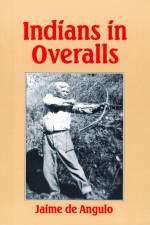
The best-known work by the eccentric anthropologist Jaime deAngulo, Indians in Overalls is a fascinating account of his first linguistic field trip - in 1921 - to the Achumawi tribe of northeastern California. The Pit River people had lived in the barren high country for thousands of years and, despite the harsh climate and difficult living conditions, they had developed an extraordinarily complex language and a rich mythology. As he traveled with the tribe and learned the spoken language, he observed gambling games and shamanistic practices, and he collected some of the marvelous stories told around the fire in the winter lodges. Of all the people he worked with, he felt closest to the Achumawi, among whom he discovered "the spirit of wonder, the recognition of life as power ...".
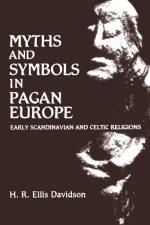
Most people know of Valhalla, the World-Tree and the gods of Norse mythology, or the strange hunts and voyages of the ancient lrish tales. Yet few people realise the significance of the similarities and contrasts between the religions of the pre-Christian people of north-western Europe.The Celts and Germans and Scandinavians had much in common in their religious practices and beliefs, and this is the first serious attempt that has been made to compare them. There are striking resemblances in their ideas about battle-goddesses and protective spirits, holy places, sacrificial rituals, divination and ideas about the Other World; and Myths and Symbols in Pagan Europe poses questions like: do such parallels go back to early times or are they owing to late Viking contact?Hilda Ellis Davidson has worked for many years on pre-Christian Scandinavian and Germanic religion and now compares them with the Celts from the background of previous studies, using evidence from archaeology, iconography, later literature and folklore, in a search for basic patterns which will add to our knowledge of the early peoples in Europe.Aimed at teachers and libraries but also accessible to students of history, religion and Celtic, Norse and German languages and cultures.
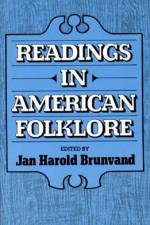
The distinguished folklorist Jan Harold Brunvand has selected 26 essays, arranged in four sections of increasing sophistication and difficulty, to introduce the beginning student to the best in modern folklore scholarship. As he writes in the Preface:These articles were chosen to illustrate a variety of approaches and folklore genres; they are rich in actual examples of folk materials and are above all well written and thought-provoking. Many are definitive studies, others appeared only recently.The essays include the work of prominent folklorists as well as several student research papers. All provide practical models for student research and writing, and the editor also gives many useful suggestions for student projects in his introductions.The articles are reprinted in full, including the original illustrations; the editor provides a short introduction to each selection as well as additional footnotes to explain unfamiliar terms and allusions to the student.
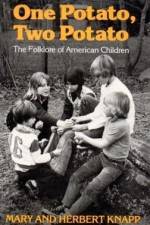
The purpose of this book is to show how children use their traditional lore to cope with the stresses of their lives and to learn what it means to be a member of a human society. The subjects' ages ranged from grade-school children through college freshman, located in forty-three states, the Virgin Islands, the Canal Zone, and American military bases abroad. The materials in this collection were drawn from a random sample.
Stretching back many centuries to its origins in India, the Gypsy oral tradition has accumulated a vast, diverse treasury of folktales. The eighty tales in this volume are gathered from thirty-one different countries. Each tale has a headnote elucidating the tale's background. Index; photographs.
Practical guide addresses issues of faith for battered women?an invaluable resource for victims of domestic violence and the crisis centers that counsel them.
A retelling of the Seneca creation story and prophesies for the future.
In the tradition of The Power of Myth, a conversation with Joseph Campbell that distills the mature wisdom and eclectic spiritual thinking of the world-renowned scholar and mythologist.
Almost three centuries have passed since the oldest manuscript of "The Thousand and One Nights" arrived in Europe. Since then, the "Nights" have occupied the minds of scholars world-wide, in particular the questions of origin, composition, language and literary form. In this book, Muhsin Mahdi, whose critical edition of the text brought so much praise, explores the complex literary history of the "Nights," bringing to fruition the search for the archetype that constituted the core of the surviving editions, and treating the fascinating story of the growth of the collection of stories that we now know as "The Thousand and One Nights,"
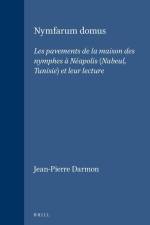
"Naeapolis-Nymfarum domus": fold. leaf in pocket.
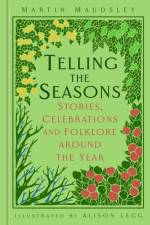
A month-by-month treasury of stories and traditions that bring to life the changing seasons and celebrate the turning year Telling the Seasons takes us on a journey through the twelve months of the year with stories, customs and celebrations. Drawing on the changing patterns of nature and the rich tapestry of folklore from the British Isles, it is a colorful guide into how and why we continue to celebrate the seasons.Here are magical myths of the sun and moon, earthy tales of walking stones and talking trees and lively legends of the spirits of each season. Original drawings, sayings, songs, recipes and rhymes, combine into a 'spell-book' of the seasons. Martin Maudsley tells tales around the year to children and adults, specializing in stories of the natural world and local landscapes. He can be found leading seasonal celebrations from firelit winter wassails to bright May Day mornings in rural Dorset where he lives.
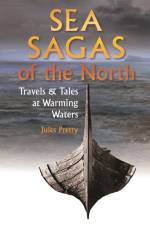
There are shadows on the warming, northern seas. Long ago, refugees fled Doggerland when seas encroached. Now rising seas threaten the low-lying shores once again.Sea Sagas of the North interweaves prose chapters and alliterative sagas. Each chapter tells of travels across shores, seas and islands. These are heroic crossings in warming waters. Each saga tells of tales and times from across the ages. Icelanders ask, "How do we say goodbye to a glacier?" This is the territory of sagas, the Norse and Anglo-Saxon gods of old, and the mythic era of Viking expansion by clinkered longships. It was when dragons protected people from themselves by hiding gold and silver hoards.These crossing tales and sagas begin at elemental wilds of north-west Iceland. They take in the Lofoten Isles of Norway, Sjæland and the Øresund in Denmark, cross the sea to the eastern shore of England, and travel to the north lands of deepwater ports, inland abbeys and the holy shore of Lindisfarne, and then to the Atlantic isles of Shetland and St Kilda, and wind-torn fragments of the Faroes, completing the circle back at Iceland's fire and ice.The book reaches its conclusion with the saga of the Drowning of Doggerland and how the once-dry steppe was flooded by the warming seas, making the people of the plains refugees. The book finishes as Ragnarök looms. What can be done to avoid more fire and flame? These are times when new stories will be needed.Heroes are a central feature of the Sagas; heroes face enemies and evil, the fierce sea and storm, the changing climate, cruel kings concerned with only their own survival, invaders seeking only money, planners plotting destruction of the fishing villages, ship and fleet owners exploiting labor and preventing safety investments, and financiers lending on the paper fish.The heroes stride: women and men confront indifference and evil. We hear of people who consider themselves to be heroes--Vortigern the King; Æthelred the Ill-advised; Olaf the Norse King; Kör the Wicked; Hrolleif the Horrible and his son Slídr; Wulfstan the Archbishop; and numerous ship owners.So, we hear of shaman Sky-Ryder at the flooding Doggerland; Queen Erce of the coast; Hildr the Drover and abbess of Whitby monastery; and Herne the Hunter King. In sagas of sail, we hear of Skaði, the girl with magic and healing powers; Grim the longship leader; Sigi the slave singer; Ingimund the generous; and Byrthnoð the bold Earl. In the Sagas of fish, we hear tell of Ólíni the nurse; Alf the apprentice boy and later Mate; fisher Ned and cobbler Waxy Jack; Magnus the goði farmer; the slave boy An; and Freddie the deckie learner. There is also Unni the island girl and rescuer; Skipper Jack the last bargeman; þordur the Life-Saver; and Gibbie the whaler. We hear, too, of Lily and Rita and other women activists of Hull, as well as Mary the first female mayor.Also included are a glossary of Norse Gods, a timeline, brief notes on walks connected with each chapter, stories, chapter notes, and a bibliography. The book is illustrated with monochrome images by the author, and maps by Chris Pretty to depict the territories of tales and stories, as well as a map of the whole region and regional maps for each chapter.
Abonner på vårt nyhetsbrev og få rabatter og inspirasjon til din neste leseopplevelse.
Ved å abonnere godtar du vår personvernerklæring.