








Gjør som tusenvis av andre bokelskere
Abonner på vårt nyhetsbrev og få rabatter og inspirasjon til din neste leseopplevelse.
Ved å abonnere godtar du vår personvernerklæring.Du kan når som helst melde deg av våre nyhetsbrev.

Folklore, People and Place is a contribution towards better understanding the complex interconnectivity of folklore, people and place, across a range of different cultural and geographical contexts.
"A collection of folk tales, myths and legends from many cultures about death, dying and what might come after."--Provided by publisher.
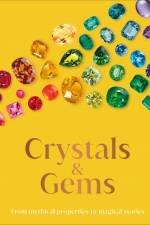
Discover the history of precious, semi-precious, and organic gemstones, their scientific properties, their mythical powers, and their traditional uses. Humans have been beguiled and fascinated by gemstones and crystals since prehistory, and made use of them for everything from currency and ceremonial decoration to tokens of love or power. But why have some been considered more significant than others - rare or otherwise? Learn all about the key characteristics of precious and semi-precious stones, and discover the science behind some of their more unusual and mysterious properties, and the various ways in which they have taken on powerful symbolic meanings. How did the Vikings use iolite to help them steer their ships, for example? Why did the Ancient Greeks and Romans believe that sardonyx could protect them in battle?Dive deep into the pages of this curated crystal book to discover:- A quirky and compelling angle on the subject of crystals and gems - combining science with culture and history. - Definitions for the key properties of precious, semi-precious, and organic stones, clearly and simply. - Explores their traditional uses in healing and manifesting, and the powers they have been ascribed through the centuries. Encounter the fascinating stories of some of the most famous or celebrated gemstones and jewels along the way - from a turquoise-studded pectoral worn during Aztec ceremonies, to the diamond necklace that helped to bring about the French Revolution - in this glorious celebration of precious, semi-precious, and organic stones in all their beauty and variety.
Hans Christian Andersen: Bilderbuch ohne Bilder. Was mir der Mond erzählte»Billedbog uden Billeder«, Erstdruck: Kopenhagen, C. A. Reitzel, 1840 mit 20 Erzählungen. Hier in der Übersetzung von Edmund Zoller, erschienen 1872 als Band 381 von Reclams Universal-Bibliothek, Leipzig.Neuausgabe.Herausgegeben von Karl-Maria Guth.Berlin 2022.Der Text dieser Ausgabe wurde behutsam an die neue deutsche Rechtschreibung angepasst.Umschlaggestaltung von Thomas Schultz-Overhage unter Verwendung des Bildes: Christian Albrecht Jensen, Porträt des Hans Christian Andersen, 1836.Gesetzt aus der Minion Pro, 11 pt.Henricus - Edition Deutsche Klassik GmbH
Abonner på vårt nyhetsbrev og få rabatter og inspirasjon til din neste leseopplevelse.
Ved å abonnere godtar du vår personvernerklæring.