















Gjør som tusenvis av andre bokelskere
Abonner på vårt nyhetsbrev og få rabatter og inspirasjon til din neste leseopplevelse.
Ved å abonnere godtar du vår personvernerklæring.Du kan når som helst melde deg av våre nyhetsbrev.

Ariadne Hui thrives on routine. So what if everything in her life is planned down to the minute: that's the way she likes it. If she's going to make partner in Toronto's most prestigious law firm, she needs to stay focused at all times.But when she comes home after yet another soul-sucking day to find an unfamiliar, gorgeous man camped out in her living room, focus is the last thing on her mind. Especially when her roommate explains this is Choi Jihoon, her cousin freshly arrived from Seoul to mend a broken heart. He just needs a few weeks to rest and heal; Ari will barely even know he's there. (Yeah, right.)Jihoon is kindness and chaos personified, and it isn't long before she's falling, hard. But when one wrong step leads to a shocking truth, Ari finds herself thrust onto the world stage: not as the competent, steely lawyer she's fought so hard to become, but as the mystery woman on the arm of a man the entire world claims to know. Now with her heart, her future, and her sense of self on the line, Ari will have to cut through all the pretty lies to find the truth of her relationship...and discover the Ariadne Hui she's finally ready to be.
'A true artist. A brilliant writer. An original thinker' Chimamanda Ngozi AdichieYorùbá Boy Running charts Samuel Ajayi Crowther's miraculous journey from slave to liberator, boy to man, running to resisting'Run, Àjàyí, run!'The day the Malian slave traders invaded the Nigerian town of Òsogùn, thirteen-year-old Àjàyí's life was split in two.Before, there was his childhood, surrounded by friends and family, watched over by the ancient Yorùbá gods of forest and water, earth and sky. After: capture, slavery - and release, into the service of a new god, his own culture left far behind. So Àjàyí becomes Samuel Crowther - missionary, linguist, minister - and abolitionist: driven to negotiate against his own people to end the miserable trade in human beings which destroyed his family.Drawing on the prolific writings of Samuel Ajayi Crowther, Biyi Bándélé has created a many-voiced, kaleidoscopic portrait of an extraordinary man. From the heart-stopping drama of Àjàyí's last day of freedom to the farcical intrigue of the Òsogùn court; from a meeting with Queen Victoria; to his consecration as the first African Bishop of the Anglican Church, his journey, like all great odysseys, circles back to where he began. By turns witty, moving and quietly political, Biyi Bándélé's reimagining of Crowther's life is a brilliant tour de force.WITH AN INTRODUCTION FROM WOLE SOYINKA'Biyi Bándélé had a prolifically talented and creative mind, shown in everything he touched. Yorùbá Boy Running is no exception' Chiwitel EjioforCover artwork Chris Ofili, Blind Leading Blind, 2005 (c) The artist.
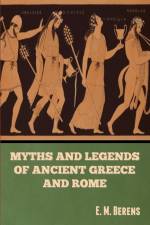
PREFACEThe want of an interesting work on Greek and Roman mythology, suitable for the requirements of both boys and girls, has long been recognized by the principals of our advanced schools. The study of the classics themselves, even where the attainments of the pupil have rendered this feasible, has not been found altogether successful in giving to the student a clear and succinct idea of the religious beliefs of the ancients, and it has been suggested that a work which would so deal with the subject as to render it at once interesting and instructive would be hailed as a valuable introduction to the study of classic authors, and would be found to assist materially the labours of both master and pupil.In endeavouring to supply this want I have sought to place before the reader a lifelike picture of the deities of classical times as they were conceived and worshipped by the ancients themselves, and thereby to awaken in the minds of young students a desire to become more intimately acquainted with the noble productions of classical antiquity.It has been my aim to render the Legends, which form the second portion of the work, a picture, as it were, of old Greek life; its customs, its superstitions, and its princely hospitalities, for which reason they are given at somewhat greater length than is usual in works of the kind.In a chapter devoted to the purpose some interesting particulars have been collected respecting the public worship of the ancient Greeks and Romans (more especially of the former), to which is subjoined an account of their principal festivals.I may add that no pains have been spared in order that, without passing over details the omission of which would have marred the completeness of the work, not a single passage should be found which could possibly offend the most scrupulous delicacy; and also that I have purposely treated the subject with that reverence which I consider due to every religious system, however erroneous.It is hardly necessary to dwell upon the importance of the study of Mythology: our poems, our novels, and even our daily journals teem with classical allusions; nor can a visit to our art galleries and museums be fully enjoyed without something more than a mere superficial knowledge of a subject which has in all ages inspired painters, sculptors, and poets. It therefore only remains for me to express a hope that my little work may prove useful, not only to teachers and scholars, but also to a large class of general readers, who, in whiling away a leisure hour, may derive some pleasure and profit from its perusal.E. M. BERENS
PREFACEThe want of an interesting work on Greek and Roman mythology, suitable for the requirements of both boys and girls, has long been recognized by the principals of our advanced schools. The study of the classics themselves, even where the attainments of the pupil have rendered this feasible, has not been found altogether successful in giving to the student a clear and succinct idea of the religious beliefs of the ancients, and it has been suggested that a work which would so deal with the subject as to render it at once interesting and instructive would be hailed as a valuable introduction to the study of classic authors, and would be found to assist materially the labours of both master and pupil.In endeavouring to supply this want I have sought to place before the reader a lifelike picture of the deities of classical times as they were conceived and worshipped by the ancients themselves, and thereby to awaken in the minds of young students a desire to become more intimately acquainted with the noble productions of classical antiquity.It has been my aim to render the Legends, which form the second portion of the work, a picture, as it were, of old Greek life; its customs, its superstitions, and its princely hospitalities, for which reason they are given at somewhat greater length than is usual in works of the kind.In a chapter devoted to the purpose some interesting particulars have been collected respecting the public worship of the ancient Greeks and Romans (more especially of the former), to which is subjoined an account of their principal festivals.I may add that no pains have been spared in order that, without passing over details the omission of which would have marred the completeness of the work, not a single passage should be found which could possibly offend the most scrupulous delicacy; and also that I have purposely treated the subject with that reverence which I consider due to every religious system, however erroneous.It is hardly necessary to dwell upon the importance of the study of Mythology: our poems, our novels, and even our daily journals teem with classical allusions; nor can a visit to our art galleries and museums be fully enjoyed without something more than a mere superficial knowledge of a subject which has in all ages inspired painters, sculptors, and poets. It therefore only remains for me to express a hope that my little work may prove useful, not only to teachers and scholars, but also to a large class of general readers, who, in whiling away a leisure hour, may derive some pleasure and profit from its perusal.E. M. BERENS
What if everything you were taught about your lineage was a lie?What if the mythical Sirens were real and you were related to them, or were one of them?For 16-year-old Selena, that improbable, mythical world becomes her destiny.
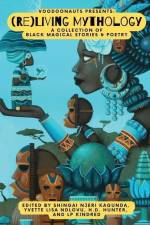
From the Voodoonauts Afrofuturist collective for Black science fiction and fantasy writers.When a desperately mundane woman borrows clothing from her mother, a soucouyant goes searching for her skin. A Nigerian parent climbs mountains to heaven to steal a name and glorious destiny for their newborn. A master tailor gets her skills tested when a spectral customer enters her workshop and she can't say no. A preacher casts dark magic from his pulpit when the Word ain't enough to run his church. These tales and more populate Voodoonauts Present: (Re)Living Mythology. Called from the imaginations of its inaugural fellows and a handful of solicited authors including Christopher Caldwell, TL Huchu, and Eden Royce, Voodoonauts curates a coterie of short fiction and poetry that paints across the breadth of magic and Blackness. Co-editors/founders Shingai Njeri Kagunda, Yvette Lisa Ndlovu, Hugh "HD" Hunter, and LP Kindred ask Black Writers to interrogate their mythologies, folklores, superstition, and wives' tales to create the book within your hands.
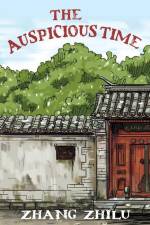
The Auspicious Timeis a novel focusing on life in Beijing before and after the founding of New China, observing the earth-shaking changes around them from the perspective of a child named Auspicious. It is a children's novel with deep Beijing charm and Chinese feelings. With restrained and peaceful brushstrokes and poetic and tender narratives, the childhood stories in the old Beijing hutongs and courtyards are like live dramas, which are presented to contemporary children through the dust of history.
Abonner på vårt nyhetsbrev og få rabatter og inspirasjon til din neste leseopplevelse.
Ved å abonnere godtar du vår personvernerklæring.