









Gjør som tusenvis av andre bokelskere
Abonner på vårt nyhetsbrev og få rabatter og inspirasjon til din neste leseopplevelse.
Ved å abonnere godtar du vår personvernerklæring.Du kan når som helst melde deg av våre nyhetsbrev.

As one of the most lauded fishing destinations in the United States, boasting world records on varieties of fish, Florida has proven irresistible to the world's top anglers for more than 100 years.Florida's Fishing Legends and Pioneers systematically chronicles the exploits of the most influential men and women of the sport throughout the state. Chosen by Doug Kelly for their contributions to the techniques, equipment, and strategies of fishing--and often radiating colorful personalities--these "e;hall of fame"e; legends and pioneers have helped preserve the Sunshine State as a top fishing destination that currently draws nearly five million anglers to its bountiful waters each year.Interviews with such current angling luminaries as Lefty Kreh, Stu Apte, Mark Sosin, Joan Salvato Wulff, Roland Martin, Guy Harvey, Al Pflueger Jr., and a number of other renowned figures are found throughout the book. Organized chronologically, this intelligent and captivating book provides readers a greater and more accurate perspective on how recreational fishing in Florida evolved over more than a century. It also features rare historical information and photographs from past decades.Florida's Fishing Legends and Pioneers is for everyone, from novice to master, who loves fishing!
A biodiversity hotspot, Florida is home to many ecosystems and species that evolved in the presence of frequent fire. In this book, Reed Noss discusses the essential role of fire in generating biodiversity and offers best practices for using fire to keep the region's ecosystems healthy and resilient. Reviewing several lines of evidence, Noss shows that fire has been important to the southeastern Coastal Plain for tens of millions of years. He explains how the region's natural fire regimes are connected to its climate, high rate of lightning strikes, physical chemistry, and vegetation. But urbanization and active fire suppression have reduced the frequency and extent of fires. Noss suggests the practice of controlled burning can and should be improved to protect fire-dependent species and natural communities from decline and extinction. Noss argues that fire managers should attempt to simulate natural fire regimes when conducting controlled burns. Based on what the species of the Southeast likely experienced during their evolutionary histories, he makes recommendations about pyrodiversity, how often and in what seasons to burn, the optimal heterogeneity of burns, mechanical treatments such as cutting and roller-chopping, and the proper use of fuel breaks. In doing so, Noss is the first to apply the new discipline of evolutionary fire ecology to a specific region. This book is a fascinating history of fire ecology in Florida, an enlightening look at why fire matters to the region, and a necessary resource for conservationists and fire managers in the state and elsewhere.
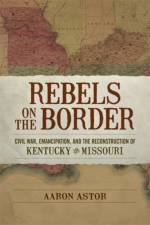
Offers a remarkably compelling and significant study of the Civil War South's highly contested and bloodiest border states: Kentucky and Missouri. By far the most complex examination to date, the book sharply focuses on the "borderland" between the free North and the Confederate South.
Abonner på vårt nyhetsbrev og få rabatter og inspirasjon til din neste leseopplevelse.
Ved å abonnere godtar du vår personvernerklæring.