



















Gjør som tusenvis av andre bokelskere
Abonner på vårt nyhetsbrev og få rabatter og inspirasjon til din neste leseopplevelse.
Ved å abonnere godtar du vår personvernerklæring.Du kan når som helst melde deg av våre nyhetsbrev.

There is a myth that has been spread around America since the 1960s that goes something like this: "The Democrats were all a bunch of conservatives, and the Republicans were all a bunch of liberals, up until the Civil Rights Act of 1964. Then, overnight, everybody switched their political party so that the conservatives were now Republicans and the liberals were now Democrats. Therefore, all the bad stuff in the South that happened in American history was done by conservatives, who are today's Republicans." There are two kinds of people in this debate: (1) the liberal Democrats who want to wash-away the sins of their political party's history and are more than willing to keep that myth alive; and (2) the scholars, historians, conservatives, Republicans, and independents who know better. Eleven out of sixteen Southern States formed a democratic confederacy for a short time when they militarily opposed our republican form of government (including our constitutional Electoral College). The history of all these Southern States is not so convenient that one can simply say, "the conservatives were always the bad guys." Another part of this myth is that "all the racists were conservatives from the South," which is still used as propaganda in today's liberal politics. The truth of the matter is that the Grand Old (Republican) Party was always the party of conservative politics, abolition, de-segregation, human and civil rights (for all citizens), individual and corporate freedoms, and free (anti-monopolist) markets going back to its first iteration with Thomas Jefferson and James Madison and up to the present. The liberal politics of the Federalists and the Democrats had been a part of Northern and Southern politics since the beginning of our nation, with the goal of democratizing the United States for the sake of a majority rule. In terms of magical overnight party-swapping, that never happened in American history. There were two periods before 1964 when the South voted mostly for the Republican Party at the federal level. In State politics, the South as a whole would be a single-party apparatus until long after 1964. The gradual transition of the South (whether we are talking about the whole South, the "Solid South," or the "Deep South") toward Republican Party politics that we see today did not take full effect until the 21st century, and it had absolutely nothing to do with race politics. Part 1 of "When the South Switched Parties" delves into the early history of the United States of America that leads up to World War I. That history alone dispels the whole "party-switching" myth that is propagated today. This part is sub-titled "Regressing Forward" as a contrast to the "conservative progressivism" that the Grand Old Party (GOP) had been engaging in despite the Democratic Party politics of the North and South. Part 2 of "When the South Switched Parties" is sub-titled "Sixty-Four" and focuses on the takeover of liberal and the Democratic Party politics in America that was seeded between 1912-1920 and that then became a juggernaut for sixty-four years straight into the 1990s. After reading both Part 1 and Part 2, you should have a full sense of factual American history that completely dispels the propaganda/myth that "conservatives are the bad guys, going back to the pre-1964 Democratic Party days." Kevin R. Haughn has authored several books that are available in multiple formats on Amazon. Your support for his works is very much appreciated.
A little known story of the heroic efforts of the small village of Solomon's Island to waylay the British fleet after they burned the public buildings in Washington, D.C. during the War of 1812. This historical fiction accurately explains the events of the invasion of Washington and the bombardment of Fort McHenry.
This work has been selected by scholars as being culturally important, and is part of the knowledge base of civilization as we know it.This work is in the "public domain in the United States of America, and possibly other nations. Within the United States, you may freely copy and distribute this work, as no entity (individual or corporate) has a copyright on the body of the work.Scholars believe, and we concur, that this work is important enough to be preserved, reproduced, and made generally available to the public. We appreciate your support of the preservation process, and thank you for being an important part of keeping this knowledge alive and relevant.
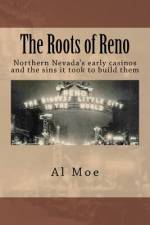
Reno was truly Hell on Wheels in the 1920's. The rest of the nation considered the town Sodom and Gomorra, but that's only half the truth. Reno offered everything in the way of adult entertainment, from speakeasy's and houses of ill-repute, to open gaming - legal or not. And it took plenty of sins by the founding fathers to make Reno "The biggest little city in the world."When the gold-veins of Tonopah and Goldfield ran out, the casino owners moved to Reno, where even greater riches awaited. Together, a group of four men (Nick Abelman, Bill Graham, Jim McKay, George Wingfield) took over Reno's casinos and held sway over the town for the next three decades. Together they administered policy, collected juice, ran politicians, and owned the red-light district and most of the town's casinos.When that wasn't enough they took over the banks and laundered money for crooks like "Pretty Boy" Floyd, Alvin Karpis, and Ma Barker's boys, and offered safety to "Baby Face" Nelson. It was a good gig.The Reno Four dictated policy all over Northern Nevada, taking special care of Reno and Lake Tahoe casinos up until the late 1950's. Their influence made Reno before Bill Harrah or "Pappy" Smith ever arrived, needing an introduction and permission to build their own casinos, Harold's Club and Harrah's.This is an expansion, an unabridged version of "Mob City - Reno" with much to tell about Nevada's gold mining towns.
Before it was an official county, men came to Bullitt County seeking the salt licks found there. The buffalo and other large animals showed the way, leaving broken paths through the wilderness that led to the salt licks like the spokes of a wheel to its hub. Salt was a necessity for preserving the game they killed, and for other uses as well. Following these seekers of salt were others seeking homesteads, or lands for investment. The county was formed in 1797 with its county seat at Shepherdsville on the banks of Salt River. In this book we take you from those early times though the rise and demise of an iron industry, the opening of new towns, following its history that included a mineral water spa, and the coming of the Louisville & Nashville Railroad. We examine the county's politics, and share its struggles during the Civil War. The book also includes an abstracted transcription of one of the County Court order books, as well as a full name index to assist in locating people.
Published in September 2010 and revised in 2013, Historian Thomas D. Perry tells the history of the town he was born in through two hundred images. Chapters on Andy Griffith, Donna Fargo, "Dinky" Railroad, and the many people of Mount Airy along with chapters on granite and the author's family give a snapshot view of the town so associated with Mayberry.
Even the smallest of villages can have fascinating stories to tell about its founding, growth, and development. For a community that saw its first settlers almost three hundred years ago, much has occurred in Ilion that offers readers an interesting and diverse historical buffet of events, places, and people. In the first volume of Our Town, the contents were spread over 32 chapters. Presented chronologically, the topics chosen were intended to highlight important aspects of the village's past. But by no means was the coverage exhaustive. The second volume, therefore, picks up the narrative and represents a continued look at additional aspects of the village's history. In reading Our Town, Volume II, there is much in this communal biography of Ilion current residents can take justifiable pride in celebrating. Correspondingly, the heightened awareness gained by their fellow New Yorkers regarding the contributions that the town made to the Empire State and the country will serve to enhance the community's standing and esteem in their eyes.
This work has been selected by scholars as being culturally important, and is part of the knowledge base of civilization as we know it.This work is in the "public domain in the United States of America, and possibly other nations. Within the United States, you may freely copy and distribute this work, as no entity (individual or corporate) has a copyright on the body of the work.Scholars believe, and we concur, that this work is important enough to be preserved, reproduced, and made generally available to the public. We appreciate your support of the preservation process, and thank you for being an important part of keeping this knowledge alive and relevant.
The Memoirs of Mary Maverick is a rare source of information about the history of Texas during the days of American colonization and the Republic of Texas. Replete with details and encounters with some of the biggest names in Texas history, Mrs. Mavericks's stories reflect the personal tales of sacrifice, fear, joy, and indomitable spirit that characterized the pioneer spirit of Texas settlers. Alacrity Press is proud to make this book available to a new generation of reader's interested in the true, unfiltered history of Texas.
Due in part to centuries of societal transformations and political upheavals, Texas bred tenacious men and women with passionate opinions. Some claimed the Lone Star State as a birthright, others only briefly made it their home, but all were inspired by its vigorous disposition. As such, they communicated insightful positions about war, immigration, tariffs, education, taxes, foreign policy, race relations, and more. Embedded within their antiquated statements, we find a hint of contemporary themes and perhaps some answers to our modern issues. This is the collection of one hundred ten statements from former Texans.
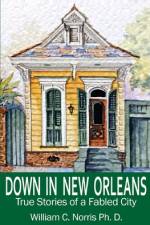
DOWN IN NEW ORLEANS: True Stories of a Fabled City by William (Bill) C. Norris, Jr. are narratives of the people, places, and events that created the city on the Mississippi River with its character and soul. Over three hundred years since French adventurers arrived in the Lower Mississippi Valley, followed by Spanish colonists and later hordes of Americans, this book reveals their personalities, motivations, agendas, emotions, temperaments, and experiences. Surprises and intrigue populate the pages. The struggles of French, Spanish, Native Americans, persons of African descent, refugees from Acadia, native-born Creoles, and Americans are part of the mystique You will meet people you have known and many you have never met. Widely known are French adventurers Iberville and his brother, Bienville, who established the French Colony. Many know of Spanish Louisiana Governor Galvez who drove the English out of West Florida. Widely known is the Louisiana Purchase. But few know Madeline Hachard, a young French woman with an order of Ursuline nuns, who wrote in 1727 of her Louisiana experiences and observations to her father in Rouen, France. He published her letters, becoming the first published book about New Orleans. Few have heard of Juan St. Malo, a runaway slave who led two villages of runaways for several years, as Africans struggled to establish free communities in Louisiana. Obscure is the U.S. military commander of the Louisiana Territory appointed by Pres. Thomas Jefferson, who was known as "Agent 13" by Spanish authorities. Archival research has confirmed he was on the Spanish dole as a spy. Down in New Orleans introduces the reader to special people who made the city unique. And there was the French/African man known as a free man of color who left San Domingue amid the slave revolt there, seeking a new life in New Orleans. He first launched a shoe business, then turning that over to his sister, launched into real estate. Thomy Lafon became one of the wealthy men of the city and a recognized philanthropist. On my French Quarter tours a crowd pleaser is story of Michaela Almonester Pontalba, an indomitable woman who faced peril and persisted, leaving the city one of its greatest landmarks. Meet these people and others who are the soul of the city. These are the stories that define the mystique of New Orleans.
There are scary places everywhere, but most people don't want to know about them.They avoid them.They pretend they don't exist.They act brave.But we know they're there.This book is for those brave souls who not only that scary places surround us, but venture further by seeking them out.If you'd like to know more about South Carolina's scary places, plan on visiting them, or want to make a road trip you might not return from, then this book is for you. About the editor-Dr. David Powers is an adventurer, philosopher, and pioneer and lives a life of constant experimentation. His life's compass is "to seek out adventure in everything he does by being intentional, determined, and unstoppable and by energizing and outfitting others to embark on their own adventures". He fulfills his purpose through speaking and books and is a best-selling author in psychology and education. He is a decorated veteran of the Marine Corps and a founding member of the U.S. Department of Homeland Security. He is married and the proud father of four feral boys and one princess that he and his wife homeschool. His mission in life is to find the magical best mug of coffee in the world.
This book is about Frankford High School, a Philadelphia school that has educated students since 1910. It attempts to follow the lives of 204 students over the years who attended the school and went on to serve in the Armed Forces, eventually giving their lives in service to the country.Each student made the ultimate sacrifice. This book begins with a brief history of the founding of Frankford High School. You are introduced to "The Heroes of Frankford High School"--the 204 brave individuals who gave their life in military service. There is a profile of each of their lives--where they were born, what their family was like, their education and career path prior to military service, and their time in service until their death. The book includes many pictures and most are photographs from the Frankford High School yearbook. Some others came from family members and are used with their approval. The profiles vary greatly in length. Some of the individuals were well known in their time and much material is available about them. Others were very difficult to research and only the bare minimum of information could be found. But each equally important in their country's service. Let's not forget that these men and one woman, were parents, children, brothers, sisters, aunts, uncles and friends who were mourned in their time and should always be remembered and never, ever forgotten. It is the very least that we can do.
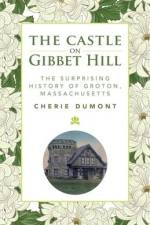
William A. Bancroft built what is now known as the Castle-and set the scene for 100 years of drama. This is the surprising story of the Castle onGibbet Hill in Groton, MA-and the hundreds of lives lived out here.
'More Montana Quick Facts' is a complete 104 page collection of original illustrations telling fantastical but accurate stories about Montana. It's a book filled with fanciful one-sentence facts paired with drawings that will surprise and delight readers of all ages.
This is a new reprint of the 1908 edition. In it, the author discusses six important Ohio hilltop fortification sites: Spruce Hill (Adams County), Fort Hill (Highland County), Gleford Fort (Perry County), Miami Fort (Hamilton County), Fortified Hill (Butler County), and Fort Ancient (Warren County). It is illustrated with photographs and diagrams.
A Story of the City: Poems Occasional and Otherwise When Ed Madden was named poet laureate for the City of Columbia, South Carolina, in 2015, he became the first city laureate in the state of South Carolina. During his two terms as city laureate, Madden documented the life and history of the city. He engaged the community by making poetry a public art, posting poems on city buses, sidewalks, movie screens, coffee sleeves, restaurant menus, and faux parking tickets distributed in downtown Columbia one bright and sunny April Fool's Day. While these poems are about a specific city, they ring true for almost any Southern city-maybe any city in America-with its ceremonial occasions and its natural disasters, its misleading public monuments and its protest marches, and its inevitably complex histories. His post officially began with a commemoration of the historic burning of Columbia during the American Civil War and ended with the selection of a new city flag. This collection spans either years of ceremony and controversy, an eclipse and a pandemic, welcomes and elegies, history and hope.
Abonner på vårt nyhetsbrev og få rabatter og inspirasjon til din neste leseopplevelse.
Ved å abonnere godtar du vår personvernerklæring.