

Gjør som tusenvis av andre bokelskere
Abonner på vårt nyhetsbrev og få rabatter og inspirasjon til din neste leseopplevelse.
Ved å abonnere godtar du vår personvernerklæring.Du kan når som helst melde deg av våre nyhetsbrev.

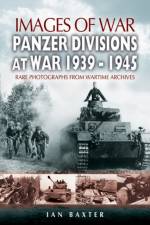
From the beginning in 1935, this book describes the different elements that went into the Panzer-Divisions. It is a visual account with 270 black-and-white photographs. It covers the main theatres of war (Poland, France, North Africa, Eastern Front and Normandy to Germany). It is complemented with captions.
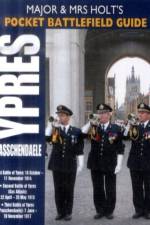
Covering the important WW1 Battles of Ypres, including the notorious Passchendaele, this guidebook takes readers on a historic trip through some of the well-known and most important sites of the area.
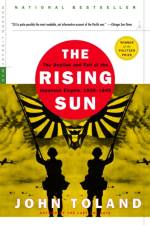
"[The Rising Sun] is quite possibly the most readable, yet informative account of the Pacific war."-Chicago Sun-TimesThis Pulitzer Prize-winning history of World War II chronicles the dramatic rise and fall of the Japanese empire, from the invasion of Manchuria and China to the atomic bombing of Hiroshima and Nagasaki. Told from the Japanese perspective, The Rising Sun is, in the author's words, "a factual saga of people caught up in the flood of the most overwhelming war of mankind, told as it happened-muddled, ennobling, disgraceful, frustrating, full of paradox." In weaving together the historical facts and human drama leading up to and culminating in the war in the Pacific, Toland crafts a riveting and unbiased narrative history. In his Foreword, Toland says that if we are to draw any conclusion from The Rising Sun, it is "that there are no simple lessons in history, that it is human nature that repeats itself, not history.""Unbelievably rich . . . readable and exciting . . .The best parts of [Toland's] book are not the battle scenes but the intimate view he gives of the highest reaches of Tokyo politics."-Newsweek
Ray Mears shows how the success of a vital World War II mission depended on survival skills.
The classic account of the war on the Eastern Front between the Russians and the Germans - the greatest clash of arms the world has ever seen - written by the eminent military historian, diarist and politician Alan Clark.
Detailed book explores the landing gear systems of World War II German combat aircraft.
The most authoritative social, cultural and narrative history of the French Revolution, and one of the great landmarks of modern history publishing.'Monumental...provocative and stylish, Simon Schama's account of the first few years of the great Revolution in France, and of the decades that led up to it, is thoughtful, informed and profoundly revisionist' Eugen Weber, The New York Times Book Review
Amid the catastrophes of the twentieth century, the Spanish Civil War continues to exert a particular fascination. The Spanish Civil War: A Very Short Introduction provides a powerfully-written explanation of the war's complex origins and course, and explores its impact on a personal and an international scale.
The Death of Yugoslavia is a survey of the pressures and events that contributed to the break-up of former Yugoslavia, considered from a historical rather than a political or sociological point of view.
A first hand account of the German U-boat battles of World War II, by one of the very few surviving commanders.
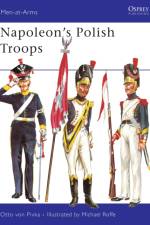
In 1795 the kingdom of Poland fell prey to her stronger neighbors, Russia, Prussia and Austria. Following the death of the king of Poland in 1798, his kingdom was divided among these three neighboring powers. France became increasingly involved, and protested at Poland''s treatment, offering refuge for Polish exiles. On October 11th, 1796, the Polish Legion was formed in the French army by General Dombrowski and Napoleon. This book covers the uniforms, dress, organization and equipment of the infantry, artillery, and cavalry of Napoleon''s Polish Troops. Among the cavalry units covered are the Chasseurs and Lancers. This title also provides a summary of the Polish divisions'' campaigns in Spain, Russia and within Poland itself.
Inspired by the trial of a bureaucrat who helped cause the Holocaust, this radical work on the banality of evil stunned the world with its exploration of a regime's moral blindness and one man's insistence that he be absolved all guilt because he was 'only following orders'.
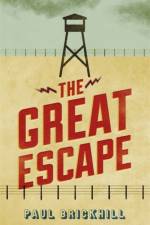
The famous story of mass escape from a WWII German PoW camp that inspired the classic film.
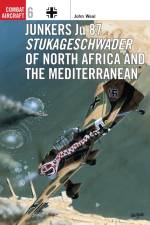
A detailed work on the Ju 87 Stuka dive-bomber. The terror-weapon of the German blitzkrieg on Western Europe, the Ju 87's reputation was hammered in the Battle of Britain but it regained its authority in many Mediterranean campaigns through the early 1940s, which are described here.
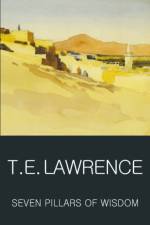
With an Introduction by Angus Calder.As Angus Calder states in his introduction to this edition, 'Seven Pillars of Wisdom is one of the major statements about the fighting experience of the First World War'. Lawrence's younger brothers, Frank and Will, had been killed on the Western Front in 1915. Seven Pillars of Wisdom, written between 1919 and 1926, tells of the vastly different campaign against the Turks in the Middle East - one which encompasses gross acts of cruelty and revenge and ends in a welter of stink and corpses in the disgusting 'hospital' in Damascus.Seven Pillars of Wisdom is no Boys Own Paper tale of Imperial triumph, but a complex work of high literary aspiration which stands in the tradition of Melville and Dostoevsky, and alongside the writings of Yeats, Eliot and Joyce.
Why did Stalin succeed Lenin?' Richard Popes, from Three Whys of the Russian Revolution. Arguably the most important event of the twentieth century, the Russian Revolution changed for ever the course of modern history.
This is a brutal story but, from the safety of fifty years distance in time it is an extremely compelling one. It is also an enduring lesson that a military unit, formed under an evil ideology, led by a social outcast and composed of vicious criminals, will sink to its lowest common denominator hate. The Dirlewanger Battalion, also known as Sonderkommando (special commando) Dirlewanger was perhaps the least understood, but at the same time the most notorious German SS anti-partisan unit in World War II. German propaganda correspondents and wartime photographers did not follow them in action. And for good reason. Wherever the Dirlewanger unit named for and led by Oskar Dirlewanger operated, corruption and rape formed an every-day part of life and indiscriminate slaughter, beatings and looting were rife. Formed as a battalion of convicted poachers in 1940, the unit operated in Poland until 1942, guarding Jews in forced labor camps and making life miserable for Poles in Lublin and Cracow. From there Dirlewanger spent two years combating partisans in central Russia, giving no quarter and expecting none in return, during vicious fighting against an elusive foe in the midst of inhospitable swamps and dismal forests. In 1944 Dirlewanger savaged Warsaw during the Polish Uprising, before moving to Slovakia to crush another rebellion there. The end of the war saw the unit, which was now a division in size, fighting for its life south of Berlin against the Soviet Army. Medieval in their outlook on war and certainly not indicative of many German military formations, this unit none-the-less remains a reflection of a segment of mankind gone mad in the inferno of World War II on the eastern front.
This final volume on the German Army of World War II details the units of the Wehrmacht that fought in the West, from the beaches of Sicily to the defence of the Reich. The text is supported by tables detailing rank insignia and unit organisation, and artwork showing uniforms and equipment.
The biography of Franz Stangl, commandant of the Treblinka extermination camp - a classic and utterly compelling study of evilOnly four men commanded Nazi extermination (as opposed to concentration) camps.
This work looks at the Focke-Wulf 190 and the aces who flew it. Nimble, speedy and well-armed, the FW190 was the scourge of the RAF and USAAF from the moment it appeared over the skies at Abbeville in August 1941.
The M4 Sherman tank was the mainstay of the Western allies between 1942 and 1945. This title examines developments such as the HVSS suspension. It uses rare archive material.
A classic autobiography by the best known Second World War Fleet Air Arm pilot. A story of real life adventure, action and heroism.
Presents a thematic history of the world from 1780 to the onset of the First World War which reveals that the world was far more 'globalised' at this time than is commonly thought. This book considers various themes of the nineteenth-century world, including the rise of the modern state, industrialization and liberalism.
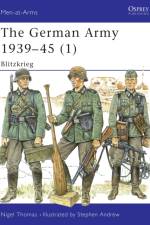
The first of a series of five books on the German army of World War II, this volume looks at their acheivements from 1935 to 1940, from pre-war campaigns in Spain and Austria to the Polish, Norwegian and French invasions. Blitzkrieg tactics, training and uniforms are all covered.
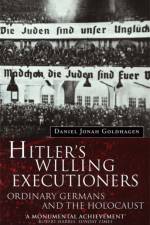
An exploration of German society and its ingrained anti-semitism that demands a fundamental revision of our thinking about the years 1933-1945. The author aims to show that the perpetrators of the Holocaust were ordinary Germans who were not compelled to kill, but did so willingly and zealously.
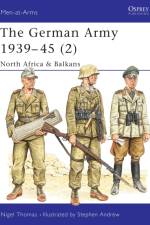
The second volume in a series of five books on the German army of World War II. It looks at the units that fought in North Africa and the Mediterranian with details of unit strengths, equipment and uniforms.
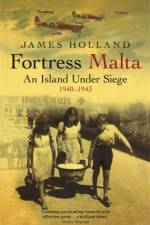
The extraordinary drama of Malta's WWII victory against impossible odds told through the eyes of the people who were there.
Abonner på vårt nyhetsbrev og få rabatter og inspirasjon til din neste leseopplevelse.
Ved å abonnere godtar du vår personvernerklæring.