




Gjør som tusenvis av andre bokelskere
Abonner på vårt nyhetsbrev og få rabatter og inspirasjon til din neste leseopplevelse.
Ved å abonnere godtar du vår personvernerklæring.Du kan når som helst melde deg av våre nyhetsbrev.

On the hellish battlefields of World War II Europe, Major Dick Winters led his Easy Company-the now-legendary Band of Brothers-from the confusion and chaos of the D-Day invasion to the final capture of Hitler's Eagle's Nest. Winters was a quiet, reluctant hero whose modesty and strength drew the admiration of not only his men, but millions worldwide. Now comes the story of his last years as witnessed and experienced by his good friend Cole C. Kingseed. Kingseed shares the formative experiences that made Winters such an effective leader. He addresses Winters's experiences and leadership during the war, his intense, unbreakable devotion to his men, his search for peace both without and within after the war, and how fame forced him to make adjustments to an international audience of well-wishers and admirers, even as he attempted to leave a lasting legacy before joining his fallen comrades. Following Winters's death on January 2, 2011, the outpouring of grief and adulation for one of this nation's preeminent leaders of character, courage, and competence showed just how much of an impact Dick Winters left on the world.INCLUDES PHOTOS
Former BBC correspondent's graphic personal account of National Service with the Suffolk Regiment in the 1950s based on the letters he wrote home to his family at the time.
Snow and Steel will be a huge reassessment of Hitler's last great throw of the dice: 'The Battle of the Bulge', the battle for the Ardennes 16 December 1944 to 25 January 1945.
To use a phrase from Shakespeare, castles are "stories in stones." They remained the architectural landmarks of 1,000 years of British history. They have also provided the setting for some of the most dramatic deeds in British history in war and political conflict. This well researched and vividly illustrated book explores the story of England's castles, featuring many of the most colorful examples, as well as a timeline, glossary, and list of castles.
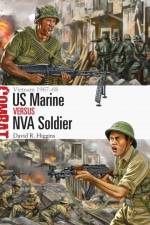
In 1967 - 68, the United States Marine Corps (USMC) was on the front line of the defence of South Vietnam's Quang Tri province, which was at the very heart of the Vietnam conflict. In this book, the author steps into the tropical terrain of Vietnam to assess the performance and experience of USMC and NVA forces in three savage battles.
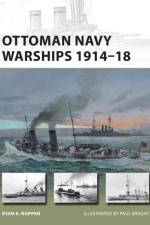
Presents an appraisal of the technical aspects and operations of the warships of the Ottoman Navy in World War I. Packed with technical specifications, revealing illustrations and exhaustive research, this book deals with the Aegean arms race.
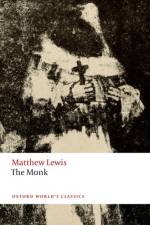
The Monk (1796) is a masterpiece of Gothic fiction and the first horror novel in English literature. It tells of the pious monk Ambrosio's descent into depravity, his passion leading to rape, blasphemy, black magic, incest, and murder. Its sensational story also reflects the terrors of the French Revolution.
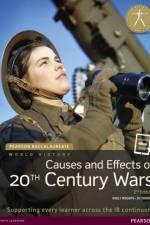
Pearson Baccalaureate History: Causes and effects of 20th century wars 2nd edition is a revised version of the bestselling 1st edition, written by leading IB practitioners to specifically match the International Baccalaureate 2015 History curriculum. With a new emphasis on cross-regional wars, this book comprehensively covers the revised Causes of wars topic. It will equip you with the knowledge and skills that you will need to answer essay questions on Paper Two and document-based questions on Paper One. This book also includes an enhanced eBook containing further worksheets, quizzes to test knowledge and examination skills, and enlarged source material.
With his first glimpse of Madame Arnoux, Frederic Moreau is convinced he has found his romantic destiny, but he is caught up in the revolution of 1848 and the attractions of three other women. Flaubert's portrait of an idealist in a disenchanted world influenced later modernists, and is here newly translated.
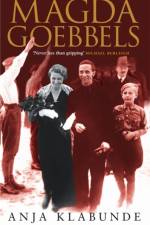
* Remarkable biography of the complex and tragic 'First Lady' of the Third Reich, Magda Goebbels
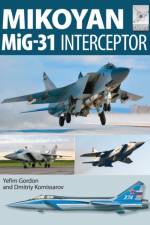
An exciting new addition to the popular Flight Craft series, this time focussing on the Mikoyan MiG-31, one of the most interesting Soviet aircrafts of all time.
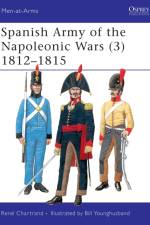
The third and final volume covering the Spanish army during the Napoleanic Wars. It covers the years from 1812 to 1815 when, with massive British assistance, the Spanish once again reorganised and greatly expanded their armies.
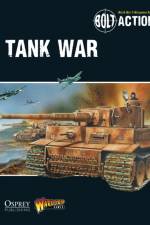
Gives players the option to expand their games to a whole new level - armoured warfare. This book helps you recreate such great engagements as the battle of Kursk with the scenarios, army options and special rules.
The castle is an evocative structure, no matter its setting, and this is no truer than in Scotland, where the multitude of castles reflect the country's turbulent history: its many conflicts and skirmishes, whether against invaders from the north, the English to the south or between clans.
The incredible story of the secret underground operations of the Second World War.
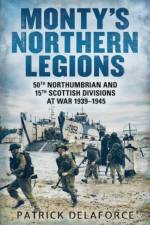
How these divisions from the North of England and Scotland helped turn the war - first in North Africa then in Europe after D-Day
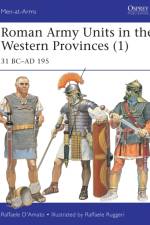
At its height the Roman Empire stretched across Europe, North Africa and the Middle East, maintained by an army of modest size but great diversity. This title investigates how Roman Army units in the Western provinces were equipped, exploring the local influences and traditions that caused the variations in attire.
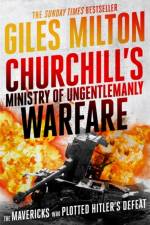
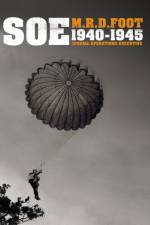
SOE, the Special Operations Executive, was a small, tough British secret service, a dirty tricks department established in July 1940 and encouraged by Churchill to 'set Europe ablaze'. Their job - as saboteurs, informers, partisans, couriers or secret agents - was to support and stimulate resistance behind enemy lines;
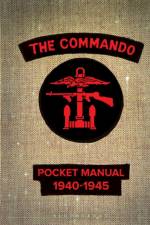
The Commandos were created by Winston Churchill in 1940 as a 'butcher and bolt' raiding unit to destroy vital targets in German occupied Europe. Recruits for this 'special service' were all volunteers, drawn from the British Army, and later from the Royal Marines and other Allied armies. Commando training was extremely demanding - men had to be physically fit and show initiative, mental toughness and adaptability. The training courses were designed to cultivate these qualities and to simulate real battle experiences, which included the use of live ammunition. Commandos learned a diverse range of skills at dedicated training centres in the remote Scottish Highlands. This pocket-book draws on authentic training manuals, lecture notes, course literature and other material from the commando schools to give a real insight into this highly specialised fighting unit - demonstrating how commandos were taught to live, fight and move on offensive operations, initially as raiding parties, and later as skilled assault infantry. Sections of the book cover survival and fieldcraft skills; night operations; assaulting obstacles; use of equipment - such as the COPPS canoe for beach reconnaissance and sabotage; and weapons training, including the Thompson submachine gun, the Bren gun, and the famous emblem of the commandos - the Fairbairn-Sykes fighting knife.
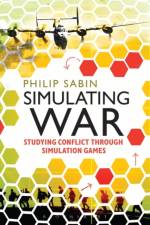
Over the past fifty years, many thousands of conflict simulations have been published that bring the dynamics of past and possible future wars to life. In this book, Philip Sabin explores the theory and practice of conflict simulation as a topic in its own right, based on his thirty years of experience in designing wargames and using them in teaching. Simulating War sets conflict simulation in its proper context alongside more familiar techniques such as game theory and operational analysis. It explains in detail the analytical and modelling techniques involved, and it teaches you how to design your own simulations of conflicts of your choice. The book provides eight simple illustrative simulations of specific historical conflicts, complete with rules, maps and counters. Simulating War is essential reading for all recreational or professional simulation gamers, and for anyone who is interested in modelling war, from teachers and students to military officers.
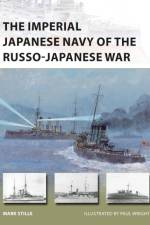
When the Imperial Japanese Navy destroyed Russia's battle fleet during the Russo-Japanese War, it marked the emergence of Japan as one of the world's major naval powers. This book outlines the history of the naval campaign against the Russian fleet.
In the aftermath of the 1992-1995 Bosnian war, the discovery of unmarked mass graves revealed Europe's worst atrocity since World War II: the genocide in the UN "e;safe area"e; of Srebrenica. To Know Where He Lies provides a powerful account of the innovative genetic technology developed to identify the eight thousand Bosnian Muslim (Bosniak) men and boys found in those graves and elsewhere, demonstrating how memory, imagination, and science come together to recover identities lost to genocide. Sarah E. Wagner explores technology's import across several areas of postwar Bosnian society-for families of the missing, the Srebrenica community, the Bosnian political leadership (including Serb and Muslim), and international aims of social repair-probing the meaning of absence itself.
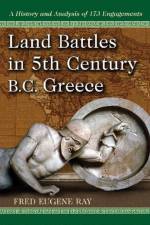
In the 5th century B.C., Greece was a patchwork country of small, independent city-states whose tendency to fight each other was offset only by strong ties to common cultural elements such as language and a unique style of warfare. While surviving myths emphasize heroics and honor, the reality of ancient Greek warfare was that of regular men dealing with everyday problems. Relying heavily on primary sources such as Herodotus, Thucydides and Plutarch, this volume provides the first-ever tactical level survey of all 173 Greek land engagements which occurred during the 5th century B.C., a seminal period in the history of western warfare. Using carefully researched logical probabilities to extend surviving records, the author places each battle within its historical context and analyzes it with a view to documenting significant overall patterns of action. The result is not only a detailed study of each battle complete with maps and battlefield diagrams, but also an overview of general trends in 5th century Greek warfare.
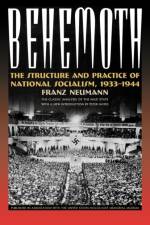
Franz Neumann's classic account of the governmental workings of Nazi Germany, first published in 1942, is reprinted in a new paperback edition with an introduction by the distinguished historian Peter Hayes. Neumann was one of the only early Frankfurt School thinkers to examine seriously the problem of political institutions. After the rise of the Nazis to power, his emphasis shifted to an analysis of economic power, and then after the war to political psychology. But his contributions in Behemoth were groundbreaking: that the Nazi organization of society involved the collapse of traditional ideas of the state, of ideology, of law, and even of any underlying rationality. The book must be "studied, not simply read," Raul Hilberg wrote.
Abonner på vårt nyhetsbrev og få rabatter og inspirasjon til din neste leseopplevelse.
Ved å abonnere godtar du vår personvernerklæring.