







Gjør som tusenvis av andre bokelskere
Abonner på vårt nyhetsbrev og få rabatter og inspirasjon til din neste leseopplevelse.
Ved å abonnere godtar du vår personvernerklæring.Du kan når som helst melde deg av våre nyhetsbrev.

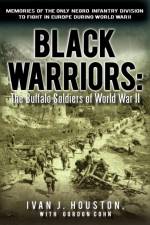
Numbering 4,000 select officers and men, Combat Team 370 was part of n Europe during World War II the 92nd Infantry Division, the only all-Negro division to fight in Europe during World War II. In Black Warriors: The Buffalo Soldiers of World War II, author Ivan J. Houston recounts his experiences, when, as a nineteen-year-old California college student, he entered the US Army and served with the 3rd Battalion, 370th Infantry Regiment, 92nd Division of the US Fifth Army from 1943 to 1945. Drawn from minute-by-minute records of the unit's activities compiled by Houston during his deployment in Italy, this account describes both the historic encounters and the achievements of his fellow black soldiers during this breakthrough period in American military history. It tells of how the Buffalo Soldiers fought alongside other American troops, including Japanese Americans and soldiers from Great Britain, Brazil, South Africa, and India. With photos and maps included, Black Warriors: The Buffalo Soldiers of World War II provides a compelling, firsthand account of the segregated Buffalo Soldiers' experiences while they fought not only the power of the Nazi war machine but also racism and the widely held belief they were not up to the task. Their achievements prove otherwise.
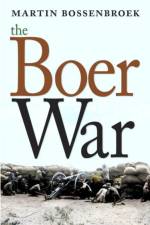
The Anglo-Boer War (1899-1902) is one of the most intriguing conflicts of modern history. It has been labeled many things: the first media war, a precursor of the First and Second World Wars, the originator of apartheid. The difference in status and resources between the superpower Great Britain and two insignificant Boer republics in southern Africa was enormous. But, against all expectation, it took the British every effort and a huge sum of money to win the war, not least by unleashing a campaign of systematic terror against the civilian population. In The Boer War, winner of the Netherland''s 2013 Libris History Prize and shortlisted for the 2013 AKO Literature Prize, the author brings a completely new perspective to this chapter of South African history, critically examining the involvement of the Netherlands in the war. Furthermore, unlike other accounts, Martin Bossenbroek explores the war primarily through the experiences of three men uniquely active during the bloody conflict. They are Willem Leyds, the Dutch lawyer who was to become South African Republic state secretary and eventual European envoy; Winston Churchill, then a British war reporter; and Deneys Reitz, a young Boer commando. The vivid and engaging experiences of these three men enable a more personal and nuanced story of the war to be told, and at the same time offer a fresh approach to a conflict that shaped the nation state of South Africa.
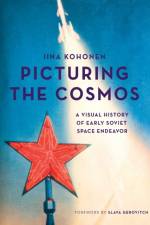
Space is the ultimate canvas for the imagination. In the 1950s and '60s, as part of the space race with the United States, the solar system was the blank page upon which the Soviet Union etched a narrative of conquest and exploration. In Picturing the Cosmos, drawing on a comprehensive corpus of rarely seen photographs and other visual phenomena, Iina Kohonen maps the complex relationship between visual propaganda and censorship during the Cold War.
Summary of design and operational history
The classic Junkers Ju 52/3m has been used by nearly 30 countries around the world as an airliner/freight carrier. Easy to fly and maintain, thousands were used by Luftwaffe during WWII, dropping paratroopers and delivering supplies on every front. Postwar the Ju 52 was used by numerous countries. About 50 survive with less than 10 still flying.
Charting his rise to power, his struggle to unify the warring factions of his faith, and his battles to retake Jerusalem and expel Christian influence from Arab lands, Saladin explores the life and the enduring legacy of this champion of Islam, and examines his significance for the world today.
An international bestseller, this is the extraordinary memoir of a German-Nigerian woman who learns that her grandfather was the brutal Nazi commandant depicted in Schindler's List.
With about 100 panoramic photos, Christophe Daguet offers us a timeless postcard of Normandy of the D-DAY and invites you in a real journey in the landscapes of the Landing.
In 1984, a small group of metropolitan homosexual men and lesbian women stepped away from the vibrant culture and hedonism of London's defiant gay scene to befriend and support the beleaguered villages of a very traditional mining community in the remote valleys of South Wales.
Offering a collection of personal and defining moments, this book offers insight into the Great War as it was experienced and as it was remembered.
This volume pulls together and republishes, with some editing, updating, and additions, articles written during 1978-86 for internal use within the CIA Directorate of Intelligence. The information is relatively timeless and still relevant to the never-ending quest for better analysis.The articles are based on reviewing cognitive psychology literature concerning how people process information to make judgments on incomplete and ambiguous information. Richard Heur has selected the experiments and findings that seem most relevant to intelligence analysis and most in need of communication to intelligence analysts. He then translates the technical reports into language that intelligence analysts can understand and interpreted the relevance of these findings to the problems intelligence analysts face.
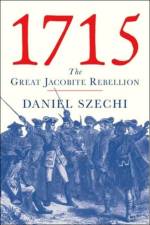
Presents an account of the Jacobite rebellion of 1715, that might have killed the Act of Union in its infancy. Drawing on a range of resources in England, Scotland, and France, the author analyses dramatic and smaller risings of the rebellion. He examines the reasons that led some men to rebel, and reveals the significance of this rebellion.
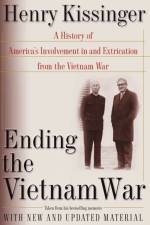
Henry Kissinger's book is a formidable and unapologetic response from the man who was at the very heart and centre of American policy-making, privy to every secret, and single-handedly responsible for the negotiations which brought America's role in Vietnam to an ambivalent end.
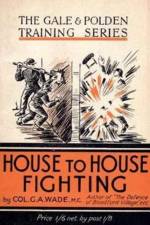
An excellent example of the high quality of instruction offered to recruits of the newly raised Home Guard in 1940. One in a series written by Col. G. AS Wade in a clear and down to earth style, and fully illustrated in colour, it covers all aspects of urban warfare.
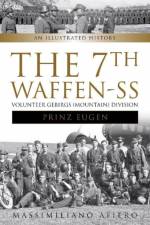
This is the complete history of one of the most famous and well-known divisions of the Waffen-SS. Created as a mountain unit to be employed exclusively on the Balkan Front against partisan units, the unit fought with valor and fierceness on the battlefield. After numerous anti-guerrilla operations in Bosnia, Croatia, Montenegro, and Serbia, towards the end of the war it was employed against units of the Bulgarian Army and Red Army forces in the difficult mission of covering the withdrawal of German forces retreating from Greece and Albania. It was one of the few Waffen-SS formations to be used in offensive actions during the final phases of the war, all of which were carried out successfully. Accused of having committed numerous crimes against civilians, its members met with a tragic fate, especially those who ended up in the hands of communist partisans.
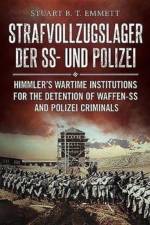
Fearing that his SS and Police convicts National Socialist spirit was irrevocably damaged in civil and military gaols, the Reichsfuhrer-SS, Heinrich Himmler, commanded the HA SS-Gericht in the spring of 1940 to establish a Waffen-SS prison within the environs of the dreaded KL Dachau. Here, he incarcerated the malodourous elements of the SS.
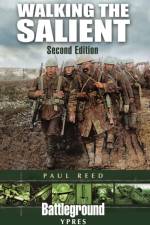
Fully revised edition of Paul Reed's classic walker's guide to the Ypres Salient. Tours of all the most famous sites: Ypres, Yser, Sanctuary Wood, Bellewaarde Ridge, Zillebeke, Hill 60, Passchendaele, Messines, Kemmel, Ploegsteert.
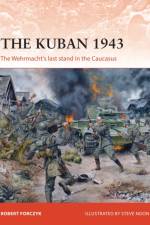
In the summer of 1942, the Wehrmacht invaded the Caucasus in order to overrun critical oil production facilities at Maikop, Grozny, and Baku. However, the Red Army stopped the Germans short of their objectives and then launched a devastating winter counteroffensive that encircled them at Stalingrad. Consequently, Hitler grudgingly ordered an evacuation from the Caucasus, but ordered 17. Armee to fortify the Kuban bridgehead and hold it at all costs in order to leave open the possibility of future offensives. On the other side, the Soviet Stavka ordered the North Caucasus Front and the Black Sea Fleet to eliminate the Kuban bridgehead as soon as possible. The stage was set for a contest between an immovable object and an unstoppable force.With the help of stunning specially commissioned artwork, this book tells the enthralling story of the impressive but strategically foolish German stand at Kuban, which tied down seven Soviet armies in a sideshow battle of attrition, which the Soviets dubbed "the Kuban meat grinder."
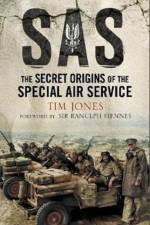
Pieces together evidence from neglected sources to reveal the true story of the SAS
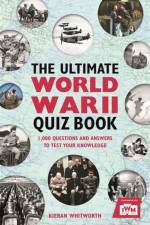
Published in association with the Imperial War Museums, this book contains over 1,000 questions (and answers, if you need them), and will provide the ultimate challenge to even the most knowledgeable military historian.
Name as a 2016 Book of the Year by the SpectatorA Daily Telegraph 'Book of the Week' (August 2015)Longlisted for 2016 PEN Hessell-Tiltman PrizeRanked in 100 Best Books of 2015 in the Daily TelegraphProfessor Frank McDonough is one of the leading scholars and most popular writers on the history of Nazi Germany. Frank McDonough's work has been described as, 'modern history writing at its very best...Ground-breaking, fascinating, occasionally deeply revisionist' by renowned historian Andrew Roberts. Drawing on a detailed examination of previously unpublished Gestapo case files this book relates the fascinating, vivid and disturbing accounts of a cross-section of ordinary and extraordinary people who opposed the Nazi regime. It also tells the equally disturbing stories of their friends, neighbours, colleagues and even relatives who were often drawn into the Gestapo's web of intrigue. The book reveals, too, the cold-blooded and efficient methods of the Gestapo officers. This book will also show that the Gestapo lacked the manpower and resources to spy on everyone as it was reliant on tip offs from the general public. Yet this did not mean the Gestapo was a weak or inefficient instrument of Nazi terror. On the contrary, it ruthlessly and efficiently targeted its officers against clearly defined political and racial 'enemies of the people'. The Gestapo will provide a chilling new doorway into the everyday life of the Third Reich and give powerful testimony from the victims of Nazi terror and poignant life stories of those who opposed Hitler's regime while challenging popular myths about the Gestapo.
Abonner på vårt nyhetsbrev og få rabatter og inspirasjon til din neste leseopplevelse.
Ved å abonnere godtar du vår personvernerklæring.