









Gjør som tusenvis av andre bokelskere
Abonner på vårt nyhetsbrev og få rabatter og inspirasjon til din neste leseopplevelse.
Ved å abonnere godtar du vår personvernerklæring.Du kan når som helst melde deg av våre nyhetsbrev.

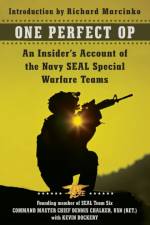
America's most elite commando unit, the US Navy SEAL Team Six pulled off one of the most remarkable covert operations in military history when they infiltrated the secret hideout of Osama Bin Laden in Pakistan in the dead of night and killed the hated terrorist mastermind. Dennis Chalker was an original ?plankowner? (founding member) of SEAL Team Six, and in One Perfect Op, he takes readers deep inside the remarkable world of America's Special Forces operatives. With an introduction by Richard Marcinko of Rogue Warrior fame, One Perfect Op describes, step by breathtaking step, one extraordinary SEALs mission, shedding fascinating new light on the training, the planning, the courage and the skill of these exceptional warriors.
Merc¿odoreda was born in Barcelona in 1908. During the Spanish Civil War she was exiled to France and later Switzerland. Rodoreda was only able to return to Barcelona in the mid-1960s, where she wrote several prize-winning novels in Catalan, including Death in Spring, which was inspired by her experience of Franco's dictatorship. Rodoreda died in 1983, a few years before Death in Spring's first publication, and is widely regarded as the most important Catalan writer of the twentieth century.
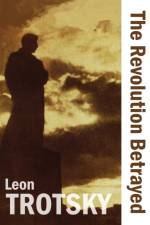
The Revolution Betrayed is one of the most important Marxist texts of all time. It is the only serious Marxist analysis of what happened to the Russian Revolution after the death of Lenin. In this book, Trotsky provided a brilliant and profound analysis of Stalinism, which has never been improved upon, let alone superseded. With a delay of 60 years, it was completely vindicated by history. Without a thorough knowledge of this work, it is impossible to understand the reasons for the collapse of the Soviet Union and the events since then in Russia and on a world scale. This remarkable work predicted the fate of the USSR down to the last detail. In the period of so-called market reform, Russia experienced the biggest collapse in world economic history. Just in the first five years alone, the economy contracted by a staggering sixty percent. Such a drop is unprecedented in economic history. It was like a catastrophic defeat in war. The collapse of the USSR has led to social disintegration. The elements of barbarism have all reappeared. Poverty, beggary, drunkenness, drug addiction, prostitution, crime, epidemics have spread to an unparalleled degree. Sections of the youth are affected by lumpenisation. At the same time, the mafia capitalists have accrued massive wealth by plundering the former nationalised industries as well as the rich sources of oil and other resources. The bureaucratic degeneration of the Soviet Union and its eventual fall must be carefully studied, if we are to be able to answer the questions of the workers and youth. And the best explanation that can be found is in the pages of this wonderful classic of Marxism. Only the restoration of a nationalised planned economy can create the conditions for a revival of Russia's colossal productive potential. But this cannot mean a return to the old Stalinist regime. Only a regime of real workers' democracy, along the lines of October 1917, can provide Russia with a way out of the present impasse. As Trotsky points out in a most graphic and profound passage from The Revolution Betrayed, a nationalised planned economy needs democracy as the human body needs oxygen.
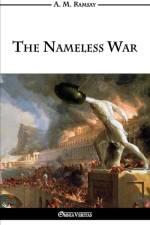
Here is the story that people have said would never be written in our time - the true history of events leading up to the Second World War, told by one who enjoyed the friendship and confidence of Mr Neville Chamberlain during the critical months between Munich and September, 1939.There has long been an unofficial ban on books dealing with what Captain Ramsay calls "The Nameless War", the conflict which has been waged from behind the political scene for centuries, which is still being waged and of which very few are aware.
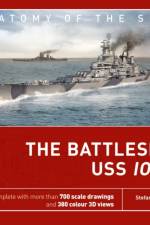
A brilliantly detailed visual representation of one of the greatest US warships, the USS Iowa, whose four decades in service took her from the Pacific War in World War II to the Persian Gulf in the late 1980s.USS Iowa (BB-61) was the lead ship in one of the most famous classes of battleships ever commissioned into the US Navy. Transferred to the Pacific Fleet in 1944, the Iowa first fired her guns in anger in the Marshall Islands campaign, and sank her first enemy ship, the Katori. The Iowa went on to serve across a number of pivotal Pacific War campaigns, including at the battles of the Philippine Sea and Leyte Gulf. It ended the war spending several months bombarding the Japanese Home Islands before the surrender in August 1945.After taking part in the Korea War, the Iowa was decommissioned in 1958, before being briefly reactivated in the 1980s as part of President Reagan''s 600-Ship Navy Plan. After being decommissioned a second and final time in 1990, the Iowa is now a museum ship in Los Angeles. This new addition to the Anatomy of the Ship series is illustrated with contemporary photographs, scaled plans of the ship and hundreds of superb 3D illustrations which bring every detail of this historic battleship to life.
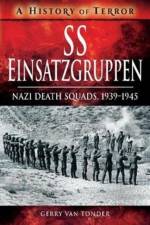
Detailed account of the formation and brutal activities of the Nazi Security Service (SD), Reinhard Heydrich's notorious death squads-Einsatzgruppen.
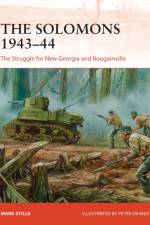
Victory at Guadalcanal for the Allies in February 1943 left them a vital foothold in the Solomon Islands chain, and was the first step in an attempt to isolate and capture the key Japanese base of Rabaul on New Britain. In order to do this they had to advance up the island chain in a combined air, naval, and ground campaign. On the other hand, the Japanese were determined to shore up their defences on the Solomons, which was a vital part of their southern front, and would bitterly contest every inch of the Allied advance. The scene was set for one of the bloodiest campaigns of the Pacific War. Fully illustrated with specially commissioned maps and artwork, this is the compelling story of the struggle for the Solomons, a key part of the Allied advance towards Japan which saw tens of thousands of casualties and so many ships lost that part of the ocean became known as 'Ironbottom Sound'.
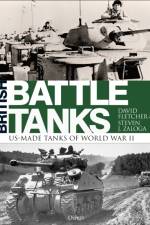
The idea of British soldiers using American tanks was not viewed with a great deal of enthusiasm by the British Army. They perceived American tanks as being crudely made, mechanically unsophisticated and impossible to fight in. However, once British crews got used to them and learned to cope with some of their difficulties, such as limited fuel capacity and unfamiliar fighting techniques, they started to see them in a far more positive light, in particular their innate reliability and simplicity of maintenance. This book, the last in a three-part series on British Battle Tanks by armour expert David Fletcher, concentrates on World War II and studies American tanks in British service, some of which were modified in ways peculiar to the British. It shows how the number of these tanks increased to the point that they virtually dominated, as well describing some types, such as the T14 and M26 Pershing, which were supplied but never used in British service.
The world¿s first modern tank, a pioneering vehicle whose basic features can be found on today¿s modern tanks. FT was an undeniable success. Large number of FTs were provided to most Western front units by 1918, and they were involved in all major offensives, successfully crossing over trenches as intended, but also driving through forests. Renault produced two variants of the FT, The machine-gun model, which was more common, and a short-barreled 37 mm Puteaux SA 18 gun. Those models were defirent by their definitive Omnibus turret, multi-faceted or rounded with bent metal plates. By December 1917 3100 FTs were to be produced with the Omnibus turret, in both types. The FT had some flaws of the first series, including the radiator fan belt and cooling system problems. In 1919 a new redesigned version was proposed by Renault, including a more powerful engine, a long-barreled Puteaux gun and additional cases fitted in their tracks. It was successfully exported throughout the world. Some of them were immediately put into action, like the Finnish and Polish versions against the Soviets.
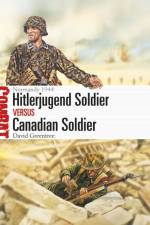
Canadian and Waffen-SS troops of 12. SS-Panzer-Division Hitlerjugend faced one another in a series of bloody battles following the D-Day landings of June 1944. The Canadian units fought in a number of distinguished regiments, while the Hitlerjugend Division were drawn from the ranks of the Hitler Youth organizations. Veteran officers and NCOs were joined by inexperienced teenagers, and clashed with the Canadians repeatedly, notably at Authie, Bretteville and Hill 168. The struggle quickly took on an especially bitter nature, fuelled by the massacre of Canadian prisoners by Hitlerjugend personnel. Employing first-hand accounts and the latest research, as well as specially commissioned artwork and carefully selected archive photographs this absorbing study investigates the origins, ethos, training, fighting techniques and weapons of both sides during the epic struggle for Normandy.
A magisterial, essential history of the struggle between whites and Native Americans over the fate of the West.
With Britain's empire collapsing and Stalin ascendent, U.S. officials set out to reconstruct Western Europe as a bulwark against communist authoritariansim. This is the story of the Marshall Plan and the birth of the Cold War: a gripping account of the seminal episodes marking the post-WWII collapse of U.S.-Soviet relations.
A deeply engaging study, unmatched in its depth, of factory life in Petrograd over the course of Russia's revolutionary year.
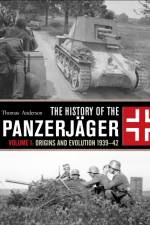
The German Panzerjäger, or Panzerjägertruppe, was one of the most innovative fighting arms of World War II and its story has never properly been told. Many books have focused on an element of the story - the Hetzer, Jagdpanzer, Jagdpanther - but this is the first time that the whole story of the development and organization of Nazi Germany's anti-tank force will have been covered, from its earliest origins in World War I, through its development in the interwar period, and its baptism of fire in the early days of World War II. This is the first of two volumes that will trace the story through the glory years of Blitzkrieg and the improvements that were made when Soviet tanks were first encountered, leading to new weapons, tactics and organization. It is packed with previously unpublished wartime photographs, combat reports, and detailed charts and statistics to give an unparalleled account of this unique arm of the Wehrmacht.
The Rohingya have been making international headlines as the world becomes aware of their plight via the story of SE Asian immigrants stranded in boats
Tied in to Ken Burns' forthcoming (2017) TV series on Vietnam, to which the author is a major contributor, the reissue of a Pulitzer finalist memoir of a Vietnamese family in the 20th century
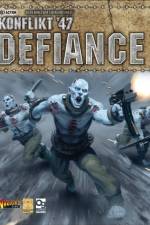
Delving deeper into the weird world of Konflikt ''47, this supplement presents a range of new material for the game, including: - New units: Options for troops and technology that can be added to the armies presented in the rulebook. - Special characters: Field the best of the best, elite men and women who may single-handedly be the crucial element between victory and defeat. - New background: The history of the world of Konflikt ''47 is detailed in more depth. - New rules: All-new means of waging war, including material previously published online.
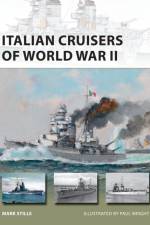
The Italian Royal Navy (Regia Marina) operated one of largest cruiser forces of World War II. As a signatory to the 1922 Washington Naval Treaty, the Regia Marina immediately attempted to reinforce its treaty-limited battleship force by building seven large 10,000-ton heavy cruisers. Italian light cruisers also possessed an interesting design history and were involved in every major fleet engagement in the Mediterranean, as well as several smaller encounters with units of the British Royal Navy. Fully illustrated with specially commissioned artwork, this fascinating volume examines the history of the Regia Marina''s cruisers during World War II where they came up against the might of the British Royal Navy.
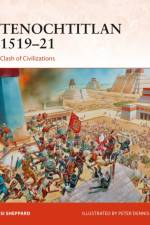
In 1519, the Conquistador Hernán Cortés landed on the mainland of the Americas. His quest to serve God, win gold, and achieve glory drove him into the heartland of what is now Mexico, where no European had ever set foot before. He marched towards to the majestic city of Tenochtitlan, floating like a jewel in the midst of Lake Texcoco. This encounter brought together cultures that had hitherto evolved in complete isolation from each other--Catholic Spain and the Aztec Empire. What ensued was the swift escalation from a clash of civilizations to a war of the worlds. At the conclusion of the Conquistador campaign of 1519–21, Tenochtitlan lay in ruins, the last Aztec Emperor was in chains, and Spanish authority over the native peoples had been definitively asserted. With colorful personalities--Cortés, Malinche, Pedro Alvarez, Cuitláhuac, Cuauhtémoc--driving the narrative, and the vivid differences in uniforms, weapons, and fighting styles between the rival armies (displayed using stunning specially commissioned artwork), this is the fascinating story of the collapse of the Aztec Empire.
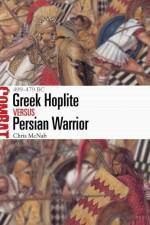
The Greco-Persian Wars (499-449 BCE) convulsed Greece, Asia Minor and the Near East for half a century. Through a series of bloody invasions and pitched battles, the mighty Persian Empire pitted itself against the smaller armies of the Greeks, strengthened through strategic alliances. This epic conflict also brought together two different styles of warfare: the Greek hoplite phalanx and the combined spear and projectile weapon-armed Persian infantry. Analysing the battles of Marathon, Thermopylae and Plataea from the eyes of a soldier, this study explores the experience of front-line combat during the first two decades of the Greco-Persian Wars. Fully illustrated with modern photographs and archival images, and drawing directly on primary sources and the most authoritative recent research, this is the enthralling story of the fighting men of Greece and Persia and the tactics and technologies they employed.
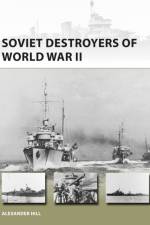
The Soviet Navy that faced the German onslaught in 1941 boasted a mixture of modern warships, often built with foreign technical assistance, and antiquated warships from the Tsarist era that were modernised for the conflict.Some Soviet naval vessels saw limited involvement in the war against Finland in 1939-1940, but the main action occurred after the German invasion, when these destroyers escorted convoys, fought battles against other destroyers and the deadly threat posed by attacking aircraft, and provided fire support for Soviet troops. From the Gnevny class of the pre-war period to the specialist destroyer leaders of the Leningrad class and the unique Tashkent, Soviet Destroyers of World War II is a detailed guide to the often forgotten destroyers of the Soviet Navy .
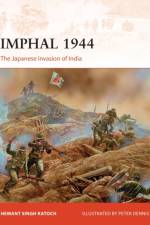
In March 1944, the Japanese Fifteenth Army launched an offensive into India from Burma. Named 'U Go', its main objective was the capture of the town of Imphal, which provided the easiest route between India and Burma. Whoever controlled it, controlled access between the two countries. Facing off against the Japanese was the British Fourteenth Army and its Imphal-based 4 Corps. For the next four months, over 200,000 men clashed in the hills and valley of Manipur in what has since been described as one of the greatest battles of World War II. Although numbers vary, it is estimated that some 30,000 Japanese soldiers died and 23,000 were injured at Imphal-Kohima in 1944 due to fighting, disease and in the retreat back to Burma. It remains the largest defeat on land ever for the Japanese Army. With fully commissioned artwork and maps, this is the complete story of the turning point in the Burma campaign in World War II.
In July 1995, the Army of the Serbian Republic killed some 8,000 Bosnian men and boys in and around the town of Srebrenica-the largest mass murder in Europe since World War II. Surviving the Bosnian Genocide is based on the testimonies of 60 female survivors of the massacre who were interviewed by Dutch historian Selma Leydesdorff. The women, many of whom still live in refugee camps, talk about their lives before the Bosnian war, the events of the massacre, and the ways they have tried to cope with their fate. Though fragmented by trauma, the women tell of life and survival under extreme conditions, while recalling a time before the war when Muslims, Croats, and Serbs lived together peaceably. By giving them a voice, this book looks beyond the rapes, murders, and atrocities of that dark time to show the agency of these women during and after the war and their fight to uncover the truth of what happened at Srebrenica and why.
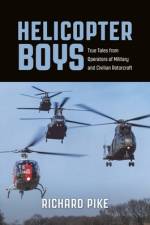
Helicopter Boys explores the role of helicopters in military and civilian situations. Acclaimed author Richard Pike, alongside fourteen contributors, share stories of the diverse nature of their operations. From the dramatic war scenes during the Indo/Pakistani war which saw one pilot's actions earn him a VrC gallantry award to the experience of Chinook pilots on board the Atlantic Conveyor during the Falklands War. Then there are the civilian tales from rescue missions in the Outer Hebrides to being a pilot across the world in places such as Australia and Nigeria. There is also a focus on the Piper Alpha disaster in 1988 which saw the loss of 167 lives. The book ends with Pike's experiences in Kosovo, helping to distribute emergency humanitarian aid on behalf of the United Nations World Food Programme shortly after the war ended in 1999. Each story is told with great detail conveying the action and excitement that helicopter pilots experienced with each operation. The scope, flair and pace of the writing in this book will appeal to the general reader as well as to the enthusiast.
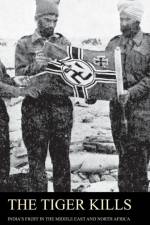
Having returned to Egypt, part of the Division (the 5th Indian Infantry Brigade) was hurried across to Syria and was heavily involved in the advance on Damascus (June 1941). From 14 to 17 June 1941 the 4th Armoured Brigade was attached to the division. The rest of the Division was heavily involved in the fighting which ebbed and flowed past Tobruk from June 1941 onwards, having been rejoined by 5 Brigade, returning from Syria, in the autumn of 1941. For most of this period the Division was dispersed with units temporarily attached to other formations much to the disgust of Major General Francis Tuker who assumed command of the Division in December 1941. Notable at this time was the breakout at the end of January by 7 Brigade, having been cut off at Benghazi during the Germans' counteroffensive from Agheila and moving 200 miles avoiding the enemy to rejoin the 8th Army. Early in April 1942 the Division was dispersed with 7 Brigade going to Cyprus, 5 Brigade to Syria, 11 Brigade to the Suez Canal Zone for training and the Central India Horse to Iraq after a period of training. By May 1942 11 Brigade was back in the fighting at Tobruk (attached to the Indian 5th Infantry Division). 11th Brigade was caught in the siege of Tobruk which fell on 21 June, and so disappeared from the order of battle for the next 18 months. 5th Brigade was rushed to the desert in June 1942 - after escaping from Mersa Matruh, the brigade held the vital Ruweisat Ridge at Alamein in the fighting of July-August 1942. The situation had become so confused that General Erwin Rommel, also known as the Desert Fox, lost his way and was forced to spend a night in the open. With the dawn came the realisation that he was in the company of 4th Division. With a sigh of relief, he slipped away, undetected. Shortly before the Second Battle of El Alamein in October 1942 the 4th Indian Division was back together again with the 7th Brigade returning from Cyprus and 161st Brigade attached (until December 1942) to fill the gap of the overrun 11th Brigade. The Division had a relatively subsidiary role in the battle, holding in stiff fighting, as a diversionary tactic, the Ruweisat Ridge which was at the centre of the Allied front whilst the breakthrough was planned further North. By December 1942 the Division was once again dispersed but strong representations by its GOC, Francis Tuker, (including his asking to be relieved of command) resulted in the Division being brought together as a fighting entity in March 1943 and it fought with distinction through to the fall of Tunis in May 1943 gaining a particular reputation for its prowess in mountainous country. The Division had the honour of capturing General von Arnim in Tunisia, bringing an end to the North African campaign. Its major battles in North Africa were Benghazi, Tobruk, Wadi Akarit, Enfidaville and Tunis.
What did Pius XII do to aid Jews during World War II? This is an examination of efforts on behalf of Jews in Italy, the country where the pope was in a position to be most helpful. It finds that despite a persistent myth to the contrary, Pius and his assistants at the Vatican did very little.
Abonner på vårt nyhetsbrev og få rabatter og inspirasjon til din neste leseopplevelse.
Ved å abonnere godtar du vår personvernerklæring.