















Gjør som tusenvis av andre bokelskere
Abonner på vårt nyhetsbrev og få rabatter og inspirasjon til din neste leseopplevelse.
Ved å abonnere godtar du vår personvernerklæring.Du kan når som helst melde deg av våre nyhetsbrev.

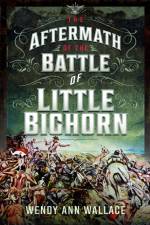
This is the second of two books dealing with the circumstances that arose leading the native americans on a collision course with the US Army that fateful day and the death of a national hero.
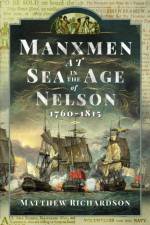
Major contribution to the study of 18th Century and Napoleonic naval warfare.
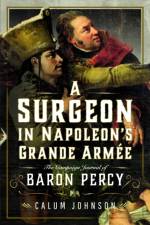
Pierre-François Percy was Surgeon-in-Chief of Napoleon's Grande Armée. This is the first English translation of Baron Percy's notebooks, containing his interesting, revealing, and informative testimony of the Revolutionary and Napoleonic campaigns in which he played an active role, as the most senior surgeon in the French Army, from 1799-1807.In his journal, Percy writes intimately about his life on campaign. He recounts his experiences across Europe, particularly in Switzerland (Helvetia), Germany, and Poland. The journal shows Percy's delight at seeing his surgeons recognized for their work at Eylau, and his notes express his shock at the brazen corruption of military officials and the indiscriminate pillaging to which the French army frequently resorted. He recounts his audiences with Napoleon, during which his pleas for more resources and a more professional military surgical corps frequently fell on deaf ears. Details that may have seemed trivial to Percy's contemporaries - about food, accommodation, dress, and transport - now offer a vital insight into the persistent struggles, and occasional pleasures, of those who followed Napoleon on his quest to conquer Europe.Percy documents his experiences of some of the major battles of the period; namely, Jena, Eylau, and Friedland. As a surgeon, he witnessed the enormous scale of devastation wrought by these significant battles, so often glorified in the historiography as tactical successes. His descriptions are meticulous and personal; injuries are described scientifically, their stark details offering a vivid and horrifying picture of the aftermath of the fighting.Percy's singular position - living with the soldiers and sharing in their poor conditions, while also being aware of the administrative decisions that governed (and often negatively impacted) their lives - makes for an account that is simultaneously fascinating for the general reader and invaluable for scholars of military and surgical history.
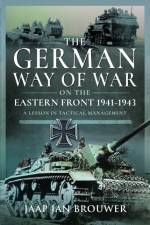
On 22 June 1941, at 0410hrs, Operation Barbarossa began. More than 3 million German soldiers crossed the border with the Soviet Union and moved east, where 4.7 million Soviet soldiers were waiting for them. Hitler expected his troops would be on the Volga before the end of the year and that important cities such as Moscow and Leningrad would have been captured. But the reality was very different; the Germans made impressive territorial gains, but their offensive eventually came to a halt at Stalingrad in December 1942, which proved to be a turning point in the war.This titanic battle is illustrated here using eyewitness accounts from generals, soldiers and civilians. Attention is not only paid to the course of the battle, but also to the tactics and organizational dimensions of the armies involved, the challenges of the vastness of the country, the dilemmas for people in the conquered areas, and the way the Germans tried to conquer their hearts while at the same time fighting a fierce guerrilla war. The role of the Reichsbahn in the field of logistics is also examined, as is the importance of the innovation and production capacity of both armies.
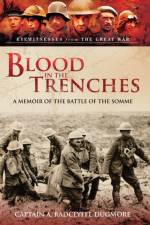
Original memoir first published in 1918 that has been long out of print.
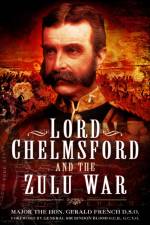
A comprehensive and detailed coverage of the Anglo Zulu war from the initial invasion to the final battle of Ulundi.
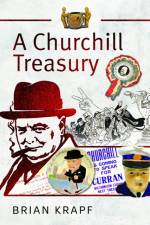
A Churchill Treasury fulfills a market need for publishing a new book documenting memorabilia from Sir Winston Churchill's decades of public service. Globally called Churchilliana, these items encompass over 60 years of materials, including badges, ribbons, textiles, porcelain, glassware and ephemera with the last Churchilliana book being published over 20 years ago as a collectors' guide. A Churchill Treasury will be enjoyed by collectors as well as readers interested in history since it uses period items to portray and explain Sir Winston's public service, starting with his father and chief inspiration, Lord Randolph and ending with retirement after his second premiership. A Churchill Treasury includes many rare items and pieces seen by the public for the very first time. Readers of all ages will enjoy learning about Sir Winston as they discover and appreciate the period pieces shown here.
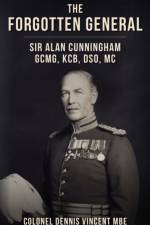
How did the man who developed a limited border offensive into a full scale campaign and advanced over 2,000 miles to defeat the Italian Army and liberate Addis Ababa, who formed and commanded the Eighth Army, end up at Camberley and then Northern Ireland?
There were no death certificates issued at Auschwitz. Nevertheless, Swiss banks still demand them before handing over the assets of account holders killed in the Holocaust to their surviving relatives. When the Jews of Europe entrusted their families' wealth to what they hoped would be a safe haven - the banks of Switzerland - they were wrong. Millions of dollars, deposited decades ago in good faith by Jews who were to die in the Nazi genocide, still lie in their vaults, earning interest and providing working capital for Swiss banks. However the involvement of neutral Switzerland in the finances of the Third Reich goes far beyond the dispute over dormant accounts. Swiss banks were the key foreign currency providers of the Nazi war machine; they knowingly accepted looted gold, stolen from the national banks of occupied Europe; and they operated an international banking centre for the Third Reich. Reissued with a new afterword, Adam LeBor reveals the true extent to which Swiss banks collaborated with the Nazi regime and profited from the deaths of millions of Jews.
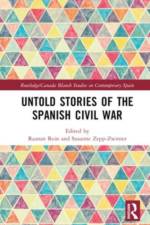
This is the first scholarly volume to offer an insight into the less known stories of women, children, and international volunteers in the Spanish Civil War.
Salazar: A Political Biography is the definitive biography of the longstanding Portuguese dictator.
This book re-thinks the relationship between the world of the traditional Jewish study hall (the beit midrash) and the academy.
"An English translation of recorded depositions by men arrested for sodomy or pederasty in eighteenth-century Paris, exploring complex questions about sources, patterns, and meanings in the history of sexuality"--
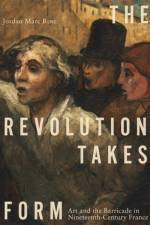
Examines the emergence and stabilization of the barricade as a symbol of revolution in mid-nineteenth-century France.
Examines the United States Information Agency's program of photographic diplomacy with Africa, locating photography at the intersection of African decolonization, racial conflict in the United States, and the cultural Cold War.
Originally published in French in 2018 and winner of the Prix Albert Londres, this unique graphic novel provides a glimpse of the devastating changes inflicted on Iraq as told through 1000 tweets and poignant illustrations. During the summer of 2016, distrought and disappointed by how Iraq is described in the media, French-Iraqi journalist Feurat Alani posted over 1000 tweets in which he told the world about his Iraq. Feurat grew up in Paris, but spent many childhood summers in an Iraq that he watched fall apart under the dictatorship of Saddam Hussein. As an adult, he reports from an Iraq under American occupation, and discovers the sounds and silences of war. The Flavors of Iraq is an intimate and discerning look at a battered country from first a child's, then a young man's perspective. Together with Léonard Cohen's superb illustrations, the result is a poetic and powerful story of a different Iraq.
Abonner på vårt nyhetsbrev og få rabatter og inspirasjon til din neste leseopplevelse.
Ved å abonnere godtar du vår personvernerklæring.