











Gjør som tusenvis av andre bokelskere
Abonner på vårt nyhetsbrev og få rabatter og inspirasjon til din neste leseopplevelse.
Ved å abonnere godtar du vår personvernerklæring.Du kan når som helst melde deg av våre nyhetsbrev.

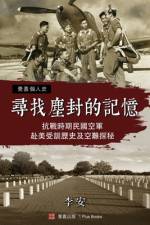
二戰時期,根據中美兩國政府達成的協議,一批批中華民國空軍飛行員先後被送到美國,參加培訓。大部分學員學成歸國,投身於抗擊日本侵略者的戰鬥,許多人為此付出了年輕的生命。還有一部分學員則在培訓期間逝於飛行事故。由於戰亂和中國接連不斷的政治運動,他們的家人大多未能得知他們死難的具體情形,更不瞭解葬在何處。而這些出師未捷身先死的年輕人,如同被遺忘的孤兒,七十年來遠離祖國與親人,在異國他鄉,一抔黃土,掩埋了他們殺敵報國的雄心。 本書作者李安的二叔李嘉禾便是如此。1941年,西南聯大物理系三年級學生李嘉禾投筆從戎加入空軍,次年秋赴美,一去未歸。六十年後,李安家人終於在德州埃爾帕索(El Paso, TX)布利斯堡國家軍人公墓找到了他。去墓地祭拜二叔時,他們驚訝地發現,在李嘉禾墓周圍,還有不少同樣鐫刻著"Chinese Air Force"的墓碑,這些都是與她二叔一樣,被時代風塵掩埋的民國空軍。 李安面對墓群立下誓言:你們都是我的二叔,我一定要幫你們找到親人!從2018年初開始,三十年來只關心高科技項目進展的"矽谷人", 懷著對歷史的敬畏和使命感走進了史料堆,邁上了尋找抗戰飛行員家屬、研究和記錄抗戰空軍赴美培訓史的歷程...... 海內外志願者和空史專家從四面八方伸出援手,民國空軍赴美系列歷史資料和照片逐漸從封存已久的檔案櫃、歷史文獻資料網站、博物館搜尋出來,還有一些來自個人收藏。一系列珍貴史料,成為尋親認親的重要線索和依據。在愛心志願者、電視台、報社等媒體,以及"龍越基金會"的幫助下,李安已經為三十三位赴美殉職空軍找到了親人。在這個過程中,她將民國空軍赴美培訓的歷史,從高層決策到具體執行,從後勤運輸到培訓課程、生活安排等等,系統地挖掘整理出來,於是有了這本"尋找塵封的記憶"。 壯志未酬的年輕飛行員們,可以安息了。
How profound is Sun Tzu in relation to the full expanse of Chinese and European military history? While historical accounts can act as pillars of strength and as guideposts for building military theories, statesmen or generals can rarely rely on Sun Tzu's advice as a prescription for success by randomly picking statements from his book.This book offers a new perspective on the Art of War by comparing and contrasting Asian and Western military thought. It explores how Chinese history and culture influenced Sun Tzu's writings, and how his writings later influenced future military leaders. It also brings to light how military leaders often ignored Sun Tzu's lessons, and how changing times and battlefield requirements occasionally made Sun Tzu's advice impractical or impossible to implement.Sun Tzu can be read metaphorically or literally. When read metaphorically, it transcends time and place and proves practical for guiding military and civilian leaders in the East and West. But when read literally, it is about strategies that win wars and have little application to the civilian world of business.
This work has been selected by scholars as being culturally important, and is part of the knowledge base of civilization as we know it.This work is in the "public domain in the United States of America, and possibly other nations. Within the United States, you may freely copy and distribute this work, as no entity (individual or corporate) has a copyright on the body of the work.Scholars believe, and we concur, that this work is important enough to be preserved, reproduced, and made generally available to the public. We appreciate your support of the preservation process, and thank you for being an important part of keeping this knowledge alive and relevant.
Dal giornalismo a Capo di Stato. Gli articoli, i proclami, gli interventi alla Camera, gli avvenimenti che condussero alla nascita del Partito Naz Fascista e l'ascesa al potere
This work has been selected by scholars as being culturally important, and is part of the knowledge base of civilization as we know it.This work is in the "public domain in the United States of America, and possibly other nations. Within the United States, you may freely copy and distribute this work, as no entity (individual or corporate) has a copyright on the body of the work.Scholars believe, and we concur, that this work is important enough to be preserved, reproduced, and made generally available to the public. We appreciate your support of the preservation process, and thank you for being an important part of keeping this knowledge alive and relevant.
This book presents the dramatic stories of elite Philippine Scout Rangers in the frontline.
Special forces members are not well known. Their identities and their missions are kept secret. They don't join for money or fame, even though they have talents that make them perfectly suited for an elite status within the military. They are the best of the best, simultaneously intelligent and sociable, and hardworking and driven. But they also can kill better than anyone on the planet. That is what makes them the best soldiers of the United States. Read on to discover the fascinating history of the Special Forces. Minute Help Press is building a library of books for people with only minutes to spare.
*Explains the events that led up to the Battle of Actium, as well as the differences in the opposing navies and tactics. *Includes ancient accounts of the Battle of Actium. *Includes a comprehensive discussion of the facts and myths surrounding the battle. *Includes a bibliography for further reading. The names of history's most famous battles still ring in our ears today, their influence immediately understood by all. Marathon lent its name to the world's most famous race, but it also preserved Western civilization during the First Persian War. Saratoga, won by one of the colonists' most renowned war heroes before he became his nation's most vile traitor. Hastings ensured the Normans' success in England and changed the course of British history. Waterloo, which marked the reshaping of the European continent and Napoleon's doom, has now become part of the English lexicon. In Charles River Editors' Greatest Battles in History series, readers can get caught up to speed on history's greatest battles in the time it takes to finish a commute, while learning interesting facts long forgotten or never known. Every era has watershed moments that shape the arc of history, and for Ancient Rome, few were as decisive or monumental as the Battle of Actium in 31 B.C. The battle's importance is understandable given the stakes and people involved; Actium pitted the joint navies of Cleopatra and Mark Antony against the battle fleet of Octavian. In many ways, this climactic battle was the culmination of a years-long power struggle between the heirs of the assassinated Julius Caesar, with Octavian being his legally appointed heir and Antony being his longtime lieutenant and trusted advisor. Antony had even taken Caesar's Egyptian mistress as his own. As one of Rome's most famous battles, the Battle of Actium has taken on a life of its own in popular memory. One of the longest-held myths about the battle is that Cleopatra, sensing defeat, began to sail away from the fight in the middle of the day, and the lovestruck Antony followed her with his own ship, abandoning his men in the middle of the fight. While that popular myth would be in keeping with explaining Cleopatra's irresistible charm and magnetism, contemporary accounts of the battle do not suggest it was actually the case. As night approached, Antony and Cleopatra spotted a gap in the now thoroughly jumbled enemy line, and ordered their ships to speed through it without delay, making for Alexandria with all speed and abandoning their entire navy to its fate. Only 60 of Antony's ships, less than a fifth of his original strength, survived. It was a crushing blow, for Octavian and his generals had virtually annihilated Egypt's seaborne power, and Antony's with it. While Antony was able to limp away from the disaster which befell his fleet, he and Cleopatra were now reduced to hunted fugitives virtually bereft of an army, and the abortive siege in Alexandria was nothing but the mopping-up. The war would end with Antony and Cleopatra both famously committing suicide. The results of Actium implemented the most radical change in the history of Rome, at least until the Empire was split into East and West centuries later. Octavian's win ensured the creation of a hereditary imperial dynasty that would steer Rome to even further greatness and remain virtually unchallenged by any serious pretender for decades. In that sense, Actium also represented the final gasp of the moribund Roman Republic, which would be replaced by an Empire that would endure for a further 500 years. The Greatest Battles in History: The Battle of Actium comprehensively covers the events that led up to the battle, the battle itself, and the famous aftermath. Along with maps of the battle and pictures of important people and places, you will learn about Actium like you never have before.
This work has been selected by scholars as being culturally important, and is part of the knowledge base of civilization as we know it.This work is in the "public domain in the United States of America, and possibly other nations. Within the United States, you may freely copy and distribute this work, as no entity (individual or corporate) has a copyright on the body of the work.Scholars believe, and we concur, that this work is important enough to be preserved, reproduced, and made generally available to the public. We appreciate your support of the preservation process, and thank you for being an important part of keeping this knowledge alive and relevant.
Les rôles de l'Armée dans les pays démocratiques ont évolué en fonction du temps, cette évolution est due à la mondialisation et la globalisation du monde, et que l'armée et le pouvoir civil essayent de s'entendre pour éviter le problème entre eux, parce que si le dialogue entre deux pôles ont coupés, là , l'armée se retournait contre le pouvoir démocratiquement élu c'est le Putsch et qu'il faut encourager le dialogue entre les deux entités pour qu'il y ait une harmonie sociale entre les gouvernants et les militaires et que le peuple vit en sérénité et participe au développement socio-économique du pays, est-ce que l'armée est le dernier rempart de la République ?
This is Horsfall's second in the Wise Old Paratrooper series. It contains his own philosophical proverbs, short stories, maxims and poetry. Thought provoking, humorous and often moving this anthology reveals many of the emotions and inner thoughts of a 'tough guy'. The book is a blend of warrior poet, martial arts sage, military historian and just plain soldier comedian. It takes the reader from the sublime to the ridiculous and back without pause. Satirical and humorous stories are balanced with political commentary and maxims that demand introspection and self-examination. This collection is fast moving but once finished the reader will be compelled to return to the beginning to discover what was missed the first time around.
Norman was born in 1927 in Richmond Beach near Seattle just prior to the Great Depression. After high school, he started Journalism at the University of Washington and in April 1946 he was drafted into the Army and shipped to Occupied Japan.This was a big change for a 19-year old farm boy but he was young, fit, eager to prove himself, and out to learn all he could from the world.His brief Journalism experience gave him surprising opportunities in the Army.This book includes 100 never-before published photographs, scanned documents and historical articles from Norman's personal collection.
This book is a review of two books on British Indian Army i.e "The Indian Army in the two world wars" edited by Kaushik Roy of Jadavpur University India and "Indian Army on Western Front" by Hugh Morton.On page 12 Kaushik Roys claim that there have been few studies of British Indian Armys frontier operations is hilarious, since frontier warfare has been studied and analysed excessively
*Includes pictures *Includes accounts of Nazis' escapes *Discusses the question of whether ODESSA actually existed *Includes online resources and a bibliography for further reading Cloak and dagger espionage, assassination, dangerous adventure, and strange deceptions such as the Operation Mincemeat plan wherein the corpse of a Welsh pauper fitted with a uniform and false papers deceived the Nazi hierarchy about the location of the Western Allies' first landing in Europe, all constitute as real a part of World War II's kaleidoscopically varied history as battles and clear-cut policies. With such a complex and dramatic struggle, human nature dictates a crop of conspiracy theories also arise. The ODESSA, or Organisation der Ehemaligen SS-Angehörigen (Organization for Former SS Members), appears quite plausible compared to some World War II legends. Next to tales of Hitler attempting to draw power from the Spear of Longinus or the Holy Grail, or the Japanese burying gold in foreign countries which thousands of treasure seekers cannot locate in the years since, the idea of an organization enabling the escape of SS and other Nazi individuals stands as modest and believable. The escape of hundreds of Nazis to South America and the Middle East represents a factual matter of history, not legend. Some of the Nazi hierarchy's vilest members, such as Dr. Josef Mengele and the mass murderer Adolf Eichmann, slipped out of Europe and spent years or decades safe from retribution. There, some evidence strongly suggests, they worked to bring the overthrow of Western democracy, frequently with the wholehearted support of Islamic extremists and the aid of money in Swiss bank accounts. Simon Wiesenthal, the famous Nazi hunter, asserted the ODESSA existed. Some historians propose that Wiesenthal may in fact be the original source positing the network's reality. The reality of the ODESSA, and its successor organizations such as "Die Spinne" ("The Spider") remains a subject of historical debate and contention. Some notable and extremely qualified historians maintain firmly that the ODESSA represents a phantasm, while other authors speak just as confidently of its existence. Regardless of whether the ODESSA existed in the formal sense Wiesenthal and the American CIA posited, an organized program of Nazi rescue certainly developed in the immediate postwar period. While the Catholic Church and even U.S. intelligence had some hand in enabling some escapes to Argentina, the preponderance of fleeing Nazis sought refuge in the Middle East. Using Italy or Franco's right-wing Spain as stopping off points, financed by two former Third Reich bankers, and masterminded by a man who likely qualified as Hitler's direct successor, the extremist Grand Mufti Haj Amin al-Husaini, the real ODESSA - whether an officially constructed organization or a simple shorthand for an informal but powerful network animated by a common purpose - represented a new alliance between the defeated Nazis and a number of Islamic extremist groups and governments. Among Simon Wiesenthal's other insights, the tireless and perceptive Nazi hunter shared one with his friend and colleague Alan Levy: "Then we talked of 'leftist fascism' and how the Russians and their Stalinist puppets in Eastern Europe issued decrees with the same wording used by the Nazi occupiers. As Simon put it: 'The world is round. If you go right, right, right, you come out on the left.'" (Levy, 2002, 14). In other words, the real ODESSA transformed the Nazis from a primarily European racist phenomenon into a Middle Eastern and quasi-Islamic racist phenomenon. In the process, they came to view all European culture with the same lethal hostility as they held towards Jews, and they even contemplated assisting a Soviet conquest of Europe, proving Wiesenthal's axiom functionally true in more than one sense.
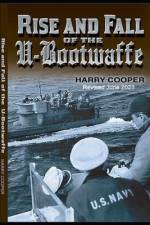
Germany was destroyed, devastated, broken and helpless under the victorious Allied powers after World War One. The ill-conceived Treaty of Versailles had a boot on the German throat. They were allowed a small defensive military not to exceed 100,000 troops and no more than 800 officers. Above all, Germany was not permitted any U-Boats of any kind. How was it then, that as early as 1936 when German U-Boats first went into combat, that they had the most advanced submarines at sea? Further, when World War Two began on 1 September 1939, they had even more units and more advanced submarines than any other navy? While it is true that the U-Bootwaffe had far too few U-Boats on 1 Sept. 1939, they had the most advanced submarines of the time. This book explains the secret planning of the new U-Bootwaffe, the mid-war changes anticipated and requested by Karl Dönitz and it gives his analysis in 1946 why the war went like it did.
*Includes pictures *Profiles weapons such as superartillery, poison gas, rifles, grenades, flamethrowers, planes, and more. *Includes a bibliography for further reading *Includes a table of contents "God would never be cruel enough to create a cyclone as terrible as that Argonne battle. Only man would ever think of doing an awful thing like that. It looked like 'the abomination of desolation' must look like. And all through the long night those big guns flashed and growled just like the lightning and the thunder when it storms in the mountains at home...And it all made me think of the Bible and the story of the Anti-Christ and Armageddon. And I'm telling you the little log cabin in Wolf Valley in old Tennessee seemed a long long way off." - Alvin C. York World War I, also known in its time as the "Great War" or the "War to End all Wars", was an unprecedented holocaust in terms of its sheer scale. Fought by men who hailed from all corners of the globe, it saw millions of soldiers do battle in brutal assaults of attrition which dragged on for months with little to no respite. Tens of millions of artillery shells and untold hundreds of millions of rifle and machine gun bullets were fired in a conflict that demonstrated man's capacity to kill each other on a heretofore unprecedented scale, and as always, such a war brought about technological innovation at a rate that made the boom of the Industrial Revolution seem stagnant. The arms race before the war and the attempt to break the deadlock of the Western and Eastern Fronts by any means possible changed the face of battle in ways that would have previously been deemed unthinkable. Before 1914, flying machines were objects of public curiosity; the first flights of any account on rotor aircraft had been made less than 5 years before and were considered to be the province of daredevils and lunatics. By 1918, all the great powers were fielding squadrons of fighting aircraft armed with machine-guns and bombs, to say nothing of light reconnaissance planes. Tanks, a common feature on the battlefield by 1918, had not previously existed outside of the realm of science fiction stories written by authors like H.G. Wells. Machine guns had gone from being heavy, cumbersome pieces with elaborate water-cooling systems to single-man-portable, magazine-fed affairs like the Chauchat, the Lewis Gun and the M1918 BAR. To these grim innovations were added flamethrowers, hand grenades, zeppelins, observation balloons, poison gas, and other improvements or inventions that revolutionized the face of warfare. These technological developments led to an imbalance. Before the introduction of the man-portable light machine gun (which took place in the second half of the war), not to mention tanks (which also joined the fight late in the game), defensive firepower vastly outweighed offensive capability. Massed batteries of artillery, emplaced heavy machine guns, barbed wire entanglements, and bewildering fortifications meant that ground could not be taken except at incredible cost. This led to the (somewhat unjustified) criticism famously leveled at the generals of World War I that their soldiers were "lions led by donkeys". Certainly, every army that fought in the Great War had its share of officers, at all levels of command, who were incompetent, unsuitable, foolish, or just plain stupid, but there were plenty of seasoned professionals who understood their job and did it well. The main problem facing commanders in the war was that there was such a bewildering array of new armaments, with such vast destructive potential, that previous military doctrines were virtually useless. The Weapons of World War I analyzes the technological advancements in weaponry that produced the deadliest conflict in history up to that time. Along with pictures of important people, places, and events, you will learn about the weapons of World War I like never before, in no time at all.
This work has been selected by scholars as being culturally important, and is part of the knowledge base of civilization as we know it.This work is in the "public domain in the United States of America, and possibly other nations. Within the United States, you may freely copy and distribute this work, as no entity (individual or corporate) has a copyright on the body of the work.Scholars believe, and we concur, that this work is important enough to be preserved, reproduced, and made generally available to the public. We appreciate your support of the preservation process, and thank you for being an important part of keeping this knowledge alive and relevant.
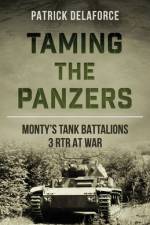
During the desperate days of May 1940 that ended with the fall of France, the 3rd Battalion Royal Tank Regiment was sent to Calais in support of 30th Infantry Brigade, where it played a vital role in the week-long defence of Calais. In helping to stem the inexorable advance of German panzers, the battalion was uniquely praised by Churchill for giving the BEF much-needed extra time for the crucial evacuation from Dunkirk's beaches to be put into effect. Reformed and refitted by the spring of 1941, 3 RTR returned to Europe to fight the panzers once again, this time in the ill-fated Greek campaign, where it became the only RTR unit to see combat. The battalion fought a costly withdrawal action against the Germans, losing its entire complement of tanks, but still managed to inflict casualties on the enemy during the retreat. Hitler was furious: the six-week Greek campaign had delayed Operation Barbarossa, allowing the Russian armies time to re-group before the panzers reached Moscow. The surviving officers and men of 3 RTR embarked for Egypt at the end of April where they came under the command of General Montgomery. 3 RTR fought again in all the main North African desert battles, including the major turning point engagements at Alam Haifa and El Alamein. Moving back to north-west Europe to join the invasion in June 1944, 3 RTR was in the thick of all the desperate battles in Normandy after its arrival on 17 June. The unit took part in the 'Great Swan' to capture Amiens and Antwerp, then provided right flank protection in Operation Market Garden. It helped to halt the panzers in the Ardennes and, as the only RTR unit in the British Army to be equipped with brand new Comet tanks, took part in the many river crossing battles on its way to the Baltic - and on to the end of the war in Europe. Praise for Taming the Panzers: 'This book is very well informed, the author was there personally for some of it and was able to speak to those that were directly involved in other parts as well as having access to war diaries etc. The style is very readable, and it is an excellent unit history [of] a tank regiment that was involved in all of the main campaigns in NW Europe and the Med' - Amazon review Patrick Delaforce (1923-2018) served with the 11th Armoured Division in the Royal Horse Artillery as a troop leader in Normandy and as FOO in The Netherlands and Germany during the Second World War. He was awarded the Bronze Cross of Orange-Nassau and Mentions in Dispatches during the fighting in Germany. He then joined the 7th Armoured Division at the end of 1945 and commanded Java Troop, 3rd Horse Artillery. He wrote several books, including Churchill's Desert Rats, Black Bull, Fighting Wessex Wyverns, Polar Bears, Monty's Ironsides and Marching to the Sound of Gunfire.
Military Industry and Regional Defense Policy re-examines military industrialization in the developing world, focusing on policy-making in producer states and the impact of security perceptions on such policy-making.Timothy D. Hoyt reassesses the role of regional state sub-systems in international relations, and recent historical studies of international technology and arms transfers. Looking at Israel, Iraq and India, the three most powerful regional powers in the Cold War era, he presesnts an expert analysis of the three-sided phenomena of the regional hegemony, the regional competitor and the small over-achiever.This new book breaks away from existing literature on military industries in the developing world, which has focused on their economic and development costs and benefits. These past studies have used primitive methodologies that focus on the production of complete weapons systems - a misleading gauge in a world of growing international defense cooperation. They have also ignored empirical evidence of the impact of local military industrial production on Cold War regional conflict, and of the defence planning and concerns that drove development of indigenous military industries in key regional powers. This new text delivers an incisive new perspective.
*Includes pictures *Includes Tito's own quotes about his life and career *Includes online resources and a bibliography for further reading *Includes a table of contents "No country of people's democracy has so many nationalities as this country has. Only in Czechoslovakia do there exist two kindred nationalities, while in some of the other countries there are only minorities. Consequently in these countries of people's democracy there has been no need to settle such serious problems as we have had to settle here. With them the road to socialism is less complicated than is the case here." - Tito The World War II era produced many leaders of titanic determination, men whose strengths and weaknesses left an extraordinary imprint on historical affairs. The struggle between massively divergent ideologies, exacerbated by huge social changes affected by the world's technological metamorphosis into the machine age, catapulted some individuals unexpectedly onto the world stage. Josip Broz Tito, better known to history as Marshal Tito, was undoubtedly one of these figures. Originally a machinist, Tito leveraged his success in the Communist Party of Yugoslavia (CPY) and a number of extraordinary strokes of luck into dictatorial rule over Yugoslavia for a span of 35 years. World War II proved the watershed that enabled him to secure control of the country, leading an ever more powerful army of communist partisans against both the Germans and other Yugoslav factions. During the war, SS leader Heinrich Himmler himself begrudgingly stated, "He has really earned his title of Marshal. When we catch him we shall kill him at once... but I wish we had a dozen Titos in Germany, men who were leaders and had such resolution and good nerves, that, even though they were forever encircled, they would never give in." During his reign, Tito managed to quash the intense national feelings of the diverse groups making up the Yugoslavian population, and he did so through several methods. He managed to successfully play the two superpower rivals, the United States and Soviet Union, off against each other during the Cold War, and in doing so, he maintained a considerable amount of independence from both, even as he additionally received foreign aid to keep his regime afloat. All the while he remained defiant, once penning a legendary letter to Joseph Stalin warning the Soviet dictator, "To Joseph Stalin: Stop sending people to kill me! We've already captured five of them, one of them with a bomb and another with a rifle... If you don't stop sending killers, I'll send a very fast working one to Moscow and I certainly won't have to send another." Never afraid to use political murder when expedient, yet simultaneously outgoing and good-humored to those around him, Tito created a unique and unusual state between the Western democracies and the Eastern Bloc. Only with his death did the fabric of his "national communist" state tear asunder and age-old identities reassert themselves, bringing about a period of intense conflicts that produced a new equilibrium with ethnically-based successor states that cracked up the state he once led. Marshal Josip Broz Tito: The Life and Legacy of Yugoslavia's First President examines the life of one of the 20th century's most influential leaders. Along with pictures of important people and places, you will learn about Tito like never before.
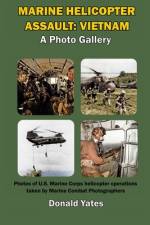
A look at U.S. Marine Corps helicopter operations in the Republic of Vietnam from 1965 until 1972. The operations include assaults, resupply, rocket attacks, and medevacs. Over 35 Marine combat photos taken by Marine combat Photographers. Types of helicopters featured in photographs include UH-1E, CH-46, UH-34D, CH-43, UH-34, CH-47, Sea Knight, and CH-53 Sea Stallion. Marine Corps units mentioned or photographed in this ebook include the 1st Marine Division, 3rd Marine Division, Marine Observation Squadron-6; 4th Marine Regiment (3MD); Helicopter Squadron (HMM)-361; 1st Marine Air Wing (1st MAW); 2nd Battalion, 4th Marines (3MD); Marine Medium Helicopter Squadron 362 (1MD); 1st Marine Aircraft Wing; Marine Medium Helicopter Squadron (HMM)-263; USMC 16th MAG)/ Marine Medium Helicopter Squadron (HMM)-261; F-Battery, 2nd Battalion, 11th Marines (3MD); Marine Aircraft Group (MAG)-56; I-Company, 26th Marines (1MD); Landing Team 3-9 (3MD); 1st Battalion, 4th Regiment (3MD); M-Company, 3rd Battalion, 4th Marines (3MD); Marine Aircraft Group-16 (1st Marine Air Wing); 9th Marine Amphibious Brigade; Medium Helicopter Squadron HMM-164 (3MD); Marine Medium Helicopter Squadron-363; 1st Battalion, 7th Marines (1MD); K-Company, 3rd Battalion, 5th Marines (1MD); 3rd Battalion, 7th Marine Regiment (1MD); 1st Battalion, 5th Marine Regiment (1MD); 3rd Battalion, 11th Marines.
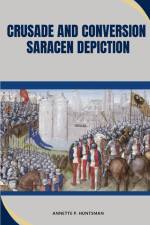
This insightful exploration delves into Middle English romances, which grapple with identity on both macro and micro levels, encompassing culture, religion, and the individual's societal role. Amidst the backdrop of political turmoil, war, and the ravages of plague, these romances probe the essence of Englishness, Christianity, gender roles, kingship, and knighthood. The encounters with the "Other," particularly Saracens, serve as a powerful lens through which to examine identity uncertainties and complexities. Saracens feature prominently in Middle English canon, from the crusade narratives involving Christian knights venturing to the Holy Land to the insular Arthurian tales. These Saracenic figures simultaneously shed light on and blur the boundaries of Middle English Christian identity. Moreover, these romances contemplate the historical context, including the series of failed crusades, prompting reflection on what it would take to achieve lasting victory in the Middle East.
Soucieux de gagner l¿indépendance et l¿autonomie du pays face au monde occidental et à l¿URSS, le leader révolutionnaire Mao Zedong a mené, entre 1949 et 1976, une «Révolution socialiste» continue. Cet ouvrage observe les formes de l¿autoritarisme maoïste en multipliant les angles de vue ¿ arcanes du pouvoir de parti-État, opposition au sein du système, voix réfractaires des petites gens, etc. S¿appuyant sur des sources inédites, l¿auteur offre des plongées sur des personnages de second ou troisième rang peu connus de l¿histoire de la Chine contemporaine, des éclairages sur une ville (Shanghai) plutôt que sur une histoire nationale, ainsi que sur une multitude d¿acteurs ordinaires impliqués dans les divers moments maoïstes. Ce décentrement du regard permet de dépasser le cadre étroit de la hiérarchie bureaucratique et de cerner la présence de diverses réponses individuelles et collectives aux formes centralisatrices et hégémoniques de l¿État maoïste. En dépit d¿un contrôle social mêlé de propagande et de terreur politique, la Chine d¿après 1949 n¿était pas exempte de diversité dans les comportements, ni de particularisme et de localisme : face à une autocratie omnipotente, les individus et les collectivités étaient loin d¿être aussi amorphes qüon l¿a longtemps imaginé. En ce sens, la rupture avec les histoires de la fin de l¿ère Qing et de l¿ère républicaine s¿avère moins accusée et moins définitive.
The USS Ohio and her sisters have served as the underwater arm of the US nuclear triad for over forty years.Thus far, very few books have been written about these majestic boats that have cruised underwater for over four decades, maintaining peace. This book intends to fill that gap. Over 100 full-color pictures released by the US navy, artwork, drawings, and a brief description of the design, construction, and various upgrades of the class serve to satisfy the most demanding naval enthusiast.
This work has been selected by scholars as being culturally important, and is part of the knowledge base of civilization as we know it.This work is in the "public domain in the United States of America, and possibly other nations. Within the United States, you may freely copy and distribute this work, as no entity (individual or corporate) has a copyright on the body of the work.Scholars believe, and we concur, that this work is important enough to be preserved, reproduced, and made generally available to the public. We appreciate your support of the preservation process, and thank you for being an important part of keeping this knowledge alive and relevant.
Focusing on the hybrid maritime world of Hong Kong, Pearl River Delta and West River in the last two decades of the late Qing period, this work tells a vivid trading and competition story of previously unknown private Chinese traders and junk masters. This challenges the prevailing view of the domination of China's maritime trade by modern foreign steamships. Making use of unpublished Kowloon Maritime Customs and British diplomatic records in the late 19th and early 20th century, Henry Sze Hang Choi convincingly shows how these private Chinese traders flexibly adopted to the foreign-dominated maritime customs agencies and treaty port system in defending their Chinese homeland stronghold against the invasion of foreign economic power.
From the Indonesian Republic's onset, there has been some form of military participation in political life - the more significant and interesting aspect of the Indonesian Army's distinctive history. Volume 1 in this three-volume set covers the Army's revolutionary roots, its fighting doctrine, and provides accounts of major operations - the independence struggle, consolidation of the Republic, military campaigns against CIA-backed regional separatists in Sumatra and Sulawesi during the late-1950s, the "liberation' of West Irian and the "Confrontation" with Malaysia. The story starts during the late-colonial period and spans the Japanese occupation during the Second World War, the struggle for independence, the chaotic parliamentary democracy period during the 1950s, Sukarno's autocratic Guided Democracy and the Army's increasingly bitter contest for power with the Indonesian Communist Party - setting the stage for the final bloody confrontation and General Soeharto's New Order - the subject of Volume 2. Written in a journalistic style, these three volumes provide readers insights into Indonesian culture and help them understand why soldiers of the Indonesian Army have behaved the way they do - often in ways, from a western perspective, that must be considered less-than-honorable.
Adattamento in italiano delle pubblicazioni di addestramento basico per i soldati dello US Army. Il testo tratta tutte le informazioni essenziali per la sopravvivenza e il successo sul campo di battaglia. Gli argomenti spaziano dalla prontezza individuale alle armi, agli esplosivi, all'allestimento di postazioni, al combattimento urbano, alla sopravvivenza, alle comunicazioni alla conoscenza delle mine e degli ordigni inesplosi ed altro.
Wer war diese SS und insbesondere die Waffen-SS? Was wissen wir darüber? Was kann man darüber wissen? Das ist die Aufgabe, der sich Edwige Thibaut, der Leichtigkeit des Jahrhunderts trotzend, energisch gestellt hat. Diese wahre Enzyklopädie der SS hätte für immer in einer Schublade verrotten können. Nun riskiert ein wagemutiger Verleger die Veröffentlichung, trotz des enormen Inhalts.In Wirklichkeit ist die SS bis heute, obwohl ihr Tausende von Büchern gewidmet wurden, wenig bekannt, schlecht erforscht und wurde oft durch summarische Beschuldigungen, die an Lächerlichkeit oder Abscheulichkeit grenzen, entstellt. Die Waffen-SS, ihr berühmtester Ableger, war die außergewöhnlichste politisch-militärische Formation, die die Menschheit je gekannt hat. Während des Zweiten Weltkriegs zählte sie eine Million Freiwillige aus 28 verschiedenen Ländern. Alle diese Jungen waren freiwillig gekommen, um ihr Leben (402.000 starben im Kampf) für eine Sache zu opfern, die jeden Teil ihres physischen Lebens und ihres Willens in Anspruch genommen hatte.All das war nicht von selbst passiert. Die SS war zu Beginn des Hitlerismus nur eine Handvoll Menschen. Sie mussten von einem enormen Glauben durchdrungen und dann verzehrt werden, damit diese absolute Hingabe, diese freie, totale Disziplin und die souveräne Überzeugung, dass sie der Welt eine neue Art von Mensch brachten, zur Entfaltung kommen konnten.Wenn man den Verlauf und das Ende des Krieges 1945 kritisch betrachtet, sieht man das Ende eines langen Prozesses, der mit der Entstehung der biblischen Religionen begann: Moral und Sünde ersetzten das Ehrgefühl und die Politik. Aus einem respektablen Gegner wurde ein absoluter Feind mit allen Lastern, der sich der "Zivilisation" widersetzt und um jeden Preis bekehrt oder eliminiert werden muss. In einem globalen Krieg standen sich nun nicht mehr nur Völker, sondern verschiedene Weltanschauungen gegenüber, von denen die einen auf den Rechten und der Gleichheit aller Menschen, dem universalistischen und nomadischen Individualismus und die anderen auf der Mystik der Rasse, der Wertschätzung einer heroischen Haltung über die Grenzen der Zeit hinaus und dem Wert der Gemeinschaft beruhten. In Anbetracht der Tatsache, dass es Gesetze gibt, die über denen von Staaten stehen, wurde der einst ausschließlich individuelle Begriff des Verbrechens zu "Verbrechen gegen die Menschlichkeit" erweitert und auf ein System, eine Ideologie und sogar eine ganze Nation angewandt.
Abonner på vårt nyhetsbrev og få rabatter og inspirasjon til din neste leseopplevelse.
Ved å abonnere godtar du vår personvernerklæring.