


















Gjør som tusenvis av andre bokelskere
Abonner på vårt nyhetsbrev og få rabatter og inspirasjon til din neste leseopplevelse.
Ved å abonnere godtar du vår personvernerklæring.Du kan når som helst melde deg av våre nyhetsbrev.

"The Confederate Navy's medical service is usually overlooked in histories of the Civil War, yet it was vital in maintaining the fighting strength of the South's navy and marine corps. Confederate medical officers not only manned war vessels, they staffed navy yards and land-based hospitals, gathered supplies, participated in raids, examined recruits, and even served at defensive shore batteries. Many such officers had served in the United States Navy, while others were recruited from civil life. Enlisted personnel and civilian physicians also helped the navy provide medical care. That care was used in managing battle wounds and other injuries but was more often devoted to preventing and treating disease. Malaria was particularly common among sailors and marines stationed in the swampy regions of the South. This book, the first devoted entirely to the medical corps of the Confederate navy, provides a carefully researched look at the men, structure, facilities, and activities of the organization. A complete list of men known to have been commissioned as naval officers is included."--
Who said that dictatorship was dead? The world today is full of Strong Men and their imitators. A fascinating exploration of how and why Caesars seize power and why they fall.There is a comforting illusion shared by historians and political commentators, that history progresses in a nice straight line towards liberal democracy or socialism, despite the odd hiccup.In reality, every democracy, however sophisticated or stable it may look, has been attacked or actually destroyed by a would-be Caesar, from Ancient Greece to the present day. Marx was wrong. Caesarism is not an absurd throwback, it is an ever-present danger.There are Big Caesars who set out to achieve total social control and Little Caesars who merely want to run an agreeable kleptocracy without opposition: from Julius Caesar and Oliver Cromwell through Napoleon and Bolivar, to Mussolini, Salazar, De Gaulle and Trump. The saga of Boris Johnson and Brexit frequently crops up in this author's narrative as a vivid, if Lilliputian instance of the same phenomenon.The final part of this book describes how and why would-be Caesars come to grief, from the Gunpowder Plot to Trump's march on the Capitol and the ejection of Boris Johnson by his own MPs, and ends with a defence of the grubby glories of parliamentary politics.
This work has been selected by scholars as being culturally important, and is part of the knowledge base of civilization as we know it.This work is in the "public domain in the United States of America, and possibly other nations. Within the United States, you may freely copy and distribute this work, as no entity (individual or corporate) has a copyright on the body of the work.Scholars believe, and we concur, that this work is important enough to be preserved, reproduced, and made generally available to the public. We appreciate your support of the preservation process, and thank you for being an important part of keeping this knowledge alive and relevant.
Since the early 1990s, the controversial comfort women system has been universally described in the West as Imperial Japan's military having engaged in atrocious criminal acts of abduction, forcible recruitment, and other means of coercion to procure young women as sex slaves for its soldiers during and before World War II. This highly emotional issue has become a matter of wartime human rights violations, a gross affront to women's rights, and a call to reexamine the need to properly address Japan's war crimes in the international community.Though understandable given the information being disseminated by the mainstream media, the comfort women issue turns out to be much more complex and multifaceted by evaluating historical documents such as the Allied Forces' official military documents, a diary by a military brothel manager, memoirs of comfort women, and various primary sources on the trafficking of women in that era.The more information on Japan's comfort women is objectively reviewed, it becomes increasingly difficult to blindly accept the narrative being promoted by the media. In fact, an inconvenient and uncomfortable truth as to what was the norm for so many in parts of Asia of that generation emerges. Were the comfort women sex slaves or prostitutes? The conclusion of the book is bound to surprise a great many readers."Marshall Wordsworth has penned an immaculate work and appraisal of World War II military brothel issues. This book ranks easily among the top works on the subject. Well written and researched, this tome is a must read for serious scholars and journalists who embark to discuss the modern day "comfort women" controversy. The author's conclusions may displease some readers though the conclusions are fully supported by the evidence presented. Read this book." - Michael Yon, author of Moment of Truth in Iraq
"Masterfully told and compellingly reinterpreted." The Moscow TimesStalinism at War tells the epic story of the Soviet Union in World War Two. Starting with Soviet involvement in the war in Asia and ending with a bloody counter-insurgency in the borderlands of Ukraine, Belarus and the Baltics, the Soviet Union's war was both considerably longer and more all-encompassing than is sometimes appreciated. Here, acclaimed scholar Mark Edele explores the complex experiences of both ordinary and extraordinary citizens - Russians and Koreans, Ukrainians and Jews, Lithuanians and Georgians, men and women, loyal Stalinists and critics of his regime - to reveal how the Soviet Union and leadership of a ruthless dictator propelled Allied victory over Germany and Japan. In doing so, Edele weaves together material on the society and culture of the wartime years with high-level politics and unites the military, economic and political history of the Soviet Union with broader popular histories from below. The result is an engaging, intelligent and authoritative account of the Soviet Union from 1937 to 1949.
Large knives with origins as farming and brush cutting tools are often associated with warfare in geographical regions of rough terrain, dense jungle, hills, and in societies without centralized leadership. They have found use as weapons in guerrilla warfare and internal rebellions. The machete has been employed extensively in political uprisings, particularly in Third World countries with unstable governments; for example, in Latin America, Southeast Asia, and Africa.Some of the most varied types of edged weaponry, however, can be found in Indonesia. Since this region faced foreign occupiers, conflicts proved common, forcing the natives to resort to knives that could easily be carried on one's person. Indonesian edged weapons saw use during the Philippine-American War of 1899-1902.Africa is yet a region that has relied on edged weaponry. Because of a need for people to develop ethnic and cultural identity, regional weapons often feature significant differences in shape and size. The edged weapons of Africa frequently demonstrate the cultural connection between war and peace, life and death, offense and defense that existed in peoples' lives.This book focuses on three geographical regions associated with jungle, desert, and guerrilla warfare from around the fifteenth century to modern day: Latin America, Indonesia, and Africa. The book starts by discussing the machete and other big-bladed weapons used extensively in Central America, Cuba, Mexico, and Chile. Next it explores the unique knives of Indonesia, with particular focus on the kris. It then examines the bladed weapons of the different regions of the African continent, including the tactics used in pre- and post-colonial warfare. The history of metallurgic science and the migration of weapons to different regions are also explored. The concluding remarks summarize the main points of each section.Knives, Swords, and Bayonets: A World History of Edged Weapon Warfare is a book series that examines the history of edged weapons in Europe, Asia, Africa, the Americas, and the Middle East and surrounding areas before gunpowder increased the distance between combatants. The book series takes a critical look at the relationship between the soldier, his weapon, and the social and political mores of the times. Each book examines the historical background and metallurgic science of the knife, sword, or bayonet respectively, and explores the handling characteristics and combat applications of each weapon. The individual books are excerpted from the previously published book, A History of Edged Weapon Warfare, also by Martina Sprague. Look for more books in this series in the near future.
This work has been selected by scholars as being culturally important, and is part of the knowledge base of civilization as we know it.This work is in the "public domain in the United States of America, and possibly other nations. Within the United States, you may freely copy and distribute this work, as no entity (individual or corporate) has a copyright on the body of the work.Scholars believe, and we concur, that this work is important enough to be preserved, reproduced, and made generally available to the public. We appreciate your support of the preservation process, and thank you for being an important part of keeping this knowledge alive and relevant.
The story of the encounter between the German Battlecruiser SMS Seydlitz and the Heugh Lighthouse in Hartlepool in December 1914.
War of 1812In 1812, Americans held two distinctly different visions of their country. Some saw growing production, manufactures, trade, and merchant ships traversing the globe bringing a vast array of staple and luxury goods to commercial centers and riches to American captains living in cities like the capitals of Europe. Others saw a vast agrarian paradise spreading from the eastern coast into the western wilderness where innumerable American farmers and their families could be independent and equal, free of government impediments and corruption. These incompatible visions of America were held by two opposing political parties. The two halves of America also had incompatible views on the necessity of war that year. Only the Democratic-Republicans were anxious to march into Canada, seize Florida, and take all the western lands they could win or negotiate. Canada survived, but the indigenous peoples, despite their prodigious efforts to get a voice at the peace treaty table, failed to preserve their cultures, as they foresaw would happen. Inside you will read about...- War Hawks and Neutrality- Declaration and Reaction- The Campaign of 1812 and 1813- 1814: War in the Balance- Final Conflict and PeaceAnd much more! Discover how shifting political ideologies shaped the path forward to 1812 and beyond.
This work has been selected by scholars as being culturally important, and is part of the knowledge base of civilization as we know it.This work is in the "public domain in the United States of America, and possibly other nations. Within the United States, you may freely copy and distribute this work, as no entity (individual or corporate) has a copyright on the body of the work.Scholars believe, and we concur, that this work is important enough to be preserved, reproduced, and made generally available to the public. We appreciate your support of the preservation process, and thank you for being an important part of keeping this knowledge alive and relevant.
These Are The Stories From The Men Of The U-Bootwaffe "U-BOAT!" (vol. VIII) has the fascinating saga of the German U-Bootwaffe in WW II as well as stories of Japanese I-Boats.....even German U-Boats in South America; we hear from 'Silent' OTTO and even Polish subs. These stories come directly from the memories of the men who fought in the greatest of all conflicts, and there is no better or more accurate history than that which comes directly from the warriors who made this history. This book is their continuing story and is an expansion of our "U-BOAT!" history. Come with us on a journey into the greatest conflict the world has ever known.
One man's dream spawned a company that impacted the way we see our world even today. The roots of Santa Barbara Research Center were established when founder Dave Evans set up radio communications for the round-the-world flight of infamous Howard Hughes. Dave went to work for Hughes, became head of the Hughes Aircraft Electronics Department, then struck out on his own with an ambitious vision.Gathering superior talent, Dave and five men pulled together to build something deemed impossible, a daylight star tracker for navigation. The journey was not easy, but their innovations produced instruments and results that were ultimately in high demand by United States defense forces and NASA's space explorations. The family of Santa Barbara Research Center bonded and thrived, supporting our country through several war efforts, the Space age, the Cold War, and beyond. For over fifty years, SBRC provided the technologies for star navigation, for soldiers to see at night, for astronomers to peer into deep space, and for tracking world-wide weather. Eventually, big business interests and a political train wreck led to the death of a dream and the disbursement of technical genius and talent that could never be recaptured. This is our story.
In books like this, we attempt to reveal the real truths behind the propaganda we have been taught over the decades. So much of the published history is incorrect or blatantly false, either by error or by design. In the volumes of this book, we rip away the curtain of false information and reveal true history, direct from those who were there. We promised our sources that we would keep these files and stories locked up for 25 years. That time has passed and we now open the books for all.
Private snapshots taken by German soldiers as the went through training then deployment into Norway. Photos of the family back in Germany; photos of the scenery as they moved forward, scenes of battle and scenes of funeral processions. These photos are all shot by foot soldiers in the war.
This work has been selected by scholars as being culturally important, and is part of the knowledge base of civilization as we know it.This work is in the "public domain in the United States of America, and possibly other nations. Within the United States, you may freely copy and distribute this work, as no entity (individual or corporate) has a copyright on the body of the work.Scholars believe, and we concur, that this work is important enough to be preserved, reproduced, and made generally available to the public. We appreciate your support of the preservation process, and thank you for being an important part of keeping this knowledge alive and relevant.
This work has been selected by scholars as being culturally important, and is part of the knowledge base of civilization as we know it.This work is in the "public domain in the United States of America, and possibly other nations. Within the United States, you may freely copy and distribute this work, as no entity (individual or corporate) has a copyright on the body of the work.Scholars believe, and we concur, that this work is important enough to be preserved, reproduced, and made generally available to the public. We appreciate your support of the preservation process, and thank you for being an important part of keeping this knowledge alive and relevant.
In the American Revolution...they were there-there in the Civil War...the Boer War, The First World War... The Second World War...The Vietnam War-they were there in every single American war...in the Shadows; they are the American Sniper. This book goes way back to the origins-to the very first snipers to ever fight in an American war, and traces there roots throughout American history. Along the way it will trace their training and various weaponry.
Congratulations with taking a first step on a journey to learn more about your World War II soldier's, sailor's, airman's, or Marine's military service and walk in their footsteps in Europe. World War II travel is done for many reasons. There are people who enjoy seeing the major battle sites and hearing history of the more famous units who helped win the war. Veterans still travel to Europe to walk where they fought, meet old friends and make new ones, and attend commemorative events. There are some who unexpectedly end up at a cemetery or battlefield and take an interest in the war. Finally, there are many who travel to heal their souls and find answers or closure to questions they have had about their father or mother's service. Whatever your reason for World War II travel, I invite you to be open to anything that shows up on your journey. This quick guide introduces you to: - Doing your homework. Helping you learn about your service member's history prior to travel. - Trip planning tips. - Considerations for hiring a travel agent, traveling with a tour group, or traveling on your own. - Learning about living history in Europe. - Ways to preserve the details and memories of your trip. - Ways to contribute to preserving World War II history in Europe. Are you ready to travel in your soldier's footsteps in Europe?
Tercera monografía de la serie "Aviones con Historia" de Aviation Art & History, que cuenta la historia del Dassault Mirage M-5MA Elkan No. 705 de la Fuerza Aérea de Chile. En veinticuatro páginas se publican detalles de su construcción y servicio para la Fuerza Aérea Belga (FAB) hasta su servicio en la Fuerza Aérea de Chile (FACh). Este Mirage operó casi veinte años en la FAB como M-5BA BA-37 en el Escuadrón No. 1 y fue retirado del servicio en 1989. En 1994 fue modificado por SABCA al estándar MirSIP para ser vendido a la FACh como M-5MA Elkan No. 705. La FACh los asignó al Grupo de Aviación No. 8, basado principalmente en la Base Aérea de Cerro Moreno, Antofagasta. En 2005 participó el ejercicio CEIBO, realizado en Argentina, en la Base Aérea de Plumerillo, Mendoza. En 2006 es retirado del servicio junto al resto de la flota y actualmente está preservado en el Ala de Abastecimiento de la FACh, Base Aérea El Bosque.
This work has been selected by scholars as being culturally important, and is part of the knowledge base of civilization as we know it.This work is in the "public domain in the United States of America, and possibly other nations. Within the United States, you may freely copy and distribute this work, as no entity (individual or corporate) has a copyright on the body of the work.Scholars believe, and we concur, that this work is important enough to be preserved, reproduced, and made generally available to the public. We appreciate your support of the preservation process, and thank you for being an important part of keeping this knowledge alive and relevant.
La storia della difesa dell'Estonia, dalla testa di ponte di Narva alla "Linea Tannenberg" da parte dei volontari europei SS danesi, norvegesi, fiamminghi ed estoni e delle unità tedesche del III (germanisches) SS-Panzerkorps - vero e proprio "Esercito Europeo" - contro l'irrompere verso ovest delle forze dell'Armata Rossa nel gennaio-settembre 1944. Battaglie, atti d'eroismo, vittorie e sconfitte dei contendenti sono ricostruite in un testo documentato ma scorrevole, basato su fonti ufficiali e resoconti di veterani, e integrati da 270 rare foto in bianco e nero e a colori e mappe.
La vida y sentir de un piloto de caza en la Segunda Guerra Mundial, es dibujada quirúrgicamente con la pluma de Bernardo Jurado.Esta obra es un excepcional ejemplo de pulcritud yrespeto a los caÃdos que cumplen su deber desde el aire.
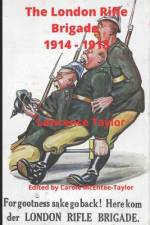
The London Rifle Brigade were part of the London Regiment, at eighty battalions, the largest Territorial Force Regiment of the Great War. Those men who enlisted in the 5th Battalion, The London Regiment, The London Rifle Brigade before the outbreak of the war were of the same educated social class, worked and socialised together and served with a self-discipline unknown to their regular army comrades. This pre- war pride in their battalion proved vital as the London Rifle Brigade went off to war in November 1914. A second and then a third battalion were formed to provide reinforcements for the first battalion as casualties mounted in 1915 and 1916. These new riflemen were enthused with the record of their comrades fighting on the Western Front, and soon the second battalion joined the first in Belgium. Although the men now were of a different social class, the spirit and discipline of the old pre- war battalion lived on for they, as well as the rest of the British Army, faced defeat in March 1918 as the German Spring Offensive might force an outcome in any peace negotiations in Germany's favour. The London Rifle Brigade would find themselves in the thick of the action once more, and in the advances of The Hundred Days which led to the Armistice in November 1918.
This work has been selected by scholars as being culturally important, and is part of the knowledge base of civilization as we know it.This work is in the "public domain in the United States of America, and possibly other nations. Within the United States, you may freely copy and distribute this work, as no entity (individual or corporate) has a copyright on the body of the work.Scholars believe, and we concur, that this work is important enough to be preserved, reproduced, and made generally available to the public. We appreciate your support of the preservation process, and thank you for being an important part of keeping this knowledge alive and relevant.
Another Shade Of Green: A Marine's Army Journey is the highly-anticipated follow-up to Andrew Belet's previous entry into the War Chronicles, Mountain Man: A Marine in Afghanistan. It follows SGT Belet's transfer from the Marines to the civilian world, to the United States Army and finally back to Afghanistan for a hellish deployment in which he was wounded and lost several close friends. Raw and unfiltered, it is a terse look at a soldier put into a difficult position, and succeeding against the odds. Told in a quick, bloq-esque style, it provides insight and understanding into the 9/11 Generation or warriors fighting a dangerous and unpredictable war.
Lieutenant Edward Settle Godfrey was commander of K Company of the 7th Cavalry in the battalion of Captain Frederick Benteen. Godfrey was a central figure in the Reno-Benteen defense over the 25th and 26th of June, 1876. He kept a diary of the Yellowstone Expedition against the Sioux from May 17 to September 24.The diary reveals anecdotes and observations of General Custer's mood and behavior before the fight on June 25th, as well as the desperate story of survival experienced by the battalions under Reno and Benteen. It also contains fascinating details about how the cavalry moved, camped, and relaxed during the days leading up to the fight.In 1892, (then Captain) Godfrey wrote what became a very famous and widely-read article for Century Magazine about the Battle of the Little Bighorn. Both of these documents are cited by most serious Custer books..
During February 1969, NVA and VC units initiated 51 indirect and ground fire attacks in the I Corps area, the highest number of attacks since August 1968. This book contains a valuable collection of edited operational and intelligence reporting from the major headquarters in I Corps, providing unique insight into this period of the war. The documents are enhanced with declassified satellite imagery, maps and order of battle (OB) data on NVA and VC units in the Northern Provinces. Collectively, they provide a fascinating summary of U.S. and NVA/VC activity by province in the region. The senior headquarters at the time was the III Marine Amphibious Force (III MAF) in Da Nang. The major subordinate elements to this headquarters in February 1969 were the XXIV Corps, the 3rd Marine Division, the 1st Marine Division and the 101st Airborne Division (Airmobile). The enclosed reporting discusses significant events and operations in the month of February to include: Operation DEWEY CANYON - This multi-battalion operation under the 3rd Marine Division began on 22 January 1969 with the establishment of Fire Bases Razor and Cunningham along the border with Laos. Col. Robert H. Barrow led the 9th Marines into NVA strongholds in the northern A Shau Valley and discovered one of the largest NVA munitions and arms caches of the war. Elements of the 1st Marine Aircraft Wing and the 101st Airborne Division Hook Company flew in support, despite limited visibility due to Monsoon weather. The heaviest fighting was from 18-22 February, which is covered in this book. By the termination of Dewey Canyon on 18 March 1969, Marines had found 525 tons of weapons and ammunition in the jungle covered mountains on the Laotian border. Operation MASSACHUSETTS STRIKER - This operation, in the southern portion of the 101st Airborne Division's Area of Operations, was designed to open Route 547 in the 25 mile-long A Shau Valley. This area was normally under the control of the NVA and the terrain in this region was formidable. The peaks of some mountains along the side of the valley reached almost 7,000 feet above sea level. Operations DEWEY CANYON and MASSACHUSETTS STRIKER were part of a series of operations in the A Shau Valley region by the 3rd Marine Division and the 101st Airborne Division throughout 1969. Follow-on operations would include APACHE SNOW, MONTGOMERY RENDEZVOUS, and LOUISIANA LEE. The operational reporting in the book has been reproduced with some additions and editing to facilitate context. This series of historical books is intended to provide unique historical documents to the reader, permitting a better understanding of the war in Vietnam. As a result, faded ink, notes in the margins as well as variations in print clarity may exist due to the age of these original documents. The included Periodic Intelligence Reports were published by III MAF's intelligence section (G2) and were usually released weekly. They provide a fascinating summary of enemy activity by province and an analysis of the enemy situation to include assessments of the strength and unit locations in the I Corps Tactical Zone. Marine Corps Command Chronologies were initiated by the Commandant of the Marine Corps in July 1965. This reporting was usually completed monthly by line units in Vietnam and is a foundation for Marine historical documentation of the war. The supporting cable traffic is highly detailed. This book covers other ongoing III MAF operations during the reporting period to include: SCOTLAND II and PURPLE MOUNTAIN- TF Hotel operations in Quang Tri Province, extending to the Laotian border. . MARSHALL MOUNTAIN- Elements of the 3rd Marine Division with the 1st Brigade, 5th Division (Mech) in Quang Tri Province. TAYLOR COMMON - Elements of the 1st Marine Division discovered large caches of supplies during operations from Go Noi Island to the An Hoa basin.
The Allies offers a rich account of the activities of British and US intelligence services in civil war Greece in 1946-49. Main subjects of this monograph are: the spies inside communist cells, informers in Athens elite circles, communication intercepts, black propaganda and special operations under the auspices of the Special Air Service, arms smuggling and, Stalin's plans.
Abonner på vårt nyhetsbrev og få rabatter og inspirasjon til din neste leseopplevelse.
Ved å abonnere godtar du vår personvernerklæring.