






















Gjør som tusenvis av andre bokelskere
Abonner på vårt nyhetsbrev og få rabatter og inspirasjon til din neste leseopplevelse.
Ved å abonnere godtar du vår personvernerklæring.Du kan når som helst melde deg av våre nyhetsbrev.

This work has been selected by scholars as being culturally important, and is part of the knowledge base of civilization as we know it.This work is in the "public domain in the United States of America, and possibly other nations. Within the United States, you may freely copy and distribute this work, as no entity (individual or corporate) has a copyright on the body of the work.Scholars believe, and we concur, that this work is important enough to be preserved, reproduced, and made generally available to the public. We appreciate your support of the preservation process, and thank you for being an important part of keeping this knowledge alive and relevant.
Sergeant Melvin Gomes served with the American Army during World War Two, serving in America and overseas and with all my love, Melvin is based on the letters he wrote home to his parents during this time. Sent over a three year period, they provide a fascinating first hand account of the life of an American soldier during the war and the relationship between him and his parents.
This work has been selected by scholars as being culturally important, and is part of the knowledge base of civilization as we know it.This work is in the "public domain in the United States of America, and possibly other nations. Within the United States, you may freely copy and distribute this work, as no entity (individual or corporate) has a copyright on the body of the work.Scholars believe, and we concur, that this work is important enough to be preserved, reproduced, and made generally available to the public. We appreciate your support of the preservation process, and thank you for being an important part of keeping this knowledge alive and relevant.
This work has been selected by scholars as being culturally important, and is part of the knowledge base of civilization as we know it.This work is in the "public domain in the United States of America, and possibly other nations. Within the United States, you may freely copy and distribute this work, as no entity (individual or corporate) has a copyright on the body of the work.Scholars believe, and we concur, that this work is important enough to be preserved, reproduced, and made generally available to the public. We appreciate your support of the preservation process, and thank you for being an important part of keeping this knowledge alive and relevant.
World War I was the first great general conflict to be fought between highly industrial societies able to manufacture and transport immense quantities of goods over land and sea. Yet the armies of the war were too vast in scale, their movements too complex, and the infrastructure upon which they depended too specialized to be operated by professional soldiers alone. In Civilian Specialists at War, Christopher Phillips examines the relationship between industrial society and industrial warfare through the lens of Britain's transport experts. Phillips analyzes the multiple connections between the army, the government, and the senior executives of some of prewar Britain's largest industrial enterprises, revealing that civilian transport experts were a key component of Britain's strategies in World War I. This book also details the application of recognizably civilian technologies and methods to the prosecution of war, and documents how transport experts were constrained by the political and military requirements of coalition warfare.
In modern history, China has been primarily a land power, dominating smaller states along its massive continental flanks. But China's turn toward the sea is now very much a reality, as evident in its stunning rise in global shipbuilding markets, its vast and expanding merchant marine, the wide offshore reach of its energy and minerals exploration companies, its growing fishing fleet, and indeed its increasingly modern navy. Yet, for all these achievements, there is still profound skepticism regarding China's potential as a genuine maritime power. Beijing must still import the most vital subcomponents for its shipyards, maritime governance remains severely bureaucratically challenged, and the navy evinces, at least as of yet, little enthusiasm for significant blue water power projection capabilities. This volume provides a truly comprehensive assessment of prospects for China's maritime development by situating these important geostrategic phenomena within a larger world historical context. China is hardly the only land power in history to attempt transformation by fostering sea power. Many continental powers have elected or been impelled to transform themselves into significant maritime powers in order to safeguard their strategic position or advance their interests. We examine cases of attempted transformation from the Persian Empire to the Soviet Union, and determine the reasons for their success or failure. Too many works on China view the nation in isolation. Of course, China's history and culture are to some extent exceptional, but building intellectual fences actually hinders the effort to understand China's current development trajectory. Without underestimating the enduring pull of China's past as it relates to threats to the country's internal stability and its landward borders, this comparative study provides reason to believe that China has turned the corner on a genuine maritime transformation. If that proves indeed to be the case, it would be a remarkable if not singular event in the history of the last two millennia.
This work has been selected by scholars as being culturally important, and is part of the knowledge base of civilization as we know it.This work is in the "public domain in the United States of America, and possibly other nations. Within the United States, you may freely copy and distribute this work, as no entity (individual or corporate) has a copyright on the body of the work.Scholars believe, and we concur, that this work is important enough to be preserved, reproduced, and made generally available to the public. We appreciate your support of the preservation process, and thank you for being an important part of keeping this knowledge alive and relevant.
This work has been selected by scholars as being culturally important, and is part of the knowledge base of civilization as we know it.This work is in the "public domain in the United States of America, and possibly other nations. Within the United States, you may freely copy and distribute this work, as no entity (individual or corporate) has a copyright on the body of the work.Scholars believe, and we concur, that this work is important enough to be preserved, reproduced, and made generally available to the public. We appreciate your support of the preservation process, and thank you for being an important part of keeping this knowledge alive and relevant.
There was nothing more secret than CIA's mind control program, MKULTRA. A large amount of direct and circumstantal all evidence point to Lee Oswald as the patsy in the JFK assassination. As Alex Hidell he was an MKULTRA secret and didn't even know it.
The sword, a treasured combat arm and symbol of identity, status, and courage has held a special place in most countries of the world. The samurai, however, may have received unparalleled attention in the history of the sword. This brief introduction to medieval Japan demonstrates how the politically strong samurai shaped the view one held of battle. Following the abolishment of the samurai class, the Meiji Restoration, and the opening of Japan to the West in the nineteenth century, Japan was anxious to move ahead with modern military equipment and the building of a national army. Few traditional swords were made and the Japanese adopted western style cavalry sabers. In the twentieth century the sword continued to be carried into battle as a supplementary weapon; not necessarily practical for the battlefield but, nevertheless, serving an important function as a "crutch for the heart." The gunto, or new-army sword, which was modeled after the samurai katana but modernized to conform to western standards, was carried by army and navy officers and cavalry troops until Japan's fall at the end of World War II.This book focuses on the era that one normally associates with the medieval period. It starts by exploring the history of Japanese sword making, the development of metallurgic science, and the skill required of the swordsmith to forge a strong and battle-worthy blade that adhered to the standards followed by the samurai warrior class. It then covers samurai mentality and philosophy of sword fighting, with respect to the battlefield use of the katana and the dynamics of Japanese swordsmanship. It summarizes with a history of the gunto new-army sword and the practical and philosophical value this sword had to the twentieth-century soldier. The concluding remarks focus on the sword as a symbol of Japanese culture.Knives, Swords, and Bayonets: A World History of Edged Weapon Warfare is a book series that examines the history of edged weapons in Europe, Asia, Africa, the Americas, and the Middle East and surrounding areas before gunpowder increased the distance between combatants. The book series takes a critical look at the relationship between the soldier, his weapon, and the social and political mores of the times. Each book examines the historical background and metallurgic science of the knife, sword, or bayonet respectively, and explores the handling characteristics and combat applications of each weapon. The individual books are excerpted from the previously published book, A History of Edged Weapon Warfare, also by Martina Sprague. Look for more books in this series in the near future.
This work has been selected by scholars as being culturally important, and is part of the knowledge base of civilization as we know it.This work is in the "public domain in the United States of America, and possibly other nations. Within the United States, you may freely copy and distribute this work, as no entity (individual or corporate) has a copyright on the body of the work.Scholars believe, and we concur, that this work is important enough to be preserved, reproduced, and made generally available to the public. We appreciate your support of the preservation process, and thank you for being an important part of keeping this knowledge alive and relevant.
One of my most prized possessions is the letters my parents wrote to each other while my Dad was in the Army Air Corps during World War II. Although most of the letters were written during WWII, some of them were written as early as 1937. Book one, Just Yours, included letters written from September 1937 - December 1942. From India with Love is the second book in the trilogy of My Parents' Love Letters During World War II. It is January 1943 and Glenn has just arrived in India. He has not seen his fiancé, Nita, since he entered the service in March 1942. This book is composed of the love letters that he wrote from January 1943 - March 1944. Unfortunately, he had to destroy the letters that Nita wrote to him before traveling to and from overseas, except for the few that he managed to ship home. Although most of this book consists of the love letters my Dad wrote to my Mother, there are a few other letters written from friends and family. I am also in possession of the diary of my paternal grandfather, Boston Harris. His brief entries provide a unique perspective of life back home, his working life on a farm, and the difficulty of running the farm with his three sons serving their country during World War II. Reading these letters is like being transported in a time machine to witness the 1940's through the eyes of a soldier from South Carolina and the girl back home who loves and misses him. In addition to these descriptive letters, there are pictures, greeting cards, and many references to movies and popular songs of the time.
Edged weapons became a mainstay in early Chinese history and through the Ming (1368-1644 CE) and Qing (1644-1912 CE) dynasties. The Chinese used swords to settle personal disputes, win military battles, and indicate one's social and martial status through the end of the Imperial Period.China, a country of vast resources, developed its metal and iron industry earlier than its western counterparts and achieved great advances in metallurgic science. There were two classes of Chinese swords: the straight double edged jian and the slightly curved single edged dao. The jian proved effective mainly for chivalry combat in the Zhou Dynasty (1045-256 BCE), and was later carried by the nobility as a symbol of status. Military officers, perhaps because of their association with the nobility, seem to have preferred the double edged jian over the dao. The dao proved useful mainly in cavalry combat, which started to gain popularity in the Western Han Dynasty (202 BCE-9 CE). The dao was a true soldier's weapon that required more attention to fighting skill than finesse.This book follows a chronological path through China's dynasties, exploring sword design and swordsmanship. The concluding remarks recap the long history of the sword with focus on the philosophical value one assigned the weapon.Knives, Swords, and Bayonets: A World History of Edged Weapon Warfare is a book series that examines the history of edged weapons in Europe, Asia, Africa, the Americas, and the Middle East and surrounding areas before gunpowder increased the distance between combatants. The book series takes a critical look at the relationship between the soldier, his weapon, and the social and political mores of the times. Each book examines the historical background and metallurgic science of the knife, sword, or bayonet respectively, and explores the handling characteristics and combat applications of each weapon. The individual books are excerpted from the previously published book, A History of Edged Weapon Warfare, also by Martina Sprague. Look for more books in this series in the near future.
Cette unité d'infanterie à la courte existence, est créée au début de l'année 1944 à partir des restes de plusieurs divisions décimées en Russie. Transférée en France, d'abord en Normandie puis en Bretagne, elle est le 7 juin 1944, dépêchée dans le Cotentin pour faire face au débarquement allié. Rapidement réduite à l'état de groupement tactique, elle restera sur le front jusqu'au 18 juillet. Devant être reformée dans la région de Saint-Malo, elle y sera complètement détruite et déclarée dissoute le 15 septembre. Cette nouvelle édition a été totalement revue grâce aux très nombreuses informations découvertes depuis la première parution.
This work has been selected by scholars as being culturally important, and is part of the knowledge base of civilization as we know it.This work is in the "public domain in the United States of America, and possibly other nations. Within the United States, you may freely copy and distribute this work, as no entity (individual or corporate) has a copyright on the body of the work.Scholars believe, and we concur, that this work is important enough to be preserved, reproduced, and made generally available to the public. We appreciate your support of the preservation process, and thank you for being an important part of keeping this knowledge alive and relevant.
This work has been selected by scholars as being culturally important, and is part of the knowledge base of civilization as we know it.This work is in the "public domain in the United States of America, and possibly other nations. Within the United States, you may freely copy and distribute this work, as no entity (individual or corporate) has a copyright on the body of the work.Scholars believe, and we concur, that this work is important enough to be preserved, reproduced, and made generally available to the public. We appreciate your support of the preservation process, and thank you for being an important part of keeping this knowledge alive and relevant.
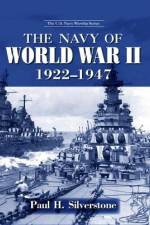
The Navy of World War II, 1922-1946 comprehensively covers the vessels that defined this momentous 24-year period in U.S. naval history. Beginning with the lean, pared-down navy created by the treaty at the Washington Naval Conference, and ending with the massive, awe-inspiring fleets that led the Allies to victory in the Second World War, the fourth volume in the celebrated U.S. Navy Warship series presents a detailed guide to all the warships that exhibited the might of the U.S. Navy to the fullest. Showcasing all the ships--both the famous and the often overlooked-that propelled the U.S Navy to prominence in the first half of the twentieth century, The Navy of World War II catalogues all the warships from this era, including those that did battle in the European, Mediterranean, and Pacific Theaters from 1941-1946. From the fleet attacked at Pearl Harbor, to those that fought valiantly in the Battle of the Guadalcanal, to the official surrender of the Japanese on the deck of the USS Missouri, this latest volume is the definitive guide to the warships that defined this pivotal period in U.S. naval history.Each volume in the U.S. Navy Warship series represents the most meticulous scholarship for its particular era, providing an authoritative account of every ship in the history of the U. S. Navy from its first incarnation as the Continental Navy to its present position as one of the world's most formidable naval superpowers. Featuring convenient, easy-to-read tabular lists, every book in the series includes an abundance of illustrations, some never before published, along with figures for actions fought, damages sustained, casualties suffered, prizes taken, and ships sunk, ultimately making the series an indispensable reference tool for maritime buffs and military historians alike. A further article about Paul Silverstone and the Navy Warships series can be found at: http: //www.thejc.com/home.aspx?ParentId=m11s18s180&SecId=180&AId=58892&ATypeId=1
The Sirens of Funagora is the true story of five hundred Ottoman sailors and the voyage they took from Constantinople to Yokohama in 1889 on the majestic but doomed frigate Ertugrul. Their mission: to build goodwill toward the Ottoman Empire in Muslim ports along the way, and to negotiate treaties with the Japanese emperor when they reached their destination. In addition to the first Ottoman diplomatic representative to Japan, the frigate had on board a poet, a musician, a photographer, and a secret agent who did his best to thwart the frigate's journey. Though it should have taken less than three months, human intrigue and natural hazards extended the voyage to almost one year. The frigate safely reached her destination, only to encounter a typhoon at the beginning of her return to Constantinople in the autumn of 1890. What ensued was the greatest naval disaster of the nineteenth century resulting in an unprecedented cultural exchange between the surviving Ottoman sailors and the Japanese villagers whose shores they washed up on. Part suspense, part odyssey, part historical narrative, Ertur's novel takes readers through this remarkable chapter in late-nineteenth century history through the eyes of the men who lived it. Readers will experience the thrilling highs and devastating lows of life on the high seas, and finish The Sirens of Funagora with a new appreciation for the caprice of history.
This work has been selected by scholars as being culturally important, and is part of the knowledge base of civilization as we know it.This work is in the "public domain in the United States of America, and possibly other nations. Within the United States, you may freely copy and distribute this work, as no entity (individual or corporate) has a copyright on the body of the work.Scholars believe, and we concur, that this work is important enough to be preserved, reproduced, and made generally available to the public. We appreciate your support of the preservation process, and thank you for being an important part of keeping this knowledge alive and relevant.
Airplanes are created to fly, not to hang down from a ceiling in museums or rust in hangars. This statement is especially true, when it comes to the U-2 spy plane, a.k.a. "Dragon Lady". This relict of the Cold War is still in operation after more than fifty years since its first flight in 1955. Designed for high flight the U-2 is at home at an altitude of more than 70,000 feet. At an altitude so high, land under the plane does not appear to be flat anymore. A pilot can see the curvature of the surface of the Earth. It is like being on a spaceship with one exception. Gravity is still present.The U-2 continues to offer the response time unmatched by spy satellites, the ability to communicate directly with troops on the ground, and lower costs compared to drones. This illustrated book presents some interesting facts from the Dragon Lady's rich past and exciting present.
They say that to really know a person you need to understand their past. If that is true, then Mary Beker did not know her husband at all.
The year is 1914. Large scale casualties to the British regular army mean that the Denbigh Territorials are thrown into the inferno of the Western Front. This is a war of rain, mud, bullets, shells and blood. The vicious fight against the forces of the Kaiser in the first year of the Great War would have a devastating effect on the families of Denbigh. This is the story of the Denbigh Terriers - of ordinary men who served in exceptional times - a story of duty, courage and of the supreme sacrifice.
In the midst of the Second World War, the Allies acknowledged Germany's ongoing programme of extermination. In the Shadow of the Holocaust examines the struggle to attain post-war justice and prosecution. Focusing on Poland's engagement with the United Nations War Crimes Commission, it analyses the different ways that the Polish Government in Exile (based in London from 1940) agitated for an Allied response to German atrocities. Michael Fleming shows that jurists associated with the Government in Exile made significant contributions to legal debates on war crimes and, along with others, paid attention to German crimes against Jews. By exploring the relationship between the UNWCC and the Polish War Crimes Office under the authority of the Polish Government in Exile and later, from the summer of 1945, the Polish Government in Warsaw, Fleming provides a new lens through which to examine the early stages of the Cold War.
After the Flying Saucers Came is a comprehensive account of the stories, the people, and the strange events that went into making the fascination with UFOs and aliens a worldwide phenomenon among believers, skeptics, and the simply curious. It traces how an odd sighting of "flying saucers" by an American pilot in 1947 inspired governments, the media, scientists, writers, and the general public to consider the possibility that extraterrestrials were visiting earth.
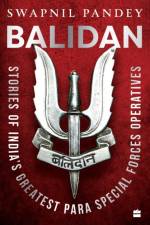
Based on more than two hundred interviews with the friends and families of these men, conducted over one year and multiple trips to various Special Forces Units near the LoC and the LAC, Balidan seeks to resurrect these men from the shadows for the first time.
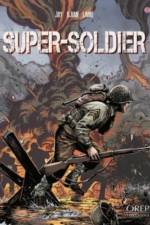
1943, on a farm in Arkansas, two brothers, Eddy and JohnnyCollins, receive their mobilization letter: one will disembark atOmaha Beach while the other will have to climb a vertiginouscliff held by the enemy. Will the two brothers end upto regain ?
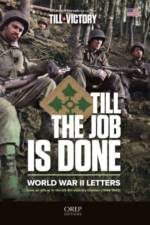
Illustrated with colorized wartime photographs and original battle relics, read for the first time the complete correspondence of an American officer in the 4th Infantry Division, from the battlefields of Normandy to the dark forest of Hÿrtgen and the liberation of Paris! These poignant letters and true story make us reflect on the terrible effects of war and the importance of peace.
Full boots-on-the-ground account of the first large-scale search & destroy campaign in Vietnam, demonstrating the efficacy of the strategy at an operational level.
Abonner på vårt nyhetsbrev og få rabatter og inspirasjon til din neste leseopplevelse.
Ved å abonnere godtar du vår personvernerklæring.