










Gjør som tusenvis av andre bokelskere
Abonner på vårt nyhetsbrev og få rabatter og inspirasjon til din neste leseopplevelse.
Ved å abonnere godtar du vår personvernerklæring.Du kan når som helst melde deg av våre nyhetsbrev.

"Krieg in Stalingrad" ist ein Buch, das wahrscheinlich die historischen Ereignisse der Schlacht von Stalingrad während des Zweiten Weltkriegs behandelt. Die Schlacht, die von 1942 bis 1943 stattfand. Es war ein wichtiger Wendepunkt im Krieg und gilt als eine der blutigsten und brutalsten Schlachten der Menschheitsgeschichte. Das Buch würde wahrscheinlich einen detaillierten Bericht über die Strategien, Taktiken und Erfahrungen der deutschen und sowjetischen Armeen während der Schlacht und ihre Bedeutung im gröÃeren Kontext des Krieges liefern. Es enthält auch besondere Details über die Auswirkungen der Schlacht auf die Stadt Stalingrad (heute Wolgograd) und ihre Bewohner. Es kann als Geschenk für Ihren Freund verwendet werden, der Kriegsgeschichten liebt.
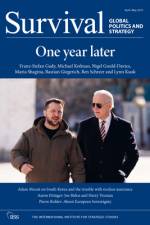
Survival, the IISS's bimonthly journal, challenges conventional wisdom and brings fresh, often controversial, perspectives on strategic issues of the moment.In this issue: Franz-Stefan Gady and Michael Kofman assess that Ukraine will not be able to avoid attrition in its military strategy against Russia Nigel Gould-Davies assesses that Vladimir Putin's priority has shifted from demobilising the population from politics to mobilising it behind the war Bastian Giegerich and Ben Schreer judge that Germany still requires significant changes to its defence and foreign policies for Zeitenwende to be meaningful Lynn Kuok believes that framing great-power competition as an ideological struggle is counterproductive to the United States' partnerships in the Asia-Pacific Adam Mount observes that a fixation on nuclear assurance is harming the military alliance between the United States and South Korea And seven more thought-provoking pieces, as well as our regular Book Reviews and Noteworthy column.Editor: Dr Dana AllinManaging Editor: Jonathan StevensonAssociate Editor: Carolyn WestEditorial Assistant: Charlie Zawadzki
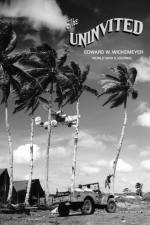
Original South Pacific World War II Journal: The recently discovered journal of Edward W. Wickemeyer, who served as a waist gunner, flight engineer, and aerial photographer on the B-24 Liberator "The Uninvited" during World War II, is included in this publication. This book also includes a detailed account of Ed's 19 months of extensive training that took place around the nation before he arrived at his first installation in Hawaii. Ed, who was stationed in the South Pacific, recalls his 44 bombing missions, which he carried out over a ten-and-a-half-month period and involved several islands. He started serving for the Army Air Forces at the conclusion of 1942. In response to the Japanese attack on Pearl Harbor, On October 30th 1942, Ed Wickemeyer, then 20 years old, gathered his best friend and went into the Fort Thomas Kentucky recruiting center. On that day, his life would change irrevocably. Included in this edition are 44 original images that were shot during bombing missions in the South Pacific jungles and developed there in a makeshift darkroom.Daniel Wickemeyer, the publisher's son, put this book together and created the detailed maps that show the locations of bombed islands and flight times. Dan has added side notes that outline significant historical occurrences that happened concurrently with the war.
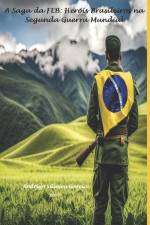
A atuação dos militares na 2a Guerra Mundial. O livro relata do inicio ao fim da missão da FEB
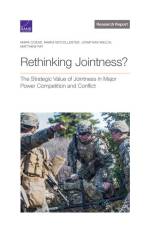
This report examines whether the assumption that jointness is inherently valuable to the U.S. military is correct, and if so, in what ways. Understanding how and why jointness is most valuable can help the U.S. military compete more effectively.
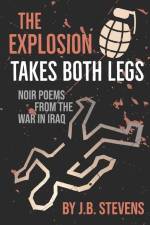
"In a punchy collection of poetry packed with humor and grit, The Explosion Takes Both Legs, former U.S. Army infantry officer turned crime-fiction writer J.B. Stevens delivers both action and insight into how Americans go to war in the 21st century. Stevens is a two-time past finalist in the Col. Darron L. Wright Memorial Writing Awards, with one award each in prose (2022) and poetry (2021) categories. The annual awards are administered by the Chicago-based literary journal Line of Advance. A graduate of The Citadel, a military college in Charleston, South Carolina, Stevens now lives in the Southeastern United States with his wife and daughter"--
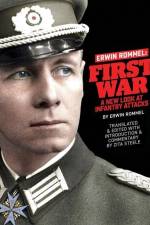
New English translation by military historian Zita Steele analyzes Field Marshal Erwin from young soldier in World War I to famous World War II commander. Many rare photographs. Faithful to German, exciting new take on his experiences.
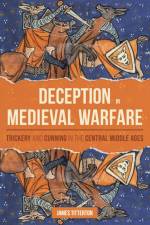
First full-length study of the use and perception of deceit in medieval warfare.Deception and trickery are a universal feature of warfare, from the Trojan horse to the inflatable tanks of the Second World War. The wars of the Central Middle Ages (c. 1000-1320) were no exception. This book looks at the various tricks reported in medieval chronicles, from the Normans feigning flight at the battle of Hastings (1066) to draw the English off Senlac Hill, to the Turks who infiltrated the Frankish camp at the Field of Blood (1119) disguised as bird sellers, to the Scottish camp followers descending on the field of Bannockburn (1314) waving laundry as banners to mimic a division of soldiers. This study also considers what contemporary society thought about deception on the battlefield: was it a legitimate way to fight? Was cunning considered an admirable quality in a warrior? Were the culturally and religious "e;other"e; thought to be more deceitful in war than Western Europeans? Through a detailed analysis of vocabulary and narrative devices, this book reveals a society with a profound moral ambivalence towards military deception, in which authors were able to celebrate a warrior's cunning while simultaneously condemning their enemies for similar acts of deceit. It also includes an appendix cataloguing over four hundred incidents of military deception as recorded in contemporary chronicle narratives.
Survival, the IISS's bimonthly journal, challenges conventional wisdom and brings fresh, often controversial, perspectives on strategic issues of the moment.In this issue: Hans Binnendijk and David C. Gompert assess that Sino-US talks on nuclear stability should start with a nuclear no-first-use declaration Irene Mia argues that fiscal constraints might prevent new leftist governments in Latin America from implementing their policy pledges Agnieszka Gehringer makes the case that the EU will benefit in the longer term from reducing its economic dependency on China Jean-Yves Haine observes that the Ukraine crisis may be more dangerous than the Cuban Missile Crisis insofar as Vladimir Putin considers Ukraine strategically crucial to Russia Cesare Merlini believes that the legacies of Henry Kissinger and Jean Monnet may help us to understand current trends in global affairs And six more thought-provoking pieces, as well as our regular Book Reviews and Noteworthy column.Editor: Dr Dana AllinManaging Editor: Jonathan StevensonAssociate Editor: Carolyn WestEditorial Assistant: Charlie Zawadzki
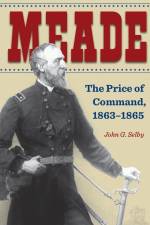
George Gordon Meade has not been treated kindly by history. Victorious at Gettysburg, the biggest battle of the American Civil War, Meade was the longest-serving commander of the Army of the Potomac, leading his army through the brutal Overland Campaign and on to the surrender of Robert E. Lee and the Army of Northern Virginia at Appomattox. Serving alongside his new superior, Ulysses S. Grant, in the last year of the war, his role has been overshadowed by the popular Grant. This first full-length study of Meade's two-year tenure as commander of the Army of the Potomac brings him out of Grant's shadow and into focus as one of the top three Union generals of the war. John G. Selby portrays a general bestride a large army he could manage well and a treacherous political environment he neither fully understood nor cared to engage. Meade's time as commander began on a high note with the victory at Gettysburg, but when he failed to fight Lee's retreating army that July and into the fall of 1863, the political knives came out. Meade spent the winter of 1863-64 struggling to retain his job while the Joint Committee on the Conduct of the War sought to have him dismissed. Meade offered to resign, but Grant told him to keep his job. Together, they managed the Overland Campaign and the initial attacks on Petersburg and Richmond in 1864. By basing his study on the Official Records of the War of the Rebellion, original Meade letters, and the letters, diaries, journals, and reminiscences of contemporaries, Selby demonstrates that Meade was a much more active, thoughtful, and enterprising commander than has been assumed. This sensitive and reflective man accepted a position that was as political as it was military, despite knowing that the political dimensions of the job might ultimately destroy what he valued the most, his reputation.
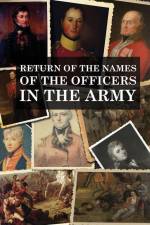
Informative list of army pensions in the 40 years between the Battle of Bunker Hill and Waterloo. Drawn up on the orders of Lord Palmerston, it is a remarkable insight into the class and rank privileges of the period.
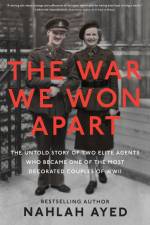
"Love, betrayal, and a secret war: the untold story of two elite agents, one Canadian, one British, who became one of the most decorated wartime couples of WWII. On opposite sides of the pond, Sonia Butt, an adventurous young British woman, and Guy d'Artois, a French-Canadian soldier and thunderstorm of a man, are preparing to go to war. From different worlds, they make their way to fight in Winston Churchill's secret army against the German forces and, unlike most involved in the world's deadliest conflict to date, to fight from behind enemy lines. Their lives first intersect during clandestine training to become agents with the Special Operations Executive. Sonia and Guy learn how to parachute into enemy territory, how to kill, blow up rail lines, support the French resistance, and eventually...how to love each other. But not long after their hasty marriage, their love is tested by separation, by a titanic invasion--and by indiscretion. Written in vivid, heart stopping prose, we follow their stories of uncommon courage--as Sonia plunges into Nazi-occupied France and slinks into black market restaurants to throw off German forces who knew she'd arrived, while at the same time participating in sabotage operations against them by night; and as Guy, in another corner of France, trains hundreds into a resistance army, fashioning himself a military leader, weapons instructor, and peacemaker all at once. Reconstructed from hours of unpublished interviews and hundreds of archival and personal documents, Ayed tells a story of sacrifice and youthful folly; a story about the ravaging costs of war paid for disproportionately by the young. But more than anything, The War We Won Apart is a story about love: two secret agents who were supposed to land in enemy territory together, but were fated to fight the war apart."--
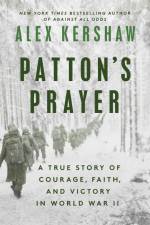
"General George Patton needed a miracle. In December 1944, the Allies found themselves stuck. Rain had plagued the troops daily since September, turning roads into rivers of muck, slowing trucks and tanks to a crawl. ... Patton seethed, desperate for some change, any change, in the weather. A devout Christian, he telephoned his head chaplain. 'Do you have a good prayer for the weather?' he asked. The resulting prayer was soon printed and distributed to the 250,000 men under Patton's command. 'Pray when driving, ' the men were told. 'Pray when fighting. Pray alone. Pray with others. Pray by night and pray by day. Pray for the cessation of immoderate rains, for good weather for Battle. Pray for victory. Pray for peace." Then came the Battle of the Bulge. Amid frigid temperatures and heavy snow, 200,000 German troops overwhelmed the meager American lines in Belgium's Ardennes Forest, massacring thousands of soldiers as the attack converged on a vital crossroads town called Bastogne. There, the 101st Airborne was dug in, but the enemy were lurking, hidden in the thick blanket of fog that seemed to never dissipate. A hundred miles of frozen roads to the south, Patton needed an answer to his prayer, fast, before it was too late"--
This work has been selected by scholars as being culturally important, and is part of the knowledge base of civilization as we know it.This work is in the "public domain in the United States of America, and possibly other nations. Within the United States, you may freely copy and distribute this work, as no entity (individual or corporate) has a copyright on the body of the work.Scholars believe, and we concur, that this work is important enough to be preserved, reproduced, and made generally available to the public. We appreciate your support of the preservation process, and thank you for being an important part of keeping this knowledge alive and relevant.
The Gurkhas have been termed the only soldiers who can win their battles on their reputation alone. Weapons shape the character of the men who wield them and two upturned kukris meeting at the top, their naked blades crossing, serve as the identifying insignia of the Brigade of Gurkhas in the United Kingdom.The Gurkhas were brought to the world's attention in the nineteenth century, when the territory ruled by Britain's Honourable East India Company in Nepal experienced a number of boundary disputes and Gurkha raids. Mutual respect developed between the Gurkhas and the British, who viewed the Gurkhas as disciplined and capable fighters training under the motto, "It is better to die than to be a coward."In modern times the Gurkhas have served the British Crown in several campaigns worldwide, including both World Wars. As World War II ended Gurkhas saw active service mainly in the Far East, until Britain moved forward to defend the Falkland Islands following the Argentine occupation in the spring of 1982.This book examines the kukri knife as a combat weapon and relates it to the history of the Gurkha soldier. It starts with a historical background of the Gurkhas, including an account of the campaigns in which they have fought. It then explores the origin and handling characteristics of the kukri and its combat applications. Next it discusses Gurkha recruitment into the British and Indian armies, followed by an examination of the status of Gurkhas as mercenary soldiers. The book summarizes with a discussion of the Gurkha reputation as the "bravest of the brave." The concluding remarks focus on the Gurkhas' so-called "inherent" fighting characteristics and the kukri knife as a symbol of status and skill.Knives, Swords, and Bayonets: A World History of Edged Weapon Warfare is a book series that examines the history of edged weapons in Europe, Asia, Africa, the Americas, and the Middle East and surrounding areas before gunpowder increased the distance between combatants. The book series takes a critical look at the relationship between the soldier, his weapon, and the social and political mores of the times. Each book examines the historical background and metallurgic science of the knife, sword, or bayonet respectively, and explores the handling characteristics and combat applications of each weapon. The individual books are excerpted from the previously published book, A History of Edged Weapon Warfare, also by Martina Sprague. Look for more books in this series in the near future.
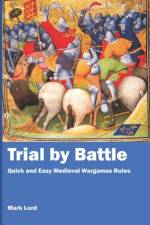
Trial by Battle is a set of wargames rules for playing games set in the Medieval period of history. They are designed to be easy to learn and to play and are ideal for a quick game. They are ideal for players who are not very familiar with wargames rules or who don't have hours to play with. Sometimes this type of ruleset is called a "beer and pretzels" game. Neither beer nor pretzels are required to play, but a game is always more enjoyable with good refreshments. The rules aim to be representative of how medieval armies fought but aren't an exact simulation. They don't provide for all the different variations in types of soldiers and armies during the Medieval period. For instance, there is an Archers unit that can represent crossbowmen or longbowmen. The rules provide the framework for an enjoyable Medieval wargame that captures the feel of battles in the Middle Ages. The rules include six scenarios and some sample army lists to help you get started.
The story of the men of the 1st Battalion Royal Welsh Fusiliers who died in the Great War. Volume 2. Surnames F to K
Abonner på vårt nyhetsbrev og få rabatter og inspirasjon til din neste leseopplevelse.
Ved å abonnere godtar du vår personvernerklæring.