




















Gjør som tusenvis av andre bokelskere
Abonner på vårt nyhetsbrev og få rabatter og inspirasjon til din neste leseopplevelse.
Ved å abonnere godtar du vår personvernerklæring.Du kan når som helst melde deg av våre nyhetsbrev.

As a samurai, warrior, and soldier, Miyamoto Musashi viewed sword fighting as a study in strategy and tactics, thinking of the quickest way to defeat the enemy. War strategy is a zero-sum game. He wins who can ably apply his understanding of strategy to enhance his tactics, and his opponent loses. As much as we would like to view it as a book about self-actualization or the achievement of business aims, the Book of Five Rings is primarily a military treatise, written by a man who understood the brutality of war and the necessity to take a fight to the finish. This brief study explains Musashi's famous text with an eye toward the pragmatism of scientific principles, made easy for modern martial arts.
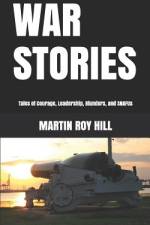
The first nonfiction book by award-winning novelist Martin Roy Hill, WAR STORIES is a collection of articles on military history published by the author in various magazines and websites. They describe acts of great heroism and acts of pure blundering, intrepid leadership and self-serving vainglory, brilliant wartime technological developments and not so brilliant ideas. Some will awe the reader with their inspirational stories. Others will astound the reader by the military stupidity they reveal.Stories about: - The little navy that saved Texas independence.- America's first colonial war and why military leaders are re-examining it.- The lost battle that set America on the course to victory in WWII.- The man who inspired the creators of Horatio Hornblower and Jack Abrey.- Why Patton really lost the 7th Army.- How master deceivers helped win WWII.And more!
La expulsión de los nativos americanos al oeste del río Misisipi durante el siglo XIX para despejar el camino a los colonos es una historia trágica que implica sufrimiento humano que alcanza grandes proporciones.La política del destino manifiesto afirmaba que Estados Unidos era una nación moralmente superior que tenía derecho a construir un imperio desde la costa este hasta la costa oeste, en detrimento de los nativos americanos que se interpusiera en su camino. Este libro documentará el Sendero de las Lágrimas, sacando a la luz muchos sucesos que ocurrieron en el trasfondo y describiendo al mismo tiempo a algunos destacados jefes nativos americanos, como el jefe seminola Abiaka y el jefe cheroqui John Ross, y a algunos de los europeos estadounidenses con los que se enfrentaron.También iremos más allá de la historia convencional y examinaremos más de cerca la asimilación que se produjo entre los colonos blancos y los nativos americanos. Las características únicas de las tribus que se enfrentaron a los colonos españoles que llegaron a Florida y a los demás colonos europeos que llegaron a la costa este no suelen conocerse en su totalidad. Analizaremos más de cerca esta mezcla de culturas para ofrecerle una imagen más clara de cómo eran los cheroquis, chickasaw, choctaw, creek y seminolas en la época del Sendero de Lágrimas.Estas son algunas de las cosas que descubrirá en este libro:Por qué las tribus desarrollaron diversas formas de cristianismo.Las razones que llevaron a los jefes a firmar tratados para ceder tierras de los nativos.La opinión de George Washington sobre los nativos americanos.Las Cinco Tribus Civilizadas y cómo se diferenciaban entre sí.La opinión del ciudadano medio sobre los nativos americanos en el siglo XIX.La opinión de Davy Crockett sobre la reubicación de los nativos americanos.La Ley de Traslado Forzoso de Indios de 1830 y su impacto en el Sendero de Lágrimas.¡Y mucho más!
This work has been selected by scholars as being culturally important, and is part of the knowledge base of civilization as we know it.This work is in the "public domain in the United States of America, and possibly other nations. Within the United States, you may freely copy and distribute this work, as no entity (individual or corporate) has a copyright on the body of the work.Scholars believe, and we concur, that this work is important enough to be preserved, reproduced, and made generally available to the public. We appreciate your support of the preservation process, and thank you for being an important part of keeping this knowledge alive and relevant.
This book presents aspects of the Cuba policy during Gerald R. Ford¿s administration (August 9, 1974 to January 20, 1977), and the oscillations between carrot and stick that was its hallmark. The book¿s Cuban perspective complements the knowledge of the U.S.-Cuban relationship during the mid-1970s.
This work has been selected by scholars as being culturally important, and is part of the knowledge base of civilization as we know it.This work is in the "public domain in the United States of America, and possibly other nations. Within the United States, you may freely copy and distribute this work, as no entity (individual or corporate) has a copyright on the body of the work.Scholars believe, and we concur, that this work is important enough to be preserved, reproduced, and made generally available to the public. We appreciate your support of the preservation process, and thank you for being an important part of keeping this knowledge alive and relevant.
This work has been selected by scholars as being culturally important, and is part of the knowledge base of civilization as we know it.This work is in the "public domain in the United States of America, and possibly other nations. Within the United States, you may freely copy and distribute this work, as no entity (individual or corporate) has a copyright on the body of the work.Scholars believe, and we concur, that this work is important enough to be preserved, reproduced, and made generally available to the public. We appreciate your support of the preservation process, and thank you for being an important part of keeping this knowledge alive and relevant.
Moins connue que ces deux grandes soeurs que sont les82nd et 101st Airborne Division, la 17th Airborne n'a pas démérité. Engagées dans la Seconde Guerre Mondial de1942 à 1945, elle participa à trois campagnes. Durant ces45 jours de combat, elle va totaliser plus de 6130 victimes pour un effectifs de départ de plus ou moins 10.000hommes.Ce livre raconte l'histoire de cette division au travers de nombreux témoignages d'hommes qui en ont fait partie.
This work has been selected by scholars as being culturally important, and is part of the knowledge base of civilization as we know it.This work is in the "public domain in the United States of America, and possibly other nations. Within the United States, you may freely copy and distribute this work, as no entity (individual or corporate) has a copyright on the body of the work.Scholars believe, and we concur, that this work is important enough to be preserved, reproduced, and made generally available to the public. We appreciate your support of the preservation process, and thank you for being an important part of keeping this knowledge alive and relevant.
For every soldier, sailor, pilot, or marine who answers a country's call, there are mothers, fathers, relatives, and friends who do more than just stand and wait. Until the end of war, through tears and fears, they become the beacons of home and hope. We may have heard of the battles and the politics of the "war to end war," but rarely do we hear of those Americans who, from the very moment the first shot was fired, rushed to the aid of France. In A Rising Power you will hear in their own voices what soldiers, sailors, relatives, protestors, civilian volunteers, correspondents, and others, were thinking, doing, and saying. They are the forgotten warriors whose voices speak again.
Carl von Clausewitz's book, On War, has stood the test of time. Clausewitz's greatest contribution may have been in the organization and compilation of commonly known facts, rather than in the discovery of new truths with respect to combat and war. He succeeded because he analyzed a great number of elements, shedding light on old ideas, and clarifying these in a format that the masses of military men could understand. He recognized the importance of studying failure brought by uncertainty and chance. Clausewitz necessarily requires deep analysis, however, which is not possible in a book this size, intended only to highlight his most important arguments. To get the most out of Clausewitz, focus should be placed on the nature of war (a set of universal principles) as opposed to the conduct of war (the specific methods by which war is waged).There are many prisms through which one can view Clausewitz and the ways in which he expressed military theory. Rather than examining specific battles or simply giving the reader a rundown of facts for memorization, this brief book introduces the major issues that appear in On War. The intent is not to go into depth about Clausewitz, but to give the reader a good start through brevity, in the hope that it will trigger further analysis and discussion. The text includes the following topics:1. On the Theory of War2. What is War?3. Absolute versus Real War4. Defense as the Stronger Form of War5. On Strategy and Tactics in War6. On Victory and Defeat7. On the Commander and Military Genius8. Topics for Further Study and DebateThe book is suitable for history interested readers looking for thought provoking topics, but not having a lot of time; and for teachers preparing the class for critical thinking about historical events, and how they have come to affect current affairs. More books with focus on domestic and international military history will be forthcoming in this series titled, A 59-Minute Perspective.
Major-General Philip H. Sheridan's Shenandoah Valley Campaign of 1864 was the most successful Union Army thrust through the region during America's Civil War. Confederate Lieutenant-General Jubal A. Early successfully won a victory at Lynchburg, Virginia, and then marched his troops down the lower Shenandoah Valley. After crossing the Potomac River and winning a victory at Frederick, Maryland, Early turned his attention to threatening the nation's capital but failed in his endeavor. After withdrawing across the Potomac River into Virginia, Lieutenant-General Ulysses S. Grant and government authorities decided that Early's army had to be defeated and driven from the Shenandoah Valley. General Grant appointed Major-General Philip H. Sheridan to command a 40,000-man infantry, cavalry, and artillery force to deal with Early. Sheridan's Shenandoah Valley Campaign had two primary objectives. First, to drive Early's Confederates from the Shenandoah Valley or destroy his army. Second, Sheridan was to destroy anything the Confederacy could use, including crops and livestock, which the Confederacy badly needed. Sheridan and Early, fought three major battles in the Shenandoah Valley between September and October 1864: Third Winchester, Fisher's Hill, and Cedar Creek. All three of the major engagements were covered by local and national journalists. Newspaper stories were the primary source of information for the civilian and military population. In Sheridan's Valley Campaign in the Newspapers, I chose three Valley News Echo newspapers that published the stories of the Shenandoah Valley Campaign of 1864.
There have been several books written on the British Army Catering Corps either from the first day of its formation in 1941 and/or all the way through to the Royal Logistic Corps being formed in 1993. Unfortunately some of these accounts were never mass produced.Where did it all begin? The ACC; what was it all about? And how did training develop throughout the years? What did it really involve?With this in mind I set myself a task of tracing ordinary men and women who were trained in Aldershot from Ramillies, Tournai, Clayton and finally at St Omer Barracks. I decided to combine an account of how we, as soldiers became a part of British Army history. The result is what you see before you, a unique look into the lives and memories from past ACC and the present Royal Logistic Corps soldiers. Wrapped within two volumes are personal anecdotes and a somewhat detailed journey incorporating the history of the Corps through others fields of literature and how it was transformed into a now disbanded part of the British Army. This is the first volume of two, giving first-hand accounts from the ordinary men and women who were there. Sometimes poignant, at other times surprising and even humorous; the personal experiences of these soldiers tells the story of the Corps in their own way which is as fresh as their past memories.This first volume falls into place by telling the story of the ascension of the Corps in the early 1940's at the home of the then British Army in Aldershot to the latter part of the 1960's. This is a chronological guide of the Corps, along with our memories within the chapters, the chapters that shaped and molded the former soldiers to being a "Soldier first, and a Chef second". We Sustain.
One high-altitude nuclear detonation will create a massive electromagnetic pulse that can bring down the U.S. national power grid and keep it down for many months, perhaps a year or longer. Americans would instantly find themselves without running water, food, refrigeration, lights, phones, functioning toilets and sewage systems, air conditioning and heating, transportation (no gasoline), and without access to their bank accounts or medical services. A nuclear high-altitude electromagnetic pulse will damage and destroy the modern electronic devices required to run U.S. critical national infrastructure; it will also disable the Emergency Power Systems and active Emergency Core Cooling Systems at dozens of U.S. nuclear power plants, causing the meltdown of their nuclear reactors. All legislative efforts to protect the grid and critical national infrastructure from electromagnetic pulse have been blocked by the electric and nuclear utilities, as well as by the Nuclear Regulatory Commission.
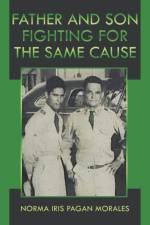
The Korean War was fought between North Korea and South Korea from 1950 to 1953. The warbegan on 25 June 1950 when North Korea invaded South Korea following clashes along the borderand rebellions in South Korea.North Korea was supported by China and the Soviet Union while South Korea was supported by theUnited States and allied countries. The fighting ended with an armistice on 27 July 1953.In 1910, ImperialJapan annexed Korea, where it ruled for 35 years until its surrender at the end of World War II on 15August 1945. The United States and the Soviet Union divided Korea along the 38th parallel into twozones of occupation. The Soviets administered the northern zone, and the Americans administeredthe southern zone. In 1948, because of Cold War tensions, the occupation zones became two sovereignstates. A communist state, the Democratic People's Republic of Korea, was established in the northunder the totalitarian rule of Kim Il Sung, while a capitalist state, the Republic of Korea, was establishedin the south under the autocratic leadership of Syngman Rhee. Both governments claimed to be thesole legitimate government of all of Korea, and neither accepted the border as permanent. Since PuertoRico is a commonwealth of the United States, every Boricua had to be prepared to fight any war thatthe United States was involved in. This is the story of my Grandfather Julio Pagan and my father Juan J.Pagan. Together they went to Korea and fought for our country.Norma Iris Pagan Morales was born in Ponce, Puerto Rico. Her parents, Juan JosePagan Rodriguez, and Digna Morales Figueroa, now deceased, always helped herwith her projects as a writer and teaching career.Norma had three siblings, Adelin Milagros Pagan Morales, Juan Jose Pagan Morales,and Julio Manuel Pagan Morales. Julio Manuel Pagan Morales died on September19, 1998. He was also known for his writing/composing skills.On February 17, 2023, Adelin Milagros Pagan Morales, her sister, died in the City of New York.Norma did all her academic studies in New York City, Puerto Rico, and Canada. She worked in theCity of New York Police Department where she oversaw the full investigation of every new civilianand uniform member of the department.As an Educator, she worked in New York City Bd. of Education, in Puerto Rico Bd. of Education as anEnglish teacher. She also worked for the Puerto Rico Army National as an English Teacher.She has teaching certifications for English as a Second Language and Teaching English as a ForeignLanguage. She also has teaching licenses to teach the following:1. English Literature2. Spanish Literature3. Communication Skills in both English and Spanish4. Office Procedures - These classes consisted of basic filing, writing memorandums, and fullcompany or organization reports.5. Computers - Certified to teach Long Distance LearningShe has published 18 books: Proud of My Puerto Rican Bequest, Porque Soy Boricua? Poemas del Alma,Art in Written Form, A Baffl ing Short Stories Collection, On Job in the Big Apple, Nature's Rage in theCaribbean, You are the One, The Unfaithful, Poemas Tiernos, Two Strangers, Puerto Rican Soldiers Servingwith Pride, Two Strangers to name a few...
Jimmy Corbin has always wanted to join the RAF, so when his wish is granted in 1940, and he learns to fly his beloved Spitfire, Jimmy is delighted. But the Battle of Britain is about to begin. When Charlotte's twin sister is murdered during a bombing raid, she vows revenge on the German pilot she believes is responsible. But someone helped him escape the country and her search for justice will lead her in directions she could never have foreseen. Fred Corben (same family, different spelling*) was delighted to be asked to work for the RSS, the Radio Security Service, but working in the shadowy environment of the listening services he soon learns that everything is not as it seems. Frederick Farmer fought and was injured in the Great War so when war loomed again he was one of the first to volunteer for the Home Guard. But Frederick's life is not all it appears, he has a secret that could affect the outcome of the war. Geoffrey Maund is a member of the RAF Air Sea Rescue Service based in Singapore, but it is his other activities that occupy his every waking thought. Why won't anyone listen to his warnings? John Perriman, a Telegraphist on HMS Cleopatra, joined the Royal Navy in 1921, aged 16, but nothing in his past had prepared him for bomb alley. Hunting Shadows: A Family at War, is a mix of fact and fiction, inspired by the true story of five members of the same family who fought for their country during the Second World War. The real story of the family members and photos are at the end of the book. Jimmy Corbin was awarded the DFC John Perriman was awarded the DSM, Atlantic and Mediterranean stars, the RN Long Service and Good Conduct medal *The reason for the different spelling is in the book.
This work has been selected by scholars as being culturally important, and is part of the knowledge base of civilization as we know it.This work is in the "public domain in the United States of America, and possibly other nations. Within the United States, you may freely copy and distribute this work, as no entity (individual or corporate) has a copyright on the body of the work.Scholars believe, and we concur, that this work is important enough to be preserved, reproduced, and made generally available to the public. We appreciate your support of the preservation process, and thank you for being an important part of keeping this knowledge alive and relevant.
This work has been selected by scholars as being culturally important, and is part of the knowledge base of civilization as we know it.This work is in the "public domain in the United States of America, and possibly other nations. Within the United States, you may freely copy and distribute this work, as no entity (individual or corporate) has a copyright on the body of the work.Scholars believe, and we concur, that this work is important enough to be preserved, reproduced, and made generally available to the public. We appreciate your support of the preservation process, and thank you for being an important part of keeping this knowledge alive and relevant.
"No one who fought there, on either side, talked seriously about who won and who lost. In such a slaughterhouse there are no winners, only survivors." - An American soldier after the Battle of Ia Drang The Vietnam War could have been called a comedy of errors if the consequences weren't so deadly and tragic. In 1951, while war was raging in Korea, the United States began signing defense pacts with nations in the Pacific, intending to create alliances that would contain the spread of Communism. As the Korean War was winding down, America joined the Southeast Asia Treaty Organization, pledging to defend several nations in the region from Communist aggression. One of those nations was South Vietnam. Before the Vietnam War, most Americans would have been hard pressed to locate Vietnam on a map. South Vietnamese President Diệm's regime was extremely unpopular, and war broke out between Communist North Vietnam and South Vietnam around the end of the 1950s. Kennedy's administration tried to prop up the South Vietnamese with training and assistance, but the South Vietnamese military was feeble. A month before his death, Kennedy signed a presidential directive withdrawing 1,000 American personnel, but shortly after Kennedy's assassination, new President Lyndon B. Johnson reversed course, instead opting to expand American assistance to South Vietnam. At the start of hostilities, the United States hoped to batter the North Vietnamese into submission with Operation Rolling Thunder in early 1965, but it was hamstrung by some of the most restrictive rules of engagement ever imposed on a military force. The Joint Chiefs of Staff wanted to fight the war to win, smashing North Vietnam's military capabilities by unleashing the full weight of America's excellent air arm against Ho Chi Minh's resources. President Lyndon Johnson, however, had other ideas. His policy revolved around fear of Soviet and Chinese involvement in the war, though a considerable body of intelligence suggested neither would likely intervene. The North Vietnamese accepted Chinese aid but viewed their large neighbor with extreme suspicion bordering on hostility. The Soviets, for their part, did not work well with the Chinese either, and they endured internal problems of their own at the time. Later in 1965, the government decided to divert many air assets to supporting a bigger American ground presence in South Vietnam. Admiral U.S.G. Sharp noted, "Our Rolling Thunder bombing program against North Vietnam got off to a painfully slow start and inched along in the most gradual increase in intensity. At the same time we decided to employ additional ground forces in South Vietnam and use them in active combat operations against the enemy." Thus, the fighting in the la Drang Valley represented the first significant encounters between American soldiers and the North Vietnamese. Fought in November 1965 as a part of the Pleiku campaign in Vietnam's Central Highlands, these battles were most notable at the time for involving large-scale helicopter assaults supported by B-52 strategic bombers playing tactical support roles. They also established a model for the war in Vietnam in which the Americans made use of rapid air mobility, reliance on artillery, and close air support, while the North Vietnamese attempted to engage their enemy at close range with the objective of neutralizing their firepower. But it would also serve as a harbinger of what was to come, as tactical successes would not bring about strategic advantages for the Americans. In fact, both sides would claim victory by the time fighting was done around Ia Drang.
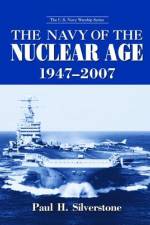
The Navy of the Nuclear Age, 1947-2007, the fifth volume in the monumental U.S. Navy Warship series, presents an all-inclusive compendium of the ships that served in the U.S. Navy from the Cold War up through the present day. Featuring radical new developments in warships such as nuclear-powered submarines and carriers equipped with ballistic missiles, the post-World War II period was one of unprecedented technological growth for the U.S. Navy. The Navy of the Nuclear Age contains specifications and illustrations for all the ships and submarines that have helped the U.S. to achieve its present-day status as the country with the world's largest and most powerful navy.A further article about Paul Silverstone and the Navy Warships series can be found at: http: //www.thejc.com/home.aspxParentId=m11s18s180&SecId=180&AId=58892&ATypeId=1
This work has been selected by scholars as being culturally important, and is part of the knowledge base of civilization as we know it.This work is in the "public domain in the United States of America, and possibly other nations. Within the United States, you may freely copy and distribute this work, as no entity (individual or corporate) has a copyright on the body of the work.Scholars believe, and we concur, that this work is important enough to be preserved, reproduced, and made generally available to the public. We appreciate your support of the preservation process, and thank you for being an important part of keeping this knowledge alive and relevant.
This is the story of an aircraft that might have changed the air-war in 1945/46. Lots of photos, drawings, information, data and more than 6000 words give a detailed insight into the development of this unique piece of aviation. When US troops in May 1945 moved into the Junkers aviation works in East Germany, they discovered two very unusual aircraft with forward-swept wings. They marveled at the first two prototypes for the Luftwaffe's new long-range jet- bomber - and handed them over to the Russians. The Junkers documents on swept wings found there, changed the aviation industry of the USA, the United Kingdom, Russia, and other nations. Boeing immediately modified the design of its B-47 and B-52 under development. The Russians build further prototypes and learned much from this advanced aircraft.Uwe W. Jack in 1990 discovered documents that proved that all other publication to date on this aircraft had been wrong. He met the chief test pilot of Junkers, who had flown the prototype of the Ju 287 and got first-hand information on its behavior in the air. Uwe W. Jack shared his knowledge liberally with other authors - but now publishes his version. Don't miss the first part of the series - Aerospace History Files 01 !
Town twinning refers to the postwar phenomenon of administrative exchange between analogous municipalities. Cold War-related research has mostly interpreted it as an instrument to pursue European integration, or to solidify détente "from below". However, municipalities were not only administrative, neutral actors, but also bearers of political content. This is particularly visible in the case of Italian towns located in the Western bloc, guided by socialist-oriented administrations, and their "twin" counterparts in the German Democratic Republic. This volume explores the connections initiated by such towns in the 1960s-1970s, focusing on socialist-specific conceptions which fueled the policies implemented by "red" municipalities, in managing local economies and social policies, but also in maintaining a lively and interconnected transnational microsociability among grassroots activists. Despite the increasing ideological divergences between Eastern and Western communists, and between Italian democratic communists and the more dogmatic and repressive, strictly pro-Soviet ones in the GDR, communication continued to flourish on the local level. The book explores what still linked the two worlds together, the "bright side of socialism" in this case, a common symbolism related to the past, practical exchanges in the present dimension, and a shared future imagination and conception of the town on the basis of a socialist horizon, built around welfare and services for citizens and workers.
This work has been selected by scholars as being culturally important, and is part of the knowledge base of civilization as we know it.This work is in the "public domain in the United States of America, and possibly other nations. Within the United States, you may freely copy and distribute this work, as no entity (individual or corporate) has a copyright on the body of the work.Scholars believe, and we concur, that this work is important enough to be preserved, reproduced, and made generally available to the public. We appreciate your support of the preservation process, and thank you for being an important part of keeping this knowledge alive and relevant.
This work has been selected by scholars as being culturally important, and is part of the knowledge base of civilization as we know it.This work is in the "public domain in the United States of America, and possibly other nations. Within the United States, you may freely copy and distribute this work, as no entity (individual or corporate) has a copyright on the body of the work.Scholars believe, and we concur, that this work is important enough to be preserved, reproduced, and made generally available to the public. We appreciate your support of the preservation process, and thank you for being an important part of keeping this knowledge alive and relevant.
This work has been selected by scholars as being culturally important, and is part of the knowledge base of civilization as we know it.This work is in the "public domain in the United States of America, and possibly other nations. Within the United States, you may freely copy and distribute this work, as no entity (individual or corporate) has a copyright on the body of the work.Scholars believe, and we concur, that this work is important enough to be preserved, reproduced, and made generally available to the public. We appreciate your support of the preservation process, and thank you for being an important part of keeping this knowledge alive and relevant.
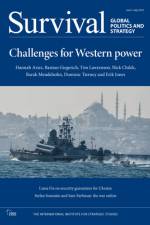
Survival, the IISS's bimonthly journal, challenges conventional wisdom and brings fresh, often controversial, perspectives on strategic issues of the moment.In this issue Hannah Aries, Bastian Giegerich and Tim Lawrenson assess that Europe's defence industry will struggle to meet increased production needs In 2007, the late Ronald Steel judged that while the Iraq War had weakened the United States, it would not profoundly affect US foreign policy (from the archive) Dana H. Allin reflects on Ronald Steel's legacy and prospects for the 'extended American Century' Liana Fix argues that the West should formulate security guarantees for Ukraine in parallel with its counter-offensive Daniel Sobelman assesses that the Yemen-based Houthi rebel movement is emulating Hizbullah And seven more thought-provoking pieces, as well as our regular Book Reviews and Noteworthy column.Editor: Dr Dana AllinManaging Editor: Jonathan StevensonAssociate Editor: Carolyn WestEditorial Assistant: Charlie Zawadzki
Abonner på vårt nyhetsbrev og få rabatter og inspirasjon til din neste leseopplevelse.
Ved å abonnere godtar du vår personvernerklæring.