











Gjør som tusenvis av andre bokelskere
Abonner på vårt nyhetsbrev og få rabatter og inspirasjon til din neste leseopplevelse.
Ved å abonnere godtar du vår personvernerklæring.Du kan når som helst melde deg av våre nyhetsbrev.

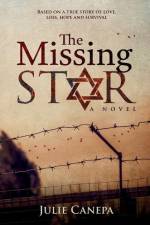
It is 1943 during the height of WWII and seventeen-year-old Vlada Munk, a Czech Jew, has sworn off any thoughts of romance. Imprisoned by the Nazis within the walls of the Jewish ghetto at Terezin, his courtships have taken tragic turns as his love interests are forced aboard trains and deported to the "East." Vlada throws himself into his work as the camp locksmith, but his resolve is tested on a spring day in 1943 when he spots the dark-haired and confident beauty, Kitty Löwi, walking down the street of the camp. Vlada and Kitty's comfortable childhoods have been shattered by the illegitimate Nazi occupation of Czechoslovakia, and they bond over their shared commonalities: denied an education, forced to give up beloved family pets, and made to wear the yellow star publicly branding them as Jews, they then endure one more indignity. They are deported to the Terezin ghetto, a place where death is delayed, not deferred. Vlada and Kitty's love is a bright spot amidst the camp's overcrowding, hunger, and daily fear of Nazi retribution. When Vlada is forced aboard a train bound for Auschwitz, Kitty is left behind in Terezin. Will they overcome all odds and honor their pledge to reunite in a world brighter than the one in which they've met? Based on a true coming-of-age story of love and loss, hope and survival, The Missing Star is ultimately the story of the resilient heart.
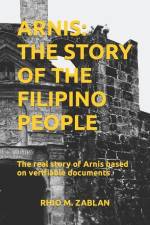
Chapter ITalks about slave-raiding/warfare, an activity considered in Philippine pre-colonial society as an honest profession, and an undertaking as legitimate as trade.This was an intrinsic part of societal life, not only for the Moros or Muslims in the southern regions of the country but was widespread among other nations or ethnolinguistic groups as well.Chapter IIThis chapter is about the prohibition of slave-raiding/warfare and how it impacted the Catholicized indigenous nationsunder the Spanish administration.As a result, these nations became easy targets of the Moros from the Sultanates Sulu and Maguindanao, the Dutch, the British, the Portuguese, Chinese pirates, and other indigenous nations who continued to defy Spanish hegemony.In response, the Spaniards created community fortifications under the leadership of soldier-priests or "El Padre Capitans," they built permanent garrisoned forts, which were generally manned by well-trained and professional soldiers of Kapampangan nation, organized armed native fleets or Barangayanes aimed at battling the raiders at sea, and of course, trained the local militias in bearing arms.Chapter IIIBased on Pedro Picornell's "The Philippine Chronicles of Fray San Antonio," National Media Production Center's "Philippine Churches," and Rene B. Javellana's "Fortress of Empire: Spanish Colonial Fortifications of the Philippines 1565-1898," this chapter presents an overview of the known locations and status of permanent garrisoned forts and community fortifications still found all over the Philippines.Chapter IVThis chapter dives deep into the composition of the Spanish colonial armies in the Philippines.From the later part of the 16th century until the 19th century, thousands of indigenous peoples served in these armies, both as professional soldiers in permanent garrisoned forts and conscripts for extraordinary missions of conquest, defense, and pacification.Chapter VDeals with the types of training the indigenous soldiers received while serving in the Spanish colonial armies, such as the use of firearms and pikes in line with tercio-esque tactics used in the earlier periods of Spanish colonization; and of course, swords for both cavalry, infantry, and militias used in the later years of Spanish colonization and throughout the American colonization.Chapter VIThis chapter discusses in detail, the factual origin of the name "Arnis" and the basis for its use as a specific fighting method.It also analyzes the origin of the word "kali" and the logical reason why it cannot be regarded as a term for the types of swordwork of pre-Hispanic Philippines; and dispels the myths and falsities behind the term's propagation.Chapter VIISummarizes the facts contained in Chapters I, II, III, IV, and V; and presents the core conclusions on the real origin and development of Arnis.This is the crowning jewel of the author's 4 years of research and toil.Chapter VIIITalks about how Arnis was traditionally practiced in the Philippines; what are the traditional titles Filipinos used to refer to their teachers and how more modern titles such as master, grandmaster, great grandmaster etc., became popular.It also tells a story of the very first Arnis clubs or groups in the country and paints a picture on how they helped spread Filipino culture around the world.It likewise enumerates and describes the history, lineages, and foundational movements associated with the Balintawak Arnis.
"Prepared for the Department of the Air Force"
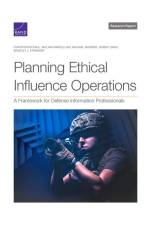
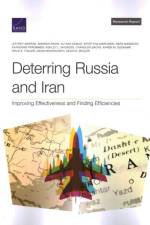
Using the principles of necessity, effectiveness, and proportionality, the authors develop a framework for evaluating influence operations with an initial screening, conducting a full ethical risk assessment, and preparing a justification statement.
The authors apply the concept of selective overmatch to reevaluate current U.S. cyber operations in light of competition and possible conflict with China and show how this framework can provide a roadmap for U.S. Cyber Command's future operations.
To support defense planners in crafting effective deterrence strategies, RAND researchers assess the impact of U.S. forward presence, exercises and short-term deployments, and security cooperation on deterrence in Europe and the Middle East.
It is the story about the U.S. military's 600 m.o.l. - Black helicopter pilots who experienced combat duty in Vietnam, some making the ultimate sacrifice of giving their lives, and who certainly have a place in U. S. history.
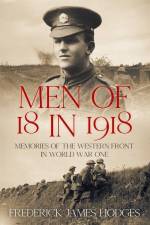
An astounding account of one young infantryman's personal experience of the Western Front in the last year of World War One. Perfect for fans of Peter Hart, Max Hastings and Barbara W. Tuchman. In the spring of 1918 German forces broke through Allied lines in a last ditch attempt to overcome their enemies. To hold back this tide young, inexperienced men from France, Britain, the United States, Australia and Canada were sent into war against battle-hardened and desperate German soldiers. What was it like to be an eighteen year old and sent to the frontlines in the First World War? Frederick James Hodges was one of these young men and his book, Men of 18 in 1918, provides insight into the ordeals of an ordinary soldier who left Britain as a teenager but returned as a man having witnessed the full horrors of war. Hodges charts his progress through the conflict from his short period of training to being thrown into defending Allied lines against the onslaught before being ordered, as part of Britain's prime assault troops, into a ninety-five day non-stop attack which only ended with the armistice of November 1918. "A must for anyone interested in the First World War." Manchester Evening News "Frederick Hodges has created a history book which will make the hair rise on the back of your neck." Chronicle and Echo
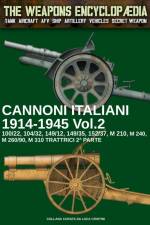
Dopo il primo volume sui cannoni italiani, in questa seconda parte tratteremo e completeremo lo studio e l'analisi dei pezzi d'artiglieria ereditati dal primo conflitto mondiale, sia di produzione nazionale che fonti di preda bellica (tipicamente austro-ungarica) a seguito della vittoria nel 1915-18.Il criterio usato sarà ancora quello già utilizzato del calibro a crescere, quindi dai pezzi leggeri in poi. Con il terzo volume che completerà il nostro lavoro sulle artiglierie italiane dei primi cinquanta anni del Novecento tratteremo prevalentemente i mezzi di concezione più moderna, ideati dalla seconda metà degli anni '30. Da questo volume invece parleremo espressamente anche delle bombarde in uso in quegli anni, mentre trattrici e trattori saranno distribuiti in vario modo nei tre volumi in ordine preferibilmente cronologico.
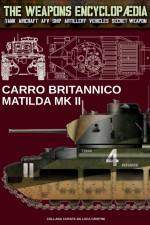
The Matilda Mk II tank, was an infantry tank used by the British Army during the Second World War. This tank was famous for its heavy armour and its ability to resist enemy attacks, especially in the early stages of the conflict. In fact, its armour made it virtually invulnerable to the anti-tank guns of the time. On the other hand, its speed and firepower were limited compared to the enemy tanks. It was armed with a 2-pound (40 mm) main gun and a coaxial machine gun. For all these characteristics, the British Matilda tank was nicknamed "the Queen of the Desert"!
Il carro armato Matilda Mk II fu un carro armato di fanteria utilizzato dall'Esercito Britannico durante la Seconda Guerra Mondiale. Questo carro era famoso per la sua pesante corazza e la sua capacità di resistere agli attacchi nemici, soprattutto nelle fasi iniziali del conflitto. La sua corazza, infatti, lo rendeva praticamente invulnerabile ai cannoni anticarro dell'epoca. Per contro, la sua velocità e la sua capacità di fuoco erano limitate rispetto ai carri avversari. Era armato di un cannone principale da 2 libbre (40 mm) e una mitragliatrice coassiale. Per tutte queste caratteristiche il carro inglese Matilda era soprannominato "la regina del deserto"!
Lindenholzhausen 1933-1945 ist das Ergebnis einer zweieinhalbjährigen Spurensuche - nach Menschen, die in diesen Jahren auf der "falschen" Seite standen.
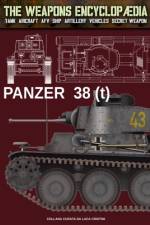
Il Panzerkampfwagen 38(t) non nasce tedesco. Il suo nome originale era LT vz. 38, ed era il miglior carro armato cecoslovacco realizzato tra le due guerre. Ebbe però fortuna e sostanziale utilizzo solo in un altro esercito, quello tedesco che ribattezzò il mezzo Pz.Kpfw.38(t). Nella Wehrmacht, questo carro armato divenne uno dei simboli della Blitzkrieg, combattendo nell'avanguardia delle unità corazzate tedesche. Fu quindi così che nella primavera del 1940, i carri armati costruiti a Praga distrussero i veicoli britannici e francesi che due anni prima non erano riusciti a venire in aiuto della Cecoslovacchia...
The Panzerkampfwagen 38(t) was not born German. Its original name was LT vz. 38, and was the best Czechoslovak tank made between the wars. However, it only had luck and substantial use in another army, the German army, which renamed the vehicle Pz.Kpfw.38(t). In the Wehrmacht, this tank became one of the symbols of the Blitzkrieg, fighting in the vanguard of the German armoured units. Thus it was that in the spring of 1940, the Prague-built tanks destroyed the British and French vehicles that had failed to come to the aid of Czechoslovakia two years earlier...
This book is a small tribute to the bond esteemed veterans formed during their time together in Vietnam. It is a testament to their shared experiences, the struggles we faced, and the lessons we learned.
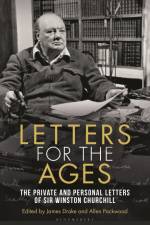
Here are some of the best of Churchill's letters, many of a more personal nature, written to a wide range of people, including his schoolmaster, his American grandmother and former President Eisenhower. Letters for the Ages concentrates on the more intimate words of Winston Churchill, seeking to show the private man behind the public figure and shine fresh light on Churchill's character and personality by capturing the drama, immediacy, storms, depressions, passions and challenges of his extraordinary career. These letters take us into his world and allow us to follow the changes in his motivations and beliefs as he navigates his 90 years. There are intimate letters to his parents, his teacher at Harrow, his wife Clementine, Prime Minister Asquith, Anthony Eden, President Roosevelt, Eamon De Valera and Charles De Gaulle. The letters are presented in chronological order, with a preface to each explaining the context, and they are accompanied throughout by facsimiles of said letters and photographs, offering the reader a sense of Churchill in his most private moments.
The unforgettable, heart-breaking story of a mother who survived Auschwitz and fought to be reunited with her daughter once again.
Suddenly there is a blow to my face, I am hurled to one side. 'My child, I have to go with her!' I scream. But Dr Mengel is standing before me, whip raised. 'Maul halten, shut up!' His eyes gleam. Filled with fear I cower down.In 1943, as the Nazi power swept across central Europe, Rosa, her husband Emanuel and their daughter, Judy, were forced into hiding. But after a year and a half of living a terrifying, day-by-day existence, they were betrayed. As they arrived in Auschwitz, Rosa was torn from her husband and her only daughter. Could she dare to hope she would see either of them again?Somehow, Rosa fought the horror and humiliation of the camp, on occasion coming dangerously close to death. In nursing the people trapped beside her, she helped others survive, but tragically she also watched them die - including a mother she had met before, with a similar story and a daughter the very same age. Her name was Edith Frank.Written immediately in the months after the war, Auschwitz - A Mother's Story tells Rosa de Winter-Levy's unique and heart-breaking personal story - from the atrocities of the camp to her journey out of hell. Powerful and affecting, it is the testimony of a mother, and the pain she will endure for the chance to hold her child again.It's night. The door opens and along with 500 other women I am taken to the so-called Krätzeblock, the scabies block. Mice and rats run over us, the women scream and cry, it's almost unbearable. There's no chance of sleep, we're all consumed by the same thought: tomorrow our final hour will have come.
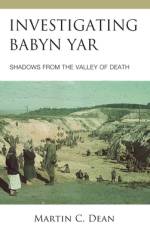
Investigating Babyn Yar tells the story of the murder of Kyiv¿s Jews using available fragmentary evidence. The book follows the trail of discarded property to identify the killing site in the ravine. Aerial photographs, ground photographs, and eye-witness testimony are interwoven to explain what happened at history¿s largest mass shooting.
This volume is a collection of a variety of important records that will give readers insight into key themes into the history of what its criminal code called ¿the unnatural and detestable sin of buggery¿- sex between males - in the Royal Navy.
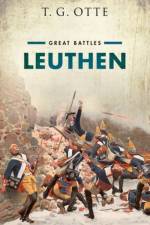
The story of Leuthen, the battle that confirmed the reputation of Frederick 'the Great' of Prussia as one of history's greatest military commanders and the most consequential conflict in continental Europe between the Thirty Years' War and the Napoleonic Wars: how it was fought, how it has been remembered, and what it has come to mean.
Abonner på vårt nyhetsbrev og få rabatter og inspirasjon til din neste leseopplevelse.
Ved å abonnere godtar du vår personvernerklæring.