







Gjør som tusenvis av andre bokelskere
Abonner på vårt nyhetsbrev og få rabatter og inspirasjon til din neste leseopplevelse.
Ved å abonnere godtar du vår personvernerklæring.Du kan når som helst melde deg av våre nyhetsbrev.

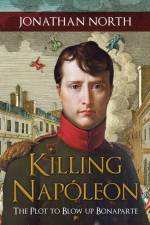
An amazing story that is still largely unknown in the English-speaking world - the plot to blow up Napoleon, an early terrorist attack on Europe's most powerful man, with striking parallels to today.
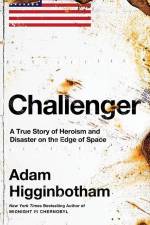
'Gripping' ED CAESAR ¿ 'Masterly' GEOFF DYER ¿ 'Incredible' TIM HARFORD ¿ 'A universal story that transcends time' NEW YORK TIMES ¿ 'Superb' DAILY TELEGRAPH ¿ 'We know what's going to happen, but feel the suspense nonetheless' THE TIMES** THE NEW YORK TIMES BESTSELLER **** WINNER OF THE KIRKUS BOOK PRIZE FOR NON-FICTION 2024 **The definitive, dramatic, minute-by-minute story of the Challenger space shuttle disaster based on fascinating in-depth reporting and new archival research - this is riveting history that reads like a thriller.On the morning of 28 January 1986, just seventy-three seconds into flight, the space shuttle Challenger broke apart over the Atlantic Ocean, killing all seven people on board. Millions around the world witnessed the tragic deaths of the crew, which included schoolteacher Christa McAuliffe. Like the assassination of JFK, the Challenger disaster is a defining moment in twentieth century history - one that forever changed the way America thought of itself and its optimistic view of the future. Yet the full story of what happened - and why - has never been told.Based on extensive archival research and meticulous, original reporting, Challenger: A True Story of Heroism and Disaster on the Edge of Space follows a handful of central protagonists - including each of the seven members of the doomed crew - through the years leading up to the accident, a detailed account of the tragedy itself, and into the investigation that followed. It's a compelling tale of optimism and ingenuity shattered by political cynicism and cost-cutting in the interests of burnishing national prestige; of hubristic 'go fever'; and of an investigation driven by heroic leakers and whistle-blowers determined to bring the truth to light.With astonishing clarity and narrative verve, Adam Higginbotham reveals the history of the shuttle program, the lives of men and women whose stories have been overshadowed by the disaster, as well as the designers, engineers and test pilots who struggled against the odds to get the first shuttle into space. A masterful blend of riveting human drama, fascinating science and shocking political infighting, Challenger brings to life a turning point in our history. The result is an even more complex and extraordinary story than any of us remembered - or thought possible.Finalist for the National Book Critics' Circle Award 2024Finalist for the Carnegie Medal for Excellence in Nonfiction 2024A Daily Mail Best Science Books of 2024A New York Times Notable Book of the Year 2024A Washington Post Notable Book of the Year 2024One of the New Yorker's dozen Essential Reads of 2024One of the Atlantic's Ten Best Books of 2024An Amazon Best Book of the Year 2024An Apple Best book and Best Audiobook of 2024A Spotify Best Audiobook of 2024Goodreads' nominee for Readers' Favourite History and Biography 2024
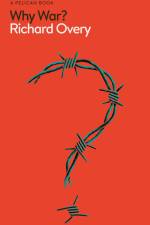
A richly absorbing book... Overy is unquestionably one of our finest living historians - The Daily TelegraphWhy has warfare always been part of the human story?From biology to belief, what explains the persistence of violent conflict?What light can this shed on humanity's past - and its future?There can be few more important but also more contentious issues than attempting to understand the human propensity for conflict. Our history is inextricably tangled in wave after wave of inter-human fighting from as far back as we have records.Repeatedly humans have foresworn war, have understood its appalling risks and have wished to create more pacific, productive societies. And yet almost inevitably circumstances emerge under which war once more seems inevitable or even desirableHow can we make sense of what Einstein called 'the dark places of human will and feeling'? Richard Overy draws on a lifetime's study of conflict to write this challenging account of how we can understand the causes of war. Looking at every facet of war from biology to belief, psychology to security, Overy allows readers to understand the many contradictory or self-reinforcing ways in which warfare can suddenly appear a legitimate option, and why it is likely to be part of our future as well as our past.
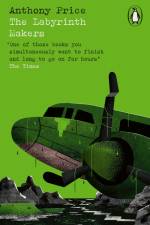
A missing plane resurfaces - and so do long-submerged secrets...An RAF Dakota, presumed lost at sea during World War Two, has just been discovered at the bottom of a drained lake over twenty years later - complete with the skeletal remains of the pilot and a strange cargo of rubble. Why are the Soviets so interested in it, even attending the dead man's funeral? Why has unassuming civil servant David Audley been tasked with leading the investigation - and what was the plane carrying that some will kill for?
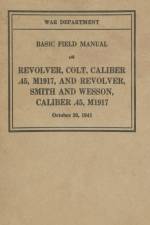
This is a reprint of the 1943 Army manual on the M1917 revolver. It contains 100 pages of full color period drawings and information on parts, assembly and accessories of the weapon. Also included are supplements C-1 and C-2 from the period.
The international best-selling author explores the revolutions-past and present-that define the chaotic, polarized and unstable age in which we livePopulist rage, ideological fracture, economic and technological shocks, geopolitical dangers and an international system studded with catastrophic risk - the early decades of the 21st century may be one of the most revolutionary periods in modern history. But they are not the first. Humans have lived, and thrived, through more than one great realignment. What makes an age a revolutionary one? And how do they end?In this major new work, Fareed Zakaria masterfully investigates eras that have shattered and shaped humanity. Four such periods hold profound lessons for today. First, in seventeenth-century Netherlands a series of transformations made that tiny land the richest in thew world - and created modern politics as we know it today. The 'Glorious Revolution' in Britain showed that major political change could happen peacefully. Next, the French Revolution, a dramatic decade and a half that devoured its ideological children and left a bloody legacy that haunts us to this day. Finally, the mother of all revolutions, the Industrial Revolution, which catapulted Britain and the U.S. to global dominance and created the modern world. Against these paradigm-shifting historical eras, Zakaria describes our current situation, unpacking the four revolutions we are living through now; in globalization, technology, identity, and geopolitics.As few public intellectuals can, Zakaria combines intellectual range, deep historical insight, and uncanny prescience to reframe and illuminate a turbulent present.
Justice and War Crimes traces the creation of the Office of the Prosecutor (OTP) in early 1994 prior to the arrival of the first Prosecutor, Richard Goldstone and his two successors, and details the Tribunal's incredible journey towards its total success. Much of this story has never been told before.It is a personal and unique look at the inner workings of the OTP (from 1994 to 2004), the first international criminal court since Nuremburg.It describes how, faced with the prospects of a complete failure, the OTP brought about the apprehension of every living person indicted by the Tribunal and prevented the outbreak of war in North Macedonia.It follows the murky path created by those who did not want to see NATO becoming involved in the apprehension of indicted war criminals. It outlines how the Kosovo conflict brought about the indictment and prosecution of Slobodan Milosevic, the first political leader of any country to be indicted for genocide.Justice and War Crimes tells the untold story of a pivotal moment in the history of international justice and is a timely reminder of the difficulties and complexities involved in the prosecution of modern war crimes.
Morals of Economic Internationalism, a classical book, has been considered essential throughout the human history, and so that this work is never forgotten we at Alpha Editions have made efforts in its preservation by republishing this book in a modern format for present and future generations. This whole book has been reformatted, retyped and designed. These books are not made of scanned copies of their original work and hence the text is clear and readable.
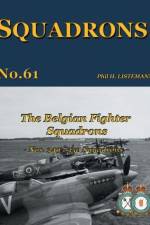
The full history of the two Belgian fighter squadrons of the RAF (Nos 349 and 350) detailled in this book illustrated with 90 photographs and 14 colour profiles.
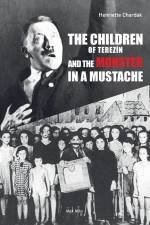
Henriette Chardak recounts her search for Ela, rare survivor of the 15,000 children who passed through the Terezin camp and were used as propaganda tools by Hitler, and her anecdotes from the filming, as well as her own family history.
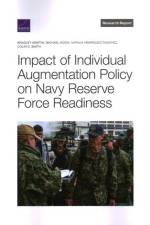
The authors examine the evolution of individual augmentation--from a stopgap to standard practice--and the effects on the Navy Reserve in terms of readiness and deployment times, specifically relating to anti-terror operations and the 2019 pandemic.
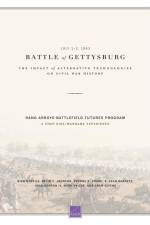
Gettysburg has been one of the U.S. Army's favorite staff ride locations for decades. It was the site of perhaps the pivotal battle of the U.S. Civil War, and General George Pickett's famous but disastrous charge marked the beginning of the end for the Confederacy. The authors of this report combine a staff ride with a consideration of alternative history: They examine what happened in the crucial 1863 Battle of Gettysburg and consider what could have happened if a few key technologies that were available for military use had been used in this battle.
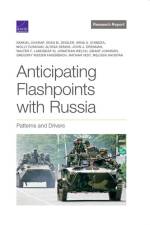
The authors combined quantitative and qualitative modes of analysis to better understand and anticipate flashpoints with Russia.
June 1941: German troops occupy Bialystok, abruptly overwhelming the city, terrorizing its largely Jewish population and threatening them with annihilation. A young man, Srolke Kot reads a note taped to the outside of the Judenrat door - "RESIST!" With the courage of desperation, 25-year-old Srolke joins the Jewish underground and fights, alongside Jewish partisans and the Red Army, against the Nazis and their collaborators.Khurbn Bialystok - The Destruction of Bialystok is the inspiring story of Jewish defiance and survival in the face of incredible odds.
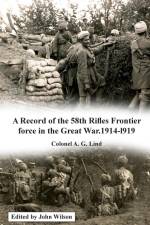
Vaughns Rifles was originally raised in 1849 as the 5th Regiment of Punjab Infantry. Lord Kitchener's Indian Army reforms of 1903 meant the regiment's designation was changed to 58th Vaughan's Rifles (Frontier Force). During the First World War, the regiment was sent with Force A to France to serve with the 21st Infantry Brigade part of the 7th Meerut Division. At the end of 1915, the regiment was sent to Egypt where it initially served with the 31st Indian Brigade and then in 1916, it was transferred to the 20th Indian Brigade. It then served with the Egyptian Expeditionary force for the remainder of the war.
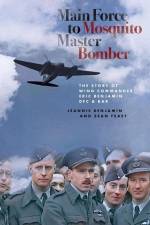
Wing Commander Eric Benjamin was no stranger to danger or excitement. In an action-packed career as part of the RAF Volunteer Reserve (RAFVR), he was awarded the Distinguished Flying Cross twice for his bravery under fire. He flew Fairey Battles with No. 150 Squadron during the Battle of France, Main Force Avro Lancasters with No. 61 Squadron during the Battle of Berlin, and De Havilland Mosquitoes as an elite Pathfinder Master Bomber in the latter stages of the war. He survived being shot down on his first operation, when his air gunner was severely wounded, and was among the last RAF aircrew to be evacuated from France in the summer of 1940. He was pulled clear of the mangled wreckage of a Vickers Wellington that crashed in flames during a spell as an instructor, narrowly escaping with his life for a second time, and 'starred' as a Flight Commander interviewed for Pathé News after a successful raid on Berlin in 1943. Towards the end of 1944, he achieved his ambition of flying Mosquitoes, and was selected and trained as a Master Bomber, operating as part of No. 54 Base in No. 5 Group and helping to mop up what was left of German industry and military might. It was from one of these sorties that his aircraft failed to return.Authored by Sean Feast and Eric's daughter Jeannie, the book includes numerous previously unpublished photographs of Eric, his colleagues, and the aircraft he flew. An inveterate letter writer, Eric once said of flying that there was 'no greater sport'. He died as he had lived, doing what he loved best.
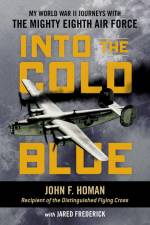
One of the last great memoirs of World War II, Into the Cold Blue is a riveting account of the air war over Europe, when hell was four miles above the earth.
This book brings black history to the fore of the War of 1812, and gives voice those enslaved people who - amidst great power competition between a slave-holding Republic and a slave-holding Empire - demonstrated exceptional bravery and initiative to gain precious freedom for themselves and their descendants.
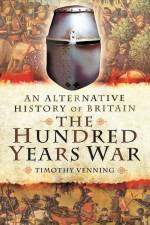
Continuing his exploration of the alternative paths that British history might so easily have taken, Timothy Venning turns his attention to the Hundred Years War between England and France.
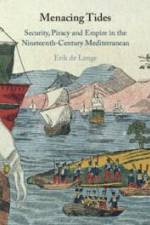
"Over the course of the nineteenth century, European states worked together to install a new order of collective security, legitimising the repression of piracy. Menacing Tides demonstrates how this European cooperation against shared threats remade the Mediterranean and unleashed a new form of collaborative imperialism"--
The Last Ghetto is a social and cultural history of Terezín, or Theresienstadt, a transit ghetto for Central and Western European Jews prior to their deportation for murder in the East. It offers the first analytical case study of a Holocaust victim society that explains human behavior in extremis, and demonstrates how prisoners created new social hierarchies, reshaped their conceptions of family, and developed new loyalties. Based on extensive research in archives around the world and empathetic reading of victim testimonies, this history of everyday life in a prisoner society reveals the many forms of agency and adaptation in Nazi concentration camps and ghettos.
An engrossing history of the desperate battles for the Rzhev Salient, a forgotten story brought to life by the harrowing memoirs of German and Russian soldiers.The fighting between the German and Russian armies in the Rzhev Salient during World War II was so grisly, so murderous, and saw such vast losses that the troops called the campaign 'The Meat Grinder'. Though millions of men would fight and die there, the Rzhev Salient does not have the name recognition of Leningrad or Moscow. It has been largely ignored by Western historians - until now. In this book, Prit Buttar, a leading expert on the Eastern Front during World War II, reveals the depth and depravity of the bitter fighting for Rzhev. He details how the region held the promise of a renewed drive on the Soviet capital for the German Army - a chance to turn the tide of war. Using both German and Russian first-hand accounts, Buttar examines the major offensives launched by the Red Army against the salient, all of which were defeated with losses exceeding two million killed, wounded or missing, until eventually, the Germans were forced to evacuate the salient in March 1943.Drawing on the latest research, Meat Grinder provides a new study of these horrific battles but also examines how the Red Army did ultimately learn from its colossal failures and how its analysis of these failures at the time helped pave the way for the eventual Soviet victory against Army Group Centre in the summer of 1944, leaving the road to Berlin clear.
Abonner på vårt nyhetsbrev og få rabatter og inspirasjon til din neste leseopplevelse.
Ved å abonnere godtar du vår personvernerklæring.