















Gjør som tusenvis av andre bokelskere
Abonner på vårt nyhetsbrev og få rabatter og inspirasjon til din neste leseopplevelse.
Ved å abonnere godtar du vår personvernerklæring.Du kan når som helst melde deg av våre nyhetsbrev.

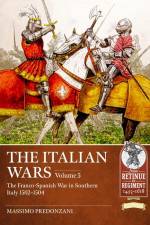
"...the numerical explanations and discussions are exceptionally helpful. Well done. Enjoyed it." - Historical Miniatures Gaming SocietyIn November 1500, Ferdinand of Spain and Louis XII of France signed the secret Treaty of Granada. This agreement enabled Spain and France to easily conquer and divide the Kingdom of Naples in the years 1501 and 1502. The treaty divided Naples between the two nations, however disputes arose over the division and the boundaries of the newly conquered territories soon led to war.Gonzalo Fernández de Córdoba, the Spanish Commander in Naples, was aware of the inferior quality of his troops and retreated to Barletta (Apulia). His plan was to await reinforcements from Spain. The French commander, Louis d'Armagnac, Duke of Nemours, split the French army into several garrisons all around Barletta, and sent a contingent led by Beraud d'Aubigny to occupy Calabria. Over the following eight months, skirmishes, ambushes, and sudden attacks, which were to become Córdoba's trademark tactic, became the norm.In April 1503, Córdoba, following the arrival of Spanish and Landsknecht reinforcements, left Barletta and moved over to the offensive. The Spanish defeated d'Aubigny's army on 21 April and then just over a week later on the 28th, they defeated the Duke of Nemours at Cerignola. The Duke was to fall in the fighting. Gonzalo de Córdoba and his troops entered Naples in triumph on 16 May 1503.Louis XII, eager to reclaim his lost territories, gathered an army and invaded Naples. However, the French were defeated again in December 1503, near the river Garigliano. Gaeta, the last French stronghold in Naples, fell on 1 January 1504. On 31 January 1504, the Treaty of Lyon was signed ratifying Spanish possession of the Kingdom of Naples.
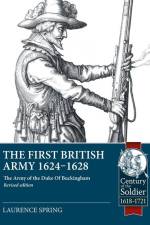
"True, the concept of Britain dates back to Roman times, but it was James I that founded Britain in the modern sense. With his accession to the throne in 1603 for the first time Scotland, England, Wales and Ireland were united - with James bestowing on himself the title of 'King of Great Britain'. Before this time, Scots and Irishmen may have served in the English Army as mercenaries, but it was known as an English Army - but now the King's (or British) flag flew over the castles and forts throughout the land. The army raised by Charles I in 1625 for his war against Spain -and subsequently, with France - is most famous for its failure. However, it is one of the best-documented armies of the early 17th century. Using archival and archaeological evidence, the first half of the book covers the lives of the officers and men serving in the army at this time - as well as the women who accompanied them. The author discusses the origins of officers and why they decided to serve in the army - and how the men from England, Scotland and Ireland were recruited (as well as how they were clothed and what they ate; the medical care; and the tactics used by the army at this time). It also covers the hidden faction of tailors, armorers and merchants who helped to put the army into the field. The second half of the book covers not only the expeditions to Cadiz, the Isle de Rhe and the siege of La Rochelle, but also their effect on an England who feared a Spanish (and later a French) invasion. Also covered are the campaigns of Count Ernest von Mansfeldt's and Sir Charles Morgan's armies at this time, which fought at Breda, Dessau Bridge and against the forces of the Holy Roman Empire. The final chapter looks at what became of the soldiers and their widows once the army had been disbanded - therefore, the book will be essential reading for anyone interested in Early Modern History, including the English Civil War and the Thirty Years War." --Publisher description.
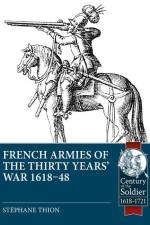
A newly revised edition on the construction of one of the first standing armies in the 17th century.French Armies of the Thirty Years' War presents the development of the French Army, one of the first standing armies in Europe, from 1617 to 1648. It shows how Louis XIII and Richelieu exploited the complex legacy of the Wars of Religion to the benefit of both the Crown and the Country.The Three Musketeers, Cyrano de Bergerac, Louis XIII, Richelieu, Condé, Turenne, La Rochelle, Rocroi...these few words sum up the literary and historical representations most people will associate with the tumultuous events in France during the first half of the seventeenth century.French Armies of the Thirty Years' War begins in 1617, the year that Louis XIII really took power, by distancing the Queen Mother and ordering the assassination of Concini, and ends in 1648 - five years after the death of Louis XIII, and the year of the Peace Treaty of Westphalia. This period in France was almost completely dominated by the personality and activities of Richelieu, who entered the King's council in April 1624. He gave the King an ambition: 'to procure the ruin of the Huguenot party, humble the pride of the great, reduce all subjects to their duty, and elevate your majesty's name among foreign nations to its rightful reputation.' By Richelieu's death, on 4 December 1642, this program had been accomplished.The first military action of this period, in August 1620, known as the Drôlerie des Ponts de Cé, was an uprising of the nobility who supported the Queen Mother against the King. The rebels were roundly defeated by the King's armies, but very few units actually fought. In his memoirs, Richelieu, who was on the Queen's side at the time, gives a detailed analysis of this defeat. In particular, he drew from it the principles that he was to follow throughout his life, and he realized: 'that which is held only by a precarious authority does not last long; that those who fight against a legitimate power are already half-defeated by their own imagination.' These political beliefs gave Louis XIII and Richelieu a powerful instrument that was to emerge transformed from the Thirty Years' War.The Army that Marie de Medici left to Henri IV's heir was small and inexperienced, but the Wars of Religion at the beginning of Louis XIII's reign, combined with Richelieu's actions, gave the French Crown an increasingly efficient army. Commanded by great captains such as the Duc de Rohan, the Viscomte de Turenne and the Prince of Condé, the army was highly successful, as shown by the long list of French victories, from the Île de Ré (1626) to Lens (1648) amply demonstrate.
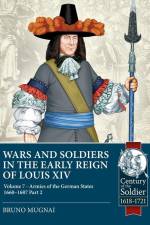
Explores the evolution of the German military system post-Peace of Westphalia, detailing its development, role in Europe, and the unique defensive political culture of the German states.After the Peace of Westphalia, several German states developed a disciplined 'Military' that produced outstanding armies. Germany supplied mercenary troops to major and minor powers in Europe, and the military state, usually exemplified by Prussia, became a crucial part of German history.However, Germany was apparently weak and internally divided into a multitude of states that constantly faced a hostile environment formed by belligerent great powers. Moreover, the German 'Military' was the resultant system of collective security, internal conflict and resolution that allowed a rich variety of political traditions to coexist relatively harmoniously. This system tried to preserve Germany against formidable attacks without making it a danger to the security of its neighbors. In contrast to the political culture of later German states, that of the 'Reich' was inherently defensive, preferring peace to war in both domestic politics and external relations. The book deals with the armies of the German Empire for the first time in a single book, with unpublished iconography and after extensive research in the German archives.Praise for previous volumes of Wars and Soldiers in the Early Reign of Louis XIV: 'This book is a must for anyone even partially interested in the Imperial army during the late seventeenth century. The level of detail must be highly commended, the author has gone to great lengths in researching this volume and it shows throughout the volume.' - Arquebusier'This book is extremely detailed, and highly useful for historians, the inquisitive, war gamers and figure modelers.' - IPMS/USA
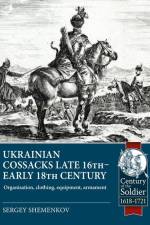
The first detailed English-language study of Ukrainian Cossacks' attire, equipment, and tactics from the late 16th to early 18th century.This is the first book about Ukrainian Cossacks for English-speaking readers. Based on historical sources, the book will relate and show in detail the appearance, clothing and equipment of the Ukrainian Cossacks and their methods of warfare.This book shows in detail the evolution of the Ukrainian Cossacks' appearance. The author reconstructs the clothing, equipment, and weaponry of Ukrainian Cossacks from the late 16th to the early 18th century. Numerous historical sources, references, documents, pictorial sources, and descriptions left by eyewitnesses have been consulted. Archaeological finds from battlefields related to the Ukrainian Cossacks were also examined. The author considers both the clothing and equipment of ordinary Cossacks and separately the clothing and military equipment of the officer corps - Cossack petty officers and hetmans. Special attention is paid to banners and various accouterments. The reader will learn about the variations between the Cossacks, the difference between the Registry and Sichev Cossacks, how they fought, and what tactics were used on the battlefield. Also considered are the separate formations of Ukrainian hetmans modeled on Western European armies and mercenary formations of the last quarter of the seventeenth to early eighteenth century - the Serdyuk and Kompanitsa. The book contains over 170 illustrations, iconographic sources, images of battles, archaeological artifacts and various types of clothing and equipment. There are also color plates of the author's reconstructions of banners, images of banners from the collection of the Swedish Army Museum, and 20 colored figures of Cossacks and representatives of Cossack elders in the author's style familiar to readers of the Helion series.
A comprehensive study examining soldiers' clothing during the Thirty Years War and British Civil Wars, challenging early seventeenth-century uniformity through detailed archival research and contemporary illustrations.Soldiers' Clothing of the Early 17th Century is a comprehensive study of the clothing worn by soldiers during the Thirty Years War and the British Civil Wars. The book delves into the changing fashion trends of soldiers' clothing during the early seventeenth century, with detailed chapters on various items of clothing, the contracts and supply system, and challenges the idea that there was no uniformity at the beginning of the century.There have been books written about military clothing during the early seventeenth century before, but never in this detail. This book is the result of over 30 years of research in the archives of record offices and libraries, recording minute details of clothing and coat colors. By examining thousands of archives and pamphlets, it challenges the idea that there was no uniformity within regiments or companies at the beginning of the century. Hundreds of contemporary illustrations, paintings and even surviving items of clothing were consulted to discover the soldiers' appearance.The first part of Soldiers' Clothing of the Early 17th Century looks at the individual items of clothing and how fashion changed over the years., as well as the contracts granted to merchants who supplied this clothing and the abuses that were made by some merchants and the corruption of the officers at the soldiers' expense. Some soldiers were so poor that they had to sell their clothing to survive. It was also part of the humiliation of a prisoner of war to be stripped of his clothing. It also investigates the supply system of these clothes, which could further lead to corruption, and how they were transported to the armies to be distributed to the armies.The second part looks at the clothing of the various Parliamentary and Royalist Armies, the army sent to Ireland during the 1640s, and the Scottish Armies during the Bishops' and Civil Wars. It also attempts to solve the often-asked question of whether the trained bands were issued with clothing.Finally, there is an examination of clothing issued to the armies of Denmark, the Dutch Republic, France, the Holy Roman Empire, Spain, and Sweden. Since soldiers' clothing did not begin at the start of the Thirty Years War, in these chapters, the author looks at the issue of clothing from the turn of the century, if not before.The book is essential for those interested in seventeenth-century military history, fashion, and re-enactors and wargamers of the period. Although the book does not include patterns and advice on how to make each item, it provides an in-depth and fascinating look at soldiers' clothing during the early seventeenth century.
A detailed study of the Battle of Narva, where Charles XII of Sweden defeated Peter the Great, showcasing new research and tactics.The Battle of Narva, in which Charles XII of Sweden defeated Peter the Great of Russia, occurred during the Great Northern War. Peter the Great's Disastrous Defeat describes the campaign, presents new research on the battle, details the opposing Swedish and Russian armies, and explains the continued development of the Swedish army.Swedish military might and regional power had expanded immensely during the seventeenth century. A series of successful conquests had transformed the little northern kingdom of Sweden into a great regional power, centered on the Baltic Sea. By the end of the century, the accession to the Swedish throne of Charles XII, a mere youngster without known military experience, convinced the neighboring monarchs that it finally was payback time. In 1699, King Frederick IV of Denmark and Norway, King Augustus II of Saxony and the Polish-Lithuanian Commonwealth, and Tsar Peter I of Russia formed a triple alliance against Sweden. The three monarchs wanted to reconquer lands lost to Sweden during its expansion. King Frederick wished to regain the lost Scanian provinces and Holstein-Gottorp. King Augustus coveted Swedish Livonia, while Tsar Peter desired the ports on the eastern Baltic shore. Soon, Tsar Peter of Russia declared war and attacked Swedish Ingria in the Gulf of Finland. A large Russian army laid siege to the vital port of Narva in modern-day Estonia.Having already successfully invaded Denmark and forced King Frederick of Denmark and Norway to withdraw from the war, King Charles turned his attention to the eastern front and Russia. After a long and arduous march, the Swedish army arrived on the outskirts of Narva in late November 1700. The Swedish King ordered his men immediately to attack the Russian fortified defense lines. With the help of a blizzard and with the wind at their back, the Swedes attacked and broke through the Russian defenses. Panicking, the Russians fled and ultimately surrendered to King Charles. It was a crushing defeat. Tsar Peter lost the entire army, including most senior commanders who fell into captivity, too. The battle had the immediate effect of the Russians evacuating the whole of Ingria.In Peter the Great's Disastrous Defeat, Michael Fredholm von Essen describes the events and tactics that led up to and resulted in the Swedish victory at Narva, presents new research on both the siege and battle and explains the continued development of the Swedish army under King Charles XII.
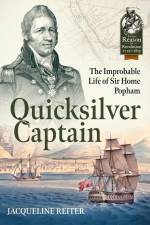
An influential yet controversial naval officer who played key roles in the French Revolutionary and Napoleonic Wars through unconventional methods and secretive operations.Quicksilver Captain is the story of Sir Home Popham (1762-1820), an extraordinary and under-appreciated personality of the French Revolutionary and Napoleonic Wars. Popham was a bundle of highly unusual contradictions. He achieved the rank of post-captain without a ship; he was more often employed by the War Department than by the Admiralty; and, as an expert in combined operations, he spent almost as much time serving on shore as at sea. In just over 25 years as a naval officer, Popham acted as an agent for transports, an unofficial diplomat, an intelligence officer, a Member of Parliament, an acclaimed hydrographer, a scientist and inventor, a publicist, and a government adviser, among many other roles.Popham's career was literally as well as figuratively amphibious. So was his personality. Popham's well-known past as an illicit private trader, as well as his notorious lack of scruples, marred his reputation. People meeting him for the first time did not know what to make of him: 'He seems a pleasant man, but a dasher.' He fully understood the importance of communication and is best known for inventing a signal code that the Royal Navy used for decades. When he died, he left reams of correspondence behind him. But he also understood that words could either obfuscate or illuminate the truth, and his genius for twisting the facts to suit his own purposes made him an unreliable narrator. Many contemporaries distrusted and loathed him; after his court martial in 1807 for attacking Buenos Aires without orders (he escaped with a reprimand), many of his naval peers refused outright to serve with him again. And yet, even his greatest critics could not deny his abilities. One of his fellow naval captains wrote what could have been his epitaph: 'He is an extraordinary man, and would have been a great man, had he been honest.'Quicksilver Captain paints a portrait of an ambitious man who built a career based on secrets and shadows. Popham's direct line to important patrons like William Pitt and Henry Dundas allowed him to play a role far beyond that of an ordinary post-captain. His ideas for using Britain's naval might for imperial defense and expanding British trade, as well as his knowledge of combined operations, made him the politicians' go-to expert. They wanted results, no matter what the cost, and Popham's willingness to play dirty - using bribery, threats, and experimental weaponry - appealed to them. In return, they protected him from his many foes, although in the end, they could not save him from his worst enemy - himself.
A detailed narrative of Wellington's first Peninsular campaign, using primary sources to cover battles, diplomacy, and the liberation of Portugal from French occupation.So Just and Glorious a Cause is a highly detailed narrative of Wellington's first campaign in the Peninsula. Using memoirs, letters, and previously unpublished primary sources, it covers events from Junot's invasion in late 1807 to the Portuguese revolts in the summer of 1808, and then the sailing of the British expedition and the battles of Roliça and Vimeiro, through to the controversial Convention of Cintra and the liberation of Portugal from the French.In 1807, with most of Europe under his control, Napoleon looked towards the Iberian Peninsula, hoping to complete his hegemony and extend his reach to South America. He sent one of his most loyal generals, Jean-Andoche Junot, with 25,000 men, to conquer Portugal. The Portuguese had long been caught in the middle between Britain and France. Faced with an invasion he had little hope of preventing, the Prince Regent fled to Brazil, assisted by a Royal Navy squadron, and let his country be occupied.In the summer of 1808, with the rebellion of the Spanish and Portuguese people spreading across the Peninsula, Britain sent an expedition to liberate Portugal under Sir Arthur Wellesley, the future Duke of Wellington. Still a relatively junior and unknown commander, Wellesley fought an aggressive and successful campaign. He defeated the French first at Roliça and then at Vimeiro but was prevented from sealing his victory by the arrival of more senior officers. The French negotiated generous terms in the Convention of Cintra and were evacuated back to France, ending their occupation of Portugal.So Just and Glorious a Cause makes extensive use of primary sources from all levels of the French, Portuguese and British forces involved, many of them previously unpublished. The terrible forced marches of the French troops as they crossed the border into Portugal, the frenzied diplomatic efforts in Lisbon, the subsequent brutal occupation, and the Royal Navy blockade are all examined, as well as Vice Admiral Cotton's efforts to fan the flames of revolt in Portugal and offer support for the uprisings. The French, Portuguese and British forces are analyzed in detail, as are the logistical challenges of Wellesley's campaign. The narratives of the first skirmish at Obidos and then the battles of Roliça and Vimeiro are constructed from first-hand accounts from both sides, and many misconceptions about each action are addressed. Finally, numerous myths surrounding the controversial Convention of Cintra are tackled, including Wellesley's part in the negotiations."One of the most eagerly awaited books on the Peninsular War for years." - Rory Muir, author of Wellington and Britain & the Defeat of Napoleon 1807-1815"Robert Griffith's book is a masterful blend of scholarly rigor and engaging narrative. It meticulously dissects the strategic, operational, and tactical dimensions of Arthur Wellesley, the future Duke of Wellington's, first campaign in the Peninsula. Drawing upon an impressive range of archival documents, letters, diaries, and memories, it presents a nuanced understanding of the challenges the British army faced as it embarked on what proved to be a crucial theater of the Napoleonic Wars. A must-read for anyone interested in the Napoleonic Wars!" - Alexander Mikaberidze, author of The Napoleonic Wars and Kutuzov
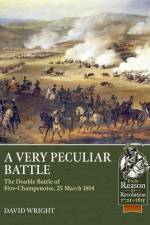
A Very Peculiar Battle tells the story of a unique battle in the Revolutionary and Napoleonic Wars. Fère-Champenoise was two separate battles that merged together. In one, a force of Russian, Württemberg, and Austrian cavalry and horse artillery defeated a larger French force of infantry, cavalry and artillery, opening the way to Paris. In the other, Russian cavalry and horse artillery destroyed Napoléon's last supply column.Fère-Champenoise was a far more significant battle than is usually portrayed. Napoléon, after a string of victories in February 1814, had been defeated by superior numbers, first by Feldmarschall Blücher at Laon (9-10 March), then by Feldmarschall Schwarzenberg at Arcis-sur-Aube (20-21 March). Napoléon then gambled on a manoeuvre sur les derrières, moving onto Schwarzenberg's line of communications and intending to join with troops from his border fortresses and Lyon to force a battle on ground of his choosing.The allies started to follow, but Emperor Alexander of Russia made a crucial decision on March 24 for the allied armies to ignore Napoléon and head for Paris. The next day, allied cavalry and horse artillery led by the Crown Prince of Württemberg defeated a larger force of the corps of Maréchaux Marmont and Mortier, the last formed French troops barring the way to the capital. This enabled Schwarzenberg's and Blücher's armies to combine, defeat the last defenders of Paris, and force the city's surrender before Napoléon could return, allowing the allies to negotiate the end of the campaign without the Empereur being able to participate.At the same time, a convoy of ammunition and supplies, escorted by the two weak Gardes nationaux divisions of Généraux de division Pacthod and Amey, and trying to find Maréchal Mortier, moved into the path of the advancing Russo-Prussian army. After a heroic retreat, attacked by Russian cavalry and horse artillery, the two divisions were forced to surrender, losing all their vehicles and guns.The battle was unique in the Revolutionary and Napoleonic Wars. It was two separate battles that merged into one, as both defeated French forces retreated towards the town of Fère-Champenoise, one from the east and the other from the northeast. Four different armies were involved: the main battle between units from the allies' Hauptarmee and the French Armée de l'Aisne and the secondary one between units from the allies' Schlesische Armee and a convoy from Maréchal Macdonald's XI Corps d'Armée, part of Napoléon's Grande Armée.Both were encounter battles in that all four armies involved were unaware of the presence of their opponent until they met. In both battles, the allied forces consisted entirely of cavalry and horse artillery, while the French forces contained predominantly infantry and foot artillery. A French force of ligne and garde units panicked, while a force of ill-trained Gardes nationaux fought stubbornly until overwhelmed. During the main battle, a short, violent storm had a devastating effect on the French, while the arrival of the secondary battle prevented the main from being an overwhelming success.
A detailed exploration of Prussian fortifications under Frederick the Great, examining their construction, theory, and strategic significance.The King and His Fortresses describes Prussian fortifications during the reign of Frederick the Great - the historical background, the experience of attacking the fortresses captured by the Prussian king, and the theory of fortification. At the book's core are two extensive chapters describing the fortresses built and modernized by the Prussians in two periods - 1740-1756 and 1763-1786, separated by the Seven Years War.The King and His Fortresses provides a comprehensive overview of Prussian fortifications during the reign of Frederick the Great. The first three chapters briefly describe the Prussian state, European fortification in the late seventeenth and early eighteenth centuries, and the state of Prussian fortifications when Frederick the Great took power. Chapter four details Frederick the Great's experience in fortress warfare, including his education in the field, the fortress exercises he conducted during peacetime, and the sieges he led or observed. Chapter five covers Prussian fortification theory during the Frederician period, including both the king's own ideas and the texts written by his engineers.The heart of the book lies in chapters six and seven, which describe the fortresses built and modernized by Frederick the Great. Chapter six covers the design and construction of fortresses between 1740 and 1756, including detailed information about fortresses in Silesia, Glogau, Neisse, Glatz, Cosel, Schurgast, Brieg, Schweidnitz, and Breslau. Additionally, the chapter describes the different types of fortress used in Prussian fortification during this time, including the use of advanced works and forts and the subject of caponiers. Chapter seven covers the years between 1763 and 1786, detailing the construction of fortresses on the Oder and in the mountains of Silesia and other provinces of the Prussian state. New solutions used in fortresses are discussed separately; artillery casemates are extensively described, including specific Prussian solutions in the form of casemates with arcaded walls open from behind and so-called Hangars - free-standing casemates serving as shelters for guns firing from open positions.The final chapter provides a collective overview of various aspects of the design and construction of Prussian fortresses during the Prussian period, including the most influential designers, the organisation of construction, workers, contractors, and issues related to financing the construction of fortresses and controlling expenditure.
Details Russia's 1812 defense against Napoleon, covering key figures, battles, and operational details, enhanced with maps and critiques.The Russian Patriotic War of 1812 is the only publicly available translation into English of Bogdanovich's official history of the Russian forces' involvement in the fight against Napoleon and his allies in Russia in 1812. This translation also includes extracts from Ivan Liprandi's critique of Bogdanovich's work.Volume 2 of The Russian Patriotic War of 1812 covers Kutuzov's appointment as Field Marshal, details of the opolchenie (militia) and donations made in 1812, the meeting in Abo between Tsar Alexander I and the Crown Prince of Sweden (Jean- Baptiste Jules Bernadotte), and the situation in enemy occupied territory. Highly detailed descriptions of operations are included, from before the Battle of Borodino to the camp at Tarutino, as well as operations on the flanks by Wittgenstein and Admiral Chichagov. Outstanding feats were performed not only by prominent personalities but also by others who participated in this war. The composition of the forces are shown as clearly as possible, as are force numbers, casualties on each side, and so on. The maps attached to this work were drafted in such a way that they might serve to explain entire phases of the war. The battle plans show the locations of dominant terrain according to detailed state surveys, while villages, forests and roads have been copied from previously published plans.
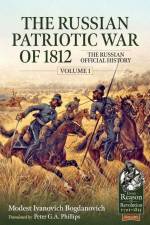
Publishing for the first time in English, this volume includes details of actions and exploits by Russian soldiers almost unknown outside of Russia.The Russian Patriotic War of 1812 is the only publicly available translation into English of Bogdanovich's official history of the Russian forces' involvement in the fight against Napoleon and his allies in Russia in 1812. This translation also includes extracts from Ivan Liprandi's critique of Bogdanovich's work.Volume 1 of The Russian Patriotic War of 1812 includes the causes of the war and an account of the operational planning by Russian forces for their retreat from the borders into the Empire, dispelling the myth of the non-existence of any premeditated plan. The logistics of the forces on both sides are examined, along with highly detailed descriptions of the operations from Russia's western borders to beyond Smolensk and operations on the northern and southern flanks. Outstanding feats were performed not only by prominent personalities but also by others who participated in this war. The composition of the forces are shown as clearly as possible, as are force numbers, casualties on each side, and so on. The maps attached to this work were drafted in such a way that they might serve to explain entire phases of the war. The battle plans show the locations of dominant terrain according to detailed state surveys, while villages, forests and roads have been copied from previously published plans.
The Battles for the Wastelands is an operational account and analysis of the offensive Northern Devastated Zone, March 1917-September 1918 and defensive actions fought by British and German forces from spring of 1917 to late summer of 1918 in the areas between the eastern-most boundaries of the Somme campaign and the Hindenburg Line.The important offensive and defensive encounters by which the British and Dominion corps captured, lost, and recaptured villages such as Achiet-le-Petit, Gomiécourt, Ervillers, Mory, Croisilles, Frémicourt, Ytres, Lebucquière, Beaumetz, and Hermies are described and explained within the context of the BEF's learning process. Although generally not large-scale, set-piece battles, these engagements were heavily contested and incurred substantial casualties. In addition to lesser known actions, this volume also examines the British Third Army Army's epic fighting withdrawal in the face of Operation Michael.The area is one of undulating open fields, country roads, scattered copses, small villages and the Canal du Nord. There are few physical remains of fortifications but there are dozens of CWGC cemeteries, many of which appear to receive no visitors for months at a time. The land is ideal for exploring either by car, bike, or on foot, and is within very easy and short traveling distance from the towns where most British visitors to the Somme and Arras stay.The Battle for the Wastelands offers both a practical touring guide as well as a reference volume for these under-appreciated but important battles and actions. It will inform those visitors who drive through these areas as they pass to and from the coast of their importance and significance to the eventual Allied victory on the Western Front.
Explores the evolution of British infantry brigade command during WWI, highlighting organizational and tactical changes and the influence of higher command structures on brigade performance.The Best of All Appointments? examines the evolution of infantry brigade command in the British Army during the First World War. Through a series of case studies, the author demonstrates that the response of brigade staff to the challenges of the Western Front reflected the army's capacity for organizational and tactical change. This volume demonstrates how the influence of the corps or division under which a brigade served was fundamental to its battlefield performance and success.In constituting a key component in the chain of command, the infantry brigade's role was subject to a progressive but irregular transformation in responding to the challenges of static warfare. The author examines the identity, structure and principal roles of the brigadier general and his staff as they existed in 1914.Reflecting the varied interrelated dimensions and conceptual planes within which brigade command operated, on a macro level, brigade operations were shaped by political, economic, topographical and technological factors. On a micro level, the influence of the brigade staff was largely determined by the irregularities of brigade sectors and their configuration with the enemy lines opposite. In order to challenge the orthodox interpretation that the role of the brigadier general and his staff was unduly narrow, the scope of this volume addresses two fundamental questions. First, the author focuses on the extent to which brigade command responses to trench warfare reflected the British Army's capability for flexibility and innovation. Through in depth analysis of brigade operations conducted during 1915-1918, it is evident that the measures implemented by brigade staff substantiated their role as agents of organizational and tactical change. These measures were manifested through various spheres of activity, the benefits of which were manifold.Although brigade commanders had little control over the broad parameters in which they operated, given the establishment of the organizational and logistic pre-conditions for success, they were able and willing to respond to the challenges of static warfare and subsequent transition to mobile operations. This process reflected the ethos of the prewar British army officer caste and its capacity for learning and adaptation. These values were sustained and applied to effect through the creation of a new generation of brigade staff officers who possessed the intellectual capacity to control large-scale operations. The Best of All Appointments? is a lasting testament to their professionalism and courage.
Examines the development of Soviet legacy MBTs by Ukraine in the post-Soviet era into models including the Bulat and Oplot, and the refurbishment and modernization of T-64, T-72 and T-80 models.The two largest heirs to the massive Soviet tank force that faced NATO during the Cold War - Russia and Ukraine - have been fighting one another since 2014 in what has now become the largest war in Europe since 1945.Volume 5 of the War in Ukraine series examines the development of Soviet legacy MBTs by Ukraine in the post- Soviet era into models including the Bulat and Oplot, and the refurbishment and modernization of T-64, T-72 and T-80 models to meet the need to respond to the war ongoing since 2014. Furthermore, this volume examines the organization and training of the opposed Russian and Ukrainian MBT forces and presents a number of case studies of their employment since 2014. The volume is completed with appendices on Explosive Reactive Armor as used in its various forms in this conflict, and the various types of 125mm gun ammunition and gun-launched anti-tank guided missiles used by both sides.This volume, extensively illustrated with full color images, is essential reading for the reader interested in post-Soviet Ukrainian MBT design, and the forces employed by both sides in the current war in Ukraine. The full history of the Russo-Ukrainian War remains to be written, but this book aims to at least give a background and a glimpse into one particular aspect of the war, as well as the role the MBT has played in the largest war of the twenty-first century so far.
How a reluctant soldier and ranger, excelling in reconnaissance, intelligence, and covert operations, details his journey post-Cold War training to the War on Terror.I am a soldier and a ranger - a specialist in reconnaissance, intelligence, and covert operations. I never wanted to be a soldier, but I found that I excelled at it. I have fired my weapons in anger, infiltrated terrorist groups, and made and burnt sources. Number 788 is my story.Being good at doing bad things is not always a blessing. You can't be the judge, only the executioner. The concept of 'for the greater good' always has a flip side. You are moving and living in the shadows. The ones in control grant you the ultimate power of life, but a life lived in the shadows is never your own.My development was slow and meticulous; it was improvised and innovative. Now, I write about what it was like to be pushed past the brink of what I thought was humanly possible. I aim to share my flawed path, lessons learned, relationships forged, revelations of self and the workings of others, with the very small hope of inspiring a few new generation warriors.I was trained at a unique time, as I joined the forces after the Cold War but just before the attacks of 9-11. During my formation, the lack of controls and regulation came with tremendous risks but also significant opportunities - I seized them. I am the product of brave officers who took action with great personal risk to save a regiment without permission and by asking for forgiveness later. Officers who believed in the saying, 'Who Dares Wins'. I share my small place as a silent mediator between the light and shadows in the long and flawed history of Western and Nordic fighters.The end of the Cold War and subsequent peacekeeping missions caught the Swedish military flatfooted when the War on Terror came around. The need for special operations forces was in high demand, but for the most part, Sweden lacked this niche capability. While still in its conceptual form, the International Ranger Platoon, an elite force that became a Special Purpose Unit within the Ranger Battalion, was used to fill the gap. Newly recruited, I was drawn to the challenge and adventure of it all; I took on the tough selection course - the reward was to be part of something new - the Special Purpose Units.
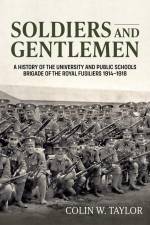
Reassesses the reputation and effectiveness of four Royal Fusiliers battalions composed of university students and public school boys.Soldiers and Gentlemen: A History of the University and Public Schools Brigade of the Royal Fusiliers 1914-1918 recounts the Great War history of four unusual infantry units: 18th, 19th, 20th and 21st (Service) Battalions of the Royal Fusiliers. Recruited from former university students and public school boys who chose to serve as 'gentleman rankers' rather than officers, these units were dismissed as 'Chocolate Soldiers' or 'rotten men'. This volume sets out to re-examine their reputation and effectiveness.Recruiting and training of the four 'Service' battalions of the University and Public Schools Brigade commenced in September 1914. Special permission was sought from Lord Kitchener; his brief reply was, 'Go ahead, and if you can raise 10,000 men I shall be all the better pleased.' Training commenced at Epsom and Leatherhead before the volunteers were moved to Clipstone (Nottinghamshire) and Tidworth (Wiltshire) for collective and pre-deployment training. Many left to pursue commissions elsewhere in Kitchener's Army during this time. Following many delays, the battalions deployed overseas for trench warfare introduction in 'quiet' sectors at Givenchy and Cambrin over the winter of 1915-1916. In early 1916, three battalions were disbanded with large numbers of personnel dispatched home for officer training. Only the 20th Royal Fusiliers, recruited largely in Manchester, remained at the front. The battalion went on to participate in the Somme offensive during which it was decimated at High Wood. It then saw action at Arras, Nieuport and Ypres before disbandment in early 1918.All of the UPS battalions (especially the 20th Battalion) have a poor reputation based on postwar criticism by literary combat veterans such as Robert Graves, Dr James Dunn, and Frank Richards. Nevertheless, although not an elite by any means, the UPS men were able to 'stick it' under pressure and fought hard on a number of occasions, contrary to this criticism.Soldiers and Gentlemen reassesses the experience and reputation of the UPS battalions by examination of a considerable number of primary and secondary sources including over thirty first-hand accounts, both published and unpublished. The latter provide a unique insight into the lives and deaths of those who served, training particulars, active service routine, and combat experience. The motivations and perspectives of the so-called 'gentleman rankers' and their transition into commissioned officers are also thoroughly explored.
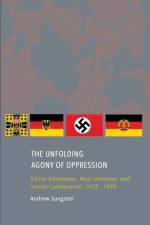
Victor Klemperer was a German-Jewish Professor who somehow survived the Nazi regime, only to find himself under post-war Soviet domination.
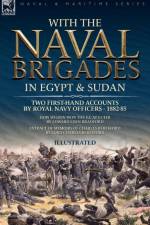
The 'Jack Tars' at war in the Mediterranean, the desert and along the River NileThere is an abiding interest among historians and students of the military campaigns of the Victorian era in the activities of the Naval Brigades of the Royal Navy. There had been comparatively few occasions since Trafalgar and until the First World War when battle fleets could be engaged. However, the crews of the navy could be always be depended upon to perform on land in a manner equal to their reputation afloat. Accordingly, Naval Brigades were deployed in many of Britain's small imperial wars of the 19th century. The special Leonaur book offers the reader virtually everything that could be wished for in that respect, because it covers the activities of sailors on land during the Egyptian War of 1882 and in the later battles against the Mahdists and the attempt to relieve Khartoum in the Sudan. Wilson's account, as told by Bradford, includes a riveting description of the first stages of the campaign in the desert and the fierce fighting which almost resulted in destruction for the British force at El-Teb. Wilson was,of course, central to this action as the Gardner gun failed and the courageous enemy broke into the British square. Beresford's riveting recollection includes the action of his ship,'Condor' at Alexandria, fierce conflict in the beleaguered squares at Abu Klea, the march across the desert and astonishing performance, misadventures and escape of the Nile river steamer commanded by Beresford as it attempted to rescue Gordon. This Leonaur edition contains illustrations, maps and photographs which did not accompany the original texts.
"A captivating look at Sigrid Schultz-one of the earliest reporters to warn Americans of the rising threat of the Nazi regime"--
A TLS and Prospect Book of the YearFrom the internationally bestselling author of Four Sisters comes the story of the Russian aristocrats, artists, and intellectuals who sought refuge in Belle Époque Paris.From the time of Peter the Great, Paris was the playground of the tsarist aristocracy. But the fall of the Romanov dynasty in 1917 forced Russians of all types to flee their homeland. Leaving with only the clothes on their backs, many came to France¿s glittering capital. Paris was no longer an amusement, but a refuge.There, former princes could be seen driving taxicabs, while their wives found work in the fashion houses, where their unique Russian style inspired designers such as Coco Chanel. Talented intellectuals, artists, poets, philosophers, and writers eked out a living at menial jobs, while others found great success. Nijinsky, Diaghilev, Bunin, Chagall, and Stravinsky joined Picasso, Hemingway, James Joyce, and Gertrude Stein in the creative crucible of the Années folles.Politics as much as art absorbed the emigrés. Activists sought to overthrow the Bolshevik regime from afar, while double agents plotted espionage and assassination from both sides. Others became trapped in a cycle of poverty and their all-consuming homesickness for Russia, the land they had been forced to abandon.This is their story.
Tim Hetherington highlights 50 photographs by the award-winning conflict photographer Tim Hetherington. Featuring seminal photography of his time in Liberia (2003-2006), Afghanistan (2007-2008) and Libya (2011) alongside unseen moments, this book showcases his important work as both a conflict photographer and humanitarian innovator.
This collection of medieval primary sources provides a comprehensive view of the Crusades from multiple perspectives.
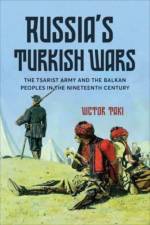
This book explores Russia's recurrent wars with the Ottoman Empire as an important and largely neglected angle on the genesis of modern warfare.
Abonner på vårt nyhetsbrev og få rabatter og inspirasjon til din neste leseopplevelse.
Ved å abonnere godtar du vår personvernerklæring.