









Gjør som tusenvis av andre bokelskere
Abonner på vårt nyhetsbrev og få rabatter og inspirasjon til din neste leseopplevelse.
Ved å abonnere godtar du vår personvernerklæring.Du kan når som helst melde deg av våre nyhetsbrev.

This is a modern reprint of the World War Two original book. It contains 80 pages of full color images and information on the Thompson Submachine Gun M1928A1. This is an exacting replica and has pages made to look old. You will not be disappointed in this piece!
Cognitive Warfare in the Age of Unpeace: Strategies, Defenses, and the New Battlefield of the Mind is a definitive examination of the emergent arena of cognitive warfare-a battlefield where consciousness and cognition are under siege. Rooted in the historical lineage of warfare, this seminal tome charts a course from the stratagems of yesteryear's influence operations to the digital subversions that define our current epoch.The book is structured to provide a layered understanding of the subject. Part I lays the foundation, explaining how the age of unpeace has given rise to a new form of warfare that exists between peace and war, where the battle for influence is paramount. Part II describes the modern tools at the disposal of state and non-state actors, including AI and neurotechnological advancements, and the ways in which these tools can manipulate and coerce on a mass scale.Through real-world case studies, Part III illustrates the practical application of cognitive strategies and the impact of such warfare on democracies, highlighting the need for robust countermeasures. In Part IV, the focus shifts to strategic insights, examining both offensive strategies for influence and subversion and the defensive strategies necessary to maintain cognitive sovereignty.The latter sections, Parts V and VI, provide a forward-looking perspective on building societal and governmental defenses against cognitive attacks. These include fostering societal resilience through public education, developing policy and governance frameworks, and addressing the ethical dimensions of cognitive defense.The final chapters speculate on the future trajectory of cognitive warfare, emphasizing the importance of international cooperation and the establishment of 'cognitive peace'. With its conclusion and appendices providing a roadmap and additional resources, this book stands as an essential guide for policymakers, security experts, academics and citizens alike in understanding and countering the sophisticated threat of cognitive warfare in our increasingly interconnected world.
With short biographies of the main protagonists, descriptions of what they had to endure and a concise examination of the 'library' itself, Lucy Alexander has revealed an astonishing exercise in mental survival under the most appalling circumstances. What would your books be?
Discover the key events in the war that shaped the modern world - moment by moment.An accessible and wide-ranging overview of the moments and milestones of the Second World War, Timelines of World War II offers a fresh angle on the subject, bringing the conflict to life through contemporary photos, documents, maps, and artefacts of importance.From the rise of fascism in Italy and Germany in the 1920s to the attack on Pearl Harbor and the bombing of Hiroshima, through to the founding of the State of Israel in 1948, entries explore the key events and turning points in all of the main theatres of war, and provide essential insights into the experiences of leaders, soldiers, and civilians involved.Stunning feature spreads showcase artworks, photographs, and other artefacts, while profile boxes bring to life the people, new technology, and milestone events that altered the course of history.A uniquely compelling and immediate account of the war, Timelines of World War II is the perfect introduction, whether you're a history student or a casual reader.
Focusing on the striking contradiction between destruction and care, violent repression, and the simultaneous development of the welfare state, Nations Apart brings a new revisionist interpretation of an occupied society.
This previously unpublished diary details the event experienced by Johnnie Johnson in 1942.
This book is about the 1971 indo pak war and conspiracy. And the beginning of a new era for East Pakistan which later known as bangladesh. The brutality and hinious behaviour by West pakistan to their another continent and the dedication and sacrifices done by Mukti bahini is the main plot of the story.. Arround 25 lakh people were killed and 5 lakhs woman were dead. World media and UN strictly refused to help Bangladesh and restricted India to do any movement but India bravely moved an moment with support of Russia and Israel.
This is book contains 100 color pages of notes, information, photos and diagrams on the Vought F4U Corsair IV. It covers everything on the aircraft including, but not limited to controls, flaps, engine, fuel and more. This reprint is taken from a period original and made to look old. A few pages will show wear and damage. Please understand this has been printed with the original integrity in mind.
The Sepoy, a classical and rare book that has been considered essential throughout human history, so that this work is never forgotten, we at Alpha Editions have made efforts in its preservation by republishing this book in a modern format for present and future generations. This whole book has been reformatted, retyped and designed. These books are not made of scanned copies of their original work and hence the text is clear and readable.
The Tank Corps, a classical and rare book that has been considered essential throughout human history, so that this work is never forgotten, we at Alpha Editions have made efforts in its preservation by republishing this book in a modern format for present and future generations. This whole book has been reformatted, retyped and designed. These books are not made of scanned copies of their original work and hence the text is clear and readable.
Sumérgete en los intrigantes pasajes de la historia mundial con "Telón de Acero: La Historia de la Guerra Fría" Desde las tensiones iniciales hasta el auge del espionaje, la carrera armamentística o espacial, este cautivador relato te transportara a una era de rivalidad global. Descubre los secretos detrás de los bastidores de las dos superpotencias en conflicto, mientras el mundo se mantiene al borde del abismo nuclear. Una narración absorbente que te mantendrá en vilo hasta la última página.
During World War II, navies developed camouflage for their ships. Applying it to both vertical and horizontal surfaces, they reduced visibility and confused the identities of their ships to the enemy. Maritime artist Malcolm Wright, author of popular books on British naval camouflage schemes in World War II, now turns his attention to the ships and aircraft of the Imperial Japanese Navy and Army from 1932 to 1945. Many schemes included in this volume are difficult to find without intensive research, making this a unique and valuable resource. The book covers every ship type from battleship to the smallest auxiliary, including the riverine craft that fought in China, all the ships in the separate fleet operated by the Imperial Japanese Army, and three special bonus pages describing camouflage schemes for selected hard-to-research ships from other navies. The timespan covered actually goes beyond 1932-45 and includes developmental milestones for each ship and class, from the 1914 construction of the battlecruiser KONGO to the 1946-47 repatriation service of the surviving vessels and their subsequent transfer to victorious navies.At 288 11" x 8.5" pages with half-inch margins and 9-point type, this book offers almost double the content area of the previous volumes in the series, which were 196 10" x 8" pages each, with a somewhat challenging 7-point font. This expansive and reader-friendly layout allows for numerous full-page spotlight views of important and interesting ships and planes, for a total of 952 images and captions. The durable case laminate jacket and 70-pound premium paper assure a long-lasting and pleasant physical experience.The captions combine construction, refit and service histories with sharp personal assessments of ship performance, accompanied by plank-level illustrations of the color schemes applied to ships and planes. Since sadly most pictures of World War II are in black and white, this book is a delight for anyone who wants to visualize the war as it actually occurred, in color. With its unparalled depth of technical detail and breadth of coverage, it is a must-have for students of naval history, the war in the Pacific, wargaming, and ship and aircraft modelling.The highly readable captions combine construction, refit and service histories with sharp personal assessments of ship performance, accompanied by plank-level illustrations of the color schemes applied to ships and planes. Since sadly most pictures of World War II are in black and white, this book is a delight for anyone who wants to visualize the war as it actually occurred, in color. With its unparalleled depth of technical detail and breadth of coverage, it is a must-have for students of naval history, the war in the Pacific, wargaming, and ship and aircraft modeling.The current printing includes fixes to several issues reported by reviewers, including making the ship scales consistent on page 7, cleaning up images on page 49 and 67, increasing image size on page 123, and removing a duplicate paragraph on page 187.
This book is a groundbreaking and comprehensive exploration of advanced thinking about space warfare. The book covers a wide range of topics, including strategies, theories, technologies, organizations, and laws, all with the ultimate goal of achieving victory in space. It presents innovative ideas and cutting-edge concepts that are shaping the future of space warfare. This book is a must-read for anyone interested in the fascinating world of space conquest and the individuals and ideas driving it forward.A complement and companion volume to Szymanski's THE BATTLE BEYOND: FIGHTING AND WINNING THE COMING WAR IN SPACE (Amplify Books, 2024), which is aimed at a more general audience.
The Allied Chaplains of the American, British, Canadian and Polish armies in the battles for Northwestern Europe and in the Battle of the Atlantic are often overlooked due to their small numbers in relation to the hundreds of thousands of other men who made up the Allied armies. However, the chaplains were highly respected and appreciated by the men in the various units they served, as well as often being incredibly brave men who were (and are) forbidden by the rules of war from carrying any sort of weapon into battle, beyond their holy books and their faith. Allied chaplains suffered the second highest loss rate of killed or wounded of any group of men in World War II (second only to that of RAF Bomber Command) and were virtually irreplaceable due to the academic and religious training that took years to complete.This book looks at the Allied Chaplains who died: during the Battle for France in 1940, endured the horrors of the Dunkirk evacuation, died in the battles on the North Atlantic (due to the sinking of their ships by German U-Boats), in the Battle for Normandy in 1944, during the Allied liberation of occupied Europe, and the defeat of Germany. It includes information about their lives before entering military chaplaincy, their deaths and sometimes the differing accounts of their deaths, as well as their final resting places in cemeteries across Europe and in the United States of America or where they are commemorated on Memorial Walls to the Missing.The Revd Dr Thomas Wilson has had an interest in WW II military history since he was 12 years old. Revd Wilson had a career in the business world before answering the call ot ordained ministry. He was ordained in the Anglican Church of Canada, and served as the Rector of a parish in Southwestern Ontario. In 2007, he had the chance to spend a year in France, on a university exchange program that his wife, Professor Dawn Cornelio Was coordinating. While there, they led some of the Canadian students on a visit to Normandy, where they all participated in graveside memorial Service for Canadian Chaplain Walter Brown. It was Padre Brown's murder that led Revd Wilson to initially explore all the Allied Chaplains killed in the Battle for Normandy. After moving to serve as the Rector of a Scottish Episcopal (Anglican) Church for over 5 years, Revd Wilson now is the Anglican Chaplain of St Raphael and the Var in southern France where he ministers to a multi-national English-speaking congregation.
"...an invaluable read for anyone interested in the Gallipoli operation, but also for those seeking to understand combat, in any conflict." -- The NYMAS ReviewThe Gallipoli Landing of 25 April 1915 is arguably Australia's best known battle. It is commemorated each year with a national holiday, services, parades and great media attention. 2015, the centenary of the Gallipoli Campaign, was marked by great publicity and the release of many books, articles, films, documentaries and television series. Despite this attention, the Landing is still a poorly understood battle, with the historiography colored by a century of misinformation, assumption, folklore and legend. The Landing in the Dawn: Dissecting a Legend - The Landing at Anzac, Gallipoli, 25 April 1915, re-examines and reconstructs the Anzac Landing by applying a new approach to an old topic - it uses the aggregate experience of a single, first-wave battalion over a single day, primarily through the investigation of veteran's letters and diaries, to create a body of evidence with which to construct a history of the battle. This approach might be expected to shed light on these men's experiences only, but their accounts surprisingly divulge sufficient detail to allow an unprecedented reconstruction and re-examination of the battle. Thus it effectively places much of the battlefield under a microscope. The use of veterans' accounts to re-tell the story of the Landing is not new. Anecdotes have for many years been layered over the known history, established in C.E.W. Bean, Official History of Australia in the War: The Story of ANZAC, Volume I, as the standard existing narrative. Here, detail extracted from an unprecedented range of primary and secondary sources, is used to reconstruct the history of the day, elevating participants' accounts from anecdote to eye-witness testimony. This shift in the way evidence is used to reinterpret the day, rather than simply painting it into the existing canvas, changes the way the battle is perceived. Even though more than 100 years have passed since the Landing, and well over 1,000 books have been written about the campaign, much can be learned by returning to the "primary source, the soldier." The Landing has not been previously studied at this level of detail. This work complements Bean's by providing new evidence and digging deeper than Bean had the opportunity to do. It potentially rewrites the history of the Landing. This is not an exclusive Australian story - for example, one third of the battalion examined were born in the British Isles. This volume, the most current and comprehensive study since Bean's, has been rightly described as a major contribution that will change the way the legendary amphibious operation is viewed.
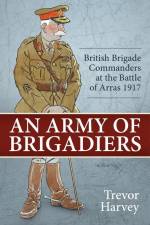
There have been two major studies in recent years that have explored the roles and responsibilities of British generals at different levels within the British Expeditionary Force's command structure. Dr Simon Innes-Robbins has written about the generals at predominantly GHQ and Army levels while Dr Andy Simpson has explored the development of the role of corps commanders during the Great War. For the first time Dr Trevor Harvey's study provides an analysis of command at the level of the infantry brigade. His study is based on a critical period during the Great War, the period from late in the Battle of the Somme to the end of the Battle of Arras in mid-May 1917.Dr Harvey's analysis is based on the service records of 116 brigadier-generals whose brigades played some part in the Battle of Arras. He explores their roles, responsibilities and backgrounds, both in theory and in practice, in the lead-up to and during the battle to explain and illustrate the range and limitations of their commands. Based on this analysis, Dr Harvey presents case studies of five brigadier-generals, their staff officers and their battalion commanders. Each brigadier-general has been selected from one of the five corps that participated in the Battle of Arras which provides an operational backdrop to the exploration of their roles. The brigadier-generals exhibit, in different combinations, their different operational experiences, their different career paths and their different personal characteristics. In undertaking his research, Dr Harvey has drawn on a wide variety sources, including diaries, letters and personal papers privately held by descendants of his chosen subjects. From the evidence drawn from the case studies, Dr Harvey identifies a series of threads about the responsibilities and actions which these brigade commanders share. He argues that the application of these threads enables the orthodox 'administration and training' interpretation of the role of brigadier-generals to be successfully challenged as both unnecessarily narrow and unduly limited. Dr Harvey's study has been praised by his examiners because 'it provides unique and original insights on British operations on the Western Front in 1916-17 which will be of great interest to scholars interested in British generalship during the First World War. This ground-breaking study is a significant addition to the historiography of generalship during the Great War.
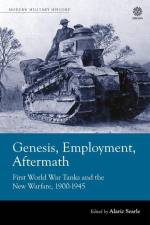
The employment of the first tanks by the British Army on the Western Front in September 1916, although symbolic rather than decisive in its effects, ushered in a new form of warfare - tank warfare. While much has been written on the history of the tank, this volume brings together a collection of essays which uncover new aspects of the history of these early machines. Leading military historians from Britain, France and Germany offer insights into the emergence of the tank before the First World War, during the conflict, as well as what happened to them after the guns fell silent on the Western Front. Based on painstaking research in archives across Europe, each of the chapters sheds new light on different aspects of the history of First World tanks. Two chapters consider why the Germans failed to recognize the possibilities of the tank and why they were so slow to develop their own machines after the first British tank attack in 1916. Two other chapters chart the history of French tanks on the Western Front and after the end of the war. Tank communication, the employment of British tanks on the Western Front, as well as the activities of British Tank Corps intelligence, are also explained. The use of British tanks in Palestine and in the Russian Civil War is examined in detail for the first time. The volume also reflects on the impact of the Battle of Cambrai, both in terms of its psychological impact in Britain and the power it exerted over military debates until the end of the Second World War. The aim of the book is to reconsider the history of First World War tanks by widening the historical perspective beyond Britain, to include France and Germany, and by reflecting on the pre-1914 and post-1918 history of the these new weapons of war.
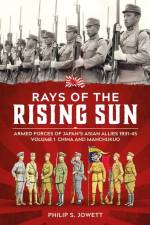
When the Japanese Empire went to war with the Allies in December 1941, it had already been fighting in China for 10 years. During that time it had conquered huge areas of China, and subjugated millions of people. The Japanese needed to control the Chinese population in these occupied territories, and for this reason they set up governments from amongst the leaders of the Chinese who were willing to co-operate with them. These so-called 'puppet' governments were designed to rule on behalf of the Japanese while firmly under their overall control. In turn, the 'puppet' governments needed their own 'independent' armed forces. These 'puppet' armies were large in number, reaching a total of well over 1 million before 1945. Although poorly-armed and equipped, these forces had an influence on the Japanese war effort through sheer numbers.The Chinese 'puppet' soldiers ranged from the well-drilled and trained regular Army of the Last Emperor of China, Pu Yi, who ruled the newly-formed state of Manchukuo, 1932-45, to the irregular Mongol cavalry who served alongside Japanese troops in the 'secret war' waged in the Mongolian hinterlands.The troops were dismissed as traitors by the Chinese fighting the Japanese, and they were equally despised by the Japanese themselves. The troops were motivated by a range of reasons, from simple survival to a loyalty to their commander. The fact that so many Chinese were willing to fight for the Japanese was embarrassing to all sides, and for this reason has been largely ignored in previous histories of the war in the East. In the first of a three volume series, Philip Jowett tells the story of the Chinese who fought for the Japanese over a 14 year period.
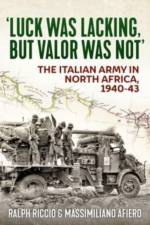
This book examines the capabilities and performance of the Italian army in the North African campaign and its significant contributions to the Axis effort there.
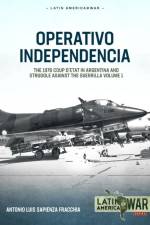
"This book does a great job of making sense of what initially seems like a confusion of political groups. The major events of the time help to weave the story of a nation trying to find the best way to govern itself during the period of 1955 until 1974. Very much worth picking up." - ModelingMadness.ComOperativo Independencia Volume 1 covers the lengthy background of Operation Independence between 1955 and 1974, with a brief description of all subversive guerrilla groups, the Argentine Security Forces organization, and the ERP and Montoneros organizations.International Marxist terrorism won the sympathy of many university students, Catholic movements and intellectuals in Argentina in the 1960s and 1970s, using terms such as 'dependency, imperialism, subjugation, colonialism and dictatorship'. Many of these young people had been catechists linked to Third World priests, but instead of taking the peaceful path of Christian preaching, they chose the bloody path of arms. Marxism-Leninism managed to penetrate the minds of socially well-off young people, convincing them that armed struggle was the only valid alternative against military dictatorships and Yankee imperialism. This is how they recruited hundreds of young people who later saw their lives and dreams cut short by a useless fight against a well-armed and highly professional Army.Although the first groups began to appear after the overthrow of General Juan Domingo Perón in 1955, the main guerrilla groups would only appear towards the end of the 1960s. They would 'prepare' the ground for Perón to return to the country and be President again. Perón called them 'Wonderful Youth', but he had created a monster he could not handle in his last years of life.All these groups were inspired by the successful Cuban revolution led by Fidel Castro in 1959 with an Argentine, Ernesto Guevara, aka Che, and unrealistically thought that they could seize power and turn Argentina into a 'socialist homeland' in the best Cuban style. But Argentina was not Cuba, and the Argentine Armed Forces, despite suffering deep divisions and internal conflicts, were powerful, well-armed and well-trained. Their members were highly motivated to defend the political model at the time.The subversive bands aimed to produce chaos in the country, infiltrating the Peronist mass, destroying institutions, and supporting violence against the state. To achieve their objectives, the guerrilla groups resorted to the most despicable acts: kidnapping politicians, police and military officers, diplomats, and national or foreign businessmen or their relatives for ransom; hijackings; taking prisons to free their fellow terrorists; bombing politicians' or military officers' houses, foreign factories, police stations and military bases; to the assassination of politicians, police and army officers, including even a former president, General Aramburu.Everything had an objective: to create chaos in the country to prepare for the coming of Perón. When the military governments gave way to free elections, with the Peronist candidate Héctor Cámpora winning in 1973, guerrilla activity did not decrease but instead increased significantly. Cámpora belonged to the Peronist left and was greatly influenced by his two Montonero sons, so Montoneros held crucial government positions. That cost him a severe reprimand from the Peronist leader, and when General Perón assumed the presidency, he declared these groups illegal and began to fight them. But there was also the Peronist right wing in the CGT (General Confederation of Labor) and later the so-called Triple A (Argentine Anti-Communist Alliance) led by José López Rega, which would be in charge of avenging those murders and kidnappings of trade unionists by Marxist groups, especially between 1973 and 1976.General Perón did not live much longer, and it was his wife, the vice president, who, upon assuming the presidency, had to face the severe problem of the guerrillas. Although her government ordered Operation Independence, she would not see the end of this story either, which would occur in another military government led by Lieutenant General Videla towards the end of the 1970s.Operativo Independencia Volume 1 covers the long period that began after the overthrow of the government of Perón in 1955 until 1974, the year before the launch of Operativo Independencia. All the subversive groups that appeared in that period, their prominent leaders and actions are covered. Of all of them, only two would be protagonists of the most violent crimes in the mid-1970s in Argentina, the People's Revolutionary Army (ERP) and the Montoneros, whose organization is detailed in this volume.
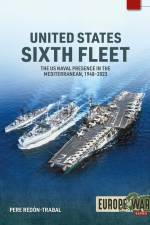
A comprehensive history of the Sixth Fleet, detailing its role in the Mediterranean from post-World War II through the Cold War to recent conflicts and interventions.The Sixth Fleet has projected the naval power of the United States into the Mediterranean for over 70 years. This work covers the history of the fleet from its inception after the Second World War, through the Cold War, to the War on Terror and the Ukrainian crisis.The Sixth Fleet was created in response to the need for a strong naval force in the Mediterranean Sea to counter the danger posed to the countries bordering the Mediterranean by the naval forces of the former Soviet Union and the Warsaw Pact countries, whose presence threatened the commercial traffic through the Strait of Gibraltar, the Suez Canal, and the Black Sea. In recent decades, several US government departments have considered eliminating the Fleet, but the events in Ukraine in 2022 demonstrated the ongoing need for such a naval force as a deterrent.The book lists most aircraft carriers, battleships, cruisers, destroyers, frigates, submarines, transports, and other support vessels that have been part of the Fleet. It also contains an essential chapter on the US Marine Corps elements, which have always been part of the Fleet. It also describes the aircraft embarked on aircraft carriers and landing ships. Finally, there is a chapter describing all the Fleet's interventions supporting Allied countries, including interventions in areas affected by natural disasters.The Sixth Fleet is a powerful naval force that has proven its utility as a deterrent.
Illustrated with over 150 original photographs of the personalities, aircraft, ships and ground forces from Argentina and Chile during the conflict.The Beagle Channel lies at the southernmost tip of South America and sovereignty over a number of islands there was hotly disputed between Argentina and Chile for much of the twentieth century. Navigation rights to this channel connecting the Atlantic and Pacific oceans were of considerable strategic value. In 1978, this dispute came within hours of breaking into large-scale open warfare between the two nations at sea, in the air and on land as Argentina launched Operación Soberanía (Operation Sovereignty).Argentina's plans involved far more than just seizing a few barely inhabited islands, however, and intended to strike deep into Chile in several locations along the length of the border between the two nations. In return, Chile planned to counterattack into northern Argentina to seize territory to be held as a bargaining chip for future negotiations. The plans of these two nations, with Argentina controlled by its Military Junta and Chile under the dictatorship of General Pinochet, threatened to draw in their Latin American neighbors.The Beagle Conflict: Argentina And Chile On The Brink Of War Volume 2 1978-1984 provides a detailed examination of the militaries of Argentina and Chile at the time of the 1978 confrontation, of their plans and deployments for war, and of the negotiations and settlement through the offices of the Vatican that ultimately settled this dispute. This volume also examines further military developments up to 1984 as tensions between the Latin American neighbors eased.The volume is illustrated with over 150 original photographs of the personalities, aircraft, ships and ground forces of the two nations, maps showing the plans for war, and specially commissioned color artworks.
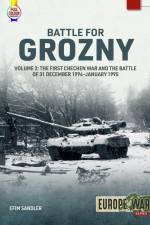
Reconstructs the infamous New Year assault on Grozny, detailing the chaotic defeat of Russian forces through veteran accounts, research, and footage.The New Year assault on Grozny by Russian forces was the most famous and controversial action of the 1st Chechen War. Entering Grozny from four directions, Russian troops with poor knowledge of the city and totally unprepared found themselves trapped, isolated and annihilated by numerous Chechen detachments. Unfortunately, due to the complexity and chaotic nature of the events, almost no official documentation exists. The reconstruction of the assault has been created from numerous veteran accounts, research publications, and video footage. Battle for Grozny is the first attempt to present a complete picture to the English-speaking audience.At first, the resistance offered by Chechens on 31 December 1994 had been relatively moderate and sporadic. All Russian forces besides the Group West managed to reach their objectives way before the planned timeline. The 131st Separate Motor-Rifle Brigade received a controversial order to move towards the railway station. With no knowledge of Grozny and never having trained for urban combat, the Brigade moved in and reached the station by noon, meeting the 81st Motor-Rifle Regiment. In the late afternoon, Chechens started to hammer Russian forces from multiple directions, knocking out the armor one by one. Trying to organize defensive lines, both units were suffering heavy casualties while all relief efforts were completely blocked by Chechens. During the night and the next day most of the Russian units left Grozny with disastrous losses in men and materiel. On the morning of 1 January, Russian aviation mistakenly attacked the positions of the 129th Motor-Rifle Regiment with devastating results - making it the worst friendly fire incident of the entire war. The only Group that managed to hold their positions was that of General Lev Rokhlin, who skillfully organized the defenses of the city hospital and cannery plant, leaving a narrow corridor for reinforcements.Battle for Grozny, Volume 2, is based on numerous little-known publications, veterans' accounts from both sides, extensive pictorial and video footage, and focuses on the reconstruction of the events that happened over two days of a New Year.
Abonner på vårt nyhetsbrev og få rabatter og inspirasjon til din neste leseopplevelse.
Ved å abonnere godtar du vår personvernerklæring.