











Gjør som tusenvis av andre bokelskere
Abonner på vårt nyhetsbrev og få rabatter og inspirasjon til din neste leseopplevelse.
Ved å abonnere godtar du vår personvernerklæring.Du kan når som helst melde deg av våre nyhetsbrev.

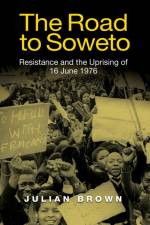
A new history of the 1976 Soweto Uprising and the events leading to it in the preceding decade, that will transform our understanding of the historical evolution of the struggle against apartheid.
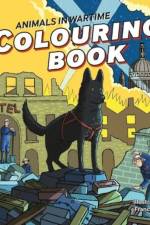
Colour in the amazing animal heroes from the Imperial War Museum's unique collection of stories. Throughout wartime, our animal friends have helped humans in marvellous ways, showing their bravery, strength and loyalty. Here we tell the real stories of these heroic animals through over 30 illustrations. You'll meet search-and-rescue dog Jet, Simon the mischievous cat, Wojtek the greedy bear, and many more!
At the height of the Second World War, Britain's skies were alight with dogfights, and its towns and cities bustling with the manufacturing of aircraft. The distant thunder of Spitfires, Hurricanes and bombers became a recurring sound, and rolling landscapes littered with airfields a familiar sight. As the air war transformed Britain's towns and countryside, it also ignited the imaginations of artists. The Air War in Paintings reveals how the artists of the 1940s responded to the unfolding air war in Britain, illuminating their private anxieties, their ambitions and their experiences. Drawing on the Imperial War Museum's unrivalled collection, this richly illustrated book explores how war artists recorded and documented all aspects of the vast efforts to build Britain's air capacity at a crucial time in its history
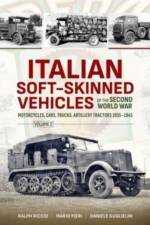
The importance of land transport vehicles within an armed force is often underestimated by the average reader, attracted by more 'martial' subjects such as tanks and artillery. Nevertheless, it was thanks to motorcycles, cars, trucks and tractors that - since the early years of the twentieth century - men, weapons, ammunition, provisions, fuel, equipment and orders were transported, all elements without which AFVs, guns and infantry are unable to fight.This first volume opens with a historical and technical introduction to the civil and military motorization in Italy from the 1920s to the end of the Second World War. This is followed by chapters dedicated to motorcycles, cars and light trucks. Each subject is described through its history, technical evolution and specifications, all supported by numerous contemporary photographs.The second volume includes the remaining chapters dealing with medium and heavy trucks, artillery tractors, special-purpose vehicles and trailers. The main text is complemented with appendices on vehicle coloring and markings, manufacturers, production facts and further details.It is common opinion that the Italian Army was beaten above all because of the poor quality of its combat vehicles. Actually, impartial and in-depth studies, made since the end of the war, have revealed that the main problem was the shortage of vehicles, as well as an entirely insufficient logistics chain. The tank crews were able to compensate with bravery and experience for the fact that their tanks were, from a certain point on, inferior to those of their enemies, but the inadequate number of AFVs and other material was impossible to remedy. The same problem plagued the entire sector of military soft-skinned vehicles, a sign of Italy's limited industrial capacity (and of procurement of raw materials and components) compared, for example, to its ally Germany. There were too few factories, too few skilled workers, and poor management skills within the armed forces.However, if quantity was lacking, the same cannot be said for quality. Many models of efficient, robust and resistant vehicles were produced, especially in the sector of the so-called 'standardized' motor vehicles, such as those mentioned above and others that we will see. These vehicles allowed the Italian troops to move and fight in the large and difficult territories of North Africa, the Balkans and the Soviet Union and which brought home what was left of the defeated soldiers.This is the first English-language study describing the soft-skinned vehicles of the Italian Armed Forces, starting from the 1930s, when Mussolini's Italy faced some colonial conflicts and participated - albeit unofficially - in the Spanish Civil War, and throughout the Second World War. For each vehicle there is a file describing its evolution and the main technical aspects, accompanied by one or more photographs and, for the most significant examples, line drawings. The work is enriched by a historical introduction, various appendices and color profiles.
How computational methods can expand how we see, read, and listen to Holocaust testimonyThe Holocaust is one of the most documented-and now digitized-events in human history. Institutions and archives hold hundreds of thousands of hours of audio and video testimony, composed of more than a billion words in dozens of languages, with millions of pieces of descriptive metadata. It would take several lifetimes to engage with these testimonies one at a time. Computational methods could be used to analyze an entire archive-but what are the ethical implications of "listening" to Holocaust testimonies by means of an algorithm? In this book, Todd Presner explores how the digital humanities can provide both new insights and humanizing perspectives for Holocaust memory and history. Presner suggests that it is possible to develop an "ethics of the algorithm" that mediates between the ethical demands of listening to individual testimonies and the interpretative possibilities of computational methods. He delves into thousands of testimonies and witness accounts, focusing on the analysis of trauma, language, voice, genre, and the archive itself. Tracing the affordances of digital tools that range from early, proto-computational approaches to more recent uses of automatic speech recognition and natural language processing, Presner introduces readers to what may be the ultimate expression of these methods: AI-driven testimonies that use machine learning to process responses to questions, offering a user experience that seems to replicate an actual conversation with a Holocaust survivor. With Ethics of the Algorithm, Presner presents a digital humanities argument for how big data models and computational methods can be used to preserve and perpetuate cultural memory.
"If there is debate on some of the finer points of Ulysses S. Grant's inland campaign, few dispute its brilliance and no one can argue with the results: Grant arrived victorious at the exact place he sought: the high ground east of Vicksburg where he had access to both the city and an open and unchallenged supply route via the Yazoo River to the north. It was the very ground Grant had wanted for months. He could finally begin the process of actually capturing Vicksburg. In the entire nine-month-long campaign, there was no more tension and drama than in these seventeen days when Grant's Army of the Tennessee marched through the wilds of Mississippi to victory after victory, tearing the heart out of the State of Mississippi and the Confederacy. This is the fifth and final of Tim's Vicksburg volumes to launch, but chronologically not the last in the five-volume series. It falls between Bayou Battles for Vicksburg (January 1 to April 30, 1863) and The Siege of Vicksburg (May 23 to July 4, 1863)"--
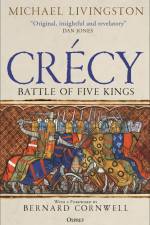
'Like Crécy itself, this book is a triumph and the tale it tells gives an old story new life.' BERNARD CORNWELL, bestselling author of The Last Kingdom series The battle of Crécy in 1346 is one of the most famous and widely studied military engagements in history. The repercussions of this battle were felt for hundreds of years, and the exploits of those fighting reached the status of legend. Yet cutting-edge research has shown that nearly everything that has been written about this dramatic event may be wrong.In this new study, Michael Livingston reveals how modern scholars have used archived manuscripts, satellite technologies and traditional fieldwork to help unlock what was arguably the battle's greatest secret: the location of the now quiet fields where so many thousands died. Crécy: Battle of Five Kings is a story of past and present. It is a new history of one of the most important battles of the Middle Ages: a compelling narrative account that nonetheless adheres to the highest scholarly standards in its detail. It is also an account that incorporates the most cutting-edge revelations and the personal story of how those discoveries were made.
This book takes the case of the civil war disappeared in Lebanon to draw on fiction¿s potential to inform peacebuilding processes by allowing the exploration of invisible histories in postwar Beirut. In its close reading of three Lebanese novels by Rabee Jaber, the book follows a multidisciplinary approach that puts trauma theory in dialogue with the Lebanese context and Arabic language, producing new concepts, models, and questions related to trauma, loss, and history, while also reflecting on the role fiction, as a cultural production, can play.
Cultivated by Hand aligns the overlooked history of amateur musicians in the early years of the United States with little-understood practices of music book making. It reveals the pervasiveness of these practices, particularly among women, and their importance for the construction of gender, class, race, and nation.
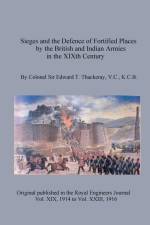
This volume contains a long series of articles written by an eminent officer of the Royal Engineers - Colonel Sir Edward T. Thackeray, V.C., K.C.B. - and published in 23 issues of the Royal Engineers Journal between 1914 and 1916. The subject matter - sieges and the defence of fortifications - is particularly the province of the military engineer, and it is for that audience that Thackeray was writing. The coverage includes Asseerghur (1803); Gawilghur (1803), Asseerghur (1819), Blockage of Cadiz (1810), the Lines of Torres Vedras; First, second and third sieges of Badahoz; Burgos; San Sebastian; Bhurtopore (1825); Khelet-i-Ghilzai (1841-42); Ghazni (1839); Mooltan (1848); Sebastopol; Delhi (where the author earned his V.C.); Lucknow; Pekin (1860); Magdala (1860); Kabul (1879) and Ladysmith (1899).
Ein herzzerreißendes aber auch ermutigendes Buch. Mit Können positioniert Nanette Blitz Konig ihre erschütternden Darstellungen in dem umfassenden Kontext der von den Nazis besetzten Niederlande und dem Zweiten Weltkrieg.
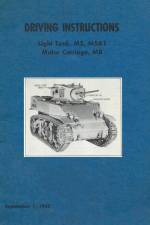
This is a wonderful reprint of the 1943 original driving instructions for the M5 light tank. It contains 35 color pages made to look old on operations, maintenance and use of the M5 Stuart Tank. You will not be disappointed in this piece!
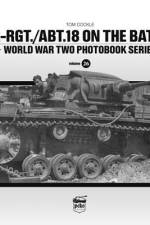
A fantastic resource for scale modelers and military historians alike.In Panzer-Rgt./Abt.18 On the Battlefield, Tom Cockle looks at this German unit and their vehicles. Many type of vehicles will appear in this book but the key role was played by the Tauchpanzers. The hardcover, landscape formatted book's brief introduction is followed by more than a hundred mainly unpublished photographs, published in the highest possible quality. Both the introduction and the captions are bilingual (English / Hungarian).
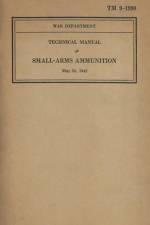
This is a quality reprint featuring 95 pages of information on small arms ammunition during World War II. It includes the C-1 supplement. It covers all ammunition for the M2 Browning Machine Gun, M1 Garand, Carbine, .45 ACP and more across ball, armor piercing, tracer, blank and more. This book is taken from an original and made to look old, yellow pages and all. You will not be disappointed in this piece!
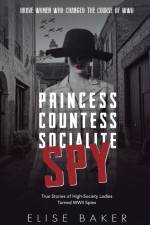
The Second World War changed the course of modern history. It is filled with incredible stories of daring risks and exceptional struggles, but in the popular imagination, these stories are more often than not the stories of men. There is, however, a hidden treasure trove of untold stories of heroic women who have risked their lives in the monumental battle against fascism. We've heard of women who became nurses treating soldiers with battlefield injuries, partisans who fought occupying armies, and skilled laborers who worked in wartime industries. But in the shadows, as part of a secret war against the Nazis, women served as intelligence agents who risked their lives to collect and relay information vital to the war effort. Danger lurked at every turn-a danger that some were not able to evade forever. These courageous women spies worked in secret, but their stories, which are finally coming to light today, offer a significant and unique perspective on the history of World War II. Inside Princess, Countess, Socialite, Spy: True Stories of High-Society Ladies Turned WWII Spies you'll learn ¿ the thrilling stories of Virginia Hall, Christine Granville, Noor Inayat Khan, Nancy Wake and Aline Griffith, who went behind enemy lines to aid the war effort, and what motivated them to take such risks, ¿ what it takes to run a successful espionage operation as a woman during a time when women had little respect in the professional realm,¿ the risks of operating undercover and secretly collecting information from the enemy, and ¿ how these women heroes of WWII helped shape the course and outcome of the most significant war in modern history.You'll gain insights into why some high-society ladies chose to give up a life of comfort to fight against global tyranny and live under constant threat of exposure and imprisonment or death. If you're looking for a unique and enlightening view of the Second World War and are interested in women's historically overshadowed roles in international espionage, then look no further than Princess, Countess, Socialite, Spy.
This story of a couple whose love is caught in the crossfire of war is a portrait of, not only the turbulent events of WWII, but also how a family survives with so much death and danger swirling.
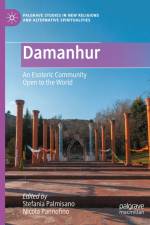
The Damanhur Federation, situated in Valchiusella, North-West Italy, is one of Europe's longest-lasting spiritual-esoteric communities. Nevertheless, there has hitherto been nearly no scientific study of this group, with the exception of a handful of specialised-journal articles. This collection fills that gap by collating the various scholarly contributions which over the years have dealt with Damanhur, aiming to present the phenomenon to a public of specialists, students and people who are just curious in a volume focusing on the multidisciplinary nature of the community as a whole. We consider the various spheres making up the social, cultural, spiritual and organisational life of Damanhur through analysis and interpretation of its historical evolution and more recent changes which have affected the community since its founder's death. The contributions combine field research with theoretical reflection, making use of both qualitative (discursive interviews and participant observation) and quantitative (questionnaires) methods.
"Since it's appearance in The New Yorker, on July 15, 1967, Jonathan Schell's THE VILLAGE OF BEN SUC has come to be regarded as a classic of American reporting. It is a rigorously factual account of the destruction by the United States Army, of a South Vietnamese village and of what happened to the 3500 in habitants"--
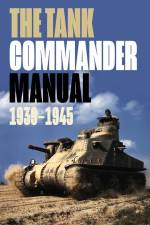
This new book puts the reader at the very heart of this "hell on wheels" and presents all of the original information required to perform this most dangerous of wartime battlefield roles. From training manuals and war office memorandums to combat reports and first-hand accounts, The Tank Commander Pocket Manual sits you in the turret position of co
Abonner på vårt nyhetsbrev og få rabatter og inspirasjon til din neste leseopplevelse.
Ved å abonnere godtar du vår personvernerklæring.