













Gjør som tusenvis av andre bokelskere
Abonner på vårt nyhetsbrev og få rabatter og inspirasjon til din neste leseopplevelse.
Ved å abonnere godtar du vår personvernerklæring.Du kan når som helst melde deg av våre nyhetsbrev.

The Iraq War has been the costliest U.S. conflict since the Vietnam War. To date, few official studies have been conducted to review what happened, why it happened, and what lessons should be drawn. The U.S. Army in the Iraq War is the Army's initial operational level analysis of this conflict, written in narrative format, with assessments and lessons embedded throughout the work. This study reviews the conflict from a Landpower perspective and includes the contributions of coalition allies, the U.S. Marine Corps, and special operations forces. Presented principally from the point of view of the commanders in Baghdad, the narrative examines the interaction of the operational and strategic levels, as well as the creation of theater level strategy and its implementation at the tactical level. Volume 1 begins in the truce tent at Safwan Airfield in southern Iraq at the end of Operation DESERT STORM and briefly examines actions by U.S. and Iraqi forces during the interwar years. The narrative continues by examining the road to war, the initially successful invasion, and the rise of Iraqi insurgent groups before exploring the country's slide toward civil war. This volume concludes with a review of the decision by the George W. Bush administration to "surge" additional forces to Iraq, placing the conduct of the "surge" and its aftermath in the second volume.This study was constructed over a span of 4 years and relied on nearly 30,000 pages of hand-picked declassified documents, hundreds of hours of original interviews, and thousands of hours of previously unavailable interviews. Original interviews conducted by the team included President George W. Bush, Secretary of State Condoleezza Rice, Secretaries of Defense Leon Panetta and Robert Gates, Chairmen of the Joint Chiefs of Staff, and every theater commander for the war, among many others. With its release, this publication, The U.S. Army in the Iraq War, represents the U.S. Government's longest and most detailed study of the Iraq conflict thus far.
This book was inspired by a deep admiration for the maritime industry and its vital role in global history, commerce, and culture. It explores the complex aspects of the marine operations, combining its extensive historical background with the progressive developments that are influencing its path. This book examines the symbiotic relationship between traditional maritime traditions and the necessity for innovation within the ever-evolving oceanic business, spanning from the experiences of ancient seafarers to the advancements of modern vessels. The problems and opportunities within the maritime sector are reflective of the larger transformations occurring in the global landscape. The future of marine is significantly influenced by climate change, technology improvements, economic dynamics, and geopolitical tensions. With a recognition of the inherent interconnection, the primary objective of this book is to furnish a thorough comprehension, thereby bridging the divide between the marine industry and the broader global framework within which it functions. For individuals with extensive experience in the marine industry, this book serves as a contemplative piece, offering valuable perspectives and serving as a navigational aid for future endeavors. For individuals who are unfamiliar with this field, it provides an entry point to a realm that, despite frequently being disregarded, holds significant importance in the intricate fabric of our interconnected global society. This work is a tribute to the marine sector and the numerous individuals who navigate its journey. As you commence upon this literary expedition, it is our aspiration that you acquire not only knowledge but also a heightened viewpoint on an enterprise that consistently molds, and is molded by, our worldwide narrative. Respected regards
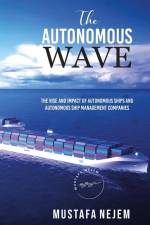
The maritime industry is on the brink of a profound transformation driven by technological innovation and automation. At the heart of this maritime revolution lies the advent of autonomous ships, a disruptive force poised to redefine how we navigate and manage vessels on the open seas. This chapter sets the stage for exploring this remarkable phenomenon, delving into the definitions, key players, and overarching trends underpinning the autonomous wave.
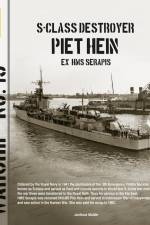
Ordered by the Royal Navy in 1941, the destroyers of the 5th Emergency Flotilla became known as S-class and served as fleet and convoy escorts in World War II. In the last months of the war, three were transferred to the Royal Netherlands Navy for service in the Far East. HMS Serapis was renamed HNLMS Piet Hein and served in the Indonesian War of Independence and saw action in the Korean War. She was sold for scrap in 1962.
A young singer's 'joie de vivre' is disrupted by the outbreak of World War 1.
"Slava Ukraini!" Strategy and the Spirit of Ukrainian Resistance tells the story of the volunteers lauded to have saved Ukraine twice. The volunteers first emerged in the spring of 2014 after the onset of the war in Donbas in a context characterized by ambiguity, state weakness, political uncertainty, and threat. They re-emerged again in February 2022 after the large-scale Russian invasion. Aimed at an interdisciplinary audience, this volume makes significant contributions to our understanding of events in Ukraine over the past decade. Based on ethnographic fieldwork with volunteer battalion fighters, the volume focuses on strategy, or the creation, control, and use of force. This framework is first applied to the volunteer militias to further the understanding of militia strategy conducted after 2014, and then to the first year and a half that followed the Russian invasion in 2022. "Slava Ukraini!" also discusses the long-term sociological impact of volunteer battalions and the war they fought in Ukraine. The Ukrainian spirit of resistance emerged first on the Maidan in November 2013, ignited the volunteer Spirit of 2014 after the Russian invasion and annexation of Crimea, and ultimately flared-up on a national scale in a manner which surprised the invading Russian forces in 2022. Yet initially the volunteers may also have exacerbated internal divisions in Ukraine. The Spirit of 2014 was also better suited to a war of movement than immobile trench warfare that left little room for heroism and aggressive soldiering. Unrealistic expectations about modern warfare led to disillusionment, and many volunteers leaving the war in 2015. The perceived stalemate and lack of Ukrainian soldiers by late 2023 raised the question of a similar dynamic witnessed in 2014 and 1914 alike.
Pioneering study of the role of the Christian churches in the Rwandan genocide of the Tutsi; a key work for historians, memory studies scholars, religion scholars and Africanists.
If you want to immerse yourself in the history of the battle that was pivotal to the reelection of Abraham Lincoln in 1864, then keep reading...Atlanta was the linchpin of the South's hopes and the North's determination, and the city became the epicenter of a battle that would change the course of history forever.The Union Army moved in to capture the city, but the Confederates defended it. Each army employed cunning strategies in their relentless pursuit of victory.But in the summer of 1864, the struggle reached its peak. It was also the time when the nation's destiny hung in the balance. Every decision made by the generals affected the future of the United States, and the Battle of Atlanta became the center stage of the war.Let's experience this battle through the eyes of soldiers who faced unimaginable odds, civilians who watched their world crumble, and commanders who grappled with the weight of their decisions.In this book, you will do the following:Journey through time. Walk through the fields and forests of Atlanta where the battle happened. Travel back to 1864-a tumultuous era where the future of a divided nation teetered on the edge of uncertainty.Sit through heart-pounding drama. Feel the pulse-pounding drama of a city under siege where every moment counted, and every decision had life-altering consequences.Experience the battle firsthand. Delve into the sheer intensity of warfare, experiencing the triumphs and tragedies of each army.Discover unseen heroes.Meet unsung heroes who stood tall in the face of adversity. Some were soldiers on the front lines; others were civilians caught in the crossfire.Uncover captivating strategies. Unearth the brilliant strategies that shaped the battle, turning the tide in the most unexpected ways. Discover the untold stories, harrowing sacrifices, and pivotal moments.Find the turning point. Explore how the Battle of Atlanta set the stage for the nation's transformation and how it became the turning point of the Civil War.
The Messerschmitt BF 109, also known as the ME 109, was perhaps the most famous fighter aircraft of the Luftwaffe. Developed during the first half of the 1930s by Wilhelm Messerschmitt and Robert Lusser. This fantastic fighter aircraft was characterised by its all-metal monocoque structure, an enclosed cabin, a fixed landing gear and a V-shaped aircraft engine with 12 inverted, water-cooled cylinders. The first examples of the Bf 109 appeared during the Spanish Civil War and remained in service until the end of the Second World War. During this period, the Bf 109 aircraft formed the main fighter force of the German Air Force. Towards the end of 1941, the Bf 109 was joined by the Focke-Wulf FW 190 aircraft. Together, they were a formidable pair of aircraft, a real nightmare for the Allies.
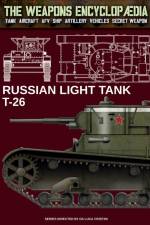
The Russian T-26 was a light tank, designed for infantry support, produced in the Soviet Union from 1931. It did not originate as an autonomous design, but was mainly derived from the British Vickers 6-ton or Vickers Type E vehicle. The T-26 tanks were armed with two parallel turrets in the centre of the hull, each equipped with a light machine gun. The next step was to install a 27-mm or 37-mm cannon on one turret. This was replaced by a 45 mm piece, and this increased the armour-piercing and explosive power. Known as the Mod. 1933, it was a great success and was produced, alone, in around 5,500 examples; an exceptional run for the time. Versions derived from the T-26 were: the OT-26 flamethrower with a flamethrower instead of a cannon, the OT-33 which had both, the ST-26 bridge-carrier to give tank divisions the necessary mobility against natural obstacles, the T-26 A-4 (U) railing radio command tank, and many others...
Il Messerschmitt BF 109, moto anche come ME 109, fu forse il più famoso aereo da caccia della Luftwaffe. Sviluppato durante la prima metà degli anni '30 da Wilhelm Messerschmitt e Robert Lusser. Questo fantastico aereo da caccia si caratterizzava per la sua struttura monoscocca completamente in metallo, una cabina chiusa, un carrello d'atterraggio fisso e un motore aeronautico a forma di V con 12 cilindri invertiti, raffreddati ad acqua. I primi esemplari del Bf 109 fecero la loro comparsa già durante la guerra civile spagnola e rimasero in servizio fino alla fine della seconda guerra mondiale. Durante questo periodo, gli aerei Bf 109 costituirono la principale forza dei caccia dell'aeronautica tedesca. Verso la fine del 1941, il Bf 109 fu affiancato dall'aereo Focke-Wulf FW 190. Insieme, furono una coppia di mezzi formidabile, vero incubo degli alleati.
This is the story of the Blue Baron, born Carlo Luigi Amedeo Winspeare Guicciardi and his active participation in the Second World War as a pilot officer in the Regia Aeronautica. But let us take two steps back. Carlo Winspeare, son of Edoardo and Clara Sarauw, was born on 13 March 1917 in Valletta (Malta) where his father, who had travelled the world in the retinue of Luigi Amedeo di Savoia, the adventurous Duke of the Abruzzi, was working as an attaché militaire, as an officer in the Regia Marina. Don't be fooled by the name that betrays English origins, the Blue Baron was a true Italian hero. With his military flights, he took part in numerous reconnaissance and reckless war missions, one of the best known of which was certainly the Battle of Mid-August on 12-13 August 1942, pompously commemorated by the regime as the 20th year of the fascist era. In this book, the author recounts all these adventures!
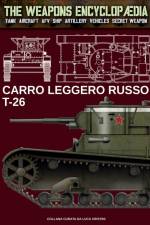
Il T-26 russo fu un carro armato leggero, pensato da supporto alla fanteria, prodotto in Unione Sovietica a partire dal 1931. Esso non nacque come un progetto autonomo, ma derivò principalmente dal mezzo britannico Vickers 6-ton o Vickers Type E. I carri armati T-26 erano armati di due torrette parallele al centro dello scafo, e dotate di una mitragliatrice leggera ciascuna. Il passo successivo fu quello di installare, su una torretta, un cannone da 27 mm o da 37 mm. Il pezzo venne sostituito da uno da 45 mm, e questo aumentò la potenza perforante ed esplosiva. Noto come Mod. 1933, ebbe un grande successo, e venne prodotto, da solo, in circa 5.500 esemplari; una tiratura eccezionale per l'epoca. Versioni derivate dal T-26 furono: il lanciafiamme OT-26 con lanciafiamme al posto del cannone, l'OT-33 che aveva sia uno che l'altro, il gettaponte ST-26 per conferire ai reparti carri l'indispensabile mobilità nei riguardi degli ostacoli naturali, il carro comando, munito di radio a ringhiera T-26 A-4 (U) e molti altri...
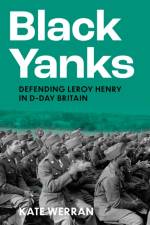
The dramatic story of one of the earliest successes of the British Civil Rights Movement, Black Yanks re-examines the UK and USA's 'special relationship' in the build up to D-Day. This is the story of how an African American soldier from Missouri ended up on death row in D-Day Britain - and the extraordinary campaign that set him free. The drama played out over a tumultuous six weeks, set against a backdrop of the most audacious sea-borne invasion ever attempted. As the build-up to D-Day escalates, Leroy Henry's story unfolds, allowing us to view a pivotal point in history with an entirely new perspective, making race, the 'special relationship' and the British peoples' collective power key considerations. The fascinating, alternative timeline reveals an edgier wartime society, hidden tensions in Anglo-American relations and the moment the British tabloid press learned to roar. Ultimately this court martial - and everything it stood for - provoked mind-blowing decision-making at the highest military level. Kate Werran unearths archival material to reveal the story behind the first significant - if uncelebrated - win in the civil rights movement, a story that has been overlooked for nearly eight decades. Until now.
'She was frequently exposed to risks which probably no other woman has undergone. She has always displayed a devotion to duty and contempt of danger which has been a source of admiration to all.' H C Halahan, Officer Commanding Royal Naval Siege Guns.
In 1984, a uranium leak at Ohio's outdated Fernald Feed Materials Production Center highlighted the decades of harm inflicted on Cold War communities by negligent radioactive waste disposal. Casey A. Huegel tells the story of the unlikely partnership of grassroots activists, regulators, union workers, and politicians that responded to the event with a new kind of environmental movement. The community group Fernald Residents for Environmental Safety and Health (FRESH) drew on the expertise of national organizations while maintaining its autonomy and focus on Fernald. Leveraging local patriotism and employment concerns, FRESH recruited blue-collar allies into an innovative program that fought for both local jobs and a healthier environment. Fernald's transformation into a nature reserve with an on-site radioactive storage facility reflected the political compromises that left waste sites improved yet imperfect. At the same time, FRESH's outsized influence transformed how the government scaled down the Cold War weapons complex, enforced health and safety standards, and reckoned with the immense environmental legacy of the nuclear arms race. A compelling history of environmental mobilization, Cleaning Up the Bomb Factory details the diverse goals and mixed successes of a groundbreaking activist movement.
Widely considered one of the 20th century's most significant - if controversial - figures, Winston Churchill held roles and made decisions that have attracted both praise and criticism. Ahead of his 150th birthday, this volume looks back on the fascinating story of one of the most influential people in British history.
In this recently rediscovered memoir of life in The Women's Land Army, E. M. Barraud writes with remarkable candour and honesty about her life working the land in The Second World War, and Set My Hand Upon The Plough is set to join the ranks of LGBT memoirs, revealing a different side to the Home Front.
Stunning photographs illustrate this fascinating account of Military Airlift Command in the United States Air Force.
Abonner på vårt nyhetsbrev og få rabatter og inspirasjon til din neste leseopplevelse.
Ved å abonnere godtar du vår personvernerklæring.