





Gjør som tusenvis av andre bokelskere
Abonner på vårt nyhetsbrev og få rabatter og inspirasjon til din neste leseopplevelse.
Ved å abonnere godtar du vår personvernerklæring.Du kan når som helst melde deg av våre nyhetsbrev.

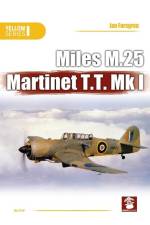
A history of the Miles M.25 Martine, a British aircraft that includes photographs, detailed scale plans, intricate drawings, and vivid color profiles.This book delves into the comprehensive history of the Miles M.25 Martinet, a pioneering British aircraft specifically designed for target towing, and its role in the Royal Air Force (RAF) and Fleet Air Arm (FAA) during World War II. Enriched with an array of photographs, detailed scale plans, intricate drawings, and vivid colour profiles, the narrative captures the essence of the Martinet's development and its operational service, offering a thorough exploration of this significant aircraft.
The leading academic vehicle for scholarly publication in the field of medieval warfare.
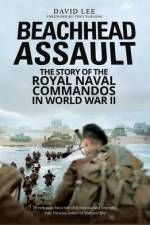
The Royal Naval Commandos had one of the most dangerous and important tasks of any unit in World War II - they were first onto the invasion beaches and they were the last to leave. The Commandos remarkable story - from their early formation and their training to the invasions they spearheaded - is told through a series of brilliantly linked anecdotes. Each tale is one of extraordinary courage and should ensure the legacy of the Commandos is not forgotten. Beachhead Assault includes a Foreword by Man and Boy author Tony Parsons, whose father was a Royal Naval Commando who fought at Elba. It also contains a preface by Ken Oakley, Chairman of the Royal Naval Commando Association.
Controversial indictment of those who exploit the tragedy of the Holocaust for personal and political gain
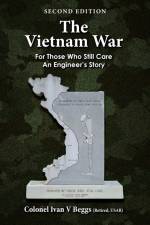
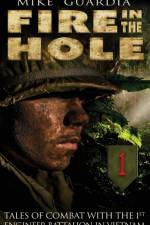
They asked their company commander, "Why are we here?" They did not understand nor wanted to be in the Vietnam War.Looking back fifty-three years, he explains the background and the causes of the War. How and why the US became mired down in turbulent times of student unrest, political assassinations, anti-war protests led by Jane Fonda, Martin Luther King and other notables, as well as Civil Rights marches, corrupt and incompetent Vietnamese governments, meanwhile Presidents and Generals quietly had doubts about the War. So, he quietly mentioned to his soldiers, "Let's do our jobs and go home." They did their jobs, went home, and nobody cared.This book is not for those expecting Rambo-type heroics. Instead, its author and his men served their country not as fighters engaged in active combat, but as engineers, quietly going about the nuts-and-bolts business of building and repairing roads, bridges, and infrastructure. They accomplished their missions through difficult conditions including heavy workloads, drug abuse, racism, doubts about the war, arguments, and heated discussions about getting the job done, and being homesick for love. He then concludes with a suggestion for future wars.
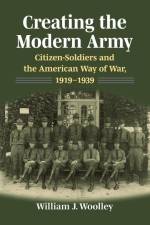
Winner: Army Historical Foundation Award for Excellence in U.S. Army History Writing The modern US Army as we know it was largely created in the years between the two world wars. Prior to World War I, officers in leadership positions were increasingly convinced that building a new army could not take place as a series of random developments but was an enterprise that had to be guided by a distinct military policy that enjoyed the support of the nation. In 1920, Congress accepted that idea and embodied it in the National Defense Act. In doing so it also accepted army leadership's idea of entrusting America's security to a unique force, the Citizen Army, and tasked the nation's Regular Army with developing and training that force. Creating the Modern Army details the efforts of the Regular Army to do so in the face of austerity budgets and public apathy while simultaneously responding to the challenges posed by the new and revolutionary mechanization of warfare.In this book Woolley focuses on the development of what he sees as the four major features of the modernized army that emerged due to these efforts. These included the creation of the civilian components of the new army: the Citizen's Military Training Camps, the Officer Reserve Corps, the National Guard, and the Reserve Officer Training Corps; the development of the four major combat branches as the structural basis for organizing the army as well as creating the means to educate new officers and soldiers about their craft and to socialize them into an army culture; the creation of a rationalized and progressive system of professional military education; and the initial mechanization of the combat branches. Woolley also points out how the development of the army in this period was heavily influenced by policies and actions of the president and Congress.The US Army that fought World War II was clearly a citizen army whose leadership was largely trained within the framework of the institutions of the army created by the National Defense Act. The way that army fought the war may have been less decisive and more costly in terms of lives and money than it should have been. But that army won the war and therefore validated the citizen army as the US way of war.
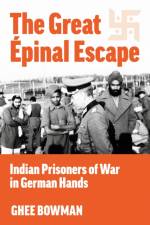
An explosive tale of courage, survival and the incredible 500 Indian prisoners of war who escaped the clutches of the Nazis and crossed the border to freedom.
Military expert Michael O'Hanlon examines America's major conflicts from the Civil War to Afghanistan. Now updated with to include the Revolutionary War and brief observations on three other conflicts in U. S. History, this unique book serves as an important treatment of America's military history at the strategic and theater of operations levels.
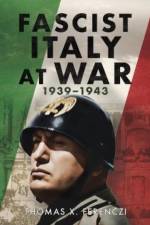
'Fascist Italy at War: 1939-1943' examines in depth Mussolini's expansionist aims in the Balkans and North Africa; Italy's brazen seizure of Albania; Italy's belated entry into WWII; Italy's disastrous military operations in Egypt, Greece, Yugoslavia, and the U.S.S.R.; the Allied invasions of Northwest Africa and Sicily; and the fall of Fascism.
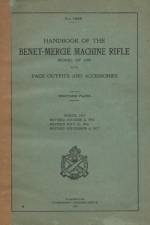
This is a reprint of the 1917 Ordnance Department manual on the The Hotchkiss M1909 Benét-Mercié Machine Rifle Gun and it's Outfits & Accessories. It contains over 118 pages of full color period drawings and information on parts, assembly and accessories of the rifle. You will not be disappointed in this book!
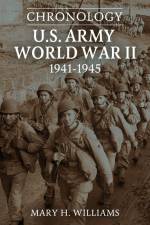
Chronology of the U.S. Army in World War II, 1941-1945, first published in 1960, is an authoritative day-by-day account of the U.S. Army and enemy forces between December 7, 1941 until the war's end in late 1945. Covering all theaters, the Chronology remains a leading reference on the events of the war, and includes a useful list of operation codewords and a massive index of more than 100 pages.
Combat Engineers. The Unsung Heroes of Vietnam.August 25, 1966. Specialist Dan Crowley was among the handful of demolition experts assigned to a route clearing mission in support of Operation AMARILLO. His equipment load was the same as it had been numerous times before: a Claymore mine, TNT, C-4 explosives, blasting caps, time fuse, det cord, eighteen rounds for his M-79 grenade launcher, two hand grenades, and his Colt .45.But this would be no ordinary mission.The Viet Cong had just surrounded an American patrol along Highway 16. Crowley's outfit - Charlie Company, 1st Engineer Battalion - was among the smattering of units thrown together for this impromptu "relief force." History would call it the Battle of Bong Trang.In a war dominated by airmobile infantry, the combat engineers played a critical role in shaping America's battlefield victories. They built obstacles, dug defensive positions, set landmines, performed various types of demolition, and could fight as infantry whenever ordered.Fire in the Hole tells the story of Charlie Company, 1st Engineer Battalion during their deployment to the Republic of Vietnam in 1965-66. Told from the perspective of four Charlie Company veterans - Dan Crowley, Larry Blair, Chuck Humphrey, and Jay Franz - this book provides an intimate, no-holds-barred account of the combat engineers in Vietnam.
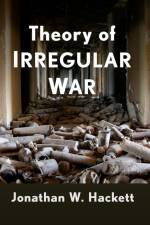
From Afghanistan to Angola, Indonesia to Iran, and Colombia to Congo, violent reactions erupt, states collapse, and militaries relentlessly pursue operations doomed to fail. And yet, no useful theory exists to explain this common tragedy. All over the world, people and states clash violently outside their established political systems, as unfulfilled demands of control and productivity bend the modern state to a breaking point. This book lays out how dysfunctional governments disrupt social orders, make territory insecure, and interfere with political-economic institutions. These give rise to a form of organized violence against the state known as irregular war. Research reveals why this frequent phenomenon is so poorly understood among conventional forces in those conflicts and the states who send their children to die in them.
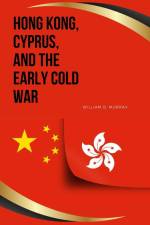
In this groundbreaking work, the Cold War is unraveled and redefined as a clash of imperialisms. Focusing on two pivotal colonies, Hong Kong (1938-1952) and Cyprus (1941-1955), the book exposes the strategic maneuvers against the Chinese Communist Party (CCP) and the Progressive Party of Working People (AKEL). Dive into the motivations and actions of British colonial policymakers navigating the challenges posed by international anti-colonialism, colonial nationalisms, and coordinated communist movements. This revisionist study asserts that British imperialism, alongside the Soviet Union, not only initiated but also shaped and evolved within the Cold War context.
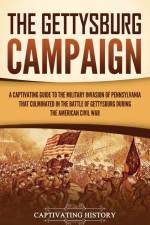
Learn about the pivotal battle that changed the course of the American Civil War.In the summer of 1863, Confederate General Robert E. Lee, fresh off a victory at the Battle of Chancellorsville, decided to invade Union territory. Taking his Army of Northern Virginia into Pennsylvania, Lee was drawn to a place where the area's major roads converged at Gettysburg.There, over seventy thousand Southern troops waged a dogged, bloody battle against over ninety thousand Union soldiers in the fields and on the boulder-strewn heights surrounding the town.Lee had a lot of faith in his troops. He nursed many hopes for the invasion, primarily engaging in peace negotiations by placing pressure on Washington, D.C.Within three days, those hopes and the future of the Southern cause lay battered on the Gettysburg battlefield, a defeat so crippling it signaled the beginning of the end for the Confederacy.This captivating guide tells the story of the Gettysburg campaign, from Lee's decision to invade to his retreat from the battlefield. In these pages, you'll read about acts of heroism, brilliant battlefield tactics, and horrible decisions that turned the tide of war.In this book, you'll learn about the following:The personal histories of generals and other major figures on both sides;The plight of the people of Gettysburg caught between two armies;The strategy Lee envisioned and the actual battle he was forced to fight;The significance of major landmarks on the Gettysburg battlefield;The scope and intensity of battlefield medical support;The post-war efforts to preserve the ground upon which America's bloodiest battle had been fought;The post-war lives of the major participants in the campaign;The politics underlying major strategic decisions;The truth about myths surrounding the fighting;And so much more!
Maria Theresa of Austria was, with Frederick the Great, certainly one of the most important figures in European history. In this paper, I will essentially only discuss the very first period in which the Austrian imperial army was, in the proper sense, 'Theresian', i.e. from 1740 until the end of the 'Eight Years' War', i.e. 1748. A particularly tragic aspect of that period was that a woman, Maria Theresa, originally certainly unaccustomed to anything when it came to the business of warfare, was forced by extraordinary circumstances to treasure her father's inheritance on her own. As time went by, however, she became so attached to her army that, after her husband's death, when she handed over the military 'keys' to her son, she said: "This branch of state administration was the only one in which I was really interested." All other topics and the bibliography will be completed in the second volume.
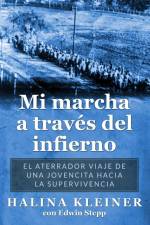
Una jovencita se ve, de repente, completamente sola y escapando de los nazis en su pueblo natal en Polonia. Después de haber sobrevivido a una aktion ideada para eliminar completamente a los judíos de Czestochowa, ella y su padre tratan de dirigirse de regreso a su casa a altas horas de la noche.Confrontados por un policía, Halina, inexplicablemente, huye y se aparta de su padre y comienza su largo viaje de supervivencia. Cansada ya de escapar, decide ofrecerse como voluntaria en un campo de trabajo. Aquella decisión la hace ganar algo de tiempo; los alemanes necesitan trabajadores para el esfuerzo de guerra. Halina trabaja en tres campos diferentes desde el otoño de 1943 hasta enero de 1945. Al principio, puede tolerar vivir en aquellos campos, a pesar de que trabaja muy duro y la alimentan muy poco, pero cuando los alemanes comienzan a perder la guerra, las condiciones se vuelven deplorables. Los judíos comienzan a infestarse de enfermedades y sus captores se vuelven cada vez más crueles.Al hacerse evidente que los alemanes están perdiendo la guerra, las SS vacían los campos y ponen a más de 2000 mujeres a caminar una marcha durante cuatro meses. En esta marcha caminarían más de 800 kilómetros, durante uno de los inviernos europeos más frío registrados. Halina fue una de las 300 mujeres en sobrevivir la marcha de la muerte a Volary y finalmente sintió la necesidad de contar su terrible historia de supervivencia.
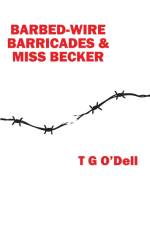
Against the background of controls and restrictions imposed on Germans and Italians living in the United Kingdom at the start of World War 2, four Anglo-German siblings are taken from their home in London and interned: the girl, Ruby Becker, is sent to the Isle of Man via Holloway Prison and her three brothers to a variety of hastily erected and severely overcrowded, poorly run camps and then onto the ill-fated SS Arandora Star. Whilst Ruby's internment is restrictive, it is nowhere near as horrific, squalid and dangerous as that endured by her brothers; yet she knows that it is she who deserves to be severely punished, not them. So why is she being treated so comparatively leniently? Why hasn't she been tried, sentenced and possibly executed. She will have to wait years for the answer. "Barbed-wire, Barricades and Miss Becker" is based on a true story and explores the injustice of blanket wartime internment as well the appalling conditions that many innocent people had to endure. It is also a story about love, sacrifice and incompetence.Above all it is a story about survival.
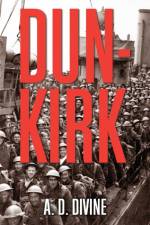
Dunkirk, first published in 1948, is the classic, detailed account of the rescue operation of the British Expeditionary Force (and allied soldiers) in May 1940 from the beaches of Dunkirk, France. Author Arthur (A. D.) Divine crossed the English Channel three times in a 35-foot boat to rescue trapped British soldiers, part of a fleet made up of every serviceable naval and civilian vessel that could be found. At the end of this heroic mission, 330,000 French, British, Belgian, and Dutch soldiers were safely evacuated, but at a great cost in life and with a tremendous amount of materiel left behind on the Dunkirk beaches. Includes an index and appendices with a list of ships used in the operation, honors awarded, and a summary of air support provided.
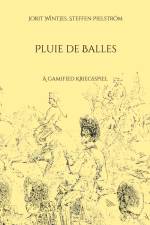
Pluie de Balles is an educational wargame designed to combine elements of modern tabletop systems and key aspects of the Prussian Kriegsspiel. It replaces the latter's facilitators with participants who move around forces on large maps, while other participants sit in staff rooms waiting for reports from their subordinate force commanders - who have to balance the need of controlling their forces and of writing reports back to their staff. Thus Pluie de Balles exposes all participants to some of the friction that is caused by having to process information, make decisions and communicate under significant stress.
This book imagines the ocean as central to understanding the world and its connections in history, literature and the social sciences. It analyzes the histories of movement and traversing across connected spaces of water and land sedimented in literary texts, local histories, music and performance.
This book tells the story of how a Swedish diplomat who saved the lives of thousands of Jews in Hungary became a symbol after his disappearance in January 1945. A variety of aspects are analysed, including secret diplomacy and representations of Wallenberg on film and television as well as in monuments. -- .
A monastic outpost in the Celtic Sea, a fortress built to defend an Empire, a prison established to intern a nation; Spike Island's remarkable 1300-year history far exceeds its modest acreage. No other place better encapsulates the Irish story. Spike Island tells of religious fervour, frequent rebellion, social endeavour, and a nation's unextinguishable yearning for freedom. After 206 years off-limits to the public, its secrets can finally be divulged. The island has garnered international attention many times, such as the famine-era prison overcrowding and inhumane conditions, the triumphant 1938 handover of the island from Britain to Ireland, and the violent prison riot in 1985. Spike Island echoes with the voices of prisoners past, having housed fierce rebels like John Mitchel, who would inspire the 1916 generation, and 1200 Republicans during the War of Independence. More recent arrivals include the notorious crime boss The General, who terrorized 1980's Ireland. Told in an entertaining and accessible chronological style featuring accounts from island dwellers and the interned alike, this book is sure to captivate anyone interested in Irish history.
Abonner på vårt nyhetsbrev og få rabatter og inspirasjon til din neste leseopplevelse.
Ved å abonnere godtar du vår personvernerklæring.