














Gjør som tusenvis av andre bokelskere
Abonner på vårt nyhetsbrev og få rabatter og inspirasjon til din neste leseopplevelse.
Ved å abonnere godtar du vår personvernerklæring.Du kan når som helst melde deg av våre nyhetsbrev.

The military heritage of Plymouth from earliest times to the present day. Will be of interest to all those who would like to know more about Plymouthâ¿s remarkable military history.
The experience of all occupied countries during the Second World War was characterized by severe material shortages. Food, most noticeably, became a scarcity in everyday life; and that food grew into a major stake for all political groups at this time. This book shines a much-needed spotlight on the political role of food in south-east Europe from 1939 to 1945. Controlling food was a key strategy adopted by all actors - be they occupiers, state institutions, resistance organizations, international humanitarian organizations or private interest groups - in substantiating their bid for power. And, as a predominantly agrarian area with a substantial peasant population, investigating this topic is particularly poignant for south-eastern Europe. From discussions of searching for and fighting for food to offering relief and fighting the partisans, the essays in this volume add nuance to discussions on the complex intertwined political and social dynamics of war and occupation. In so doing this sophisticated study fills an important gap in our understanding of the Second World War, food policy, and the social history of Europe more broadly.
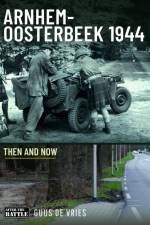
ARNHEM-OOSTERBEEK 1944 Then and Now shows and tells the story of the most daring part of operation Market-Garden: the landing of the British 1st Airborne Division west of Arnhem to capture the bridges over the Rhine. The operation did not go according to plan and the British soon had to go on the defensive. After the area around the Arnhem road bridge had completely fallen into German hands, a six-day siege of the remnants of the airborne troops followed in a small area in Oosterbeek.
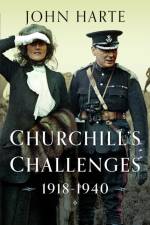
Why do bad things happen to good people? The current battle between superstitious and prejudiced forces from the past, against more enlightened modern ones, began when Winston Churchill was appointed colonial secretary in 1920\. With the defeat of the shadowy Turkish Empire in 1918 by the Allies, he was challenged by three grim forces of menace and coercion: Communism, Fascism, and Islamist Fundamentalism. Each aimed to extinguish every spark of democratic freedom across the Middle East and the West. Since every new generation tends to rearrange the past, todayâ¿s new young generation might want to know how it led to the present situation when subversives undermined democracy from within and without. Churchillâ¿s Challenges describes how it really was. This book combines a social and cultural history of 1918-1940 with a biography of Winston Churchill, to reveal how he responded to his society at that time, and his impact on it. His own character transformed just as dramatically from the eager and ambitious youth to the shrewd and successful politician he became. This account of the first half of Winston Churchillâ¿s life will help readers focus on how the world developed as a consequence of his influence in each ministerial position he filled. It discusses how the changes in Churchill came about as a consequence of his experiences of the changing world with all its complexities. His decisions still impact world politics today.
When the Nazis came to power in January 1933, they began a programme of transforming Germany from a democracy into a totalitarian state, but it was not a matter of simply enforcing compliance. The people had to be coaxed into believing in the new regime. Hearts and minds had to be won over and one of the ways the Nazis did that was to create an ideal of German nationhood in which everyone could feel proud. This was especially the case with art, which came to be used as a powerful tool of propaganda both to disseminate the myth amongst the population and indicate to the Nazi administrators the sort of cultural environment they should create. It was not an easy thing to do. While the nation was being re-created as a dynamic, modern, and powerful industrial giant, all the signals coming from Hitler indicated that his own idyllic view of the German nation was of a traditional, rural people deep-rooted in a romantic-mystical aesthetic. Hitlerâ¿s own experience as an artist in Vienna before the First World War had shown that, whilst technically proficient, his work was detached and impersonal. Despite being rejected by the Vienna Academy of Fine Arts he continued to see himself as artistically gifted, especially in the field of architecture. This book looks at how the artistic side of Hitlerâ¿s personality dominated Nazi aesthetics and the ways in which the Third Reich manipulated public opinion and advanced its political agenda using the power of art. Despite his early setbacks, Hitler always thought of himself first and foremost an artist. He would frequently break off discussions with diplomats and soldiers to veer off on a lecture about his ideas on art and architecture which had been formed during his time in Vienna. _Nazi Propaganda Through Art and Architecture_ explores how Hitlerâ¿s artistic and architectural vision for Germany led to the monumental structures which we now associate with the Third Reich, alongside the rural idyl he sought to espouse, and how they came to symbolise the re-emergent power of a German nation which would dominate Europe.
The first full history of US nuclear secrecy, from its origins in the late 1930s to our post-Cold War present.
The physical and philosophical concepts of space, highlighting their infinite, ever-changing naturePhysical spacePhysical space is the place where objects and forces are located. It is a three-dimensional space, with length, width, and height. Physical space is infinite and is constantly expanding.To describe physical space, scientists use the theory of relativity. According to this theory, space and time are intertwined in a single, cross-linked matrix called "spacetime." Physical forces are produced by the curvature of spacetime. For example, gravitational force is produced by the curvature of spacetime.Philosophical spacePhilosophical space is a broader concept than physical space. It includes the three dimensions of physical space, as well as other aspects such as time, identity, consciousness, and knowledge.Philosophical space is infinite and ever-changing. It is an integrated system, in which all things are interconnected.InfinityTo say that space is infinite means that there is nothing beyond it. There is no end to space, and it will always continue to expand.Infinity is a complex concept. It is difficult to understand, because the world we experience is small and limited.
A neglected passage of World War II history, when French forces liberated this trophy city in the aftermath of a Nazi collapse, only to almost lose it again in the Battle of the Bulge. De Gaulle described the liberation of Strasbourg "one of the most brilliant episodes in our military history." But who did the fighting?
First published in 1975, this book is concerned with the facts and implications of the case of Lin Piao and his army, as well as with the broader question of military intervention in the authoritarian polity of developing countries. A wide range of materials is presented, including "top-secret" documents of the CCP Central Committee, Lin PiaoΓÇÖs own writings and speeches from the 1966-1970 period, pertinent material from the Tenth Party Congress, and press criticism. In their introduction, the author provides a thorough critical analysis of the case of Lin Piao and of the dynamic of power politics that emerged from the Cultural Revolution in the late 1960s.
Gabriele Tergit (1894¿1982) war bis 1933 eine der erfolgreichsten Autorinnen ihrer Generation. Aus dem nationalsozialistischen Deutschland geflohen, fand sie jedoch im Exil kein Publikum mehr ¿ obwohl sie kontinuierlich schrieb. Ihr vielseitiges literarisches und publizistisches Schaffen ist bis heute nur wenig bekannt und wissenschaftlich bearbeitet. Der vorliegende Band schließt an die in den letzten Jahren erfolgte ¿Wiederentdeckung¿ Tergits durch Neuauflagen und Nachlasseditionen an und dokumentiert die erste wissenschaftliche Tagung zu Tergits Schreiben. Bei einem geteilten Interesse an Tergits chronistischem und kritischem Erzählen rücken die einzelnen Beiträge ganz unterschiedliche Werke und Werkgruppen aus verschiedenen Lebens- und Schaffensphasen in den Blick. Neben Reportagen und Feuilletons aus den Jahren der Weimarer Republik, den Romanen, ihren Entstehungsbedingungen und ihrer oft schwierigen Rezeption, werden bisher weitgehend unbekannte, zu großen Teilen unveröffentlichte Texte aus dem Exil und der Nachkriegszeit diskutiert und Tergits Selbstpositionierung als Exilautorin sowie ihre oft auch konflikthaften Bezüge zum zeitgenössischen Literaturbetrieb analysiert.
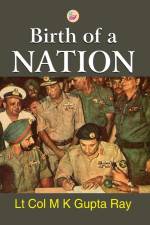
On 3 December, 1971 India had sent her forces inside East Pakistan, part of a neighbouring state, to save the citizens (Bengali Muslims) from one of the most dreadful genocides, that was being perpetrated upon them by their own so-called ruling class from West Pakistan. This was one of the very few unique battles fought in the annals of the human history where a neighbouring country had ever sent its troops not to capture the country and subdue the people but to save them from their demoniac leaders. What can be more sublime employment of the Army? This book, in quest of the genesis of this war, has dug into the history of the subcontinent and narrated development of the events. The warring countries were once parts of the same country before the cruel hands of politics dissected it into two. The narration included advent of British Rule followed by political development which caused the partition, horror of partition, freedom struggle in Bangladesh, part of author's formative life leading to join army, events culminating into war and the war itself. Lastly each and every Indian showed undivided support to the government in taking proper action including employment of arms to free the poor East Bengalese from untold miseries.
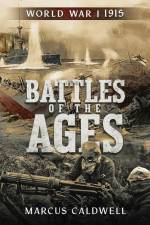
Step into 1915 a pivotal year in World War I, marked by profound shifts in military tactics and the very nature of warfare. This concise and engaging book delves into how the events of 1915 reshaped the global conflict, altering the course of history.Without focusing on specific battles, the narrative examines the introduction of new, more lethal forms of warfare, including the first widespread use of chemical weapons. These developments brought about unprecedented challenges and horrors, testing the resolve and adaptability of soldiers and commanders alike.The book also sheds light on the strategic miscalculations and bold gambits that characterized this year, highlighting how the war's nature transformed from traditional combat to a more complex, multifaceted struggle. It delves into the impact of these changes on the soldiers in the trenches, the commanding generals, and the home fronts, offering a comprehensive view of the war's evolving dynamics.An insightful look into a year that significantly influenced the trajectory of the First World War. It is an essential read for anyone seeking to understand the complexities and transformative nature of this global conflict.Featuring the following battles:¿¿Battle of Neuve ChapelleSecond Battle of YpresSecond Battle of ArtoisBattle of LoosSecond Battle of ChampagneBattles of the IsonzoSiege of Przemy¿lBattle of Humin-BolimówCarpathian Winter WarSecond Battle of the Masurian LakesFirst Battle of PrzasnyszBattle of ¿om¿aSecond Battle of the Vistula RiverAttack of the Dead MenGorlice-Tarnów OffensiveBug-Narew OffensiveVistula-Bug OffensiveRiga-Schaulen OffensiveBattle of DniestrBattle of Zolota LypaRovno OffensiveVilno-Dvinsk OffensiveLanding at Cape HellesLanding at Anzac CoveThird Attack on Anzac CoveAugust Offensive
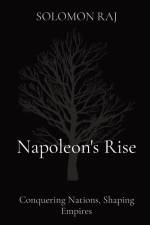
The rise to power of Napoleon Bonaparte is a riveting saga of ambition, military genius, and political prowess that irrevocably altered the path that European history would take in the future. Napoleon was born in Corsica in 1769, and his rise from obscurity in his Corsican family to the highest levels of power in France is a tale of unyielding resolve and brilliant strategic planning.Napoleon's enrollment in the French Royal Military School in Brienne marked the beginning of his military career, which he began at a young age. During the turbulent time of the French Revolution, he ascended through the ranks thanks to his outstanding skills on the battlefield, which rapidly marked him apart from his peers. In the year 1799, he made the most of the chance to execute a coup d'état, which effectively brought an end to the revolutionary government and ultimately led to his appointment as First Consul.There was more to Napoleon's rise to power than that. In 1804, he proclaimed himself Emperor of France, which was a symbolic act that marked a transition away from revolutionary ideals and toward a more authoritarian form of government. His goal extended beyond the confines of France, as he intended to construct a broad European empire that would be under his rule.Napoleon's military prowess was one of the defining characteristics that contributed to his rise to power. It is said that his campaigns are legendary because they were distinguished by a string of wins that demonstrated his tactical skill and his ability to inspire his soldiery. The Battle of Austerlitz, which took place in 1805, and the Battle of Jena-Auerstedt, which took place in 1806, are two of the most notable examples of his strategic brilliance, which earned him the reputation of one of the most accomplished military commanders in the history of the world.The extent of Napoleon's conquests was unbounded. It was during the Napoleonic Wars, which were a series of wars that lasted from 1803 until 1815, that he was able to expand his sphere of influence throughout Europe. Nations were destroyed by his marching forces, and he redrawn the geography of the continent to accommodate his aspirations to become an imperial power. Furthermore, the Napoleonic Code, which was a comprehensive legal system that was implemented during this time period, further strengthened his influence on the regions that were under his rule.One of the most significant accomplishments of Napoleon's conquests was the establishment of the French Empire, which, at its peak, encompassed the whole region from Spain to Russia. The realization of his dream of a unified Europe ruled by France came to pass, but only for a short period of time. In spite of this, the only thing that could compare to the splendor of his empire was the difficulties it encountered, which included the unrelenting opposition of other European nations who were eager to put a stop to his growth.
Can one girl save a nation?With Japan's future in the balance, Risuko may recover the Kano clan's honor - or she may destroy it foreverLord Takeda has sent Risuko, Emi, and Toumi on a mission to the capital. The road is dangerous. The destination is treacherous. Risuko - the girl who just likes to climb - must make a choice that will have repercussions not only for Risuko's life and those of her friends, but possibly for all of Japan.In this thrilling third book in the Seasons of the Sword, she encounters old friends, new enemies, and a strange boy from a far-off land called Portugal. Through raging battles and deadly court intrigue, Risuko must follow a path narrower and less stable than any pine branch. And the consequences should she fail are sharp and hard as rocks below.The red-and-white disguise of the kunoichi awaits.Is Risuko ready?Seasons of the Sword:Risuko (Winter)Bright Eyes (Spring)Kano (Summer - coming March, 2024!)Autumn - coming soon!(Young adult historical adventure; Japanese Civil War)
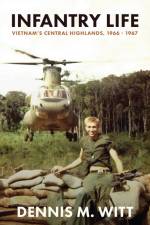
Firefights, mortar attacks, and friendly fire were all part of the experiences of an infantryman in the jungles of the Central Highlands of Vietnam. But bugs, leeches, exhaustion, swamps, accidents, snakes, C-rations, digging in, cutting overhead cover, grief, humor, camaraderie, rain, thirst, impressive weapons, useless weapons, care packages, and much, much more filled up most of the infantryman's one-year tour in Vietnam.Daily life as an infantryman in Vietnam was a completely foreign experience compared to the lives most young American soldiers knew growing up. The war and the jungle saw to that. Soldiers had to cope and adapt. Almost all did.In this book, the author tells many stories of events he personally experienced during his year in Vietnam. Through these stories, he aptly describes the daily life and shared experiences of soldiers in the 4th Infantry Division in the jungles of Vietnam's Central Highlands.Anyone who has a personal connection with someone who served as an infantryman in Vietnam or simply has curiosity about infantry life in Vietnam will better understand, after reading this book, the answer to the question "What was daily life like for them there?"
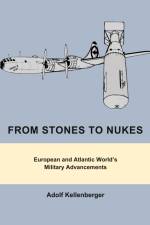
This volume offers a sophisticated exploration of the history of weapons and warfare in Europe and the Atlantic world, aimed at stimulating and inspiring those with an interest in this domain. It invites readers to revisit the foundational principles that underpinned the development of contem¬porary armaments and military practices until shortly before the turn of the millennium.In an era where global challenges have become inescapable, this book emphasizes the importance of reconnecting with our shared origins and understanding our unique paths. As our world undergoes rapid changes in politics, society, economics, and technology, this exploration of history sheds light on the dynamics of change, both in times of peace and war.
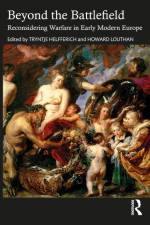
This volume draws together an international team of scholars to explore the experience and significance of early modern European continental warfare from an interdisciplinary perspective.
Gabriel Carvalho's "American Dreams: Stories of Hope and Failure in the United States" takes you on an interesting trip through the heart of what it means to be American. In this fascinating look at the history of the country, Carvalho skillfully weaves together stories of success and tragedy, showing how complicated the American Dream really is.This book tells the stories of pioneers, immigrants, and visionaries who changed the course of the country's history. These stories will connect with readers of all ages. Each story paints a lively picture of the complicated search for success in America, from the problems early settlers faced to the strength of communities during economic downturns.The hopes of the people in this country changed as the country went through industrialization, the Great Depression, and the civil rights movements. Carvalho writes about the subtleties of success and failure, showing how past events can affect people's hopes and dreams. The book celebrates the variety of life in the United States by looking at the hopes and dreams of refugees, business owners, and activists who made their way through times that were changing."American Dreams" has themes that are relevant to today, like the gig economy and protecting the earth. These themes can help readers think about their own goals. This beautifully written story makes you think about how our ideas of success are changing, how we can work for equality, and how strong we need to be to deal with life's problems.There are parts of history, society, and personal stories in "American Dreams" that help readers really understand the complicated tapestry that is the American Dream. Carvalho's study of the hopes and failures that have shaped the United States is current and thought-provoking, especially as the country continues to struggle with its shared goals.
'With its meticulous documentation, this multifaceted volume brings a range of individual lives and networks to the fore, outlining their inestimable contributions to British culture. It is an inspiring and timely intervention into the fields of exile and childhood studies, demonstrating just how inextricably the two are linked.' (Professor Kiera Vaclavik, Director of the Centre for Childhood Cultures, Queen Mary, University of London) The essays that make up this book cover a diverse range of subjects, all broadly on the theme of child refugees from Nazism in Britain. The book's three sections - on displacement, children in art, and children in education and play - indicate the various topics considered in the study. The authors come from different academic fields - including German and Austrian exile studies, art history, language and literature, and education - so each chapter offers a depth of research as well as adding to the breadth of the overarching theme. Thus far, there has been no study dedicated to examining both the experience of these refugee children and those who worked with them, and yet they and their own children live on, marked in different ways by their experience and making their own mark in British art and literature too.
A history of the first two decades of the Air National Guard as it evolved from a post-war âflying clubâ? for WW2 veterans to an operational force integral to U.S. aerial strength.
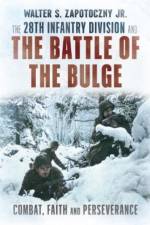
A forensic examination of what lay behind the exceptional heroism exhibited by the 28th Infantry Division in the Battle of the Bulge.
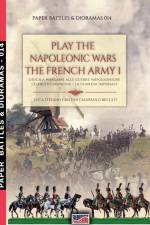
Under Napoleon I, the French Army conquered most of Europe during the Napoleonic Wars. Professionalising again from the Revolutionary forces and using columns of attack with heavy artillery support and swarms of pursuit cavalry the French army under Napoleon and his marshals was able to outmanoeuvre and destroy the allied armies repeatedly until 1812. Napoleon introduced the concept of all arms Corps, each one a traditional army 'in miniature', permitting the field force to be split across several lines of march and rejoin or to operate independently. The Grande Armée operated by seeking a decisive battle with each enemy army and then destroying them in detail before rapidly occupying territory and forcing a peace.
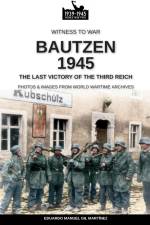
The last clear German victory in World War II occurred in the last days of April 1945 during the defense, loss and subsequent recovery of the Saxon city of Bautzen. On that occasion, when all was lost, the remnants of once powerful German units, such as the Panzer Divions Hermann Göring, Brandeburg or Grossdeutschland, inflicted a total defeat on the proud Soviet-Polish units, more robust and better armed, that supported the Red Army advance towards the capital of the Reich. This text tells the story of the events that took place in that city, the capital of Upper Lusatia, just south of the German capital. The high efficiency of the German soldiers made the difference with a real state of an army by then in decay and with no more fuel, showing how the fighting spirit was kept high until the end thanks to the concrete possibility of stopping the Soviets, even if only for a few hours or days, in their overwhelming advance to allow the evacuation of the greatest number of Germans people towards the West of the country. An innovative work this one by Gil Martínez, that will certainly occupy, together with the previous one already published in Breslau 1945, a special place in the library of all those who are interested in the military history of the last terrible world conflict.
Under Napoleon I, the French Army conquered most of Europe during the Napoleonic Wars. Professionalising again from the Revolutionary forces and using columns of attack with heavy artillery support and swarms of pursuit cavalry the French army under Napoleon and his marshals was able to outmanoeuvre and destroy the allied armies repeatedly until 1812. Napoleon introduced the concept of all arms Corps, each one a traditional army 'in miniature', permitting the field force to be split across several lines of march and rejoin or to operate independently. The Grande Armée operated by seeking a decisive battle with each enemy army and then destroying them in detail before rapidly occupying territory and forcing a peace.
With great care, the author of "Land of Liberty: An In-Depth History of the United States" has put together a fascinating story of the country's rich tapestry. Marco Rossi takes readers on an interesting trip through the important events that have made the US the powerhouse it is today.Rossi's well-researched and thought-provoking book goes deep into the history of the United States, telling the complex stories of the native peoples, early European travel, and the founding of the thirteen colonies. Ideas from the Enlightenment, the start of democratic government, and the revolutionary spirit are broken down, giving readers a more complete picture of how the country's politics have changed over time.The story skillfully moves between important events like the French and Indian War, the Boston Massacre, and the Declaration of Independence, showing how they had a huge effect on people in new ways. Rossi expertly walks readers through the Revolutionary War, the writing of the Constitution, and the difficulties of the early Republic, showing how strong and determined the Founding Fathers were.This book isn't just a history book; it also tells a story that connects to modern problems and draws parallels that make you think. As readers go on this literary journey, they learn more about how the American character is shaped by the timeless ideas of freedom and democracy."Land of Liberty" is more than just a history book; it's a tribute to the United States' strong character. This book is a must-read for history buffs, scholars, and anyone else who wants to learn more about the United States' fascinating past. It offers an interesting journey through the annals of history.
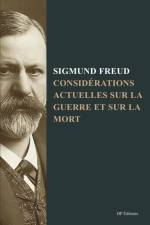
La transformation des penchants, sur laquelle repose notre aptitude à la vie civilisée, peut, sous l'influence des événements de la vie, être frappée de régression, passagère ou durable. Il est incontestable que les influences ayant leur source dans la guerre font partie des forces capables de provoquer une pareille régression, ce qui fait que nous n'avons pas le droit de refuser l'aptitude à la vie civilisée à tous ceux qui se comportent contrairement aux principes sur lesquels repose cette vie et que nous devons attendre, jusqu'à ce que des temps meilleurs et plus calmes ramènent de nouveau à la surface leurs sentiments nobles et élevés.Cette nouvelle édition possède une mise en page dont la taille des caractères est destinée à rendre la lecture confortable.
Abonner på vårt nyhetsbrev og få rabatter og inspirasjon til din neste leseopplevelse.
Ved å abonnere godtar du vår personvernerklæring.