















Gjør som tusenvis av andre bokelskere
Abonner på vårt nyhetsbrev og få rabatter og inspirasjon til din neste leseopplevelse.
Ved å abonnere godtar du vår personvernerklæring.Du kan når som helst melde deg av våre nyhetsbrev.

In 1522, the Ottomans attacked the island of Rhodes and, after a six-month siege, the Hospitallers surrendered on terms. The Knights Hospitaller had ruled Rhodes since 1309, and the Ottomans had attempted to capture the island 40 years before in 1480, but were defeated by the Knights. The Ottoman victory in 1522 resulted in the Knights being expelled from the island and eventually settling in Malta, Gozo, and Tripoli and the Ottomans obtaining domination over the Eastern Mediterranean and its trade.This collection of essays, published on the 500th anniversary of the siege, explores such question as why Suleiman the Magnificent attacked Rhodes, what made the 1522 siege successful, and how the Rhodian population, the Knights Hospitaller, the Eastern and Western Mediterranean, and Europe in general were affected by the loss of Rhodes. The answers to these questions are explored in new research by expert historians and archaeologists in their field.This book will appeal to all those interested in the Knights Hospitaller, Ottoman History, Crusader Studies, and Early Modern European History.
Investigating more than 70 key concepts relating to the performing arts in more than six non-European languages, this volume provides a groundbreaking research tool and one-of-a-kind reference source for theatre, performance, and dance studies worldwide.
This volume explores a basic question in the historiography of art: the extent to which iconology was a homogenous research method in its own immutable right. By contributing to the rejection of the universalizing narrative, these case studies argue that there were many strands of iconology.
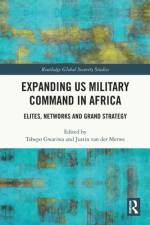
This book discusses the systematic expansion of the United States Africa Command (AFRICOM) across the continent of Africa.
Written in honour of the leading historian of war and state formation in the early modern Low Countries Marjolein 't Hart, the chapters gathered in this volume examine the main drivers, beneficiaries and discontents of state formation across and beyond Europe in the early modern period.
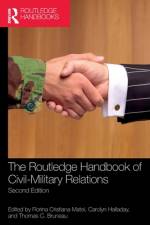
This second edition of The Routledge Handbook of Civil-Military Relations offers a wide-ranging, internationally focused overview of the field of civil-military relations.The armed forces are central actors in most societies and are involved in many different roles. Amongst other activities, they engage in peace operations, support the police in fighting crime, support civilian authorities in dealing with natural disasters, and fight against terrorists and in internal conflicts. The existing literature on this subject is limited in its discussion of warfighting and thus does not do justice to the variety of roles. This second edition not only fills this important lacuna but offers an up-to-date comparative analysis and provides a conceptual framework to analyze how strategies can realistically be implemented. Amalgamating ideas from key thinkers in the field, the book is organized into three main thematic parts: Part I: Civil-Military Relations in Non-Democratic States and Illiberal Democracies; Part II: Civil-Military Relations in New Democracies; Part III: Civil-Military Relations in Established Democracies.This handbook will be essential reading for students and practitioners in the fields of civil-military relations, defense studies, war and conflict studies, international security, and IR in general.
This book looks at the representations of modern war by analysing texts and examining the ways in which authors relate to the atrocious horrors of war.Rejecting the assumption that violence is simply a denial of reason or, at best, a pathological form of collective sadism, this book considers it 'a cultural act' that needs to be understood as underpinned by a series of shared and accepted norms and values stemming from a society at a given moment of its history and shaped by its language. Traditional vocabulary and language seem inadequate to describe soldiers' experience of modern warfare. The problem for writers is to depict and render intelligible a dramatically unprecedented reality through recourse to something familiar. For some historians and literary critics, the absurdity of the First World War has shaped our ironic and disenchanted reading of the entire twentieth century. Yet these ways of coping with the urge to communicate inexpressible feelings and emotions in most cases are not sufficient to overcome the incoherence of the sentiments felt and the events witnessed.The contributors attempt to address the questions and issues that are posed by the highly ambiguous views, texts, and representations examined in this volume.This book was originally published as a special issue of the journal European Review of History: Revue Européenne d'Histoire.
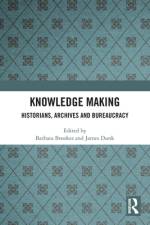
Paper has been the material of bureaucracy, and paperwork performs functions of order, control, and surveillance. This book explores how those functions transform over time, allowing private challenges to the public narratives created by institutions and governments.
This book offers a fresh look at the role of coalitions in contentious politics in North Africa and the Middle East, based on conceptual reflexions and empirical case studies by researchers who have conducted extensive fieldwork in the region.Coalitions of actors that have traditionally not been allies have become a key feature of the protest movements that have emerged across North Africa and the Middle East since 2011. But what happens when Islamists ally with Leftists, workers with student unions and young engineers with local tribesmen? How do coalitions form across ideological, generational, professional, ethnic and class divides? Are such collaborations transformative? The authors seek to show that it is important to go beyond analyses that focus mainly on identifying the factors that led to a coalition's success or failure: coalitions are moments of transformative encounter that can lead to changes affecting relations with political authorities, ideological learnings, repertoires of action and understandings of the notion of right. Instead of analyzing coalitions and social divides as two opposite processes, this book further argues that studying the alliance of social groups goes hand in hand with exploring processes of differentiation that are engineered by both political regimes and social actors.Focusing on the role of coalitions in contentious politics, before and after the Arab uprisings, this book proposes a sociology of coalitions in the Middle East based on key empirical examples, to analyze the transformations that emerged out of such alliances at the levels of repertoires of action, forms of organization, relations to political authorities and ideological learnings.The chapters in this book were originally published as a special issue of the journal, Mediterranean Politics.
The first book in any language to provide a comprehensive portrait of the origins of aid to political prisoners and exiles in late nineteenth-century Russia, showing how a series of aid organizations emerged from the nascent radical liberationist movement of the 1870s-80s.
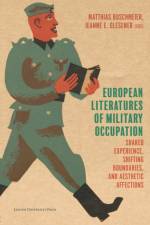
Occupation literature: a new perspective on European identitiesWhat does it mean to live under occupation? How does it shape the culture and identities of European nations? How does it affect the way we write and read literature? These are fundamental questions that set the stage for an in-depth exploration. Focusing on the literary works of writers from various European countries that were occupied by Nazi Germany, the Soviet Union or the Allies during and after World War II, the contributions in this edited volume seek to unravel the complex interplay between historical circumstances and literary expression. Centred on the concept of occupation literature as a genre in its own right, differentiating it from 'war literature', the book navigates this subtle distinction, drawing connections with the Holocaust novel and extending the timeframe beyond Nazi occupation. European Literatures of Military Occupation argues that the multifaceted experiences of occupation have played a pivotal role in shaping European identities. Moreover, the volume links European identities to the experience of occupation by unveiling the complex and diverse ways in which writers respond to historical and political circumstances. Introducing the concept of 'affective realism' and exploring its intersection with the occupation novel, the book provides nuanced insights into the intricate relationship between history, identity, and literature. It combines theoretical perspectives relevant to researchers in the humanities with detailed case studies, generating a truly interdisciplinary perspective, enriched by a strong transnational dimension, creating a cohesive narrative that intervenes innovatively in the fields of literary, cultural, and historical criticism. Ebook available in Open Access. This publication is GPRC-labeled (Guaranteed Peer-Reviewed Content). Contributors: Klaus-Michael Bogdal (Bielefeld University), Jan Andres (Bielefeld University), Benedikts Kalnacs (University of Latvia), Stefan Laffin (Leibnitz University of Hannover), Daniela Lieb (Centre national de littérature, Luxembourg), Atinati Mamatsashvil (Ilia State University), Christopher Meid (University of Freiburg), Aleksandar Momcilovic (independent scholar), Jeroen Olyslaegers (independent literary author), Joanna Rzepa (University of Essex), Sandra Schell (Heidelberg University), Meinolf Schumacher (Bielefeld University), Stefanie Siess (Heidelberg University)
Field Marshal Bernard Law Montgomery had a dynamic personality that often led to difficulties with political or military superiors but made him an immensely effective leader of men. He identified himself closely with his soldiers whose welfare was his continual concern and whom he treated almost as family. In return, they fought for him magnificently in some of the most important battles of the Second World War. These battles varied in type, terrain and tactics: defended river crossings including that of the Rhine; amphibious landings including the D-Day landings; defensive encounters including Alam Halfa and the Ardennes; mobile operations including the capture of Tripoli, the â¿left hookâ¿ at the Mareth Line and the dash from the Seine to the Scheldt culminating in the daring attempt to seize the Rhine bridges; â¿set pieceâ¿ conflicts against enemies in prepared positions equipped with often superior weapons including Alamein and Normandy. In addition to describing the battles that made Montgomery the legendary military commander for which he is rightly remembered, this fascinating book examines both his qualities and weaknesses. Notwithstanding the latter, there is no doubt that he fully justified the trust and loyalty that soldiers gave to the man they knew as â¿Montyâ¿.
Transcribed for the first time from Commissary General Tupper Carey's handwritten journals, this is the second of two volumes which cover the lively career of a Commissary who served throughout the Peninsular war and Waterloo campaign. Written with vivid detail, these journals offer a truly unique window into the life of a Commissary and the campaigns in which he served. Although a civilian and greatly discouraged from putting himself in mortal danger, Tupper was often to be found watching the fighting from some nearby vantage point and often describes the actions he witnessed, particularly where it affected his own charge, whether a battalion, a brigade or even later an entire division. Interspersed with these primary roles, he was often seconded to form supply bases in the rear of the army, or to hastily remove or destroy stores when threatened by enemy advances. He also talks freely about fellow officers, and being a private journal written simply for the eyes of his immediate family, he is not shy in giving his honest opinions of both his subordinates or indeed his superiors. This volume covers the period from the launch of Wellingtonâ¿s great advance into Spain in 1813 until the end of the war in 1814, the Waterloo campaign of 1815 and the Army of Occupation in France from 1815 to 1818, when Tupper became arguably the most important Commissary working for the Duke of Wellington.
Ernest Grimaud de Caux was _The Times_ correspondent in Madrid from 1910 to 1939, encompassing the period of Primo de Riveraâ¿s Dictatorship, the fall of the monarchy, and the Civil War. With his deep knowledge of Spainâ¿s history, culture and politics, he was widely respected in his profession and highly valued by _The Times_. _It Happened in France_ covers the immediate post Civil War years, when de Caux was living in France, under German Occupation. It contains a series of so far unpublished essays, written at the time, and recounting his experience of the Occupation, including the flight from Paris under the German advance, daily life in the Southwest, his three weeks in prison after arrest by the Gestapo, reflections on Vichyâ¿s political leaders, and what today we would call the geopolitics of the time. These essays, accompanied by a biography and personal appreciation of de Caux, constitute a fascinating and intimate account of an important aspect of the Second World War.
The airborne landings on D-Day played a major part in the success of the largest amphibious operation ever mounted. Yet just over three months later Operation _Market Garden_, the largest airborne operation ever attempted, failed to take all its objectives. It is notable, however, that in the film _A Bridge Too Far_ Dirk Bogardeâ¿s Lieutenant General â¿Boyâ¿ Browning refers to a large number of cancelled operations since D-Day. What were these operations? Why do we know so little about them? And what can they tell us about Allied airborne planning, and the way that the allies fought, in 1944?As James Daly reveals, plans were considered or drawn-up for a number of ambitious airborne assaults that could have formed part of the Alliesâ¿ efforts to break out of the beachheads. Of these, three, operations _Wastage_, _Tuxedo_ and _Wild Oats_, might well have been part of the fighting in Normandy itself. Operation _Wild Oats_, for example, was to see the 1st Airborne Division help capture Caen in conjunction with the British I Corps and XXX Corps. Three others, operations _Beneficiary_, _Hands Up_ and _Swordhilt_, were to be combined airborne and amphibious descents to seize the vitally important ports of St Malo and Brest, as well as the Quiberon Bay area in southern Brittany. Airborne planning was frenetic and wide ranging during this period. One operation would have seen gliders landing on a beach; another would have seen the airborne troops taking off without maps. Some of them were months in the planning; others were merely an idea that lasted for a matter of days. Far from being standalone airborne operations, all of them were part of a wider strategy and several were major combined operations, effectively small-scale D-Days, complete with seaborne landings. For the first time, this book looks at each of these operations in detail. Using new research and drawing on original planning documents, including maps of planned drop zones and operational areas, most of which have never been published before, James Daly explores a little-known aspect of the Alliesâ¿ landings in France in the summer of 1944.
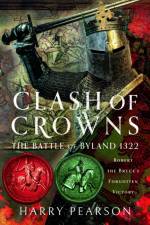
The battle of Byland, on 14 October 1322, was a crucial battle in the Wars of Scottish Independence. This absorbing study from Harry Pearson sheds new light on one of the most overlooked battles in British history. The area of the North York Moors National Park contains some of the most dramatic and scenic landscapes in the North of England, and none more so than the section of the Cleveland Way, which clings to the edge of the escarpment that marks the western boundary of the Hambleton Hills. On a clear day, the entire Vale of Mowbray can be seen. When visiting the area today it is hard to imagine thousands of English and Scottish troops engaged in bitter conflict there. At first light on the morning of October 14th in 1322, the armies of two kings confronted each other over this same ground. The soldiers of King Edward II of England looked down from the heights at a force of several thousand men led by King Robert I 'the Bruce' of Scotland, as they deployed below Sutton Bank in the area around Gormire Lake, with thousands more approaching from the direction of Northallerton to the north-west. Although a daunting sight for the English defenders, they no doubt had confidence in the strength of their seemingly impregnable position. The early morning air would have been thick with the call of shouted orders and war cries and the clamour of the readying of weapons, armour and harness as the Scots drew up into battle-formation, ready to attack up the steep, narrow, and heavily defended pass. Complete with fresh research and over 100 images and maps, this new edition of _Clash of Crowns_ tells the story of the ensuing battle, the dramatic circumstances which brought it about and the impact of the outcome on the history of the British Isles.
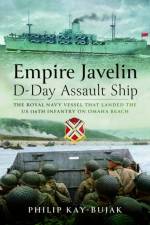
_Empire Javelin_ an American-built LSI (Landing Ship, Infantry) in Royal Navy service, played an important role on D-Day. She carried A Company 116th RCT (the famous â¿Bedfordâ¿ Boysâ¿) across the Channel and her landing craft put them ashore on Dog Green sector as part of the initial assault or â¿suicide waveâ¿, onto Omaha beach. In telling her story, Philip Kay-Bujak does justice to the contribution of the Royal Navy at Omaha Beach, which has been underappreciated in the past (when directing Saving Private Ryan, Stephen Spielberg notoriously said there was no British involvement). Drawing heavily on first-hand accounts, the author covers the actions of the ship herself and of the landing craft launched from her in great detail. One third of her landing craft were lost in the first wave alone. He also reveals _Empire Javelinâ¿s_ earlier life, from design and construction, through launch and training. Similarly, he relates her service after that fateful day in June 1944, when she continued to ferry troops across the Channel for several months. The events surrounding her sinking in December 1944, either by U-boat or a mine, while laden with troops, are also fully examined. The authorâ¿s skilful narrative is supported by archive photos, the whole forming a fitting testament to the contribution of _Empire Javelin_ and ships like her, which, though less glamorous than battleships and destroyers, played a vital role in Operation Overlord and the liberation of Europe.
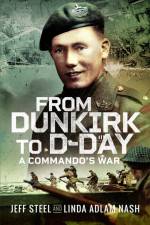
Bill Adlamâ¿s hair-raising escape from Dunkirk, his dramatic commando raids and his storming the D-Day beaches reads like fiction. But it all happened. Bill escaped the Dunkirk disaster via a bayonet charge into Nazi machine guns. He was presented with the Military Medal â¿for gallantry under fireâ¿ by King George VI. Later, Bill volunteered for commandos: he thrived on adrenaline. Number 4 Commando took him to a surgical strike in the north of Norway. The stated objective: to destroy oil installations. It was a feint. Ian Fleming of the Secret Intelligence Service had masterminded the raid. Its objective: to help break the Enigma Code. Number 4 Commando then sent him on a raid to Dieppe in August 1942 to spike naval guns to enable a landing by Canadian forces. Billâ¿s commanding officer was Lord Lovat: cousin to Ian Fleming and (allegedly) template for the fictional James Bond. Billâ¿s prowess as a commando saw him headhunted to a top secret location in the wilds of Scotland. Here he trained others in the dark arts of â¿butcher and boltâ¿. On the morning o 6 June 1944, D-Day, Bill passed over the sands of Normandy in minutes. The next two months saw him up against Hitlerâ¿s elite army and Waffen SS divisions. The reader will ask the same question that Bill asked: how would he ever come out alive?
Abonner på vårt nyhetsbrev og få rabatter og inspirasjon til din neste leseopplevelse.
Ved å abonnere godtar du vår personvernerklæring.