









Gjør som tusenvis av andre bokelskere
Abonner på vårt nyhetsbrev og få rabatter og inspirasjon til din neste leseopplevelse.
Ved å abonnere godtar du vår personvernerklæring.Du kan når som helst melde deg av våre nyhetsbrev.

Explore some fascinating photographs documenting a variety of military vehicles in preservation since 1960s.
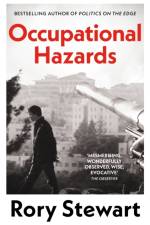
A fascinating insight into the complexity, history and unpredictability of Iraq.By September 2003, six months after the US-led invasion of Iraq, the anarchy had begun. Rory Stewart, a young Biritish diplomat, was appointed as the Coalition Provisional Authority's deputy governor of a province of 850,000 people in the southern marshland region. There, he and his colleagues confronted gangsters, Iranian-linked politicians, tribal vendettas and a full Islamist insurgency. Occupational Hazards is Rory Stewart's inside account of the attempt to rebuild a nation, the errors made, the misunderstandings and insurmountable difficulties encountered. It reveals an Iraq hidden from most foreign journalists and soldiers. Stewart is an award-winning writer, gifted with extraordinary insight into the comedy, occasional heroism and moral risks of foreign occupation. 'Beautifully written, highly evocative . . . a joy to read' John Simpson 'A marvellous book . . . a devastating narrative' Simon Jenkins 'Absolutely absorbing' Ken Loach 'Strikes gut and brain at once' James Meek 'Wonderfully observed, wise, evocative' Observer
The story of how the post-war Labour government under Clement Attlee re-fashioned Britain is a familiar one. This is the alternative story of how the Conservatives envisioned Britain's post-war future, revealing the bold, at times utopian, plans that British Conservatives drew up for Britain and the post-war world.
A tale of bravery, adventure and a remarkable friendship, inspired by true events from World War 2 following twelve-year-old Grace, who lives at Blacksod Lighthouse and weather station with her parents and little brother.
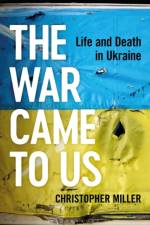
Vivid... Shocking... [Miller] brings a seasoned, personal perspective to his account of both the 16-month conflict and its wider roots.'Daily Telegraph'A beautiful blend of memoir, reportage and history...superb.'Irish Times'...powerful and insightful...Miller provides a human dimension to a bloody conflict.' Kirkus ReviewsA breathtaking exploration of Ukraine's past, present, and future, and a heartbreaking account of the war against Russia, written by a leading journalist who has lived and worked in Ukraine for over a decade.When Russian President Vladimir Putin launched his unprovoked, full-scale invasion of Ukraine just before dawn on 24 February 2022, it marked his latest and most overt attempt to brutally conquer the country, and reshaped the world order. Christopher Miller, the Ukraine correspondent for the Financial Times and a foremost journalist covering the country, was there on the ground when the first Russian missiles struck and troops stormed over the border. But the seeds of Russia's war against Ukraine and the West were sown more than a decade earlier.This is the definitive, inside story of its long fight for freedom. Told through Miller's personal experiences, vivid front-line dispatches and illuminating interviews with unforgettable characters, The War Came To Us takes readers on a riveting journey through the key locales and pivotal events of Ukraine's modern history. From the coal-dusted, sunflower-covered steppe of the Donbas in the far east to the heart of the Euromaidan revolution camp in Kyiv; from the Black Sea shores of Crimea, where Russian troops stealthily annexed Ukraine's peninsula, to the bloody battlefields where Cossacks roamed before the Kremlin's warlords ruled with iron fists; and through the horror and destruction wrought by Russian forces in Bucha, Bakhmut, Mariupol, and beyond.With candor, wit and sensitivity, Miller captures Ukraine in all its glory: vast, defiant, resilient, and full of wonder. A breathtaking narrative that is at times both poignant and inspiring, The War Came To Us is the story of an American who fell in love with a foreign place and its people ? and witnessed them do extraordinary things to escape the long shadow of their former imperial ruler and preserve their independence.
Explores family reactions to mass death events in early twentieth-century Britain to show how families pushed against state-imposed memorial narratives and created objects to enable themselves to mourn. This is a unique, comparative, and domestic perspective on mourning that makes important contributions to the field of death studies.
"A sweeping history of intimacy and family life in France during the age of revolution. The French Revolution and Napoleonic Wars devastated Europe for nearly a quarter of a century. The Soldier's Reward recovers the stories of soldiers and their relationships to family and domestic life during this period, revealing how prolonged warfare transformed family and gender dynamics and gave rise to new kinds of citizenship.In this groundbreaking work combining social, cultural, gender, and military history, Jennifer Heuer vividly describes how men fought for years with only fleeting moments of peace. Combatants were promised promotion, financial gain, and patriotic glory. They were also rewarded for their service by being allowed to return home to waiting families and love interests, and with marriages that were arranged and financially supported by the state. Heuer explores competing ideas of masculinity in France, as well the experiences of the men and women who participated in such marriages. She argues that we cannot fully understand the changing nature of war and peace in this period without considering the important roles played by family, gender, and romantic entanglements.Casting new light on a turbulent era of mass mobilization and seemingly endless conflict, The Soldier's Reward shows how from the Revolution through the Restoration, war, intimacy, and citizenship intersected in France in new and unexpected ways"--
Historical Dictionary of Modern Coups D¿état contains a chronology, an introduction, and an extensive bibliography. The dictionary section has more than 1,400 cross-referenced dictionary entries. This book is an excellent resource for students, and researchers.
Service Manual for the British Super-Heavy tank TOG-2*. Pieced together from surviving records this manual was written in sections during the long development of the tank and was stopped when the project was terminated. As such the manual is incomplete but has been recreated as close as possible to what the original manual would have looked like had the tank entered production. Terminated at a time when the manual was transitioning from TOG-2R to TOG-2* this manual provides an intriguing insight into the development process for a service manual for a tank and to the vehicle itself. Intended as a supplement to 'The Tanks of TOG' by Andrew Hills this manual shows how far the project had progressed and the amount of work which had gone into the design.
This captivating book delves into the secretive world of the Irish Republican Brotherhood (IRB) and its profound impact on Ireland's political landscape between 1914 and 1924. With the aid of new documentation, Ranelagh unravels the true influence of the oath-bound society without which the 1916 Rising might never have taken shape. For Michael Collins, the IRB was the true custodian of the Irish Republic, and the only body he pledged his loyalty to, but its legacy remains obscured by its intense secrecy. This book re-introduces the IRB as the organisation that created and furnished the IRA, influenced the result of the critical 1918 election, and changed the face of Irish history. From É amon de Valera's recollections of how he first learned of the Treaty to narratives from Nora Connolly O' Brien, Emmett Dalton, and others, testimonies from key figures paint a vivid picture of the IRB's inner workings and external influence. A fascinating exploration of secret societies, political manoeuvres, and personal sacrifices, The Organisation casts new light on a pivotal chapter in Ireland's quest for independence.
Renault UE Forword The beginning of the projectBrandt/Latil NCitroën KégresseRenaultN infantry supply vehicle1937 an improved versionUE in Wehrmacht serviceMajor Alfred BeckerInfanterie UE-Schlepper(f)Mannschaftstransportwagen Renault UE(f)Kleiner Funk- und Beobachtungspanzer auf Infanterie-Schlepper UE(f)Fernmeldekabel Kraftwagen Renault UE(f)Selbstfahrlafette für 3.7cm Pak36 auf Renault UE(f)Selbstfahrlafette für 28/32 cm Wurfrahmen auf Infanterie-Schlepper UE(f)Gepanzerte MG Träger Renault UE(f)Munitionsschlepper Renault UE(f)Panzerkampfwagen Attrape auf UE(f)Sicherungsfahrzeug UE(f)Renault UE with the LuftwaffeMalaxa UEItalian serviceRenault trailers in German serviceRenault UE field conversion
This book makes the case for a unique coastal-urban experience of war on the home front during the First World War, focusing on case studies from the north-east of England. The use of case studies from this region problematises an often assumed national or generalised experience of civilian life during the war, by shifting the frame of analysis away from the metropolis. This book begins with chapters related to wartime resilience, including analysis of pre-war fear of invasion and bombardment, and government policy on public safety. It then moves on to a discussion of power relations and the local implementation of policy related to bombardment, including policing. Finally, the book explores the 'coastal-urban' environment, focusing on depictions of war damage in popular culture, and the wartime and post-war commemoration of civilian bombardment. This work provides a multi-faceted perspective on civilian resilience, while responding to a recent call for new histories of the 'coastal zone'.
This work has been selected by scholars as being culturally important, and is part of the knowledge base of civilization as we know it.This work is in the "public domain in the United States of America, and possibly other nations. Within the United States, you may freely copy and distribute this work, as no entity (individual or corporate) has a copyright on the body of the work.Scholars believe, and we concur, that this work is important enough to be preserved, reproduced, and made generally available to the public. We appreciate your support of the preservation process, and thank you for being an important part of keeping this knowledge alive and relevant.
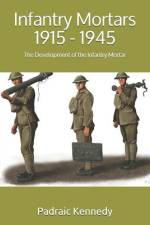
This book is about the development of the modern infantry mortar, from its origin during the First World War, through its evolution during the inter-war years, to its acceptance as an indispensable support weapon for infantry during the Second World War. The mortar is defined as a piece of ordnance that fires its projectile at angles between 45 degrees and 90 degrees of elevation. They are indirect fire weapons with either smooth bore or rifled barrels and can vary from simple tube weapons to complex artillery pieces. Medium mortars are classified here as mortars ranging in calibre from 81mm up to 82mm. This work focuses on the best known medium mortars within the stipulated time-frame.The requirements of trench warfare during the First World War led to the British development of the Stokes Three inch mortar, which then became the prototype for the infantry support mortar. Currently, and since at least the end of WW2, mortars have usually been defined by their calibre into light, medium or heavy types. The British Army adopted the Stokes Three inch mortar in 1916, and this mortar calibre of a nominal 81mm was the origin for the medium mortar. The concept of close support for infantry began to evolve during WW1. The mortar proved to be a simple and practical way of achieving this and a lot of armies began to equip their infantry with what later became known as infantry mortars. The 81mm nominal calibre of the Stokes mortar was generally adopted by most armies as a suitable calibre for this weapon.
This work has been selected by scholars as being culturally important, and is part of the knowledge base of civilization as we know it.This work is in the "public domain in the United States of America, and possibly other nations. Within the United States, you may freely copy and distribute this work, as no entity (individual or corporate) has a copyright on the body of the work.Scholars believe, and we concur, that this work is important enough to be preserved, reproduced, and made generally available to the public. We appreciate your support of the preservation process, and thank you for being an important part of keeping this knowledge alive and relevant.
This work has been selected by scholars as being culturally important, and is part of the knowledge base of civilization as we know it.This work is in the "public domain in the United States of America, and possibly other nations. Within the United States, you may freely copy and distribute this work, as no entity (individual or corporate) has a copyright on the body of the work.Scholars believe, and we concur, that this work is important enough to be preserved, reproduced, and made generally available to the public. We appreciate your support of the preservation process, and thank you for being an important part of keeping this knowledge alive and relevant.
Also known as the Lafayette squadron, this is a new translation of Captain George Thenault's exciting account of his time serving alongside American volunteer aviators during WWI.
This story is inspired by true events that took place during the Korean War. It is the story of Tom Harding, a Marine pilot who, just before the peace talks, risked his life to save the lives of a Marine recon team who were trapped 160 miles behind the enemy line in North Korea and their struggle to survive the 160 miles to safety.
This work has been selected by scholars as being culturally important, and is part of the knowledge base of civilization as we know it.This work is in the "public domain in the United States of America, and possibly other nations. Within the United States, you may freely copy and distribute this work, as no entity (individual or corporate) has a copyright on the body of the work.Scholars believe, and we concur, that this work is important enough to be preserved, reproduced, and made generally available to the public. We appreciate your support of the preservation process, and thank you for being an important part of keeping this knowledge alive and relevant.
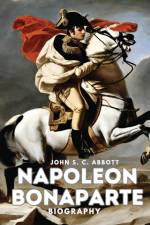
"Napoleon Bonaparte" by John S. C. Abbott is a biography of one of the most famous and controversial figures of European history. The book provides a detailed account of Napoleon's life and achievements, from his humble beginnings on the island of Corsica to his rise to power as one of the most powerful emperors in European history.The book begins with a description of Napoleon's early life, including his education and military training. It then goes on to describe his rise to power, including his military victories and political maneuvering. The book also delves into Napoleon's personal life, including his relationships with his family and mistresses, as well as his health problems and eventual downfall.Throughout the book, Abbott provides an insightful and engaging look at Napoleon's life and legacy. He explores both the positive and negative aspects of Napoleon's reign, including his military genius, his contributions to French society, and his authoritarian tendencies. Overall, "Napoleon Bonaparte" is an informative and engaging biography that sheds new light on one of the most fascinating figures in European history.
Roscoe Hastings is a Professor Emeritus at Monroe Community College in Rochester, New York. He taught Health and Physical Education for over 50 years. He received the New York State Chancellor's Award for Excellence in Teaching. He is a member of the Section V Wrestling Hall of Fame. He has digitized and indexed thousands of Church records and newspapers. He has received The Federation of Genealogical Societies Archives Award. He has traced his family genealogy back to the 1600's colonial America. He has also researched the genealogies of over fifty Warrensburg, NY families. His ancestors or relatives have been involved in every American war since King Phillip's War in 1675 until the Afghanistan conflict in the 2000's.
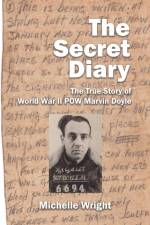
If caught, his captors would have killed him but Marvin Doyle was determined to document the truth in case he didn't make it out alive. There was also another reason; Marvin thought the sooner he'd write down what happened the sooner he'd be able erase it from his tortured mind. This is the true story of aerial gunner Sergeant Marvin Doyle, a World War II prisoner of war who kept a secret diary while held captive in Stalag Luft 1, a German prison camp by the Baltic Sea. Marvin was shot down on November 4, 1944 in a B-24 bomber over Mostar, Yugoslavia. He wanted history to know what he and his crew endured for America's freedom. Even more than that, he wanted the love of his life, his wife Anne, to know what happened to him. He had to be resourceful to make this happen. Once he got to Stalag Luft 1 he began to collect the wrappers from discarded cigarette packs, and he wrote his secret diary on the back of 37 of them. He knew if the Nazis discovered his secret diary, he would be put in solitairy confinement or worse, but he knew his experience had to be documented. He detailed the terror of his plane being shot down, the hard parachute landing in which he was injured, his capture by dozens of Germans ready to shoot him on the spot, the overwhelming hunger and the unbearable cold. He detailed being forced to walk miles through a blinding snowstorm to get from one prison camp to the next. He would later talk of his appreciation to his squadron for carrying him when he was injured so the Nazis wouldn't shoot him. He shared how he was haunted by the tail-gunner who froze with fear as their plane was going down and was too scared to pull his chute. He describes eating bugs and drinking vile coffee. And he writes of dreaming of sweet Anne and how he hoped she was waiting for him.Perhaps surprisingly, he didn't write of his hatred for his captors despite the horrific conditions. Instead, he hoped for peace for both sides. He wrote, "I have been in the air and also on the ground and I know how horrible war can be. It is terrible that so many people have to be slaughtered even though they are your enemies." This book also looks at other notable things which happened in Stalag Luft 1 including a hidden radio which allowed prisoners to listen to news broadcasts from Britain and America and allowed them to write a secret newspaper distributed amongst the camp. Especially poignant is his treasured letter from General George C. Marshall, Chief of Staff of the Army, in which he warns about the importance of avoiding war in the future. At the war's end Marshall wrote to Marvin and his fellow servicemen, "Choose your leaders wisely - that is the way to keep ours the country for which you fought. Make sure that those leaders are determined to maintain peace throughout the world. You know what war is. You know that we must not have another. As individuals you can prevent it if you give to the task which lies ahead the same spirit which you displayed in uniform." Sgt. Marvin Doyle wanted history to know the truth about what happened and this is the first time his diary is being publicly released.
General George S. Patton, Jr. was the epitome of the American fighting soldier in World War II. His unique, unequaled leadership style provided him with the ability to obtain more from his troops than any other General officer in the war.His charisma, his flamboyance, and his highly publicized warrior image stimulated his men--more than any other General--to an aggressive desire to meet and destroy the enemy.Patton was the personification of the pure warrior spirit; the single-mindedness, the ruthlessness, and the driving will, all of which make up the requisites for victory in battle.With his superior and dominant understanding of the combat effectiveness of unified forces, Patton integrated his armored divisions, motorized infantry, and self-propelled artillery into a singular fighting force.Add to that his acute perception of well-devised air support operations and his close-knit collaboration with the XIX Tactical Air Command and it becomes clear how Patton created the most perfect blitzkrieg ever applied against an opposing enemy.Creating General Patton tells the story of how George S. Patton, Jr. built his own legend as a military genius and warrior.
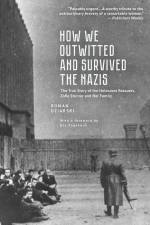
"Extraordinary storytelling about unfathomable horror." - Library Journal (starred review)"[A] worthy tribute to the extraordinary bravery of a remarkable woman." -- Publishers WeeklyIn World War II's Poland, thirty year old Zofia Sterner and her husband Wacek refuse to be classified as Jews destined for extermination.Instead, they evade the Nazis and the Soviets in several dramatic escapes and selflessly rescue many Jews from the Warsaw Ghetto and a labor camp, later becoming active participants in the Warsaw Uprising where they are taken prisoner. This retelling, captured through diaries, interviews, war crime trial testimonies, and letters, detail the Sterners' heroic rescues, escapes, and ultimate survival. A true story of hope amid horrifying tragedy, How We Outwitted and Survived the Nazis illustrates how war brings out the worst and the best in people, and how true humanity and heroism of ordinary people are revealed by their willingness to risk everything and help others. This story is about being human under the most inhumane conditions.
Abonner på vårt nyhetsbrev og få rabatter og inspirasjon til din neste leseopplevelse.
Ved å abonnere godtar du vår personvernerklæring.