


















Gjør som tusenvis av andre bokelskere
Abonner på vårt nyhetsbrev og få rabatter og inspirasjon til din neste leseopplevelse.
Ved å abonnere godtar du vår personvernerklæring.Du kan når som helst melde deg av våre nyhetsbrev.

Der Leinenpanzer war der vorherrschende Brustpanzertyp im klassischen Griechenland. Er wurde von Hopliten, vielen Reitern sowie auch leichter ausgerüsteten Peltasten getragen. Aufgrund seiner vergänglichen Materialen ist kein Exemplar dieser Rüstung bis heute erhalten. Dennoch ist es dank der Informationen aus archäologischen und literarischen Quellen möglich, einige Aussagen über die Beschaffenheit und den Aufbau des Leinenpanzers zu tätigen. Genauere Information über seine Konstruktion und seine Schutzwirkung sind allerdings nur durch experimentalarchäologische Versuche zu erlangen. Seit mehreren Jahren werden entsprechende Experimente vom Hamburger Projekt "linothorax" durchgeführt. Der vorliegende Band liefert ein erstes umfassendes Zwischenfazit dieser Arbeit. Er enthält einen Überblick über den Hopliten als Träger der Rüstung, die wichtigsten Quellen, die Hamburger Experimente und die Schutzwirkung des Leinenpanzers. In weiteren Kapiteln werden detaillierte Beschreibungen der Herstellungen von Leinenpanzer-platten, Bronzeschuppen und Brustpanzern geboten. Somit dient das Buch nicht nur als einführendes Werk zum Leinenpanzer, sondern kann auch als Anleitung für weitere Versuche verwendet werden.
This book follows the course of the post-Singapore campaign from its beginnings to the bitter end, woven around the story of 49th Bty, 48th LAA Regiment and other Royal Artillery units, to show how politics and military commands affected both ends of the scale, top to bottom, from the General to the Gunner, from the Brigadier to the Bombadier. What happened is often told in their own words and almost always taken from contemporary accounts. It is the true story of the fiasco in the Far East following the Allies' first attempt to set up a joint command to stop the all-conquering Japanese, as first Hong Kong, then Malaya, Singapore and the Philippines fell before them. It was impossible to resource properly from the start and ABDACOM's collapse left thousands of British and Australian personnel on the island of Java with orders to fight to the last man and the last bullet. The magic carpet out was only available for a select few. The senior officers who had staffed ABDACOM generally departed, and officers and men with particular skills or abilities that the Allies desperately needed were shipped away as the Japanese net closed around Java. Generally those left behind were those who were 'expendable'. They were left under the command of the colonial Dutch commanders, men who had never expected nor been trained to deal with such a situation. Their defence plan for the island had two parts. Firstly to try to use what ships and aircraft they had to stop the Japanese landing on Java in the first place. The second (post-invasion) plan was based on the assumption that there were only two beaches where the Japanese might land. Given this, the Allied forces would undertake a fighting retreat to delay the invaders, so that any relief force that might be around would have time to turn up. Failing this, the 'last stand' would be around the city of Bandoeng in the mountainous central spine of the island. As plans go it was not particularly ambitious but, given the circumstances and the forces at their disposal, it was the best they could do. The major flaw in this was that it relied on the Japanese landing on one or both of two beaches. Unfortunately, they also landed on a third, only forty miles away by good roads from Kalidjati, one of the two major airbases on the island. It should have been obvious that such a facility so close to the coast would be a prime target for the enemy. There was plenty of room there for their fighter and bomber aircraft and they could destroy the puny defence forces on Java within days. And the airfield was also only a few miles from a road leading to Bandoeng; a shorter route to the one the Dutch commanders hoped the invaders would take. If the Japanese took Kalidjati, the whole defence plan would be in ruins. The loss of Kalidjati is the centrepiece and climax of this book. Kalidjati was where it all went wrong and with Kalidjati lost, Java was doomed. What happened there on 1st March 1942 was a 'perfect storm' when everything that could go wrong, did go wrong. It was a microcosm of the chaotic campaign that followed the fall of Singapore: a hostile climate, no knowledge of the local language, no orders or intelligence from above, lack of essential equipment, stores and ammunition, and incompetence, indecisiveness and inadequate communications at all levels. Many men paid a terrible price for their superiors' failings in the flash-flood that swept through the airfield that day.
Few new personal accounts by Waffen-SS soldiers appear in English; even fewer originate from the multitude of non-German European volunteers who formed such an important proportion of this service's manpower. Twilight of the Gods was originally written in Swedish, and published in Buenos Aires shortly after the end of WWII. Erik Wallin, a Swedish soldier who volunteered for service with the Waffen-SS, and participated in the climactic battles on the Eastern Front during late 1944 and 1945, later telling his story to this book's editor, Thorolf Hillblad. Wallin served with the Panzer Reconnaissance Battalion, 11th SS-Panzergrenadier Division Nordland, a unit composed mainly of non-German volunteers, including Danes, Norwegians, and Swedes. The division enjoyed a high reputation for its combat capability, and was always at the focal points of the fighting on the Eastern Front in the last year of the war. During this period it saw combat in the Baltic, in Pomerania, on the Oder, and finally in defense of Berlin, where it was destroyed. Erik Wallin served with his unit in all of these locations, and provides the reader with a fascinating glimpse into these final battles. The book is written with a 'no holds barred' approach which will captivate, excite and maybe even shock the reader - his recollections do not evade the brutality of fighting against the advancing Red Army. Twilight of the Gods is destined to become a classic memoir of the Second World War. An outstanding new World War II memoir, and a first-hand account of the Waffen-SS on the Eastern Front Written in an exciting and direct style that is guaranteed to grab and hold the reader's attention Contains much new information on the personnel and actions of 11th SS Panzergrenadier Division Nordland.
This book is a comprehensive history of the Canadian Knights of Columbus Catholic Army Huts. It explores the role of these huts in providing support and comfort for Canadian soldiers during World War I, and provides insights into the people and organizations that made them possible. From fundraising to construction, this book is a fascinating look at the history of wartime support services.This work has been selected by scholars as being culturally important, and is part of the knowledge base of civilization as we know it.This work is in the "public domain in the United States of America, and possibly other nations. Within the United States, you may freely copy and distribute this work, as no entity (individual or corporate) has a copyright on the body of the work.Scholars believe, and we concur, that this work is important enough to be preserved, reproduced, and made generally available to the public. We appreciate your support of the preservation process, and thank you for being an important part of keeping this knowledge alive and relevant.
The authors of the seventy-seven stories in this book are thirty-two former military and now docents serving aboard the USS Hornet, Sea, Air & Space Museum, one of the most highly decorated carriers of WWII. Docents, a term that defines tour guides in a museum, often share stories with visitors and each other. When the pandemic hit, and they no longer met with guests and each other, they began sharing their yarns by email. The stories were collected and printed by Docent Dale Bervin who put them in a binder for all to read. From that effort it is those narratives that make up this book. These stories range from tales of the outwardly calm approach of flying in combat, to tales of humor. Others span ship operations to stories they've heard from visitors. Sprinkled throughout the book is the poetry of a guest docent, Don Purdy a Douglas A-4E Skyhawk pilot in Vietnam. Don writes beautifully about what a pilot in combat experiences, how he may suffer the experience later, and how he honors his friends who lost their lives. Other pilot stories are from those who flew in the Navy, Army, and Air Force and one that flew for the making of the movie, Tora! Tora! Tora! Stories in the book are from those who flew or crewed the following aircraft: Fighters: F-8 Crusader, F-9 Panther, F-9 CougarBombers/Attack Aircraft: , AD/A-1 Skyraider, A-4 Skyhawk, B-47 Stratojet, Anti-Submarine: S-2 TrackerCargo: C-1 Trader, C-130 Hercules, C-69 Lockheed Constellation.Trainer: T-6 Texan, BT-13 Valiant, TA-4J SkyhawkHelicopters: UH-Huey, AH-Cobra, SH-3A Sea King
December 1941....the newly formed Blackpool Regiment, the 137 (Army) Field Regiment RA (TA) had just arrived in Singapore. The Japanese were preparing to invade Malaya.The story of what happened to the Regiment is brief and tragic. Defeated in the battle of Jitra within days of landing, it was forced to retreat down the Malayan Peninsula, suffering catastrophic losses at the battle of Slim River, eventually making it back to Singapore to end up fighting in the grounds of Raffles Hotel, before surrendering on the orders of General Percival.There followed three-and-a-half years in various POW camps on the notorious Burma-Thai Railway of Death.At the time of the surrender, a flotilla of ships was trying to escape from Singapore. The author's uncle was on board one of those ships, unfortunately losing his life when HMS Yin Ping was sunk by a Japanese cruiser. The story of the sinking is related in some detail, along with some of the survivors' connection with the terrible massacres on Bangka Island.The Blackpool Regiment's story is told through the eyes of a serving officer and the story of the tragedy of HMS Yin Ping is a combination of the author's family knowledge and the extensive research undertaken by Michael Pether.
This work has been selected by scholars as being culturally important, and is part of the knowledge base of civilization as we know it.This work is in the "public domain in the United States of America, and possibly other nations. Within the United States, you may freely copy and distribute this work, as no entity (individual or corporate) has a copyright on the body of the work.Scholars believe, and we concur, that this work is important enough to be preserved, reproduced, and made generally available to the public. We appreciate your support of the preservation process, and thank you for being an important part of keeping this knowledge alive and relevant.
This work has been selected by scholars as being culturally important, and is part of the knowledge base of civilization as we know it.This work is in the "public domain in the United States of America, and possibly other nations. Within the United States, you may freely copy and distribute this work, as no entity (individual or corporate) has a copyright on the body of the work.Scholars believe, and we concur, that this work is important enough to be preserved, reproduced, and made generally available to the public. We appreciate your support of the preservation process, and thank you for being an important part of keeping this knowledge alive and relevant.
This work has been selected by scholars as being culturally important, and is part of the knowledge base of civilization as we know it.This work is in the "public domain in the United States of America, and possibly other nations. Within the United States, you may freely copy and distribute this work, as no entity (individual or corporate) has a copyright on the body of the work.Scholars believe, and we concur, that this work is important enough to be preserved, reproduced, and made generally available to the public. We appreciate your support of the preservation process, and thank you for being an important part of keeping this knowledge alive and relevant.
Reconsiders the legacy of an important Hasidic mystic, leader, and educator who confronted the dilemmas of modernity after World War I and whose writing constitutes a unique testimony to religious experience and its rupture in the Warsaw Ghetto.
Explores Elie Wiesel's portraits of the sages of Judaism and elaborates on the Hasidic legacy from his life and his teaching.
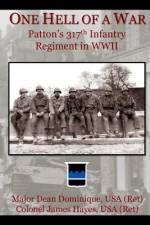
"One of the most enjoyable WW2 books to date."-War History Online One Hell of a War" is a fascinating blend of firsthand accounts and the strategic decisions that led to them based on the history of the 317th Infantry Regiment from its initial activation in World War II through the end of the war. This book has all the elements everyone loved in "Band of Brothers" with the added integration of the strategic leadership decisions of Patton, Bradley and Eisenhower. Most interestingly, it contains well written and thought-provoking excerpts of the late Colonel James Hayes, who served with the regiment during its entire wartime service. The history books do not say a great deal about the 317th Infantry Regiment of the 80th Infantry Division in WWII. However, it was a regiment that accomplished rather startling results: first bridgehead across the Moselle, cleared out La Grande Couronne de Nancy, participated in the capture of Metz -- the first time in history that the fort had ever fallen to an assault, and, of course, participated in the Battle of the Bulge as one of the first regiments to arrive in the area after the German assault had broken the line. It suffered extremely severe casualties and contained some of the best men ever known. What others are saying about One Hell of a War...- "One Hell of a War" is one of those books you simply can't put down. It should come with a carrying handle and a sign warning "Do Not Disturb"...one of the most enjoyable WW2 books to date.-Phil Hodges for War History Online- I love to read WWII history, and One Hell of a War takes the reader into the foxhole and onto the battlefield like no other book I have read ... this is a must read book.-Jim Ravella, President, Folds of Honor Foundation- It would be wonderful if every unit who fought during the war had a book like this portraying what was accomplished and how terrible war is for the men who actually fight it. -Gayalyn Wojtowicz, daughter of S/Sgt. Guyowen H. Howard, Sr. 317/B - OUTSTANDING! "One Hell of a War" is a magnificent and masterfully told story that effortlessly weaves together the historical operations of one of Patton's infantry regiments and first-hand accounts like no other book that I have read. A book this excellent is a rarity and should be on every professional reading list.-Colonel Frank Athanason, USA (Ret), Past National Commander of the Military Order of the Purple Heart- Dean Dominique's careful research and editing of Colonel James Hayes' combat memoirs rings true in a book that is both a scholarly work and an exciting read. Trust me, when you reach the section about the fighting and cold weather during the Battle of the Bulge, you'll want to put on a coat; it's that good.-Alexander Barnes; Author of "In a Strange land; The American Occupation of Germany 1918-1923.- A remarkable story about an infantry regiment during WWII that played a key role in operations in Europe. Dean does a masterful job of weaving the personal accounts into the historical context of the major operations. With so few WWII veterans left, books like these are valuable resources.-Rich Killblane, Author of "The Filthy Thirteen; From the Dustbowl to Hitler's Eagle's Nest: The 101st Airborne's Most Legendary Squad of Combat Paratroopers.- Dean Dominique's new book, "One Hell of a War," knocks it out of the ballpark and is one of the best books I've read...You won't be able to put it down.-Andrew Z. Adkins, III author of "You Can't Get Much Closer Than This: Combat with Company H, 317th Infantry Regiment, 80th Division." A portion of the proceeds from the sale of this book are donated to charities that directly support America's wounded, injured and ill Service Members. Wounded Warrior Publications, LLC is a Service-Disabled, Veteran Owned Small Business. Visit us at www.WWPubs.com.
Who were the Brits that tried to help the Nazis? At the end of the Second World War, nearly 200 British nationals were under investigation for assisting Hitler's Germany. Many have remained infamous such as William Joyce, known as Lord Haw-Haw, and John Amery, who were both executed for High Treason. But in this study Adrian Weale unearths others who plotted to undermine the Allies. Weale begins with Oswald Mosley's British Union of Fascists, through the war years and the following trials from investigations by MI5. This is a complex history of betrayal, double-crossing and treachery, with the revelation that a British Fascist turned double agent was working at the heart of the Third Reich to undermine the Nazi propaganda effort in Britain. Renegades: Hitler's Englishmen is a revealing history of allies and enemies. Adrian Weale is a British writer and journalist, as well as a former officer in the British Army Intelligence Corps.
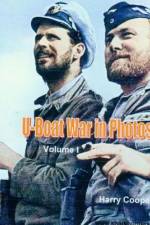
"U-Boat War in Photos" volume 1 (U-1 through U-29) The Battle of the Atlantic was the longest continuously running battle in the history of war. The German U-Bootfahrer were some of the most honorable fighters in the war despite wartime propaganda to the contrary. They did not machine gun men in the water but rather, they helped struggling survivors of the sunken ships in the early years. After 'Black May' of 1943 when the German codes were broken and 'Huff-Duff' (or High Frequency Directional Finder = HFDF) came on the scene and U-Boats did not dare linger on the surface did the U-Boats cease giving aid; they never murdered men at sea. Nearly 3,000 ships were sunk, tens of thousand merchant sailors died, more than 800 U-Boats were lost and nearly 29,000 U-Bootfahrer perished in the cold oceans of the world. At the end of the war however, the U-Bootwaffe was the only oversubscribed branch of the Wehrmacht (German military forces). After 'Black May' U-Boats had one chance in ten of returning from their first Feindfahrt (war patrol) and nine out of ten chances of being sunk. Still they enlisted.....still they went to sea, most never to return.
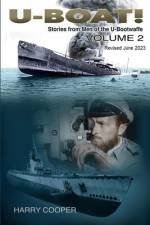
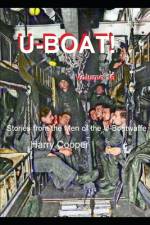
Each chapter is a separate memory of a veteran of the Battle of the Atlantic, the longest continual battle in history. These veterans of the U-Boats remember how it was with comments from veterans of the Royal Navy and the US Navy. First person memories are the best history there is.
This book examines the response of American society to the My Lai massacreand its ambiguous place in American national memory. The author argues thatthe massacre revelations left many Americans untroubled. It was only whenthe soldiers most immediately responsible came to be tried that oppositionto the conflict grew, for these prosecutions were regarded by supporters ofthe war as evidence that the national leaders no longer had the will to dowhat was necessary to win.
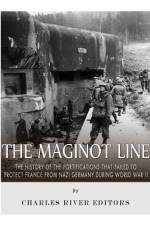
*Includes pictures *Explains the origins of the Maginot Line, its construction, and the World War II fighting around it *Includes online resources and a bibliography for further reading *Includes a table of contents "We could hardly dream of building a kind of Great Wall of France, which would in any case be far too costly. Instead we have foreseen powerful but flexible means of organizing defense, based on the dual principle of taking full advantage of the terrain and establishing a continuous line of fire everywhere." - Andre Maginot As the power of Nazi Germany grew alarmingly during the 1930s, the French sought means to defend their territory against the rising menace of the Thousand-Year Reich. As architects of the most punitive measures in the Treaty of Versailles following World War I, the French government made natural targets for Teutonic retribution, so the Maginot Line, a series of interconnected strongpoints and fortifications running along much of France's eastern border, helped allay French fears of invasion. The popular legend of the Maginot Line portrays the frontier defenses as a useless "white elephant" project that was prompted by a gross misapprehension of warfare's new realities in the mid-20th century and quickly overwhelmed by the forceful advance of the German blitzkrieg. English idiom today invokes this vision of the Maginot Line as a metaphor for any defensive measure strongly believed in but actually useless. Indeed, usages such as "Maginot Line mentality," describing an overly defensive, reactive mindset, perpetuate the legend. As a French author and military liaison with the British, Andre Maurois, wrote about his disillusionment with the defensive line he originally enthusiastically supported: "We know now that the Maginot line-complex was a dangerous disease of the mind; but I publish this as it was written in January, 1940." In reality, however, the actual Maginot Line proved considerably more functional than memory has served. The true flaw in French military strategy during the opening days of World War II lay not in reliance on the Maginot fortifications but in the army's neglect to exploit the military opportunities the Line created. In other words, the border defense performed as envisioned, but the other military arms supported it insufficiently to halt the Germans. The French Army squandered the opportunity not because the Maginot Line existed but because they failed to utilize their own defensive plan properly. Some French commentary contributed to the legend, but the bloviating of politicians altered nothing regarding the Maginot Line's actual purpose or history: "General Maurin, defended the status quo in these words: '[H]ow could one think that we are still thinking about an offensive when we have spent billions to establish a fortified barrier? Would we be mad enough to advance beyond this barrier to undertake some adventure?' [...] but the Maginot Line had never been conceived as a sort of Great Wall of China sealing France off from the outside world. Its purpose was to free manpower for offensive operations elsewhere." (Jackson, 2004, 27). In fact, a forgotten battle in the southeast of France, where four French divisions (later reduced to three by the redeployment of one northwards in a futile effort to stem the German tide) held off 32 Italian divisions thanks to the defensive power of the so-called "Little Maginot Line of the Alps," proved the soundness of both the concept and engineering. Though the Italians suffered from poor equipment and the meddling incompetence of Mussolini's personal "leadership," the fighting on the Alpine front brilliantly highlighted the Maginot Line's success as a "force multiplier." French soldiers held off brave but futile Italian attacks at odds of 8:1 or 10:1 in favor of the Italians for five days until an armistice with the Axis put an end to this undeniable display of the Maginot Line's effectiveness.
OTRA GUERRA MUNDIAL ES POSIBLE, demuestra de manera irónica y sarcástica que la historia no tiene por qué ser contada de manera aburrida. Haciendo uso de un lenguaraz despliegue de medios, el autor nos sumerje en uno de los más dramáticos conflictos de la historia de la humanidad sin dejar por ello de hacernos reír y sin banalizar el drama que trata, salpicándolo todo con anécdotas jugosas y hechos inverosímiles. Este libro reune lo ameno, lo didáctico y lo deslenguado en unas pocas páginas. Aprenderá la historia como nunca se la han contado y descubrirá además, que en efecto: OTRA GUERRA MUNDIAL ES POSIBLE, pues se puede relatar la historia con altas dosis de humor negro y se puede a la vez alertar sobre la posibillidad de que el ser humano recaiga en sus errores pasados. Este es el libro de historia que habría querido leer en el colegio.
The second book in the 'Navypedia. Fighting ships of the world since 1990' series contains information about ships, vessels and boats of the navies and paramilitary maritime organizations of 39 countries (in alphabetical order from Denmark to Italy) that were in service, under construction or ordered from 1990 to 2022. The second volume contains 1108 articles on the classes of ships, containing information on the dates of construction, commissioning and decommissioning, performance characteristics, modernizations, and other information that allows you to get information in a compressed form about the combat qualities of ships and the composition of the navies in the period under review. The illustrations for the articles contain 550 side views on 1:1250 and 1:625 scales. Additional information is provided on the composition of aviation and marines, bases, and the activity of the navies in question.
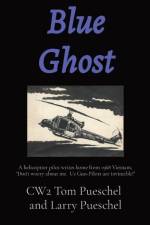
Tommie Pueschel dreamed of flying ever since he was a little kid. It's now 1968, and U.S. Army Warrant Officer Thomas R. Pueschel is 22 years old and his dream of flying is being realized. Only thing is, he is in Vietnam and the helicopter he is flying is loaded with guns and rockets and while he may be flying, there's people on the ground who are shooting back at him. His dream has now turned into a full-blown nightmare. The events around him are encapsulating him, forcing him to do things he would never do, never even think of doing, and he's got no choice. In a letter home to his parents, he voices his concern:"All my life, you and the church have taught me, 'Thou shalt not kill' and yet, I now find myself on a ship which is taking me to a place where I will be expected to do just that. It is a battle that has been raging in me for many months now, and I cannot find what seems to be an answer, and I guess I will not until that final test comes when I come face to face with my enemy and have to tighten my finger on the trigger and blast the breath of life in an instant from the body of a fellow man. I know it will be him or me, and I think that I may be able to do it, but the thought still frightens me terribly. Can I really take the life of a man, and afterwards, can I really justify that act by attributing it to my own instincts for self-preservation?"This is the story of Tom's 423 days in Vietnam from his first days in that God-forsaken country in October 1967 through his "freedom bird" home on the 5th of December 1968. Vietnam was ugly and brutal and 1968 was the bloodiest and most deadly year of the war. Troop levels were at their highest (536,100 American troops) and the fighting was at its worst. As one of the original "Blue Ghosts", Tom flew over 900 missions in his 423 days and experienced "enough blood and gore for all." Much of Tom's story is told in his own words, through the many letters he wrote home, with his changing thoughts and insights, and his great attempts to call out for some of the normalcy of the life he left behind. It is also told through the history of the times, the decisions made by others that he had no say in but greatly affected him, and how expendable life can be in times of war. This is a unique portrayal of one soldier's journey through the Vietnam War and his own inner struggle with the consequence of what he was doing.
Love and war are easy to begin but hard to end... as these 11 true-life WWI love stories reveal.World War I took 20 million lives and wounded 21 million people. It led to the fall of four great imperial dynasties, resulted in the Bolshevik Revolution, and destabilized Europe, laying the groundwork for WWII.It also brought passionate lovers together and tore them apart. It gave soldiers a reason to live and nurses a cause to travel to far-off lands, sometimes in the hopes of being reunited with their lovers.This book sheds light on 11 epic love stories, some of which feature leading historical figures-including Franz Ferdinand, whose death sparked the war itself.Some stories have happy endings and some end in desolation. However, each is a celebration of deep, enduring love... the kind that is patient, unconditional, and eternal.True love has a myriad of paths that lead to the same beating heart. Sometimes it begins with friendship; at other times it is a blazing fire that leaves you with only one direction to run to.Within the pages of this book, you will find love stories that took place in different corners of the globe. If they prove one thing, it is that loves knows no barriers, sees no differences, and imposes no conditions. There is nothing that two people who are truly in love wouldn't do to be together.Each and every couple's story is a lesson in love, a beacon for young star-crossed lovers, and a ray of hope for those who may be separated or challenged by time, distance, or disapproving families.Some of the many highlights include: The heartwarming story of Archduke Franz Ferdinand and the lady-in-waiting, Sophie Chotek-a couple from different sides of society who defied all odds and chose love over positionThe young woman whose husband's life was violently taken in a shell explosion, and who wrote poems of love to comfort other women who had experienced the same unbearable lossThe letters a young woman continued to write to her lover, a soldier who had perished on the battlefield many years beforeThe close calls with death experienced by a couple who remained resilient in the face of deadly battles and attacks, hopeful that they would one day be reunitedWinston Churchill's powerful love for his wife, Clementine, whom he wrote to from the trenches, convinced that the war would take his lifeThe story of a young soldier who was caught in a German-occupied French village-and a young woman who fell in love with him and helped hide him from the enemyA soldier and a nurse who saw, first-hand, the devastation that war brings, yet who maintained a supportive friendship that was transformed into a deep and abiding loveAnd much more.This book is more than a recollection of individual stories. It is a testimony to the power of love and its great importance to human beings during the bleakest times in history.Love gives us something to fight, live, and die for. It is a force that is incomparable to any other emotion.If nothing warms your heart like reading about couples whose love defied all odds during war-torn times, then scroll up and click "Add to Cart" right now.
Knives have been carried with enthusiasm as sidearms to swords since antiquity, and as sidearms to firearms into modern day. Knife combat involves strategy (the planning behind an attack which allows the soldier to reach a combat objective) and tactics (the actual use of the knife, for example, to dispose of an enemy in trench warfare or to kill a sentry at night). Historically serving several missions, the knife has proven a good infiltration weapon when silence must be preserved. It has been used for killing sentries, and has come in handy in close quarters on the large battlefield; for example, in foxholes where firearms or grenades would have been impractical. Soldiers recognized early the benefits of carrying a small and lightweight weapon that could be concealed on one's person, relied upon in the hand-to-hand fight, or deployed to finish an adversary at close range when one's firearm malfunctioned.Although soldiers carry knives for a variety of purposes-not all knives are designed strictly for fighting but also double as tools such as trench digger, ration opener, parachute line cutter, etc.-this book concerns itself primarily with the role the knife has played as a combat weapon in near modern and modern warfare in the western world. Combat can further be broken down into the use of the knife to kill an enemy including sentry killings and trench raids, and the psychological use of the knife as a weapon of coercion or to send the enemy to flight. The book begins with a discussion of knife design and carry, which purpose it is to familiarize the reader with the many factors the knife smith must consider when crafting the weapon. Next it demonstrates the important function the knife has served as a battlefield sidearm in the different military branches. It then examines the effectiveness of the knife and how soldiers have trained to prepare for the possibility of using cold steel against an enemy combatant. The concluding remarks focus on the knife as a weapon of inspiration.Knives, Swords, and Bayonets: A World History of Edged Weapon Warfare is a book series that examines the history of edged weapons in Europe, Asia, Africa, the Americas, and the Middle East and surrounding areas before gunpowder increased the distance between combatants. The book series takes a critical look at the relationship between the soldier, his weapon, and the social and political mores of the times. Each book examines the historical background and metallurgic science of the knife, sword, or bayonet respectively, and explores the handling characteristics and combat applications of each weapon. The individual books are excerpted from the previously published book, A History of Edged Weapon Warfare, also by Martina Sprague. Look for more books in this series in the near future.
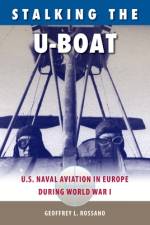
"An exceptional piece of scholarship. Rossano clearly points out that military organizations in general, and a naval air force in particular, are built from the ground up and not the other way around. While we celebrate the exploits of the pilots, Rossano reminds us that there were myriad mechanics, constructors, paymasters, and even some ship drivers who played a vital role in naval aviation during WWI."--Craig C. Felker, U.S. Naval Academy "A fine book that will stand for many years as the definitive study of U.S. naval aviation in Europe. Well-researched and written, the book ranges widely, from the high-level planning in Washington for a naval air war to moving thousands of men and hundreds of aircraft across the ocean to the routine but dangerous training, patrol, and bombing flights that constituted the navy's air mission in World War I."--William F. Trimble, author of Attack from the Sea Stalking the U-Boatis the first and only comprehensive study of U.S. naval aviation operations in Europe during WWI. The navy's experiences in this conflict laid the foundations for the later emergence of aviation as a crucial--sometimes dominant--element of fleet operations, yet those origins have been previously poorly understood and documented.Begun as antisubmarine operations, naval aviation posed enormous logistical, administrative, personnel, and operational problems. How the USN developed this capability--on foreign soil in the midst of desperate conflict--makes a fascinating tale sure to appeal to all military and naval historians.
A compelling collection of nonfiction military history titles by Robert Child. Five full books in all with photographs and detailed maps. This is a keepsake multi-volume set you want to have on your shelf. It includes: #1) Washington's Crossing: America's First D-Day A ragged Continental army has now put an icy river between themselves and the pursing British army. The men in blue and buff uniforms have known nothing but defeat and had once again made a narrow escape while the Congress at Philadelphia reflecting no confidence in their troops prepare to evacuate to Baltimore. Washington's besieged men reflect the state of a nation weary of war and a cause on the brink of extinction. They are an army in waiting - waiting for ammunition, blankets and reinforcements. But others, nearly half, are simply waiting for their enlistments to be up on January 1, 1777. Within days Washington would have no men with which to fight and the cause and the dream of independence would be over. Against this backdrop George Washington decides to go on the offensive. #2) Rush On Boys: Hamilton at War As the story opens, young Alexander Hamilton marches with the Continentals at Fort Lee, New Jersey. He is frustrated by being relegated to the end of the line and missing out on the action. He desperately wants to make a name for himself. His fortunes soon change at the Raritan River when the vanguard of British infantry catches up to Washington's army. Hamilton, and his cannons are the only defense line available to prevent the army from being destroyed. Successfully protecting the Continental army and allowing their escape with his rear-guard action, Hamilton catches the attention of George Washington. The future President asks the twenty-year-old Hamilton to join his staff. Sent on one daring mission after another Hamilton s stature grows, creating great political mistrust among his rivals. When ambition overtakes Hamilton, he threatens to overthrow Congress, which he sees as corrupt. Challenging a Congressman to a duel who views Hamilton as treasonous immigrant his world nearly self-destructs. With the end of the American Revolution looming and his visions of his own glory fading, Hamilton becomes determined to leave Washington s staff and return to the battlefield. Washington, the only man who can help him, does all in his power to deny him. One daring assignment remains, however, that will determine the outcome of the final battle and the entire war. It is at a place called Yorktown. #3) Gettysburg: Voices from the Front A stirring collection of first-hand accounts from Privates on up to the commanding Generals at the Battle of Gettysburg woven into a dramatic and compelling narrative. The reader is transported back to the chaos and uncertainty of the sweltering first three days of July 1863 when Lee's Army of Northern Virginia invaded the North threatening Philadelphia, Baltimore and Washington itself. Soldiers on both sides gave everything they had believing that Gettysburg would be the final epic battle in an already long and terrible war. #4) How Canada Won the Great War For nearly 100 years Canada's role in ending WWI sooner than anyone thought possible has gone largely unrecognized. The Canadian Corp led by citizen soldier, Arthur Currie, became the premiere fighting force on the Western Front. The fact that Canada was not yet a formalized nation but a Dominion at the close of the war may be the reason for the absence of recognition yet the record of the Canadian WWI military accomplishments is irrefutable. #5) D-Day in 90 Minutes There are few adjectives, which have not been applied to the combined amphibious and airborne assault operation that took place on June the 6th 1944. Two and a half years in the planning, Operation Overlord, the invasion of German occupied France would require every tool in the allied arsenal.
Here is the story of Japanese-German cooperation, post-war U-Boat sightings off Argentina, How U-124 became the Edelweißboot, the saga of U-234, from Waffen SS to Foreign Legion, the Shame of U-534, a Bit about U-505, Eyewitness to Hitler's Suicide, the Galloping Ghost of the Japanese Coast.....USS TRIGGER, loss of the liner WILHELM GUSTLOFF and more U-Boat history directly from the men who lived it. These are all memories of the men who fought the war sea; first person history.
"Testimonial Montage: A Family of Israeli Holocaust Testimonies from the Cracow Ghetto Resistance explores interconnected testimonies of four Holocaust survivors who participated in the Cracow ghetto resistance. The author teases out the contours of personal narrative from the collective voice of this family of testimonies"--
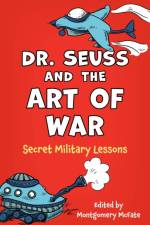
Dr. Seuss's imaginative, whimsical children's tales are in fact packed with insights on national security and military strategy. Theodor Geisel's anti-totalitarian and pro-democracy views coming out of his WWII experiences are embedded in his classic books illuminating military topics such as strategy, insurgency, deterrence, cyber war, and more.
Dr. Seuss's imaginative, whimsical children's tales are in fact packed with insights on national security and military strategy. Theodor Geisel's anti-totalitarian and pro-democracy views coming out of his WWII experiences are embedded in his classic books illuminating military topics such as strategy, insurgency, deterrence, cyber war, and more.
Abonner på vårt nyhetsbrev og få rabatter og inspirasjon til din neste leseopplevelse.
Ved å abonnere godtar du vår personvernerklæring.