









Gjør som tusenvis av andre bokelskere
Abonner på vårt nyhetsbrev og få rabatter og inspirasjon til din neste leseopplevelse.
Ved å abonnere godtar du vår personvernerklæring.Du kan når som helst melde deg av våre nyhetsbrev.

This work has been selected by scholars as being culturally important, and is part of the knowledge base of civilization as we know it.This work is in the "public domain in the United States of America, and possibly other nations. Within the United States, you may freely copy and distribute this work, as no entity (individual or corporate) has a copyright on the body of the work.Scholars believe, and we concur, that this work is important enough to be preserved, reproduced, and made generally available to the public. We appreciate your support of the preservation process, and thank you for being an important part of keeping this knowledge alive and relevant.
The Holocaust was the systematic murder of six million European Jews by Adolf Hitler's Nazi Party. The horrors of the Holocaust have documented been many times. Even those that were not killed, mutilated, or starved in concentration camps were stripped of their citizenship and their identities. The Nazis did not stop there, though. Hitler, in his quest to build an empire, planned and executed the most extensive theft of art and cultural treasures in history.A group of art historians, museum curators, scholars, and others with an expertise in art accepted the enormous responsibility of traveling to the front lines of World War II in an effort to protect art before it could be stolen or recover the art that fell into the hands of the Nazis. Even more lent their expertise when the fighting ended, remaining in Europe for years after the war was over. They were called "Venus fixers" by the troops but have since come to be known as the Monuments Men. Acting on orders from General Dwight D. Eisenhower, who had the backing of President Franklin D. Roosevelt, many of the Monuments Men - and women - put their lives on the line for art. By doing so, they preserved not just paintings, sculptures, and tapestries, but a significant portion of the culture that makes life worth living. As Mikhail Piotrovsky, the director of the State Hermitage Museum in Russia, said, "Art belongs to humanity. Art is what makes us human."This book dives into the fascinating history of one of the greatest treasure hunts of all time!HistoryCaps is an imprint of BookCaps Study Guides. With each book, a brief period of history is recapped. We publish a wide array of topics (from baseball and music to science and philosophy), so check our growing catalogue regularly to see our newest books.
In March 2001 I was Assistant Editor of Defence Journal Karachi and a chapter from my book Pakistan Army till 1965 was serialized in Defence Journals March 2001 issue assessing 25 Cavalry's true role on 8 September 1965.The account ruffled many feathers in Pakistan.Below is a account of this debate.In 1965 War Pakistan Army was still a very intellectually backward and biased army.Old units regarded themselves as families and regimentation was a religion combined with ethnic chauvinism.In this situation the fact that a newly raised tank regiment actually repelled an entire Indian tank division to retreat was unpalatable to the forces that controlled Pakistan Army !Field Marshal Ayub Khan a self promoted Field Marshal saw his parent Punjab Regiment as ultimate army and was heavily biased in favour of Punjab Regiment. Other infantry units and other arms like armour were looked down.Partly it was a Britis inherited tradition.In this situation 25 Cavalrys crucial role was simply downplayed.Truth slowly emerged when Pakistan Armys official history was written and published around 1985-89.
This work has been selected by scholars as being culturally important, and is part of the knowledge base of civilization as we know it.This work is in the "public domain in the United States of America, and possibly other nations. Within the United States, you may freely copy and distribute this work, as no entity (individual or corporate) has a copyright on the body of the work.Scholars believe, and we concur, that this work is important enough to be preserved, reproduced, and made generally available to the public. We appreciate your support of the preservation process, and thank you for being an important part of keeping this knowledge alive and relevant.
A History of World War Two told in letters, stories of romance, and vintage photographs by Barbara Storm FarrThere are many books that will give you the facts of World War Two, however, there are precious few that provide an intimate view into the hopes, dreams, and emotions of the people who lived through it.This is such a book...It was December 8, 1941 when high school sophomore Barbara Storm, author of this book, was called into her high school gymnasium and informed that the country was at war.As she relates, "we sat quietly with fear and wonder of what the future held for the young people in that room."A thousand miles away, a young man, Bill Farr would soon be taken from his college studies and placed in the Army Air Corps. There, through a mutual friend, he would meet Barbara and a story of war and romance, would begin.Bill Farr was a keen observer, and his letters from training facilities, and later, an Army Air Corps base in southern Italy, give insight into the thoughts of a young man suddenly swept into a global war.He wrote as many as four letters a week to Barbara, his ?girl at home, ? describing his experiences and his impressions. The letters were full of pathos, frustration, boredom, but they exhibited hope that a better world would emerge from the chaos and destruction of a battle scarred Europe.The letters also depict the growing romance between the separated couple and the expectations of life after the war. Bill writes of designing and building a home for a future family. These were the dreams that most of the men on the fighting fronts possessed. In the middle of the disruption of their lives, they hoped, as Bill did, that the war's end would inaugurate a period of peace and prosperity.World War Two was a defining moment in history, and understanding the event is gained from both the "bigger picture" and the micro stories of how it affected real people.And that is the magic of this book.The author, a historian, has placed the letters in the context of the political and military actions of the period. The story of Bill Farr typifies the experiences of the many soldiers in the war, yet it is unique. This book takes its place as an important documentary history of the war from the perspective of the soldiers who risked their lives and spent three to five years to "save democracy." They came home to uncertainty and struggle, as did Bill Farr, but they persevered.They became the "greatest generation."A History of World War Two tells the story of war and romance in letters intertwined with explanations of war events. It is illustrated with close to 100 vintage pictures published for the first time. Bill Farr, a photographer and member of the 37th Photo Squadron, took many local photographs of the people and scenery of Foggia, San Severo, the Isle of Capri, Naples and Pompeii which are included in this volume. Also included are his photographs on the Sea Scamp, the ship carrying his squadron home after the war ended, depicting life aboard the three week voyage.
For a really long time, November 11 was recognized as the day in 1918 while battling stopped in what was for quite some time known as "the Great War," the contention we currently call the First World War. Both the memory of the finish of the contention that cleared the world from 1914 to 1918 and the name it got at the time mirror the extraordinary monstrosity of the setbacks and annihilation brought about by the showdown. Before 1914 there had been incredibly ridiculous conflicts, and some of them had remembered battling for grounds and seas everywhere, except none had involved such countless nations and frontier regions, straightforwardly or in a roundabout way elaborate such a huge extent of the planet's populace or killed such countless individuals while fixing domains and administrations. Assuming the finish of the showdown delivered such extraordinary help and brought broad expectation that nothing comparable could at any point reoccur, it is unavoidable to ask how it was that only twenty years after 1918 the experience nearly rehashed the same thing and why simply a year after the fact it started. successfully a second world fire
Diplomacy is one of the major components of international relations. It intervenes to resolve tensions between countries in disagreement. When it fails to do so, war is the most feared scenario. Contemporary international relations are undergoing a pivotal evolution with the ever-stronger challenge to the domination of the Western world. But it is not easy to communicate in such a context. Between the sensitivities of some, the clumsiness or the misunderstandings, any communication becomes a risky exercise of style. The war in Ukraine is a concrete case of diplomatic failure. It reveals that dialogue between peoples is never simple, especially when it is complicated by the ambitions of political leaders or the weight of history. The author seeks to promote a synthetic vision to events or phenomena that are in fact linked. He tries to shed light on different issues and the power games that agitate and dominate the world.
This work has been selected by scholars as being culturally important, and is part of the knowledge base of civilization as we know it.This work is in the "public domain in the United States of America, and possibly other nations. Within the United States, you may freely copy and distribute this work, as no entity (individual or corporate) has a copyright on the body of the work.Scholars believe, and we concur, that this work is important enough to be preserved, reproduced, and made generally available to the public. We appreciate your support of the preservation process, and thank you for being an important part of keeping this knowledge alive and relevant.
In the final hours of World War II in Europe, stately Itter Castle in Austria was defended by a handful of U.S. Army and German Wehrmacht troops who joined forces in an attempt to hold off a division of battle-hardened Waffen-SS intent on assassinating all the French VIP prisoners being held there. Included were two former Prime Ministers, two retired Commanders-in-Chief of the Army, the sister of Charles de Gaulle, a renowned labor leader, the head of the right-wing political party, and a former tennis champion. The small contingent of Allies were able to hold their ground until they were down to a precious few rounds of ammunition. They were preparing to sacrifice their lives in medieval-style hand-to-hand combat.
This work has been selected by scholars as being culturally important, and is part of the knowledge base of civilization as we know it.This work is in the "public domain in the United States of America, and possibly other nations. Within the United States, you may freely copy and distribute this work, as no entity (individual or corporate) has a copyright on the body of the work.Scholars believe, and we concur, that this work is important enough to be preserved, reproduced, and made generally available to the public. We appreciate your support of the preservation process, and thank you for being an important part of keeping this knowledge alive and relevant.
The 14th of August 2022 is the 30th anniversary of the start of the war between the Georgians and the Abkhazians in the decades-long dispute over ownership of the small territory known to the autochthonous Abkhazians as Apsny, to the Georgians as apxazeti, and to most of the world as Abkhazia. For much of the world the territory remains either a thoroughly unknown or, at best, poorly known country, and, for many, a disputed region... This project is the continuation of the earlier "Reflections on Abkhazia: [14 August] 1992-2012", which was completed 10 years ago. It aims to bring together different points of view on Abkhazia and the Georgian-Abkhazian conflict. The authors were given complete freedom regarding the content of their texts. The views they express in their contributions for this project do not necessarily reflect the views of the AbkhazWorld.com website. The texts have been listed alphabetically according to the names of the authors. List of authors: Aivar Jürgenson, Alexander Iskandaryan, Aslanbek Mirzoev, Beslan Kobakhia, Cem Kumuk, Charlotte Hille, Christopher Langton, Clayton Payne, Dieter Boden, Dodge Billingsley, Donnacha à Beacháin, Edward Mihalkanin, Elçin Başol, Fehim Taştekin, Giulia Prelz Oltramonti, Inal Khashig, Jade Cemre Erciyes, Karlos Zurutuza, Ketevan Murusidze, Kieran Pender, Marina Elbakidze, Maxim Gvindzhia, Natella Akaba, Paata Zakareishvili, Patrick Armstrong, Paula Garb, Ramesh Ganohariti, Rick Fawn, Stanislav Lakoba, Stephen Shenfield, Thomas de Waal, Timothy K. Blauvelt, Ucha Nanuashvili, Uwe Klussmann, Ãmit Dinçer & Yasemin Oral, Vadim Mukhanov, Vitaly Sharia, Vladislav Bugera, Zaira Khiba. Metin Sonmez (Comp. & Ed.) & George B. Hewitt (Ed.)
This work has been selected by scholars as being culturally important, and is part of the knowledge base of civilization as we know it.This work is in the "public domain in the United States of America, and possibly other nations. Within the United States, you may freely copy and distribute this work, as no entity (individual or corporate) has a copyright on the body of the work.Scholars believe, and we concur, that this work is important enough to be preserved, reproduced, and made generally available to the public. We appreciate your support of the preservation process, and thank you for being an important part of keeping this knowledge alive and relevant.
The War of 1812 was fought from June, 1812 to February, 1815 between Great Britain and the United States, along with their respective Indigenous allies. Sites connected with the War dot the Canadian landscape, from St. John's, Newfoundland & Labrador west to Amherstburg, Ontario. While giving us heroes like Major General Isaac Brock, Native leader Tecumseh, and the intrepid Laura Secord, the War also left death and destruction in its wake. Settlers' homes were burned and their livelihoods despoiled, with thousands left dead or wounded. According to eyewitnesses, this conflict has left a powerful supernatural legacy at many sites connected with the War. In this work, Dr. David J. Clarke examines more than sixty Canadian locales, chronicling their history relative to the War of 1812, plus the numerous reports of hauntings associated with these fascinating places.
This work has been selected by scholars as being culturally important, and is part of the knowledge base of civilization as we know it.This work is in the "public domain in the United States of America, and possibly other nations. Within the United States, you may freely copy and distribute this work, as no entity (individual or corporate) has a copyright on the body of the work.Scholars believe, and we concur, that this work is important enough to be preserved, reproduced, and made generally available to the public. We appreciate your support of the preservation process, and thank you for being an important part of keeping this knowledge alive and relevant.
Nationally renowned military artist Don Troiani teams with historian John Rees to highlight the role of under-recognized African American soldiers in America's early wars.
A true and inspring story of a woman facing troubling times during WW2 and continuing lifes journey with strengh courage and determination after the loss of her parentd to Auschwitz. Staying focused and grounded whilst raising a family and helping others. Showing us all that life has many challanges along the way.
Jest to opowie¿¿ o niezwyk¿ej m¿odej kobiecie i nieprawdopodobnej podró¿y odbytej podczas nazistowskiego re¿imu, w trakcie II wojny ¿wiatowej i jej nast¿pstwach. Dramatyczna historia przetrwania Manii Lichtenstein jest narracj¿ jej wnuczki, a wspomnienia bubi (babci) splataj¿ si¿ z pi¿knymi fragmentami poezji i refleksji osobistej.Ocaläa z Holokaustu, Mania Lichtenstein üywäa pisania jako ¿rodka do radzenia sobie z traumatycznymi skutkami wojny. Wielu ¿ydów nie zgin¿¿o w obozach koncentracyjnych, ale zostäo zamordowanych w swoich rodzinnych spöecznöciach, podczas pogromów, a nast¿pnie pogrzebani w döach. Jako m¿oda dziewczyna, Mania by¿a ¿wiadkiem okrucie¿stw, jednocze¿nie robi¿c wszystko, co w jej mocy, by przetrwä. ¿y¿a we W¿odzimierzu, na pó¿noc od Lwowa (Ukraina), by¿a internowana przez trzy lata w pobliskim obozie pracy, udäo jej si¿ uciec i ukrywäa si¿ w lasach ä do köca wojny. Chö by¿a jedynym ocaläym cz¿onkiem swojej rodziny, Mania zdöäa odbudowä nowe ¿ycie w Stanach Zjednoczonych, z nowym j¿zykiem i nowymi zwyczajami, zawsze nosz¿c w sercu poczucie straty, ale te¿ wspomnienia.
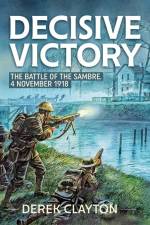
The Battle of the Sambre, 4 November 1918, was a decisive British victory. The battle has, however, been largely neglected by historians: it was the last large-scale, set-piece battle fought by the British Expeditionary Force on the Western Front: the Armistice was only one week away. Seven Victoria Crosses were won and the poet Wilfred Owen was killed in action. In scale it was similar to the first day of the Battle of the Somme: thirteen divisions of the BEF led the assault on a frontage of approximately twenty miles, supported by over 1,000 guns, with initial plans presuming an involvement of up to 70 tanks and armoured cars. The German Army was determined to hold a defensive line incorporating the Mormal Forest and the Sambre-Oise Canal, hoping to buy time for a strategic withdrawal to as yet incomplete defensive positions between Antwerp and the Meuse and thereby negotiate a compromise peace in the spring of 1919. This is the only book devoted solely to this battle and includes original, bespoke, color maps covering every inch of the battlefield. This volume analyses the battle at the operational and tactical levels: the BEF was no longer striving for a breakthrough - sequential 'bite and hold' was now the accepted method of advance. Drawing on information largely from unpublished archives, including over 300 formation/unit war diaries, Dr Clayton casts a critical eye over the day's events, examining the difference between plan and reality; the tactical proficiency of units engaged; the competence of commanders, some of whom proved capable of pragmatic flexibility in the face of stubborn enemy resistance and were able to adapt or even abandon original plans in order to ensure ultimate success. The role of the Royal Engineers is also highlighted, their tasks including devising improvised bridging equipment to facilitate the crossing of the waterway. Other questions are raised and answered: to what extent was this an 'all-arms' battle? Where does this engagement fit in the context of the BEF's 'learning curve'? Was it necessary to fight the battle at all? Was it indeed decisive?Dr Clayton's analysis places the battle into its wider strategic context and reaches important, new conclusions: that this victory, hard-won as it was by a British army hampered by logistical, geographical and meteorological constraints and worn down by the almost continuous hard fighting of the summer and autumn, irrevocably and finally crushed the will of the German defenders, leading to a pursuit of a demoralized, broken and beaten army, whose means of continued resistance had been destroyed thus expediting the armistice.
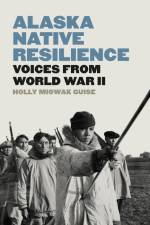
The US government justified its World War II occupation of Alaska as a defense against Japan¿s invasion of the Aleutian Islands, but it equally served to advance colonial expansion in relation to the geographically and culturally diverse Indigenous communities affected. Offering important Alaska Native experiences of this history, Holly Miowak Guise draws on a wealth of oral histories and interviews with Indigenous elders to explore the multidimensional relationship between Alaska Natives and the US military during the Pacific War.The forced relocation and internment of Unangax¿ in 1942 proved a harbinger of Indigenous loss and suffering in World War II Alaska. Violence against Native women, assimilation and Jim Crow segregation, and discrimination against Native servicemen followed the colonial blueprint. Yet Alaska Native peoples took steps to enact their sovereignty and restore equilibrium to their lives by resisting violence and disrupting attempts at US control. Their subversive actions altered the colonial structures imposed upon them by maintaining Indigenous spaces and asserting sovereignty over their homelands.A multifaceted challenge to conventional histories, Alaska Native Resilience shares the experiences of Indigenous peoples from across Alaska to reveal long-overlooked demonstrations of Native opposition to colonialism.
"These are the horrid, barbarous and bloody facts truly set down with every circumstance, for which I am now condemned to die, and whereby it appears that I am not alone guilty..."The Golden Age of Piracy was over by the 1720s, but the legacies these scoundrels left behind are still with us. Part of that legacy exists in written form: trial records and newspaper articles, speeches and sermons, laws and proclamations. Collected here are thirty-eight original period documents, edited and footnoted for clarity and context. The letters and memorials you'll find inside show all sides of life in the time of pirates, from preachers to prisoners and from victims to governors and mayors.
This is a full color copy of the original diary of George F. Moore which he kept during the year of 1863 while enlisted in the Civil War. He served in Co. D 35th Regiment Massachusetts Volunteers. It is not transcribed. It is in old English cursive.
Provides an overview of the evolution of political Islam in South-east Asia. Analyses the sources of relgious radicalism and assesses the regional terrorist and radical networks. Describes how secular democratic institutions can be strengthened, and how moderate and tolerant tendencies can be promoted.
Warfare has co-existed with humans ever since creation. Conflict has been part of human existence as far as history could recollect. The type of warfare being fought at any point in history is dependent upon the available technology at that particular period. Successful tactics at one point in history are not however necessarily successful at another. Economic might sustain wars and conflicts. The ancient and middle age's courtesy of war declaration is barbaric in the twenty first century warfare. Most, if not all Islamic terrorists who are fueled by sinister ideology has redefined the order or system of battle in the twenty first century. The evil that is Terrorism must be tackled headlong by whatever kind of alliance, coalition or military drills and exercises to keep fit and updated to current reality.They(Terrorists) attack any type of targets whether for territorial gains or for ideological convenienceThis type of military strategy leveraged on flexibility and deterrence to bring the enemy into total submission after the damaging shock. To achieve military prowess and gain superiority against an opponent or military enemy, the general elements of planning must be exercised. The winning card in warfare has three faces or sides. In warfare situation, scientific research facilities and personnel are optimized to its peak level. The size and flexibility of a country's industrial base proved an effective indication of its military capacity. Modern war strategists simulate real-time battle situations and even undertook real-time war game room scenarios. In modern warfare, tactics are becoming increasingly more complex because of the sophisticated equipment now available. A commander will seek tactics that will give optimum chance of accomplishing a mission with the least damage to the commander's forces. One of the most important tools of perpetual alertness is early warning system. Alliance is a multilateral aggregation of components to achieve greater strength which hither to would not be realized by a single entity no matter how powerful it is.Knowing full well that security is capital intensive and the long term benefit is unquantifiable in value, while insecurity on the other hand is even more capital expensive in costs, more damaging in capital and human blood. it becomes apparent that joint military exercises or drills are marriage of necessity and indispensability because a defeat to one will lead to the next being targeted and overwhelm like a contagious disease.Once sighted, the terrorists will feel the implementation of the might of an unmanned aerial predator drones missile falling on them without warning
This work has been selected by scholars as being culturally important, and is part of the knowledge base of civilization as we know it.This work is in the "public domain in the United States of America, and possibly other nations. Within the United States, you may freely copy and distribute this work, as no entity (individual or corporate) has a copyright on the body of the work.Scholars believe, and we concur, that this work is important enough to be preserved, reproduced, and made generally available to the public. We appreciate your support of the preservation process, and thank you for being an important part of keeping this knowledge alive and relevant.
What motivates men to go to war? The answer is the desire for recognition and the opportunity to gain eternal fame. War is perhaps the most common way in which a man can become a hero. We tend to romanticize war. War is portrayed as a daring adventure for a sacred cause, where the soldier will ultimately reach the highest level of self-actualization. As demonstrated by the great military figures in history, the promise of honor and heroism can help a man conquer the world. Persuading talented officers to forsake field command for a desk job has historically been difficult. Foot soldiers, too, know that their way to glory and historical immortality lies with the sword and not the pen.This book examines the dream of membership in an elite society and battle as the supreme test of the individual; promises of great rewards and military training as a "pleasant pastime"; and the tendency to grow fond of the pleasure/pain dichotomy of war. The material in this book is excerpted from For God, Gold, and Glory: A History of Military Service and Man's Search for Power, Wealth, and Adventure, also by Martina Sprague. The full series comprises the following books:1. The Forces of War: Patriotism, Tradition, and Revenge2. The Financial Incentives of War: Poverty Draft, Mercenaries, and Volunteers in Foreign Armies3. The Propaganda of War: Personal Transformation and the Search for Adventure4. The Glory of War: The Way to Historical Immortality5. The Reality of War: Boredom, Disillusion, and Desertion
What do you get when you take several hundred young G.I.s and Infuse them with a sense of invincibility ... and a dash of alcohol? Hilarity! The outrageous antics and real-life exploits of a forward-deployed tank battalion during the height of the Cold War. West Germany would never be the same! Disclaimer: This book contains adult language and some adult situations. If you consider such material to be offensive in nature, this is probably not the book for you. A portion of the proceeds from the sale of this book will be donated to American Gold Star Mothers, Inc., a non-profit organization comprised of mothers who have lost a son or daughter in the service of our country. They are a Veterans Service Organization, established in 1928 and chartered by the United States Congress in 1984. American Gold Star Mothers continues to honor our sons and daughters through service - service to veterans and patriotic events.
In January 1968, John Corbett and his fellow leathernecks of the 26th Marine Regiment fortified a remote outpost at a place in South Vietnam called Khe Sanh. Within days of their arrival, twenty thousand North Vietnamese soldiers surrounded the base. What followed over the next seventy-seven days became one of the deadliest fights of the Vietnam War—and one of the greatest battles in military history.Private First Class Corbett made do with little or no sleep for days on end. The enemy bombarded the base incessantly. Extremes of heat, cold, and fog added to the misery, as did all manner of wounds and injuries too minor to justify evacuation from frontline positions. The emotional toll was tremendous as the Marines saw their friends suffer and die every day of the siege. Corbett relates these experiences through the eyes of a twenty-year-old but with the mind and maturity of a man now in his fifties. His story of life, death, and growing up on the front lines at Khe Sanh speaks for all of the Marines caught up in the epic siege of the Vietnam War.
Abonner på vårt nyhetsbrev og få rabatter og inspirasjon til din neste leseopplevelse.
Ved å abonnere godtar du vår personvernerklæring.