

















Gjør som tusenvis av andre bokelskere
Abonner på vårt nyhetsbrev og få rabatter og inspirasjon til din neste leseopplevelse.
Ved å abonnere godtar du vår personvernerklæring.Du kan når som helst melde deg av våre nyhetsbrev.

" La lutte inégale qui depuis plus d'une année se continue entre le Mexique et les États-Unis peut être envisagée sous deux faces distinctes, selon que l'attention se porte sur les conséquences et l'issue probable de la guerre, ou sur les épisodes, les tableaux étranges qu'elle déroule à nos yeux. Quand on a pu observer de près les deux nations belligérantes, quand on a vécu en quelque sorte dans leur intimité, il est difficile de ne pas tenir compte de ce double aspect des évènements : d'un côté, l'impression produite par le simple récit des faits se complète et se fortifie par les souvenirs ; de l'autre, le rôle de plus en plus considérable que les États-Unis sont appelés à jouer dans les destinées du Nouveau-Monde ouvre à l'esprit une vaste perspective. On se transporte en idée au milieu des deux armées, on les voit en présence, l'une rachetant par une énergie à toute épreuve le désavantage d'une organisation vicieuse, l'autre décimée par les discordes civiles et livrée au plus affreux dénuement, fléau du pays en temps de paix, appui insuffisant en temps de guerre. Ce contraste même, qui d'avance indique l'issue de la lutte, ramène la pensée sur les intérêts de l'Europe, plus engagés qu'on ne parait le croire dans les questions débattues entre les deux armées..."
" La guerre de l'indépendance avait formé au Mexique une population aujourd'hui bien éclaircie, bien isolée, par ses m¿urs comme par ses souvenirs, de la société dont autrefois elle défendit si vaillamment la cause. Des guerrilleros, des aventuriers de toute sorte composaient cette population exceptionnelle. Heureux le voyageur qui rencontre encore sur sa route quelques-uns de ces enfants perdus de la révolution mexicaine ! Leurs confidences éclairent pour lui d'un nouveau jour une des époques sans contredit les plus curieuses de l'histoire contemporaine de la Nouvelle-Espagne. Toutes les fois du moins que j'ai pu questionner ces vétérans des grandes luttes de 1810, j'ai recueilli des révélations, j'ai entendu des récits dont la trace ne s'est point effacée de ma mémoire. Parmi ces vieux soldats de l'indépendance, il en est un surtout en qui tous les instincts aventureux, toutes les sauvages passions de l'armée insurrectionnelle du Mexique semblaient avoir trouvé leur personnification. Sa vie me fut racontée sur le théâtre même des campagnes de 1810 et 1811, et les aventures qui me mirent en relation avec le capitaine Ruperto Castaños étaient vraiment un digne prélude à ces récits. Aussi ne séparerai-je pas des romanesques souvenirs du routier les incidents, les scènes de voyage au milieu desquels se déroula devant moi cette étrange existence..."
"... Par une singularité digne de remarque, ces deux points extrêmes du même continent, New-York et San-Francisco, semblent rapprochés par l'identité des conditions géographiques. La première de ces villes, à l'est et sur l'Atlantique, regarde l'Europe ; la seconde, à l'ouest, sur l'Océan Pacifique, est en face de l'Asie. Les fondateurs de New-York, comme ceux de San-Francisco, durent être frappés par l'aspect d'une immense baie, abritée contre les vents du large par une ceinture de collines verdoyantes, et au fond de laquelle venaient se déverser deux larges fleuves. Des deux côtés, d'ailleurs, on retrouve les mêmes avantages naturels. Le Rio-San-Joaquin et le Rio-Sacramento sont pour San-Francisco ce que l'Hudson et la Rivière de l'Est sont pour New-York il n'y a que les noms à changer. Aujourd'hui encore la race anglo-saxonne remplace à San-Francisco la race espagnole, comme elle remplaçait à New-York, il y a deux siècles à peu près, les colons hollandais. Ici toutefois il y a un premier contraste à noter. A New-York, la race anglo-saxonne n'a plus qu'à maintenir une prospérité acquise et développée par de longs efforts ; à San-Francisco, elle voit cette prospérité naître et grandir déjà avec une rapidité merveilleuse..."
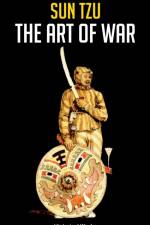
Sun Tzu The Art of War, The Commander stands for the virtues of wisdom, sincerely, benevolence, courage and strictness. By method and discipline are to be understood the marshaling of the army in its proper subdivisions. By method and discipline are to be understood the marshaling of the army in its proper subdivisions, the graduations of rank among the officers, the maintenance of roads by which supplies may reach the army, and the control of military expenditure. These five heads should be familiar to every general: he who knows them will be victorious; he who knows them not will fail.
"The Battle of the Falkland Islands Before and After" with the aid of Henry Edmund Harvey Spencer-Cooper is a historic masterpiece that delves into the intricacies of naval conflict for the duration of a pivotal moment in World War I. Spencer-Cooper's meticulous evaluation unfolds the events main up to and following the Battle of the Falkland Islands, offering readers with a complete information of the navy techniques, geopolitical factors, and the profound effect of this maritime engagement. As a wonderful historian and creator, Spencer-Cooper not handiest dissects the info of the conflict however additionally weaves a narrative that connects readers to the broader historical context. His insightful analysis is going beyond the tactical components, providing a profound exploration of the human testimonies, political selections, and the effects that reverberated before and after this considerable naval clash. The creator's elegant prose and passion for historical storytelling shine thru, making the complexities of naval struggle handy to a huge target market. Spencer-Cooper's paintings will become a gateway for readers to have interaction with and recognize the multifaceted dimensions of this historical event. "The Battle of the Falkland Islands Before and After" stands as a testament to Spencer-Cooper's potential to mix scholarly depth with attractive storytelling, creating a compelling narrative that enriches our knowledge of a vital moment in naval history.
A genuine classic. Not to be missed. By one of the masters of nonfiction. Monte Sole - Mountain of the Sun - had the bad luck to lie on the main route of withdrawal of the retreating German armies in autumn 1944. As the allied advance stormed up Italy to the very shadow of Monte Sole, Axis frustration over their retreat and the harassing Italian partisans reached its peak. With full authorization of Field Marshall Albert Kesselring, and with an infusion of dread SS reinforcements, the Germans determined to neutralize Monte Sole. The result was, in Kesselring's chilling words, "a war operation". Jack Olsen re-creates the unspeakable three-day butchery of innocent Italian civilians that ranked among the blackest atrocities in the history of man's inhumanities to man.Kirkus Reviews: The story of the Italian mountain villagers who lived on Monte Sole trying to survive the war and the horror that overtook them on September 29, 30 and October 1, 1944, when the retreating German army massacred 1800 of the citizens of Monte Sole. Olsen, a writer with a penchant for mountains (The Climb to Hell), tells the story well. The mountain--a 2000-foot peak in central Italy, some fifteen miles south of Bologna--had been a haven for Partisans. For this reason the Germans mistrusted the villagers, but the ugly rastrellamento (purge) occurred more by chance than vengeance: Monte Sole happened to be located on the main route of the retreating army, and the SS deemed it necessary to ""neutralize"" the mountain. In operational terms, this meant mass-murder. The book is based on the accounts of survivors, the few official records, courtroom testimony, and visible scars. It begins with the postman on his rounds, and by this device visits with most of the contadini (tenant farmers) of the region, the priests, the storekeeper, the elders. They are simple people, family-oriented rather than nationalistic, and often likably eccentric. It is their very individuality that makes the ensuing chapters on the mass-murder so effective. Compelling, compassionate--rarely sentimental--a stirring book.The award-winning author of thirty-three books, Jack Olsen's books have been published in fifteen countries and eleven languages. Olsen's journalism earned the National Headliners Award, Chicago Newspaper Guild's Page One Award, commendations from Columbia and Indiana Universities, the Washington State Governor's Award, the Scripps-Howard Award and other honors. He was listed in Who's Who in America since 1968 and in Who's Who in the World since 1987. The Philadelphia Inquirer described him as "an American treasure."Olsen was described as "the dean of true crime authors" by the Washington Post and the New York Daily News and "the master of true crime" by the Detroit Free Press and Newsday. Publishers Weekly called him "the best true crime writer around." His studies of crime are required reading in university criminology courses and have been cited in the New York Times Notable Books of the Year. In a page-one review, the Times described his work as "a genuine contribution to criminology and journalism alike."Olsen is a two-time winner in the Best Fact Crime category of the Mystery Writer's of America, Edgar award.
The interment of remains of American war dead at permanent overseas American military cemeteries was made by the American Graves Registration Service, Quartermaster General of the War Department. When the interment program was completed the cemeteries were turned over to the American Battle Monuments Commission (ABMC) for maintenance and administration. There are 32 Federal memorials, monuments and markers located in 17 foreign countries, providing the final resting place for 5,111 Michigan burials and 2,679 names of those whose bodies were never recovered. This does not include MIA, but usually lost at sea or unidentified.These cemeteries and memorials, most of which commemorate the service and sacrifice of Americans who served in World War I and World War II, are among the most beautiful and meticulously maintained shrines in the world.The information provided here is Last name, first name & middle initial; Rank; Branch; Unit; Death date; [either Plot Row Grave or Missing] and Awards, including two Medal of Honor recipients.
World War IWorld War I, or the Great War, was believed to be "the war to end all wars." Because of the incredible extent of destruction and the staggering number of wounded and dead, even those who lived through it could scarcely comprehend its horror. Beginning in 1914, alliances between powerful nations soon plunged the world into a global conflict. Fighting-including miserable trench warfare-broke out in practically every corner of Europe and spread around the world to Africa, Asia, and the Middle East. Inside you will read about...- The Causes of World War I- The War in Europe: The Western Front- The War in the Balkans and the Ottoman Empire- The United States- Russia and the War in Eastern Europe- The Impact of World War IAnd much more! Even the peace treaty in 1919, which occurred during a deadly worldwide influenza pandemic, brought no relief; another world war, intricately connected to the first, would break out in only two short decades.
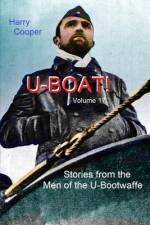
"U-BOAT!" (vol. 17) contains more fascinating first-person memories from the men who rode the U-Boats as well as other branches of service and in other countries. These stories come directly from the memories of the men who fought in the greatest conflict the world has ever known and there is no better or more accurate history than that which comes directly from the warriors who made this history. This book is their continuing story and an expansion of our U-Boat history. Come with us on a journey into the greatest conflict known as World War Two. Japanese Giant I.400, visit with Erich Topp, Soviet Submarine S.56, Hans-Georg Hess (Youngest Skipper), visit with Jürgen Oesten, the Awesome USS BARB and many more stories. These are all Memories of the warriors who made World War Two history.
Half a century after the collapse of the Nazi regime and the Third Reich, scholars from a range of fields continue to examine the causes of Nazi Germany. An increasing number of young Americans are attempting to understand the circumstances that led to the rise of the Nazi party and the subsequent Holocaust, as well as the implication such events may have for today as the world faces a resurgence of neo-Nazism, ethnic warfare, and genocide. In the months following World War II, extensive psychiatric and psychological testing was performed on over 200 Nazis in an effort to understand the key personalities of the Third Reich and of those individuals who "just followed orders." In addressing these issues, the current volume examines the strange history of over 200 Rorschach Inkblot protocols that were administered to Nazi war criminals and answers such questions as: * Why the long delay in publishing protocols? * What caused such jealousies among the principals? * How should the protocols be interpreted? * Were the Nazis monsters or ordinary human beings? This text delivers a definitive and comprehensive study of the psychological functioning of Nazi war criminals -- both the elite and the rank-and-file. In order to apply a fresh perspective to understanding the causes that created such antisocial behavior, these analyses lead to a discussion within the context of previous work done in social and clinical psychology. Subjects discussed include the authoritarian personality, altruism, obedience to authority, diffusion of responsibility, and moral indifference. The implications for current political events are also examined as Neo-Nazism, anti-Semitism, and ethnic hate are once again on the rise. While the book does contain some technical material relating to the psychological interpretations, it is intended to be a scholarly presentation written in a narrative style. No prior knowledge of psychological testing is necessary, but it should be of great benefit for those interested in the Rorschach Inkblot test, or with a special interest in psychological testing, personality assessment, and the history of psychology. It is also intended for readers with a broad interest in Nazi Germany.
This is a look at Half-tracks (semi-tracks) of French vehicles that was conquored by the Wehrmacht during the second world war in France and later reused by the Wehrmacht. Either as is or after reconstruction or modification. The book is to be viewed as a pictorial, with a rich biliograhy for further information about these vehicles. These seem almost written out of history, and pictures of these are rare. This book collects over 100 pictures and drawings for the french Half-tracks (semi-tracks) in Wehrmacht use. All armies, whether it be due to necessity, curiosity, preference or mere opportunity, use weapons and equipment that are captured from the enemy. Arguably no other army in modern times, utilized captured foreign ordnance to such an extent as the Wehrmacht during World War II. It even went so far that these captured weapons and vehicles where assigned a Kenn nummer(identification numbers) by the Wehrmachts Waffenamt(German army's weapons department). Germany is often praised for their great engineering and their greatness in design of weapons. The problem for Germany after WW1 was that in production they were utterly behind France and England at the time. The amount of private cars and trucks are one of the indicators of that. There was lots of reasons why Germany lacked production capacity after the Great War, not only had it lost all its colonies, mainly to France and England, it had also been dismembered. Poland was again a free country, and Poland could produce to its own needs. Austria-Hungary was also dismembered, and broken up. The great weapons factories of Czechoslovakia was making weapons for the czechs themselves and exporting a great deal, instead of arming Austria and Germany
This book details British fortifications used from the Tudor period beginning in 1485 through the end of World War II in 1945. With the advent of firearms, the Tudor period indeed opened a new chapter in the histories of Britain, fortification and warfare. By 1500 AD, Britain and Europe at large entered a new phase, marked by the foundation of colonial empires and a broadened sphere of influence and rule. During the following centuries, British sailors, ruthless adventurers, fighting men, and greedy merchants laid foundations to fortify the most widespread and most prosperous colonial Empire the world had ever seen. This text focuses on British coastal fortifications and on combinations of fortresses used for more general strategic purposes. Featured structures have protected points of vital importance, such as capital cities, military depots, ports, harbors and dockyards at essential locations in Britain and throughout the British Empire.
Approximately 150,000 African-American soldiers, officers and men went to France to serve in WWI. Alongside them were thousands of African-American women who served in the various volunteer relief organizations like the Red Cross and the Y.M.C.A.Addie Hunton and Kathryn Johnson were two of the women who served. With keen observation and intelligence, they tell the story of what it was like to be overseas "fighting for democracy" with only a glimmer of hope of achieving it back home after the war.They relate the soldiers' stories as well as their own excitement at their new experiences in Europe.Their experience of interacting with the French sharply contrasted with the segregation and humiliation exported from America to France with the Yankee troops. Yet they did not carry bitterness home with them. They remained proud and glad that they had the privilege to serve.
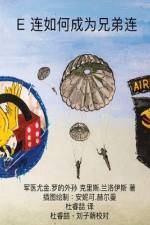
Easy Company of the 506th Parachute Infantry Regiment, 101st Airborne was one of many cohesive units which served with distinction during World War II. First brought to the public eye in 1992 by historian Stephen Ambrose's book, "Band of Brothers," these soldiers, then in their 70s, became internationally famous by the HBO miniseries under the same name, produced by Tom Hanks and Steven Spielberg.This illustrated story book will immerse students and adults alike in the stories of ordinary men who courageously volunteered to join the elite paratroopers. Chris Langlois, a grandson of medic Eugene Roe, who served in Easy Company, collaborated with artist Anneke Helleman from The Netherlands to create an introduction to the men of Easy Company. This is the beginning of a journey for the reader to learn more about these heroes.
Fourth monograph of the series "Airplanes with History" of Aviation Art & History, which tells the story of the Cessna A-37B Dragonfly No. 605 from the Chilean Air Force. Twenty-four pages publish details of its construction and service for the Chilean Air Force (FACh) up to its service in the Salvadoran Air Force (FAS). This Dragonfly operated 34 years in the FACh being originally assigned to the Aviation Group No. 1 at Los Cóndores Air Base in Iquique, facing crises with Peru in 1975-1976 and Argentina in 1978. In 1982 it was transferred to Aviation Group No. 12, stationed at the Chabunco Air Base in Punta Arenas, where it operated until December 2009, when it was deactivated and preserved in the Supply Wing at El Bosque Air Base. During its service in this unit, it operated in Aviation Group No. 3 at Maquehue Air Base in Temuco in 1992 and participated in the multinational exercise Crucex III in Brazil in August 2006. In 2014 it was sold along with nine other aircraft to the FAS, being registered as FAS 442 and integrated into the Fighter and Bombardment Group of the Second Air Brigade. This aircraft is still in flight and accumulates 42 years of service in the air forces of South America.
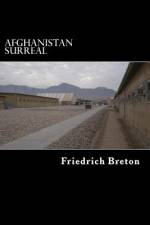
"Afghanistan surreal" bündelt und gestaltet die individuellen Wahrnehmungen eines deutschen Soldaten im Auslandseinsatz in Afghanistan zu einer formenreichen und episodenhaften Erzählung. Diese setzt sich schlaglichtartig mit den Erfahrungen des Menschen in Uniform und seiner Entwicklung im Einsatz auseinander. "Afghanistan surreal" leuchtet dabei den Rahmen des psychischen Spannungsfeldes aus, in dem sich ein deutscher Soldat am Hindukusch bewegt. Damit übersteigt es die Einzelerfahrung und lässt erahnen, zwischen welchen Polen sich deutsche Soldaten in bewaffneten Konflikten des 21. Jahrhunderts bewegen."Mit einer naiven Ernsthaftigkeit verarbeitete ich 2010 meine widersprüchlichen Wahrnehmungen als Soldat am Hindukusch. Bisweilen berauscht, ernüchtert, hoffnungsvoll und frustriert zeichne ich die Monate in der Fremde nach und bediene mich dazu dessen, was ich für surrealistische Techniken hielt. Ich glaubte, nur so der Widersprüchlichkeit im Auslandseinsatz habhaft zu werden. Das Pseudonym Friedrich Breton ist Ausdruck dessen. Die Stärke des Werks liegt nicht in der Stringenz einer Handlung oder in der Glätte der Worte, sondern der unmittelbaren Nähe zur Erfahrung. Seitdem sind die Dinge komplizierter geworden." (Wolf Gregis)
The U.S. Army's Special Operations Forces (SOF) are some of the most highly trained and specialized soldiers in the world. These elite warriors are tasked with conducting unconventional operations, often behind enemy lines, to achieve strategic objectives that conventional forces were unable to accomplish. In Iraq, SOF played a critical role in the U.S. military's efforts to defeat terrorist networks, insurgent groups, and other adversaries during Operation Iraqi Freedom and subsequent operations.This book, "Silent Warriors: U.S. Army Special Operations in Iraq," provides a detailed account of the missions, tactics, and strategies used by these highly skilled soldiers during the conflict. Drawing on interviews with SOF operators, commanders, and other military personnel, as well as declassified documents and media reports, this book offers a comprehensive and compelling narrative of SOF's role in the Iraq War.From the earliest days of the conflict, SOF units such as the Delta Force, Navy SEALs, and Army Rangers were deployed to conduct high-risk missions such as direct action raids, intelligence gathering, and special reconnaissance. These missions required incredible skill, courage, and adaptability, as SOF soldiers often found themselves operating in some of Iraq's most dangerous and hostile environments.As the war progressed, SOF units continued to play a critical role in the fight against terrorism and insurgency. They worked closely with Iraqi security forces, provided training and mentorship to local militias, and developed innovative tactics and strategies to combat a constantly evolving enemy.Through a series of nineteen chapters, this book provides a detailed and gripping account of the contributions made by the U.S. Army Special Operations Forces in Iraq. Each chapter explores a different aspect of SOF operations in the country, from the initial invasion in 2003 to the final withdrawal of U.S. troops in 2011.
This is the first in-depth comparison of German and British infantry tactics, training, and leadership techniques during World War I. Samuels' study undercuts some traditional views about the reasons for German successes and British failures during the Great War and points to how different value systems in the two countries affected their military prowess. This historical study of the doctrines underlying the British and German strategies and their implementation is intended for students of military history and contemporary military strategy. This history first analyzes the development of German infantry tactics and the role of the Storm Battalions and then examines the British attempt to adopt the German defensive systems and points to reasons for flaws in the British doing so. In comparing and contrasting the British and German armies, Samuels outlines the key concepts on which the German defensive system was based and analyzes how forces were trained and leadership was decentralized to produce a dynamic and flexible system. British efforts to adopt the key concepts failed because leadership was centralized and poor training contributed also to combat ineffectiveness.
World War I, or the Great War, was believed to be "the war to end all wars." Because of the incredible extent of destruction and the staggering number of wounded and dead, even those who lived through it could scarcely comprehend its horror. Beginning in 1914, alliances between powerful nations soon plunged the world into a global conflict. Fighting-including miserable trench warfare-broke out in practically every corner of Europe and spread around the world to Africa, Asia, and the Middle East. You'll learn:What roles did nationalism, colonialism, and the European alliance structure play in the start of the war?Who thought that trench warfare was a good idea?Why did the Germans wear those spiked helmets?How did chemical warfare get introduced and what role did it play?How did the rise of communism seriously affect the course of the war?The most of these operations were hidden from the public since that was the only way they could be successfully carried out, but in the years since, stories about various missions have emerged. They paint a picture of incredible courage and ingenuity, whether in war zones, enemy territory, or far from the front lines.
Make a smooth transition into civilian life after your military journey!Have you thought about how life would be as a civilian after your deployment? Are you wondering how to make a smooth transition now that your time in the military is coming to an end? Are you worried about how to cope with the mental health challenges caused by your service?Make a Smooth Transition after the Military shows you how you can have a successful civilian life after a difficult deployment and other challenges you encountered during your long tours and your time in service. U.S. Air Force retiree Roseline Salazar explains you how you can create a normal life for yourself, even after a long-term military career. After reading, you will know how to: Decide what you want to do in this next phase of your lifeCreate your own custom success planUnderstand your mental health and how to find help if you need itFace any challenges or scenarios with minimal difficultyMove on without regretsRealize your worth and start planning for your bright futurePaint a picture of what you would like your dream life to beMoving back to civilian life doesn't have to be stressful or intimidating. Make the switch as smooth as possible with Make a Smooth Transition after the Military
Reminiscent of the work of Nobel Prize laureate Svetlana Alexievich, What Have You Left Behind? powerfully draws together civilian accounts of the Yemeni civil war and serves as a vital reminder of the scale of the human tragedy behind the headlines.
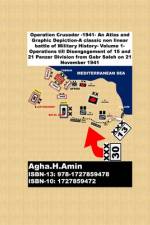
Volume 1-Operations till Disengagement of 15 and 21 Panzer Division from Gabr Saleh on 21 November 1941
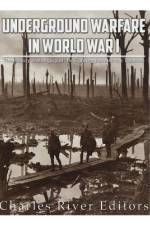
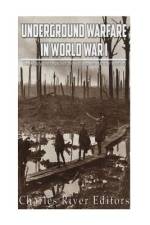
*Includes pictures *Includes accounts of mining by soldiers on both sides *Includes online resources and a bibliography for further reading "It was a pretty gloomy business. We started sinking this shaft and it filled with water, so we pumped it out with hand pumps-lift and force. We got down about 10 feet or so. It was heartbreaking-I hated it. But I had to keep my men going. The Boche [Germans] saved us. We were making a lot of noise with spiling [timbering the tunnels]. The Boche opposite us were Saxons, rather friendly, and they put up a notice on a blackboard 'No good your mining. We've tried. It can't be done.' The notice was in English. I reported this to my OC and it went up to HQ and they stopped the mine." - Major General F. Gordon Hyland World War I, also known in its time as the "Great War" or the "War to End all Wars", was an unprecedented holocaust in terms of its sheer scale. Fought by men who hailed from all corners of the globe, it saw millions of soldiers do battle in brutal assaults of attrition which dragged on for months with little to no respite. Tens of millions of artillery shells and untold hundreds of millions of rifle and machine gun bullets were fired in a conflict that demonstrated man's capacity to kill each other on a heretofore unprecedented scale, and as always, such a war brought about technological innovation at a rate that made the boom of the Industrial Revolution seem stagnant. World War I was the first truly industrial war, and it created a paradigm which reached its zenith with World War II and towards which virtually all equipment, innovation and training were dedicated throughout the Cold War and the remainder of the 20th century. To this day, modern warfare remains synonymous with tanks and mass infantry battles, although a confrontation of this nature has not occurred (except briefly during Operation Desert Storm) since World War II. The enduring image of World War I is of men stuck in muddy trenches, and of vast armies deadlocked in a fight neither could win. It was a war of barbed wire, poison gas, and horrific losses as officers led their troops on mass charges across No Man's Land and into a hail of bullets. While these impressions are all too true, they hide the fact that trench warfare was dynamic and constantly evolving throughout the war as all armies struggled to find a way to break through the opposing lines. Most books and documentaries about the war focus on the carnage of the trenches, depicting the ceaseless bombardment and sniping, and the assaults and counterattacks that took millions of lives. This was the experience of most frontline soldiers during that great conflict, but it was not the only experience. There was another war going on beneath the trenches, a war of tunnels and mines fought by men who didn't see sunlight for days at a time and who lived in constant fear of cave-ins and enemy detection. These men, who had mostly been miners in civilian life, lived a twilight existence, working long hours in silence and near darkness while great battles raged overhead. They suffered from fatigue, stress, and the knowledge that they could be killed at any time by an unseen enemy. Despite this, they persevered, and the mines they laid under enemy trench systems turned the tide of at least one major battle. Underground Warfare in World War I: The History and Legacy of the Fighting Beneath and Between the Trenches examines one of the most forgotten aspects of the fighting on the ground during the Great War. Along with pictures of important people, places, and events, you will learn about World War I's underground warfare like never before.
This book is a simplified version of the First World War, which is perfectly described by Uzair Ansari. World War I was considered short and glorious, but at the end of 1914, with heavy losses on both sides, there was no end in sight. About 9 million lives were lost during World War I. With its end, a new world order emerged, old empires collapsed, and new countries were born. forced to pay reparations, and the Treaty of Versailles, Article 231, obliges him to assume responsibility for the entire theater that began in the Balkans and covered almost all of Europe to distant had reached the European countries, which included almost every continent in the world, so it is called. First World War.
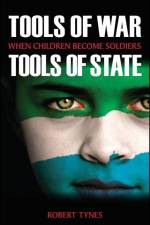
Examines why many governments, rebels, and terrorist organizations are using children as soldiers.
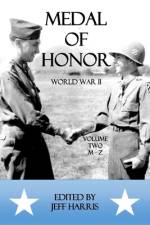
This is the second of two volumes (M-Z) collecting the citations of Medal of Honor Recipients in World War II. These citations tell the story of valor beyond the normal call of duty. Some of these men made the ultimate sacrifice for American liberty. In such a divisive modern climate it is refreshing to see that these heroes came from all classes, colors, and creeds. The bravery found in these descriptions is truly inspirational.
*Includes pictures *Includes accounts of mining by soldiers on both sides *Includes online resources and a bibliography for further reading "It was a pretty gloomy business. We started sinking this shaft and it filled with water, so we pumped it out with hand pumps-lift and force. We got down about 10 feet or so. It was heartbreaking-I hated it. But I had to keep my men going. The Boche [Germans] saved us. We were making a lot of noise with spiling [timbering the tunnels]. The Boche opposite us were Saxons, rather friendly, and they put up a notice on a blackboard 'No good your mining. We've tried. It can't be done.' The notice was in English. I reported this to my OC and it went up to HQ and they stopped the mine." - Major General F. Gordon Hyland World War I, also known in its time as the "Great War" or the "War to End all Wars", was an unprecedented holocaust in terms of its sheer scale. Fought by men who hailed from all corners of the globe, it saw millions of soldiers do battle in brutal assaults of attrition which dragged on for months with little to no respite. Tens of millions of artillery shells and untold hundreds of millions of rifle and machine gun bullets were fired in a conflict that demonstrated man's capacity to kill each other on a heretofore unprecedented scale, and as always, such a war brought about technological innovation at a rate that made the boom of the Industrial Revolution seem stagnant. World War I was the first truly industrial war, and it created a paradigm which reached its zenith with World War II and towards which virtually all equipment, innovation and training were dedicated throughout the Cold War and the remainder of the 20th century. To this day, modern warfare remains synonymous with tanks and mass infantry battles, although a confrontation of this nature has not occurred (except briefly during Operation Desert Storm) since World War II. The enduring image of World War I is of men stuck in muddy trenches, and of vast armies deadlocked in a fight neither could win. It was a war of barbed wire, poison gas, and horrific losses as officers led their troops on mass charges across No Man's Land and into a hail of bullets. While these impressions are all too true, they hide the fact that trench warfare was dynamic and constantly evolving throughout the war as all armies struggled to find a way to break through the opposing lines. Most books and documentaries about the war focus on the carnage of the trenches, depicting the ceaseless bombardment and sniping, and the assaults and counterattacks that took millions of lives. This was the experience of most frontline soldiers during that great conflict, but it was not the only experience. There was another war going on beneath the trenches, a war of tunnels and mines fought by men who didn't see sunlight for days at a time and who lived in constant fear of cave-ins and enemy detection. These men, who had mostly been miners in civilian life, lived a twilight existence, working long hours in silence and near darkness while great battles raged overhead. They suffered from fatigue, stress, and the knowledge that they could be killed at any time by an unseen enemy. Despite this, they persevered, and the mines they laid under enemy trench systems turned the tide of at least one major battle. Underground Warfare in World War I: The History and Legacy of the Fighting Beneath and Between the Trenches examines one of the most forgotten aspects of the fighting on the ground during the Great War. Along with pictures of important people, places, and events, you will learn about World War I's underground warfare like never before.
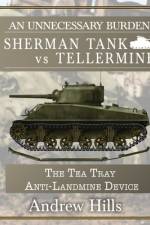
German Tellermines were a major and persistent threat to Allied tanks in the Second World War. Numerous devices such as flails and rollers were developed to try and counter this weapon, but the ideal solution was to find a cheap way of providing all Allied tanks with adequate protection.One idea that was investigated by the British was called the 'Tea Tray'. This involved affixing additional armour to a tank's belly. Whilst this idea was never adopted by the Allies in the Second World War, the 'Tea Tray' concept offers a number of insights into the development of Allied armour and the use of landmines. Therefore, this book, the first to focus on the 'Tea Tray', explores the origins and development of this interesting idea.
This work has been selected by scholars as being culturally important, and is part of the knowledge base of civilization as we know it.This work is in the "public domain in the United States of America, and possibly other nations. Within the United States, you may freely copy and distribute this work, as no entity (individual or corporate) has a copyright on the body of the work.Scholars believe, and we concur, that this work is important enough to be preserved, reproduced, and made generally available to the public. We appreciate your support of the preservation process, and thank you for being an important part of keeping this knowledge alive and relevant.
Abonner på vårt nyhetsbrev og få rabatter og inspirasjon til din neste leseopplevelse.
Ved å abonnere godtar du vår personvernerklæring.