








Gjør som tusenvis av andre bokelskere
Abonner på vårt nyhetsbrev og få rabatter og inspirasjon til din neste leseopplevelse.
Ved å abonnere godtar du vår personvernerklæring.Du kan når som helst melde deg av våre nyhetsbrev.

Dieses Buch bietet einen umfassenden Ãberblick über die Artillerie-Unterricht für die K.K. Kriegs-Marine. Es eignet sich ideal für alle, die sich für das Militär und die Artillerie interessieren.This work has been selected by scholars as being culturally important, and is part of the knowledge base of civilization as we know it.This work is in the "public domain in the United States of America, and possibly other nations. Within the United States, you may freely copy and distribute this work, as no entity (individual or corporate) has a copyright on the body of the work.Scholars believe, and we concur, that this work is important enough to be preserved, reproduced, and made generally available to the public. We appreciate your support of the preservation process, and thank you for being an important part of keeping this knowledge alive and relevant.
Dieses Buch ist eine Sammlung von Studien aus der Abteilung für Kriegsgeschichte und Taktik des GroÃen Generalstabs der PreuÃischen Armee. Die Beiträge behandeln verschiedene Aspekte militärischer Strategie und Taktik, einschlieÃlich der Anwendung neuer Waffentechnologien und der Analyse historischer Schlachten.This work has been selected by scholars as being culturally important, and is part of the knowledge base of civilization as we know it.This work is in the "public domain in the United States of America, and possibly other nations. Within the United States, you may freely copy and distribute this work, as no entity (individual or corporate) has a copyright on the body of the work.Scholars believe, and we concur, that this work is important enough to be preserved, reproduced, and made generally available to the public. We appreciate your support of the preservation process, and thank you for being an important part of keeping this knowledge alive and relevant.
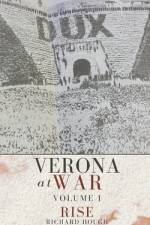
This is the story of an ancient city at war. From the embers of the Great War, a violent new ideology is born. In the streets and piazzas of Verona, the fledgling movement establishes a foothold. Led by charismatic ideologues with the financial backing of wealthy barons and the brute force of a violent mob, the ideology quickly spreads across the city and beyond. It even hosts a series of dramatic interventions by the leader of the movement himself, Benito Mussolini. Seizing power, the new regime immediately embarks on an ambitious programme of urban renewal and industrial regeneration, but violence and intimidation are never far behind. From the first meetings in a backstreet osteria, to the striking torchlight processions and relentless campaign of mob violence, Richard Hough charts the rise of fascism in Verona, a city more commonly associated with the genteel world of opera and Shakespeare. _________________________________________________ This book is written and published by an independent author based in Italy.Support small.Support independent.
"War's New Horizon," a captivating and deeply moving account that offers a powerful exploration of the conflict's gripping reality, takes readers into the heartbreaking landscape of the Russian-Ukrainian war. Immerse yourself in a narrative that takes place against a backdrop of political turmoil, human resilience, and the unwavering spirit of a nation caught in the crosshairs of history.Judy Stinson, an author, presents a personal and vivid portrait of the lives forever altered by this bloody conflict in "War's New Horizon." The book follows the harrowing journey of ordinary people thrust into extraordinary circumstances, from the initial stirrings of unrest to the outbreak of full-blown warfare.[Judy Stinson] uncovers the intricate web of geopolitical tensions, historical complexities, and personal sacrifices that fuel the Russian-Ukrainian war through meticulous research and compelling storytelling. An unparalleled understanding of this ongoing struggle is provided by this meticulously crafted narrative, which combines personal anecdotes, gripping accounts from the front lines, and real-life testimonies.You'll be taken into the trenches with brave soldiers as you turn each page, feel the pain of broken families, and witness the resilience of communities coming together in the face of adversity. The film "War's New Horizon" gives a nuanced account of the complexities of conflicts and sheds light on the human cost, the struggle for identity, and the pursuit of freedom."War's New Horizon" will leave an indelible mark on your soul whether you are a history enthusiast, a geopolitical observer, or simply a yearning for a compelling story that resonates with the triumph of the human spirit. Prepare to be swept up in a story about perseverance, hope, and the unwavering strength of human will in the face of insurmountable odds.Find out the unfiltered truth, the untold tales, and the extraordinary resilience of those who were caught in the midst of the Russian-Ukrainian war. "War's New Horizon" is a moving tribute to those whose lives have been forever altered by the conflict and a moving reminder of the indomitable human spirit.Start a life-altering journey through the Russian-Ukrainian conflict today by purchasing "War's New Horizon," which will leave you inspired, educated, and forever changed.
I started this work back in 1973, and it has been a very difficult process because I could actually feel those same emotions as I wrote about them. Perhaps one of the most astonishing things I learned is that time does not diminish the edge of those extreme emotions. Just as you learn to bury certain emotions and feelings in war, you have to learn how to incorporate those extremes into some degree of "normalcy." It has been both therapeutic and painful, but I wouldn't have it any other way. The pain helps me to appreciate life and to appreciate others as human beings. It's just that I wish we could learn these things in a better way.If I had to choose one thing as being the single, greatest thing the Marines taught me it would be that no matter what the obstacle is, no matter what life throws at you, never, ever, give up. Many times, since Vietnam I have wanted to give up, but that one life lesson, that voice barking out saying "one more" wouldn't let me. I owe a lifetime debt of gratitude to the Marine Corps and to my Drill Instructors: SSgt. Sunn, SSgt. Garcia, and especially Sgt. Clark. My Marine training and experience is something that time and reflection have taught me more to appreciate.Some readers will be upset by the use of racial references, some will be upset by the vulgar language, some by the stark brutality, some by the sexual references. I can sanitize my manuscript and give the reader a false sense of how war reduces the humanity of an individual but in a paradoxical twist heroic and superhuman efforts would erupt in the defense of your brothers-in-arms. Not only that, but sanitizing the past distorts history and lulls a person into a nonchalant manner of behavior in determining courses of action. The end result is that I would defeat the purpose that compelled me to write my book in the first place. So, what is the point? I hope that you understand what I am trying to achieve.President Nixon had a program that allowed for any Vietnam combat Marine, who had a year or less to serve, opt to be released from active duty and still retain full VA benefits. I took advantage of that program and served one year and seven months and then was released from my two-year commitment.During my nineteen months in the Marines, I consistently received above average evaluations from my superiors, I went from Private E-1 to Corporal E-4 in fourteen months, fast for Marine Corps standards even in combat in Vietnam, was promoted to a Section Leader in Weapons Platoon, offered a promotion to Sergeant E-5 in less than seventeen months with a $6,000.00 bonus and an immediate thirty day leave anywhere in the free world if I would re-enlist, and I was honorably discharged. In addition, I have been awarded the Combat Action Ribbon (awarded only to those who served in combat), Presidential Unit Commendation, Meritorious Unit Commendation Ribbon w/3B*, National Defense Service Medal, Vietnam Service Medal w/4B*, Republic of Vietnam Meritorious Unit Citation (Gallantry Cross Medal Color w/Palm), Republic of Vietnam Meritorious Unit Citation (Civil Actions Medal, First Class Color w/Palm), and the Vietnam Campaign Medal w/Device.The title, The Mailman Went UA, came from our little song and dance routine that we performed when we didn't receive any mail. It reflected the utter desperation of trying not to drown in aloneness and a heartbreak that extended beyond the lack of mail to who you were as a human being, and that impact is impossible to put into words and to shake. The mail was our only touch with any degree of normalcy. It was more than a connection with the "World." It was the essential element in preserving our sanity. We were surrounded by death and destruction and became unfazed by them, but we were always hit hard when we didn't receive any mail.
--------------------------------------------------------------------------------------------------------------------------------------------------------------------------------Zweiter Weltkrieg ErlebnisberichtFall Gelb 1940 - Westfeldzug --------------------------------------------------------------------------------------------------------------------------------------------------------------------------------Ihre Vorteile im Ãberblick: Reduziert - statt 9,99 nur 8,99 ! Greifen Sie zu! Nur solange der Vorrat reicht!Bestseller, in zweiter, überarbeiteter Auflage, welchen Sie nur auf Amazon erhalten!auch als Kindle Version erhältlichfairer Preisextrem schneller Versand & Geld-Zurück-Garantie da es sich hier um einen Amazon Prime Artikel handelt--------------------------------------------------------------------------------------------------------------------------------------------------------------------------------Mai 1940: Hunderttausende von deutschen Soldaten stehen an der Westgrenze des Deutschen Reiches bereit zum Angriff. Am 3. September 1939 hatten Frankreich und England Deutschland den Krieg erklärt. Im Morgengrauen des 10. Mai, dröhnten 4 deutsche Bombergeschwader westwärts. Ju-52-Transporter trugen Fallschirmjäger nach Belgien und Holland, weit hinter die feindlichen Linien. Unter ihnen begann für rund 136 Heeres - und 10 Panzerdivisionen der Marsch über die Grenzen. Wieder zogen Kolonnen von Feldgrauen durch Städte und Dörfer, die schon im I. Weltkrieg Opfer mörderischer Materialschlachten geworden waren und auch an riesigen Soldatenfriedhöfen vorbei. Der Obergefreite Werner Rumpf führte während des Krieges Tagebuch. Er gehörte zu einer Infanterie-Geschützkompanie, und was er und seine Gefährten damals erdulden und leisten mussten, hatte mit dem modernen Blitzkrieg so wenig zu tun wie andere Propagandaparolen jener folgenschweren Tage und Wochen. Seine Tagebucheinträge bilden die Grundlage des vorliegenden Bandes. Walter Mönch lädt Sie ein auf eine beispiellose Reise in die Tage des Westfeldzuges. Betrachten Sie die Geschehnisse dieser Tage aus dem Blickwinkel der Männer, die diese entscheidenden Wochen des Zweiten Weltkriegs miterlebt haben und an der Front kämpften!--------------------------------------------------------------------------------------------------------------------------------------------------------------------------------
Everywhere you look, people are asking the same question: "what the hell is happening in the West?" Outrage has replaced reasoned discourse, victimhood is now a virtue, depression and suicide are both on the rise, and rampant cynicism is increasingly the norm, not the exception. Is this the end of western civilization as we know it? Veteran Marine Corps Captain Jayson Downing addresses these challenging questions in his book Redefining the Warrior Spirit: Combatting Bad Ideas Destroying the West. Drawing on his own experiences in military training and the crucible of combat deployments, he breaks down exactly what is going on in the modern West, and even more importantly, what we can do about it. Informative, direct, and surprisingly hopeful, this personal development book is a fresh perspective on the ongoing culture war in the United States and beyond. Journeying widely across the great warrior traditions of the world, he combines age-old wisdom with modern science to explain some of life's most challenging questions. The reader will learn why to pursue a life of courageous service, how to make your "yes" a yes and your "no" a no, what it means to embrace a life of strength and power, and why you must always confront adversaries with your face forward. Redefining the Warrior Spirit shatters our conceptions of right vs. left politicking and answers a far more profound and ennobling question: what does it truly mean to be a warrior, both in and out of the uniform?
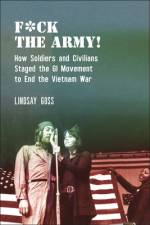
"F*ck the Army! resurrects the history of the FTA, an antiwar variety show led by Jane Fonda in 1971, building a new theory of revolutionary activism out of the theatrical acts of solidarity and resistance that soldiers and civilians performed together, on stage and off, as they sought to end the U.S. war in Vietnam by connecting struggles for liberation across the lines of race, gender, and nationality"--
Leon and his twin Norman were born in August 1929, the youngest of four children born to Mary and Mark Levy, immigrants from Lithuania.
"This first sustained exploration of Sebald's engagement with Jews and Jewishness challenges his position as German "speaker of the Holocaust" by revealing that, despite his intentions, his figural treatment of Jewish characters perpetuates harmful stereotypes. German writer W.G. Sebald (1944-2001) has been hailed, together with Primo Levi, as the "prime speaker of the Holocaust," a breathtaking claim that casts Levi, survivor of Auschwitz, and Sebald, progeny of the German perpetrator generation, in an unlikely pairing that confirms Sebald's status as the preeminent German writer concerned with the Jewish experience in recent history. Recipient of a Koret Jewish Book Award for his "extraordinary evocation of the last century's greatest trauma," Sebald has been widely valorized for restoring individuality to the Jewish victims he portrays. Sebald's Jews challenges Sebald's position as the moral conscience of a nation struggling to repair the German-Jewish relationship. It argues that despite the varied and quasi-documentary life stories of the Jews who people his narrative prose, and despite his intentions, Sebald's elaborate figural writing fashions Jewish characters as tropes for the conflicts that troubled his generation, allegories that vitiate Jewish individuality and evoke age-old and malign Jewish stereotypes. The book provides new insights into Sebald's ambiguous engagement with Jewishness by revising the notion that he restores individuality to Jewish lives and avoids the generalized treatment of Jews he excoriated in the writing of his German peers. The study reflects a shift in Sebald research that reassesses his revered position by examining controversial aspects of his oeuvre. It provides a much-needed broadening of Sebald scholarship"--
"The two world wars were undoubtedly two of the most catastrophic events in human history, not just for those who actually fought in them, but for untold millions of civilians. And even though the wars' superlativeness is unquestioned, our understanding of exactly how bad the civilian costs were is limited. Although the numbers are better for the two wars than for most earlier wars, gaps and uncertainties remain. States went to great lengths to record military casualties, but civilian fatalities often went uncounted, and figures were often deliberately obscured. In this book, renowned economic historian Cormac O Grada aims to set the record straight, establishing a figure for civilian fatalities that reveals much about the nature of modern war. The book builds on earlier estimates of casualties from a range of causes, some reliable, some approximate at best, and warns against spurious precision when approximations are impossible. For example, while the human toll of the Jewish Holocaust is generally agreed to have been about 6 million, the tolls of two other war genocides, those of the Armenian community in Turkey during World War I and of the European Roma community during World War II, cannot be determined with any precision. (Scholarly estimates of these range from 0.6 to 1.2 million, and from "at least 130,000" to "between 250,000 and 500,000.") During World War II Chinese civilians faced both a civil war and Japanese occupation, and no estimate of the resulting civilian deaths, which range from an implausibly low 2.5 million to 20 million, is reliable. The book shows that the single biggest cause of civilian deaths during the two wars were famines, some of which are familiar and well-documented, while others have attracted research only recently, and a few await systematic analysis. The book covers these as well as genocides, particularly the Jewish Holocaust, and deaths from aerial bombing, and shows how in each of these categories the numbers have been controversial and contested. Most of the book deals with death, but it contains accounts too of the tens of millions of displaced persons and refugees and forced labourers, of civilian trauma, and of sexual violence and other atrocities. In the end O Grada argues that the two world wars cost at least 45 to 50 million civilian lives, almost double the cost in military lives. Addressing the uncertainties and inaccuracies in civilian casualties, the book shows the failings of international law and gives a vital and harrowing understanding of the true cost of war"--
The first cultural history of English Welsh duality - an identification with two constituent nations at once - that explores how 'Welshness' was imagined, performed, and mobilised in England during and between the two world wars.
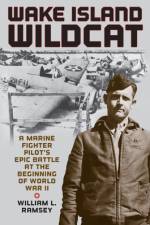
Wake Island Wildcat tells the story of "Hammerin' Hank," Henry Elrod, the fighter pilot who was the linchpin of the defense of Wake Island, attacked by the Japanese on the same day as Pearl Harbor. This is not only the story of the battle for Wake Island, but also the story of a Marine fighter pilot at war, told with drama and verve.
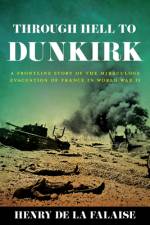
A dramatic firsthand account of the miraculous evacuation of British troops from Dunkirk, a pivotal moment of World War II.
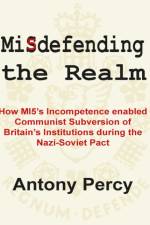
When, early in 1940, an important Soviet defector provided hints to British Intelligence about spies within the country''s institutions, MI5''s report was intercepted by a Soviet agent in the Home Office... She alerted her lover, Isaiah Berlin, and Berlin''s friend, Guy Burgess, whereupon the pair initiated a rapid counter-attack. Burgess contrived a reason for the two of them to visit the Soviet Union, which was then an ally of Nazi Germany, in order to alert his bosses of the threat and protect the infamous ''Cambridge Spies''.The story of this extraordinary escapade, hitherto ignored by the historians, lies at the heart of a thorough and scholarly expose of MI5''s constitutional inability to resist communist infiltration of Britain''s corridors of power and its later attempt to cover up its negligence. This book will be of interest to all students of history, international relations, espionage and civil, national and international security.
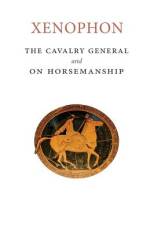
Xenophon's "The Cavalry General" and "On Horsemanship" are some of the earliest surviving treatises on their subjects from the Classical world. Xenophon, a student of Socrates and member of the famous Ten Thousand, was an astute military student and participated in or observed many of the important events of his time. These works are an invaluable insight into the use of cavalry and care for horses in Ancient Greece, and remain a useful tool for modern historians and equestrian enthusiasts alike. Translated and with footnotes by H.G. Dakyns (1838-1911).
The story unveils when a young boy is separated from his family in Aboudit and is called to serve in the military as a child soldier. Only familiar with love and compassion that he was treated with by his family, he is subjected to the horrors of war that the country has been undergoing for the past two decades. In his attempt to survive it all and hoping to meet his family again, the boy continues to face and thrive the wars until he lands in the United States. His journey from Sudan to America offers exceptional experiences for the readers to learn from.
The Broken Mirror of Memory is as raw as it is compelling. A coming-of-age tale of lost love, war service in Iraq, homecoming, addiction, and recovery. A psychedelic tale of the exploration of the human soul and the attempt to contact the spirit of a mother long dead. It is a complicated book that asks its readers to question the role of warfare in human society and the morality of killing in the name of our governments. A journey that spans the globe and a road trip that crosses a continent to the American west in the style of the beatnik writers. Poetry detailing PTSD, alcoholism, psychedelic trips, and recovery. A search for oneness with the universe amid the mundane. A search for long-elusive meaning.
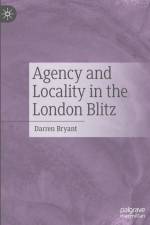
This book takes a fresh approach to the London Blitz by viewing this time through individual local boroughs of the metropolis. The term ¿London Blitz¿ means that culturally we have become accustomed to understanding that the actual blitz experience was the same wherever in the capital one happened to be, despite some areas being hit more than others. This book illustrates how there were many London blitzes, not one, influenced by a myriad of metropolitan localities, and giving rise to an agency of locality that helped to shape the lived blitz experience. By walking through the streets of London, this book conducts a local area analysis, witnessing the blitz through six London localities, representative of the assorted administrative, economic, and socio-political variables prevalent in wartime London. Covering air raids alongside topics like the provision of shelters, homelessness, and communal feeding, it shows how any history of the London Blitz must acknowledge that it was an experience reflective of a varied metropolis.
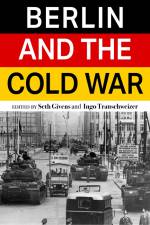
With a focus on Berlin, this assessment of transatlantic relations since 1945 emphasizes the importance of diplomacy and long-term conflict management at a time when many commentators speculate about a new cold war developing.
"... Ce ne sont là toutefois que les plans lointains et les grandes lignes du tableau. Ramenez vos regards sur la ville elle-même, ou plutôt regardez à vos pieds. Au milieu de l'échiquier formé par les terrasses des maisons, et parmi les fleurs dont ces terrasses sont ornées, vous verrez surgir, comme d'un immense bouquet, les clochers, les églises, avec leurs dômes de faïence jaune et bleue, les maisons enfin avec les murs bariolés et les balcons pavoisés de coutil qui leur donnent sans cesse un air de fête. La cathédrale occupe un des côtés de la plaza Mayor ; elle domine de toute la hauteur de ses tours le palais présidentiel, parallélogramme écrasé qui renferme à lui seul les sept ministères, - une prison, un jardin botanique, une caserne, les deux chambres. L'Ayuntamiento (municipalité) forme avec le palais un angle droit que continuent le portail de Las Flores et le Parian, vastes capharnaüms commerciaux..."
Abonner på vårt nyhetsbrev og få rabatter og inspirasjon til din neste leseopplevelse.
Ved å abonnere godtar du vår personvernerklæring.