

















Gjør som tusenvis av andre bokelskere
Abonner på vårt nyhetsbrev og få rabatter og inspirasjon til din neste leseopplevelse.
Ved å abonnere godtar du vår personvernerklæring.Du kan når som helst melde deg av våre nyhetsbrev.

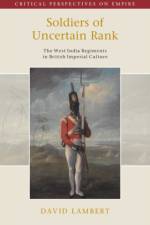
This book examines the place and status of the Black soldiers of the British Army's West India Regiments from the late eighteenth century until their disbandment in 1927. Analysing their depiction in word and image, it sheds important new light on debates about race, Britishness and military service.
The inspiring and unknown story of how the villagers of Graignes joined in solidarity with US paratroopers following the invasion of Normandy. Inspired by his own father's experience, Stephen G. Rabe recounts how the villagers supported and saved paratroopers from marauding Nazi SS forces in the post-D-Day period.
Why did the Gulf monarchies - and the UAE in particular - avoid the upheavals and challenges of the Arab uprisings? This book examines how the UAE survived the waves of regional unrest. It departs from attributing regime survival to rentier state theory and instead offers a more nuanced approach to understanding the pillars of regime legitimacy upon which the UAE now rests. In doing so, the book sheds light on the transformation of the UAE from a quietist state, which relied almost entirely upon an overseas security guarantor, to an assertive regional power in its own right.Written by an Emirati author who understands the internal dynamics of the country, the book examines the state's proactive foreign policy and the changing domestic and regional environment influencing its decisions. The book argues that the UAE leadership encouraged a new national identity to evolve amid the pressures of modernity, particularly at a time when young Emiratis had access to information beyond government control via social media. This is also part of its shift away from a country based on a rentier economy to a situation where the citizens take more initiative, learn more skills, and increasingly enter the private sector to help the country prosper. This has given rise to a new Emirati identity that is politically conservative, economically neo-liberal and socially liberal. In providing an analysis of the policies of the UAE leadership before and after the Arab Spring, this book is a vital contribution to the literature on Emirati domestic and foreign policy and points to where the country might be headed.
The book portrays the security challenges Israelis faced during the state's first two decades of independence from the perspective of the history of emotions. It traces the efforts made by policymakers, journalists, teachers, and other cultural agents to mold the feelings of citizens.
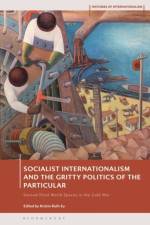
This collection takes a case study approach to enter into and explore spaces of 'Second-Third World' interaction during the Cold War. From the dining halls of a university, to hospital wards, construction sites, military barracks, pubs and more, the chapters drop the scale down from the global to the particular to better see, understand and interpret the complex nature of these spaces. These ordinary spaces are examined to understand how they were conceived, constructed, shaped and reshaped by people over time. Many are physical places of encounter, while others are more abstract, embodying ideological goals. In exploring these spaces the contributors show how the Second and Third World actors understood them and connected them to ideas such as gender and space, the space of the nation, of the modern and of the self. Essentially, it seeks to unravel how these spaces between Second and Third Worlds worked, and what, if anything, was distinctive and consequential about them. Second-Third World Spaces in the Cold War explores the ways in which these Second and Third World actors collaborated and clashed in these everyday spaces, and brings these multi-faceted, multi-actor histories to a vital centre ground.
Explores little-known contexts of the Greek Revolution, especially the previously unrecognised Scottish dimension of the international movement known as Philhellenism
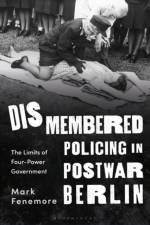
Assessing the impact of Germany's defeat on the policing of Berlin, this book addresses the reconstruction of the police force as a crucial component of four-power government. As Mark Fenemore shows, getting four nationalities to work together to administer a complex major city was a unique undertaking, never before attempted. The situation was made even more difficult by the conditions of hunger and desperation that caused a spike in crime. The stage was a city in ruins, the capital of a defeated, divided, prostrate, occupied country. The audience the administrations were playing to was a population deeply scarred by Nazism, total war, cold, hunger and mass rape.Dismembered Policing explores postwar Berlin from the perspective of all four occupiers and of ordinary Berliners. Fenemore discusses how each occupation government sought to act as an advertisement for its country's respective cultural values, mores and system of governance.As an international, multi-archival study, the book draws on evidence in French and German as well as in English. Using law enforcement as a lens, it examines issues like mass rape, the black market, interracial sex and political violence. With hunger, sexually motivated assault and dismembered body parts featuring prominently, it is reminiscent of Ian McEwen's novel The Innocent, but based on real police files.
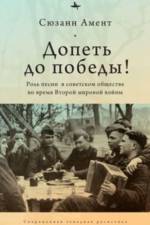
A woman wearing a ballgown singing in the snow for returning ski troops; a technician's tears ruining a master recording of a new wartime song; fresh recruits spontaneously standing and doffing their caps to a new song, thereby creating the new wartime anthem. This well researched, multi-faceted book depicts the relationship between song and society during World War II in the USSR. Chapter topics range from the creation and distribution of the songs to how the public received and shaped them. The body of song that came out of that era created a true cultural legacy which reflected both the hearts of the individuals fighting as well as the narrative of the party and state in bringing the nation to victory.
A short, but highly relevant, history of the Cold War, 1919-1994, and its significance today. The 75-year Cold War pitted the Anglo-American world against the Soviet Bloc, with China the ultimate prize. Chapter A will examine the creation of the Anglo-American Special Relationship, the end of World War I, 1919 Versailles Peace Treaty, the lead-in to World War II and the aftermath through 1949. Chapter B will examine the Bolshevik revolution, 1919 Comintern creation, 1924 Soviet Bloc creation, the tumultuous 1930s, World War II, plus Soviet competition with America and England from 1949-1979. Chapter C will discuss a China torn between West and East, finally joining the Soviet bloc in 1949 but by 1979 rejoining the West, and cooperating to destroy the USSR from 1979-1994, when the final Russian troops left Germany. In the Conclusion, the Cold War's impact and strategic significance today will focus on Vladimir Putin and Xi Jinping once again combining against the Anglo-American led West. Will history "rhyme" as Mark Twain says, allowing the Anglo-American West to win Cold War II, or will events turn out differently this time.
This fascinating book reveals the security relationships between Britain and Japan in the four decades leading up to the outbreak of war in December 1941.
The story of the people of Herkimer County, caught up in the cataclysm that was the Civil War.
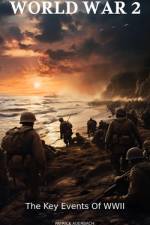
In the turbulent era of the 20th century, amidst political machinations and rising powers, the world found itself engulfed in a conflict of unprecedented scale and devastation: World War II. "World War 2: The Key Events Of WWII" delves deep into this monumental period, weaving a tapestry of stories, strategies, battles, and consequences that reshaped the modern world. From the ominous beginnings in a fractured Europe to the dropping of atomic bombs on Japanese soil, this chronicle captures the war in all its complexity. Navigate the political landscapes of Berlin, Moscow, and London; soar in the skies during the Battle of Britain; trudge through the snow in the Siege of Leningrad; and storm the beaches of Normandy. Meet the pivotal figures, from Churchill's defiant oratory to Hitler's dark ambitions, and Roosevelt's diplomatic maneuvers to Stalin's iron fist. But "World War 2: The Key Events Of WWII" goes beyond generals and politicians. It tells the stories of everyday people-soldiers and civilians, heroes and victims-who faced the horrors of war with resilience, sorrow, bravery, and hope. Their tales of perseverance and sacrifice provide a human context to the vast theater of World War II. Comprehensive yet accessible, "World War 2: The Key Events Of WWII" is an essential read for history enthusiasts and those seeking to understand the forces that shaped the latter half of the 20th century. Journey through a time of profound change, witness the rise and fall of empires, and explore the legacy of a war that still resonates with the world today. Here are the key events the book focuses on: Prelude To War (1935 - 1939)The German Invasion of Poland (September 1939 - 6th October 1939)The Phoney War (Winter 1939 -1940)Winter War (30 November 1939 - 13 March 1940)The Fall of France (10 May - 25 June 1940)The Dunkirk Evacuations (June 1940)Battle Of Britain (July-October 1940)Operation Barbarossa (1941)The Attack On Pearl Harbor (December 1941)The Battle of Stalingrad (August 1942 - February 1943)The Holocaust (1941-1945)D-Day (June 6, 1944)Battle of the Bulge (December 1944-January 1945)Yalta Conference (February 1945)Battle of Iwo Jima (February-March 1945)Atomic bombings of Hiroshima and Nagasaki (August 6 & 9, 1945) and the Japanese Surrender aboard the USS Missouri (September 2, 1945)Establishment of the United Nations (October 1945)
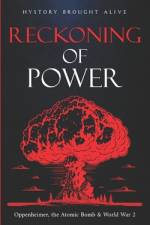
This book explores the history of the Atomic Bomb in World War II and uncovers Robert Oppenheimer's mysterious role as its visionary leader.As the world plunged into war, Oppenheimer found himself at the centre of a moral and scientific dilemma. Could science save humanity, or would it be its downfall?With gripping narratives and meticulous research, this book takes you on a riveting journey from the Manhattan Project to the Atomic Bombings at Hiroshima & Nagasaka, traversing the landscapes of WWII, and the nuclear age aftermath.Here are some of the highlights: J. Robert Oppenheimer, the brilliant, but troubled physicist who played a key role in the development of the Atomic BombExplore the turbulent backdrop of World War II, where global conflict ignited scientific innovationStep into the shoes of some of the greatest scientific minds in history - Albert Einstein, Edward Teller, Leslie Groves, Niels Bohr, and Leo SzilárdWitness the crucial moments and decisions that led to the dropping of the "Little Boy" and "Fat Man" Atomic Bombs on Hiroshima and NagasakiDiscover the Manhattan Project, a top secret mission that assembled the world's brightest minds in a race against the sinister, Nazi Atomic ProjectE = mc² Unravel the mysteries of Einstein's groundbreaking equation that laid the foundation for atomic scienceExplore the Cold War and the arms race, followed by a glimpse into the future of nuclear energy, its challenges, possibilities, and the "Dream of Fusion"All of this and much, much more....Whether you're a history enthusiast or new to the subject, this book tells all about Oppenheimer, the Atomic Bomb, World War II, and the Nuclear Age Aftermath.Grab your copy of This Book today!
This book is a fictional account about one British Army Warrior armoured vehicle, "The Beast" Call Sign 32 (Three Two) from 3 Platoon, A Company, the Third Battalion the Royal Regiment of Fusiliers (3RRF) involved in the epic fight to wrestle a small country from the hands of a tyrannical dictator. What is it like to travel blindly into battle in the back of an Infantry Fighting Vehicle whilst tanks, artillery, and aircraft are firing you in? What are the thoughts of the dismounted soldiers in the crew compartment not knowing what they will face once the big metallic door swings open? How do the Officers and SNCO's train then co-ordinate these men in battle? What is it like to be in constant fear of being attacked by chemical or biological weapons? What is it like to lose close friends and continue to carry on with your mission? Read this book and those questions will be answered.
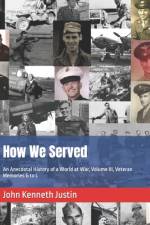
How We Served, is an anecdotal history of a century of military and homefront service around the globe during times of peace and war. Told by the men and women who so served, or their loved ones, their service is memorialized to varying degrees, from longer first hand reflections, to shorter summations raising a hand to be counted as having been there. All are included, for all served, and that service deserves our remembrance, and our thanks.
The Holocaust continues to leave survivors and their descendants, as well as historians searching for words to convey the enormity of that event. This title features nine contributors who tackle questions about the nature of memory and forgiveness after the Holocaust to encourage others to participate in similar inter- and intrafaith inquiries.
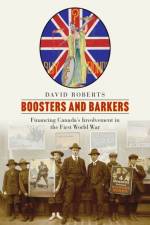
How bond campaigns used coercive, modern marketing techniques to sell Canadians on the First World War. "Stick it, Canada! Buy more Victory Bonds!" The First World War demanded deep personal sacrifice in the field and at home, even when home was far from the front. It also made unrelenting financial demands on both the governments and populations of Canada and Newfoundland. Boosters and Barkers is a highly original examination of the drive to finance Canadian participation in the conflict: Ottawa's calls for direct public contributions in the form of war bonds; the intersections with imperial funding, taxation, and conventional revenue; and the substantial fiscal implications of participation in the conflict during and after the war. Canada's bond-selling campaigns used print, images, and music to sell both the war and public engagement. They received an astounding response, generating revenue that covered almost a third of the country's total war costs, which were estimated at $6.6 billion-- a dramatic charge on a dominion so far from the front. This is a story of inexorable need, shrewd propaganda, resistance, engagement, and long-term consequences.
From the origins of state militias to the intricacies of their modern-day counterparts, this definitive guide explores the evolution and legal framework of State Defense Forces, National Guard, and Federal Military Forces. Navigating through seminal legislation like the Defense Act of 1916 and Title 32 of the United States Code, the book delves into the dual roles these forces play-both within their states and under federal command. Special focus is given to the State of Alaska, offering a comprehensive look at its unique laws, Organized Militia, and homeland security strategies. The book also includes a meticulous compilation of relevant regulations, codes, and practices, making it an indispensable resource for scholars, legal experts, and military personnel alike.
This book contains information about all fighting ships and boats that were part of the PLA Navy, as well as para-military maritime organizations of the PRC (Coast Guard, Fisheries Law Enforcement Department, Naval Surveillance Service) from 1949 to 2023. Data on commissioning, decommissioning, performance characteristics, data on modernizations are given. The articles are accompanied by a large number of illustrations, mostly side views of ships on a standard scale.
Sintesi del più distruttivo conflitto mondiale della storia recente, gli interpreti i personaggi e le loro azioni, durante i sei anni di guerra. Considerazioni e inesattezze propagandistiche attinte dalla stampa dell'epoca che pongono in risalto aspetti ancora non chiari dal 1939 al 1945. L'avvento del terzo Reich, le cause scatenanti e le circostanze che hanno condotto alla guerra con le battaglie più significative e determinanti perseguite dai belligeranti. I rapporti fra Hitler e Mussolini che condizionarono l'andamento del conflitto. Il dopoguerra e le conseguenze geopolitiche che facilitarono la nascita delle superpotenze militari. Un diario che fornisce una visione competa di una catastrofe umanitaria senza precedenti che ha segnato il novecento e le deflagranti conseguenze che ancora ci condizionano.
1001 Sensational Second World War Facts is the biggest and most comprehensive fact book on the subject of WW2. Covering the major combatants, the big battles, weapons and casualties, 1001 Sensational Second World War Facts gives a unique perspective to WW2 that will be of interest to everyone.
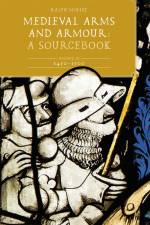
Authoritative reference guide, using the documents in which arms and armour first appeared to explain and define them.
While the social and cultural history of the early modern military has greatly advanced in the last few decades, the religious dimension of the military life in the Holy Roman Empire between 1500 and 1650 has hardly been explored. The Reformation's brought profound political, social and cultural upheavals, but the religiosity of the men and women who followed the Christian life in the chaos of war still represents a large gap in the historiography. Faith in War shows that confessional antagonisms lost much of their meaning during war and coexistence became a fact of army life. Connecting military and civilian social and cultural history in these ways, Nikolas Funke's case study on this period brings new life to important current historiographical discussions in a military context, including stereotyping, confessionalization, social discipline, deviance, toleration, religious violence, and the culture of death.
"This book describes the experiences of the diverse people who successfully defended Fort Stanwix on the New York frontier at the Mohawk River Oneida carrying place portage between 1758 and 1781. It focuses on Colonel Peter Gansevoort's 3rd New York Continental regiment and the August 1777 three-week siege by forces under British Colonel St. Leger."--
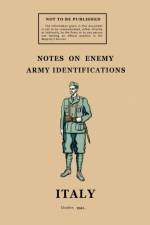
This period handbook was published to give British military personnel a better understanding of the principal characteristics of both the Italian army and the Black Shirt Militia under active service conditions, it is dated October 1941. It begins with a description of distinctive branches, or specialities, the most characteristic of which was the arm of the Royal Carabinieri, a semi-military body occupying, historically, the senior position in the Army. Other specialities included the Grenadiers of Sardinia, the Bersaglieri, the Alpini and the San Marco Marine Regiment.The handbook then goes on to show, in order, the organisation of Command and Staff, of formations (corps and divisions) and of the arms and services; services, supply and transportation; ranks, plates (many in colour) cover uniforms, insignia, medals and decorations; armament and equipment and a chapter on the Air Force, There are chapters on tactical doctrine and principles of employment, on permanent fortifications, camouflage and abbreviations. Finally there is a brief index.
Abonner på vårt nyhetsbrev og få rabatter og inspirasjon til din neste leseopplevelse.
Ved å abonnere godtar du vår personvernerklæring.