


















Gjør som tusenvis av andre bokelskere
Abonner på vårt nyhetsbrev og få rabatter og inspirasjon til din neste leseopplevelse.
Ved å abonnere godtar du vår personvernerklæring.Du kan når som helst melde deg av våre nyhetsbrev.

THE WAGNER GROUP The Wagner Group Inside the World's Most Elite Private Military Company is a compellingexposé of the inner workings of one of the world's most secretive and formidable organizations.
Monstrous Fantasies asks why medieval romances reimagining the crusades ending in a Christian victory circulated in England with such abundance after the 1291 Muslim reconquest of Acre, the last of the Latin crusader states in the Holy Land, and what these texts reveal about the cultural anxieties of late medieval England. Leila K. Norako highlights the impact that the Ottoman victory and subsequent massacre of Christian prisoners at the battle of Nicopolis in 1396 had on intensifying the popularity of what she calls recovery romance. These two episodes inspired a sense of urgency over the fate of the Holy Land and of Latin Christendom itself, resulting in the proliferation of romances in which crusading English kings like Richard I and anachronistic legends like King Arthur not only reconquered Jerusalem but committed genocidal violence against the Muslims. These romances, which--as Norako argues--also influenced Geoffrey Chaucer's Canterbury Tales, conjure fantasies of an ascendant global Christendom by rehearsing acts of conquest and cultural annihilation that were impossible to realize in the late Middle Ages. Emphasizing the tension in these texts between nostalgia and anticipation that fuels their narrative momentum, Monstrous Fantasies also explores how the cultural desires for European and Christian hegemony that recovery romances versified were revived in the wake of the so-called wars on terror in the twenty-first century in such films as Kingdom of Heaven and American Sniper.
A fully illustrated account of the conclusion of the Atlanta campaign, 1864.
Refugee crises are one of the gravest problems facing the modern world. This book explores the paradox of why countries such as Britain pride themselves on their past treatment of refugees yet are suspicious and hostile towards asylum seekers trying to gain entry. It explores the contemporary treatment and representation of refugees ranging from the Huguenots in the sixteenth to eighteenth centuries through to the many groups that have gained entry more recently. Was the treatment of refugees such as Jews escaping Tsarist and later Nazi persecution as welcoming as politicians and others now make out? Why have some groups been remembered positively, whilst others have been forgotten? Remembering refugees plays particular attention to how historians and those in the heritage industry have dealt with the refugee presence. By adopting an original and critical framework, it asks why a variety of academic disciplines, as well as politicians, the media and the general public, have difficulty with refugees. A richly textured book that utilizes a huge range of sources from parliamentary debates through to novels, films and autobiographical writing, it argues that the current panic about refugees and asylum seekers says more about the moral failings of contemporary society than it does about those fleeing persecution.
2 manuscritos completos en 1 libro: Primera Guerra Mundial: Una guÃa apasionante de principio a finSegunda Guerra Mundial: Una guÃa apasionante de la Segunda Guerra MundialEs bien sabido que la Primera Guerra Mundial se inició con el asesinato del archiduque austriaco Francisco Fernando. Las superpotencias mundiales se enzarzaron entonces en el conflicto más sangriento de la historia, con millones de bajas en ambos bandos. La Primera Guerra Mundial transformó el panorama sociopolÃtico de principios del siglo XX y marcó la vida de innumerables personas durante décadas.En la primera parte de este libro, usted: El largo siglo XIX y cómo afectó al panorama polÃtico.La unificación de Alemania e Italia.El estado de la polÃtica de poder europea.Los nuevos avances tecnológicos que dieron forma a la guerra.El problema austrohúngaro y el comienzo de la Primera Guerra Mundial.Actividades militares en todos los teatros de la guerra.Las influyentes batallas de Verdún, Somme, Isonzo y GalÃpoli.La guerra de trincheras y las nuevas tácticas utilizadas en la guerra.La entrada de Estados Unidos y la Revolución rusa.Los momentos finales de la guerra.La Conferencia de Paz de ParÃs y el nuevo orden mundial.La Segunda Guerra Mundial está indisolublemente ligada a Hitler y los nazis; sin embargo, hay mucho más por descubrir. A través de este libro descubrirá los principales acontecimientos que tuvieron lugar en todo el mundo para crear una tormenta perfecta que permitió a Hitler ascender al poder.En la segunda parte de este libro, usted: Cómo el final de la Primera Guerra Mundial contribuyó a desembocar en la Segunda.El ascenso de Hitler al poder.Conflictos y disturbios en Ãfrica y Asia.El Holocausto.Guerra de ideologÃas.El asombroso número de bajas.Las principales batallas de la guerra y su impacto en el esfuerzo bélico.Y mucho, ¡mucho más!
In World War II, 127 ships and barges were built in Savannah, Georgia between 1942-1944 by Southeastern Shipbuilding Corporation, Yard. This is a combination of 88 Liberty, 18 Coastal cargo, 28 Naval Vessels including minesweepers and submarine rescue ships, and 7 concrete barges. This publication lists details of the ship, whom it was named after, and a little biography of the person whom the ship was named after. The launches usually took place at midday.Credit goes to the Savannah Morning News, Savannah Bull Street Library - Genealogy Room, the Digital Library of Georgia, Georgia Historic Newspapers, Georgia Historical Society, and the ProQuest Newsstand.
Māori Weapons: The Art of War and CultureDiscover the captivating world of Māori weaponry in this immersive exploration of a culture deeply rooted in tradition, resilience, and reverence for the land. "Māori Weapons: The Art of War and Culture" takes you on a remarkable journey through the history, craftsmanship, and cultural significance of these extraordinary weapons.Unveiling the secrets of Maori warfare, this book delves into the heart of hand-to-hand combat, where Maori warriors honed their skills, adapting to a changing world while staying true to their cultural heritage. From swift and silent ambushes in New Zealand's rugged terrain to the unique dual-weapon approach of Maori warriors, you'll gain insights into the tactics that made them formidable adversaries.But Maori weapons were more than just instruments of war; they were expressions of art and tradition. Discover the intricate carvings, the symbolism, and the spiritual energy that infused each weapon. Learn how weapons like the mere, made from the revered greenstone (pounamu), were symbols of strength and honor, passed down through generations."Maori Weapons: The Art of War and Culture" also delves into the legacy of Maori weaponry, exploring the impact of British colonization, preservation efforts, and their continued cultural importance in modern Maori society. These weapons are not relics; they are living connections to a warrior culture deeply rooted in the Maori way of life.Join us on this enthralling journey through the pages of history, where Maori weapons come to life, telling a story of innovation, resilience, and an enduring connection to land and tradition. This book is a celebration of the Maori spirit and the indomitable legacy of their warrior culture.
The third book in the 'Navypedia. Fighting ships of the world since 1990' series contains information about ships, vessels and boats of the navies and paramilitary maritime organizations of 47 countries (in alphabetical order from Jamaica to Portugal) that were in service, under construction or ordered from 1990 to 2023. The third volume contains 1140 articles on the classes of ships, containing information on the dates of construction, commissioning and decommissioning, performance characteristics, modernizations, and other information that allows you to get information in a compressed form about the combat qualities of ships and the composition of the navies in the period under review. The illustrations for the articles contain 611 side views on 1:1250 and 1:625 scales. Additional information is provided on the composition of aviation and marines, bases, and the activity of the navies in question.
Begleiten Sie uns auf einer epischen Reise durch die fesselnde Welt der Piraterie! In unserem faszinierenden Buch "Die Geschichte der Piraten: Geheimnisse der Meere" nehmen wir Sie mit auf eine unvergessliche Reise durch die schillernde Geschichte der Piraten, von den frühen Tagen der Seeräuberei bis zu den modernen Herausforderungen der Cyberpiraterie.Dieses Buch entführt Sie in eine Zeit voller Abenteuer, Kämpfe auf hoher See, furchtlose Kapitäne und ungezügelte Freiheit. In 27 packenden Kapiteln erkunden wir die verschiedenen Aspekte der Piraterie - von den goldenen Jahren im 17. Jahrhundert bis hin zu den Seeschlachten, den Piratenrepubliken, den mysteriösen Schätzen und der vielschichtigen Rolle der Piraterie im Welthandel und Kolonialismus.Erleben Sie die unvergleichliche Faszination der Piraterie in einer völlig neuen Art und Weise. Dieses Buch ist eine reine Textquelle und ermöglicht es Ihnen, sich in die Welt der Piraten hineinzubegeben, ohne von Bildern abgelenkt zu werden. Die Worte nehmen Sie mit auf eine Reise, bei der Sie sich inmitten von Freibeutern, Seeschlachten und versteckten Schätzen fühlen werden."Die Geschichte der Piraten: Geheimnisse der Meere" ist ein Must-Have für Geschichtsliebhaber, Abenteurer und alle, die von der faszinierenden Welt der Piraten angezogen werden. Lassen Sie sich von der meisterhaften Erzählung mitreiÃen und tauchen Sie ein in eine Welt voller Spannung, Gefahr und Abenteuer. Holen Sie sich jetzt Ihr Exemplar dieses einzigartigen Buches und entdecken Sie die Geheimnisse der Piraterie wie nie zuvor!
Deutsche version of my English editionDer Kubelwagen (Kübelwagen) wird fast ausschlieÃlich als Volkswagens Variante dargestellt, aber der Kubelwagen war in Wirklichkeit ein Autotyp, der sich ab den dreiÃiger Jahren von einer ziemlich komplizierten Autokonstruktion zum VW entwickelte, der in Design und Wartung einfach war. Einige seiner Vorgänger waren alle schwerer im Design und die Lösungen waren oft überentwickelt. Obwohl es auch Designs wie den Steyr 250 und das tschechische Tatra-Design gab. Oder die deutsche DKW Sonderklasse aus der Vorkriegszeit. Dies ist ein Buch, das versucht, einige der Fahrzeuge zu zeigen, die den Namen Kübelwagen trugen. Diese Ausgabe ist die überarbeitete 8,5 "x 11" mit gröÃeren Fotos. Es gibt über 150 Bilder und Zeichnungen der verschiedenen Designs und Varianten. Der Einfachheit halber sind auch die zwei verschiedenen Hersteller des Schwimmwagens enthalten. Das Buch enthält Autos von Adler, BMW, DKW, Horch, Mercedes Benz, Opel, Skoda, Steyr, Stoewer, Tatra, Tempo, Trippel, Wanderer und VW. Sie können mir über mein Autorenkonto auf Twitter folgen, wo Sie andere groÃartige Autoren aufgreifen und diskutieren können. Ich poste Bilder, die ich aus dem Internet gefunden habe.@Postmanden1 Mein Redbubble-Konto ist#WW2nerd #ZWK #2WK #WW2 #WWII #2WW #SWW #2GM Vorwort Kubelwagen Adler Adler 6 Reichswehr Panzerwagen Kraftfahrzeug 13 Adler 10N Adler 12N-RW kübelwagen Adler 12N-3G Adler Favorit reichswehr kübelwagenAdler Type 3 Gd Kübelwagen BMW BMW 309 Kübelwagen BMW-315 Kübelwagen BMW 325 DKW DKW Sonderklasse 1001 KübelwagenHorch Horch 830 R Horch 901 mittlerer Einheits-PKW Mercedes Benz Mercedes Benz 290 Reichswehr kübelMercedes Benz kübel 260Mercedes Benz 170V Mercedes Benz 170VL Mercedes Benz 320WK Mercedes Benz 340 Wehrmacht Kübel lang Mercedes Benz G5 Opel Opel P4 Opel Super 6 Opel Admiral Kübelwagen Skoda Skoda Superb 3000 SteyrSteyr Type 55 Steyr Type 250 Steyr Typ 1500 Stoewer Stoewer M12 Stoewer Typ 40 Tatra Tatra 57K Tempo G1200 Trippel Trippel SG6/38 Trippel SG6/41 Wanderer Wanderer W11 2.5L Wanderer W11 3.0L Wanderer W23S VW Type 62 Type 82 Kübelwagen VW Type 128 Schwimmwagen VW Type 166 Schwimmwagen Extra Fotos Bücher zum Weiterlesen
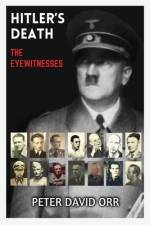
Hitler's Death - The Eyewitnesses examines the accounts of all the people who claimed to have seen Adolf Hitler dead on April 30, 1945.
When Fred Foster heard that the Japanese had bombed Pearl Harbor, like many of his friends and family he decided to join the Army. His training eventually brought him into Germany and the Battle of the Bulge. Read this story to learn how Fred gained inspiration from a tiny ant in the midst of the horrors of WWII.
Slava Ukraini. Who Dares Shares, is an observational diary written over the first eighteen months of the Russo/Ukraine war that began in February 2022. Frustrated by the lack of attention that the world media was paying to the build up of Russian Forces on the Belarus/Ukraine border in January 2022 Robin Horsfall began to post critical warnings on social media outlets. When the war began he continued to write and assess the situation drawing from his British Special Forces background. He gradually gained a following of over one million who read his posts every week and contrasted them favourably against the 'clickbait' and sound bite reports of the national media. Slava Ukraine means Glory to Ukraine and Who Dares Shares has become the key phrase or jingle that Robin is now recognised by. Opinionated, accurate and free of any vested interests the book takes the reader almost daily through the developments and emotions that the war has invoked.
Questo libro contiene le memorie di mio nonno paterno sui suoi cinque anni di guerra. Quando era ancora in vita, egli spesso mi intratteneva narrandomi di quel periodo. Ho quindi deciso di mettere insieme i suoi ricordi scrivendo questo breve racconto, che pubblico con l'obiettivo di salvare queste memorie personali le quali, insieme a tante altre, costituiscono il sale della Storia. Infatti senza le testimonianze e le memorie dei singoli, lo studio della Storia rischierebbe di cadere in una fredda e inanimata schematicità .Tra gli episodi narrati da mio nonno, ce n'è uno di cui non ho trovato riscontro nelle fonti a mia disposizione: il bombardamento di Njegusi (Montenegro) da parte dell'aviazione italiana.Si narra poi l'annuncio dell'armistizio dato da una radio svizzera già a mezzogiorno dell'otto settembre. Visto che l'armistizio fu annunciato dal generale Dwight Eisenhower alle ore 18.30 tramite i microfoni di Radio Algeri, pensavo che mio nonno avesse ripetutamente confuso l'ora di pranzo con l'ora di cena, ma mi pareva strano. Così ho voluto vederci più chiaro e alla fine mi sono imbattuto in una fonte che rende del tutto verosimile il racconto di mio nonno. In appendice ho riportato un estratto della fonte in questione.Inoltre si parla della morte di alcune centinaia di prigionieri di guerra tedeschi in Francia, al Camp Joffre di Rivesaltes, le cui cause - a detta di mio nonno - furono diverse da quelle dichiarate dalle autorità francesi dell'epoca, secondo cui quegli uomini morirono a causa del caldo eccessivo. In appendice ho inserito un approfondimento su questa delicata vicenda.Credo che già tali elementi inediti conferiscano a queste memorie un certo interesse storico.
In the heart of Rhodesia, amidst a backdrop of political upheaval, warfare, and a tumultuous landscape, emerges an epic saga of love, duty, and sacrifice. Journey with James, an elite Selous Scout, as he navigates the treacherous terrain of guerrilla warfare, loyalty, and love. When he encounters Amina, a brave nurse with secrets of her own, their worlds collide in a passionate affair that will test the boundaries of their convictions. Whispers of the Rhodesian Selous Scouts delves deep into the human soul, revealing the complexities of wartime allegiances and the enduring human capacity for love and redemption. Through the fierce battles, covert missions, and emotional whirlwinds, readers will experience the essence of a time where hope battled despair and love sought its place amidst chaos. Dedicated to the real Selous Scouts, this novel provides a vivid portrayal of a forgotten era, shedding light on the unsung heroes of Rhodesia and the legacies they left behind. Dive into a world where every choice can mean the difference between life and death and where love becomes the ultimate act of courage.
Quel tifone non spazzò via solo una flotta: cancellò anche la storia del sacrificio di molti.I mongoli erano guerrieri senza onore.Mai in vita mia ho conosciuto nemici più temibili, volgari e brutali di quelli che giunsero nel Chinzei in quella tragica mattina dell'anno passato.Secondo la leggenda le isole del Giappone furono create da una coppia di dèi.Per secoli gli abitanti dell'arcipelago hanno vissuto senza conoscere il trauma della dominazione straniera, convinti che gli dèi che avevano creato la loro terra ne fossero anche i guardiani.Per secoli il Giappone è esistito come un "sole solitario" ai confini dell'Asia.Poi un cataclisma travolse il mondo.L'orda guidata da Gengis Khan si espanse come una cielo sulla terra, cavalcando sulle macerie di grandi civiltà e sui corpi di milioni di persone.Giunse infine il momento in cui il cielo si accorse di un intruso che occupava il suo spazio infinito: quel sole fiero e libero da ogni autorità , quel "sole" la cui stessa esistenza era un oltraggio al blu che sovrastava tutte le terre...Questo libro, scritto in parte come opera narrativa e in parte come saggio storico, racconta come l'orda dei Khan divenne il cielo del mondo e ciò che accadde quando decise di sfidare il sole: le invasioni mongole del Giappone.
What do you think it would be like to see the world aboard a ship? Many people throughout history have gotten to do so for a variety of different reasons, including one man in particular named "Buck." Early in his life, Buck joined the military. As part of his job in the Coast Guard, he traveled on a ship to many different places across the world, such as England, Hawaii and the Philippines. Buck did not do this for fun but to fight for the United States during World War II. The jobs that Buck, and countless other American soldiers did, helped to protect the freedom of the United States.
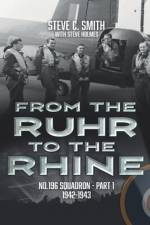
No.196 Squadron was reformed at RAF Driffield, Yorkshire, on November 7th 1942, as a night bomber unit in No. 4 Group, RAF Bomber Command. The squadron was initially equipped with the sturdyand reliable Vickers Wellington Mk.X. From the outset, the squadron was heavily committed to attacks on the German U-Boat pens on the French coast. Operating almost continuously during the Battle of the Ruhr, the squadron suffered grievous losses in men and aircraft. In July 1943, the Squadron transferred to No.3 Group and started conversion to the Short Stirling Mk.III, operating from the newly opened RAF Witchford, and soon became heavily engaged in Bomber Commands' autumn and early winter campaigns. With increased activity over German targets and revitalised German defences, the losses suffered by 196 Squadron, along with the Group's other Short Stirling equipped squadrons, steadily reached unacceptable levels. In November 1943, despite having proved itself repeatedly, No.196 was unceremoniously transferred to No.38 Group, much against the aircrew's wishes. This book recalls the achievements of a squadron that quietly fought a life-and-death battle over occupied Europe and Germany, almost unknown outside the parent group.
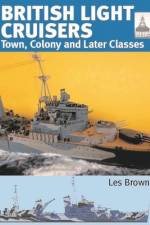
The 'ShipCraft' series provides in-depth information about building and modifying model kits of famous warship types. Lavishly illustrated, each book takes the modeller through a brief history of the subject, highlighting differences between ships and changes in their appearance over their careers. This includes paint schemes and camouflage, featuring color profiles and highly detailed line drawings and scale plans. The modelling section reviews the strengths and weaknesses of available kits, lists commercial accessory sets for super-detailing of the subjects, and provides hints on modifying and improving the basic kit. This is followed by an extensive photographic gallery of selected high-quality models in a variety of scales, and the book concludes with a section on research references - books, monographs, large-scale plans and relevant websites.This is the second of two volumes covering Royal Navy 6-inch cruisers of the 1930s and later, this one devoted to the 'second generation' designs armed with triple mountings. The Southampton class marked a return to large cruisers, but the urgent requirement for numbers led to the smaller 'Colonies' from which all the later RN 6-inch cruisers were derivatives. These ships formed the backbone of British cruiser forces during the Second World War.With its unparalleled level of visual information - paint schemes, models, line drawings and photographs - this book is simply the best reference for any modelmaker setting out to build one of these famous cruisers.
Amidst the militancy of the 1960s and early 1970s the Mexican population of the dusty agricultural town of Crystal City, Texas (Cristal in Spanish), staged two electoral revolts, winning control of the city council and school board. Armando Navarro presents the most comprehensive examination to date of the rise of the Chicano political movement in Cristal.
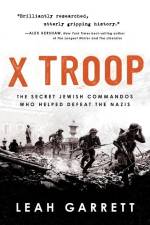
"Brilliantly researched, utterly gripping history: the first full account of a remarkable group of Jewish refugees-a top-secret band of brothers-who waged war on Hitler." -Alex Kershaw, New York Times best-selling author of The Longest Winter and TheLiberatorThe incredible World War II saga of the German-Jewish commandos who fought in Britain's most secretive special-forces unit-but whose story has gone untold until now June 1942. The shadow of the Third Reich has fallen across the European continent. In desperation, Winston Churchill and his chief of staff form an unusual plan: a new commando unit made up of Jewish refugees who have escaped to Britain. The resulting volunteers are a motley group of intellectuals, artists, and athletes, most from Germany and Austria. Many have been interned as enemy aliens, and have lost their families, their homes-their whole worlds. They will stop at nothing to defeat the Nazis. Trained in counterintelligence and advanced combat, this top-secret unit becomes known as X Troop. Some simply call them a "suicide squad." Drawing on extensive original research, including interviews with the last surviving members, Leah Garrett follows this unique band of brothers from Germany to England and back again, with stops at British internment camps, the beaches of Normandy, the battlefields of Italy and Holland, and the hellscape of Terezin concentration camp-the scene of one of the most dramatic, untold rescues of the war. For the first time, X Troop tells the astonishing story of these secret shock troops and their devastating blows against the Nazis."Garrett's detective work is stunning, and her storytelling is masterful. This is an original account of Jewish rescue, resistance, and revenge." -Wendy Lower, author of The Ravine and National Book Award finalist Hitler's Furies
How Robespierre's career and legacy embody the dangerous contradictions of democracyMaximilien Robespierre (1758-1794) is arguably the most controversial and contradictory figure of the French Revolution, inspiring passionate debate like no other protagonist of those dramatic and violent events. The fervor of those who defend Robespierre the "e;Incorruptible,"e; who championed the rights of the people, is met with revulsion by those who condemn him as the bloodthirsty tyrant who sent people to the guillotine. Marcel Gauchet argues that he was both, embodying the glorious achievement of liberty as well as the excesses that culminated in the Terror.In much the same way that 1789 and 1793 symbolize the two opposing faces of the French Revolution, Robespierre's contradictions were the contradictions of the revolution itself. Robespierre was its purest incarnation, neither the defender of liberty who fell victim to the corrupting influence of power nor the tyrant who betrayed the principles of the revolution. Gauchet shows how Robespierre's personal transition from opposition to governance was itself an expression of the tragedy inherent in a revolution whose own prophetic ideals were impossible to implement.This panoramic book tells the story of how the man most associated with the founding of modern French democracy was also the first tyrant of that democracy, and it offers vital lessons for all democracies about the perpetual danger of tyranny.
The graphic memoir of Ginette Kolinka, Holocaust survivor, educator, and “ambassador for the memory” of Auschwitz-BirkenauIt is April 1944. 19-year-old Ginette Kolinka arrives at the Auschwitz-Birkenau camp. Her father and little brother are immediately gassed. Ginette is selected as a worker. She survives. It is October 2020. 95-year-old Ginette takes advantage of a lull in the COVID-19 epidemic to accompany a group visiting Birkenau one last time. As a farewell, she brings with her a journalist (France Info's Victor Matet) and a comic strip writer, J-D Morvan. From this trip a comic book is born. Ginette tells of her life before the war, how she discovered she was Jewish, how her family fled Paris before she and her father were denounced. She tells the story of the camp; completely, honestly, without seeking pity. We see her today, how she still shares her story with the world, how she still stands and bears witness. Ginette tells everything with her trademark liveliness and biting humor. We often laugh, and sometimes we shudder. Because the story she tells is ours too.
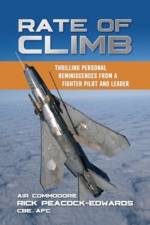
A veteran RAF fighter pilot reflects on his service in the sky during the Cold War, the Gulf War, and more in this exciting memoir.Rick Peacock-Edwards has led different lives at different times, but through it all, he has consistently enjoyed himself. One of three sons of outstanding South African Battle of Britain pilot F/O S R "e;Teddy"e; Peacock-Edwards, Rick has a compassionate regard for a generation of wartime aircrew: "e;As the proud son of one of the "e;Few,"e; their selfless daring has inspired me throughout my life. Importantly, they influenced my decision to become an airman in the Royal Air Force, to become a fighter pilot like my father, and to live life with spirit as they had lived their lives. It is essential that their experiences live on."e; Rate of Climb, his original and entertaining biography, drawing on previously unpublished family and archival material, shows Rick in complete command of his primary subject: flying. A leading ex-RAF fighter pilot to his fingertips, he flew the Lightning, Phantom, Tornado F2/3 and other high-performance aircraft, and served in senior-ranking positions in the UK, Germany and the US. During a varied and distinguished career, he was closely associated with the Eurofighter Typhoon programme and was appointed as the Royal Air Force Inspector of Flight Safety. He ably demonstrated his uncommon skill and determined leadership during the Cold War era, first Gulf War and elsewhere. A past master of The Honourable Company of Air Pilots, he is a Fellow of the Royal Aeronautical Society and the immediate past vice chairman of the Royal Air Force Club in London. He is equally as engaged in his post-RAF career as he was when a serving officer. This is an action-packed account of a foremost flyer's life with endless good stories, and a colourful cast of characters to match. Rick's compelling recollections in Rate of Climb reveal a life of considerable achievement, in a very personal book capturing the ties of airmanship that the author has been privileged to share. A must for all lovers of derring-do in the air.
Until the end of the Cold War in 1990, the RAF had several major bases worldwide - largely in those areas where the service had been based during the inter-war years. In Cold War Boys Overseas contributors recall their time at these foreign destinations. With almost half of RAF personnel serving abroad in the 1960s situated throughout Germany, the book starts its focus there with tales of monitoring the Soviet threat. The stories then advance to the warmer climates of the Near East and Far East where different challenges awaited those serving there. As the period progressed RAF squadrons saw changes to their equipment with Hunters, Javelins and Canberras being replaced by a new generation of combat aircraft such as the Buccaneer, Harrier, Jaguar, Phantom and Vulcan. Innovation of missile defense and the expansion of the role of helicopters were also critical at this time. How this affected the RAF is told by the aircrew and ground crew who served then. The stories that feature in the book reveal just how serving overseas was a different way of life and the chapters illustrate the many facets of the RAF's capabilities across the globe. They also highlight a lifestyle that no longer exists in today's RAF. Buckle up and allow the Cold War Boys to take you on a thrilling adventure across the globe.
Abonner på vårt nyhetsbrev og få rabatter og inspirasjon til din neste leseopplevelse.
Ved å abonnere godtar du vår personvernerklæring.