










Gjør som tusenvis av andre bokelskere
Abonner på vårt nyhetsbrev og få rabatter og inspirasjon til din neste leseopplevelse.
Ved å abonnere godtar du vår personvernerklæring.Du kan når som helst melde deg av våre nyhetsbrev.

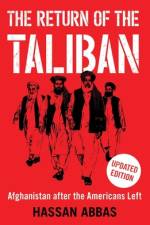
The first account of the new Taliban--showing who they are, what they want, and how they differ from their predecessors A Newsweek Staffers' Favorite Book of 2023 Since the fall of Kabul in 2021, the Taliban have effective control of Afghanistan--a scenario few Western commentators anticipated. But after a twenty-year-long bitter war against the Republic of Afghanistan, reestablishing control is a complex procedure. What is the Taliban's strategy now that they've returned to power? In this groundbreaking new account, Hassan Abbas examines the resurgent Taliban as ruptures between moderates and the hardliners in power continue to widen. The group is now facing debilitating threats--from humanitarian crises to the Islamic State in Khorasan--but also engaging on the world stage, particularly with China and central Asian states. Making considered use of sources and contacts in the region, and offering profiles of major Taliban leaders, Return of the Taliban is the essential account of the movement as it develops and consolidates its grasp on Afghanistan.
Paramjit Kumar, an Indian-born author, philosopher, and economist, possessed the gift of speaking multiple languages and had explored numerous corners of the world. In 1945, during his youth, he established connections with Mahatma Gandhi and engaged in peaceful discussions with leaders of the Muslim League and Lord Wavell in concerted effort to prevent the partition of India.As time went on, Kumar's life mission expanded to encompass the pursuit of global peace and the liberation of Tibet. His endeavours in this direction were blessed by His Holiness the Dalai Lama, who appointed him as his special envoy for the cause of Tibetan freedom. Kumar adeptly cultivated international relationships, fostering a shared resonance of ideas among people from diverse races, cultures, and nationalities across the globe. In addition to his socio-cultural activities aimed at promoting unity and national cohesion within India, he conducted extensive campaigns in the name of the world peace.Among Mr. Kumar's noteworthy prior publications were "Lull before the Red Typhoon," "Scourge From The Sky," and "Lest We Become Slaves," published in 1953. The latter was an exceptional work in which he presciently foresaw Red China's future attack on India. Another notable work was "Roll Call of Death," published in New York. In 1966, while serving as the Secretary General of the Forum for Facts on Tibet and Vietnam, he had the opportunity to inspect the war zone in Vietnam, and his personal experiences there formed the basis for some of the incidents recounted in "Roll Call of Death." Additionally, he published "The People's Guardian," a weekly magazine dedicated to unveiling social injustices and political corruption in India during those years.
World War 2 was more than a conflict of nations and epic battles; it was a turning point that fundamentally altered the course of human interaction. This transformative period in history saw the rapid development of groundbreaking technologies like rocket science and jet engine propulsion, shifting the world from local community-focused lifestyles to a global, technology-driven society. It also marked a pivotal change in societal focus, moving from individual responsibility to a broader emphasis on human rights.World War 2: The War that Changed Humanity delves into this seismic shift against the dramatic backdrop of some of the war's most crucial battles, including Operation Market Garden and Operation Veritable. The book offers an insightful review of these foundational changes, exploring how the war not only reshaped the geopolitical landscape but also redefined humanity's social and technological trajectory.
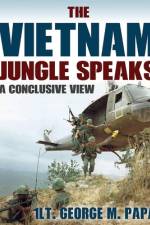
This illustrated book is a true and rare eye-witness account of what front-line combat was really like in the jungle of Vietnam. Some called it search and destroy. In reality, it was more like expose and retaliate. Written by a front- line Infantry Lieutenant who had a duty to keep as many of his men alive as possible. This book shows the 'boots-on-the-ground' perspective of real soldiers. Relive history with the best non-fiction Vietnam War book written this decade!The author, Lieutenant George M. Papa, details the time he spent as the Platoon Leader of 3rd Platoon, Alpha Company, of the 1/46 Battalion, of the 196th Light Infantry Brigade of the Americal Division in the 'free-fire' zone of 'Eye Corps', during the Vietnam War. A 'free fire zone' means that no other non U.S. soldier or civilian is to be in that zone, period, which is away from the populated coast, and if they are, they can be fired on without waiting to be fired on first.Lt. Papa's full 13-month tour fell between the North Vietnamese Army's destruction of his battalion headquarters in May 1969 (battle of Landing Zone Professional) and the NVA overrun of that same relocated HQ in March 1971 (battle of LZ Mary Ann). Both of these defeats are detailed.
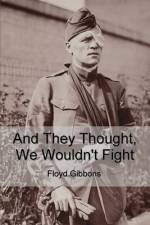
Gibbons' book is based on his WWI dispatches for the Chicago Tribute and provides a first-hand account of the war from an embedded journalist (before that term even existed). We journey with him as his ship across the Atlantic is torpedoed, as he witnesses Pershing's grand arrival in France, as the American troops are trained by the British and French, and as he descends into the hell of the trenches. More than just a narrative of the US entering WWI, this is a book that documents young America's trial-by-fire as they emerge onto the worldwide stage in the 20th century, leaving behind their isolationist, pioneering early years and transforming into the global, industrial military power that is only now beginning to wane as their superpower status erodes roughly 100-years later. ... ( Mike) About the Author: Floyd Phillips Gibbons (July 16, 1887 - September 23, 1939) was the war correspondent for the Chicago Tribune during World War I. One of radio's first news reporters and commentators, he was famous for a fast-talking delivery style. Floyd Gibbons lived a life of danger of which he often wrote and spoke.Gibbons began as a police reporter on the Minneapolis Daily News in 1907, but was fired. He also worked for the Milwaukee Free Press and the Minneapolis Tribune. While working for the Tribune in 1910, he was arrested for cutting a telegraph line in Winter, Wisconsin to prevent other newspapers from reporting a story first. He moved to the Chicago Tribune in 1912. He became well known for covering the Pancho Villa Expedition in 1916. He became a London correspondent for the Chicago Tribune in 1917 and reported on the 1917 torpedoing of the British ship RMS Laconia, on which he was a passenger.The Chicago Tribune appreciated his keen eye for detail, and vivid splashy style. It sent him to England to cover World War I. As a correspondent at the Battle of Belleau Wood, France. Gibbons accompanied the Fifth Marines where his account of the battle that he submitted violated wartime censorship by mentioning that he was serving with the U.S. Marine Corps. Gibbons' colourful prose added to the reputation of the Marines. Gibbons lost an eye after being hit by German gunfire at Château-Thierry in June 1918 while attempting to rescue an American marine. Always afterwards he wore a distinctive white patch on his left eye. He was given France's greatest honor, the Croix de Guerre with palm, for his valor on the field of battle.In 1918-1927 he was the chief of the Chicago Tribune's foreign service, and director of the paper's European office. He gained fame for his coverage of wars and famines in Poland, Russia and Morocco. He was fired in 1926, started to write novels, and became a radio commentator for NBC. He narrated newsreels, for which he received a star on the Hollywood Walk of Fame. He also narrated Vitaphone's "Your True Adventures" series of short films, which began as a radio program in which Gibbons paid twenty-five dollars for the best story submitted by a listener. In 1927 he wrote a biography of the Manfred von Richthofen (the Red Baron) titled The Red Knight of Germany. He also wrote the speculative fiction novel The Red Napoleon in 1929. Gibbons was the narrator for the documentary film With Byrd at the South Pole (1930). In 1929, he had his own half-hour radio program heard Wednesday nights on the NBC Red Network at 10:30. Competition from Paul Whiteman's show on CBS Radio, however, brought Gibbons' show to an end by March 1930.When Gibbons suggested that Frank Buck write about Buck's animal collecting adventures, Buck collaborated with Edward Anthony on Bring 'Em Back Alive which became a bestseller in 1930. (Wikipedia.og)
The Korean War of 1950-1953 was a powder keg that could have easily escalated into World War III. Combatants North Korea and South Korea squared off in a bitter struggle to dominate the peninsula. North Korea received support from China and Soviet Union. South Korea was backed by the United States and United Nations. Fortunately, the war was contained due to keen strategic planning and did not spread into a global conflict. This included the reinforcement of secondary lines of defense through the mobilization of Navy warships and putting real teeth into NATO. Unfortunately, the legacy of the Korean War continues to burden our world, even to this day. At the outbreak of the War, a plethora of inactive military reserves were called to duty, disrupting personal lives and professional obligations. This is the story of one such man's experience aboard a USS Navy Destroyer Escort initially assigned to patrol the eastern seaboard and protect American interests from Norfolk, Virginia to Guantanamo Bay, Cuba. Ultimately the ship is dispatched to the North Sea to protect NATO interests against potential Soviet aggression. The story is filled with good humor and true personal anecdotes of Navy adventures on the high seas while underscoring the real risks to life and limb inherent in manning a Navy ship in times of conflict. Also brought to light are the sacrifices made by the families of those who serve. It is truly a captivating collection of Navy tales with surprising twists and turns.
In the annals of human history, few events have left as indelible a mark as World War II. From the shattered ruins of cities to the vast expanses of battlefields, the echoes of that conflict reverberate through time, reminding us of the triumphs and tragedies, the heroism and horror, that defined a generation. World War II was more than just a military conflict; it was a cataclysmic event that reshaped the world in profound and enduring ways. It brought about the collapse of empires, the rise of new powers, and the dawn of the nuclear age. It left scars on the landscape and on the human psyche that would take generations to heal. In the pages that follow, we will journey through the tumultuous years of World War II, from the seeds of discord that led to its outbreak to the climactic battles that decided its outcome. We will bear witness to the struggles and sacrifices of millions of people from all walks of life, whose lives were forever altered by the crucible of war. But this is more than just a recounting of battles and campaigns; it is a reflection on the legacy of conflict and the enduring lessons that can be gleaned from the crucible of war. It is a reminder of the importance of remembrance and the imperative to learn from the mistakes of the past. As we embark on this journey through history, may we honor the memory of those who fought and died in World War II and strive to build a world where such conflicts are consigned to the past. May we never forget the lessons of the past, lest we be condemned to repeat them. In the echoes of conflict, let us find the wisdom to forge a future of peace and prosperity for generations to come.
WW2 Vehicles Through the Lens is a new series of photographic albums presenting military and civilian vehicles used by the military during World War Two. Each book will have six-eight parts, each dealing with a different subject featuring mostly previously unpublished photographs.
In the postwar years, Dutch survivors Eddy de Wind, Louis Micheels, and Elie A. Cohen, who went on to become practicing psychoanalysts, penned accounts of their survival of the Nazi camps. Their sober assessments contrast sharply with those by Bruno Bettelheim and Viktor Frankl, which emphasized decisiveness, 'positive thinking', and resistance, missing the fact that many Holocaust victims with those characteristics or other qualities did not survive. De Wind's, Micheels' and Cohen's accounts are more sober, (self-)critical, and shaped by analytical practice. By analyzing them anew and comparing them with accounts by female doctors who survived Block 10 in Auschwitz, this book argues that their theories of survival accord with contemporary sensibilities in psychoanalysis and Holocaust historiography. Psychoanalytic concepts have changed over time in response to greater understanding of the Holocaust and recent Holocaust historiography makes us more receptive to insights that were unfashionable in the first postwar decades.
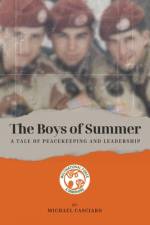
"...I remember their faces. I remember their pride in their unit, "STRIKE AND KILL," but above all I remember their happiness at the thought of going home to family, friends, loved ones, fiancés, and most of all, America. America for everything she stands for, America, the reason they all wore that uniform and the reason they served so far away from home. America must know, America must appreciate, America must miss their most valued treasure, their American soldiers. They ARE a part of something bigger, they always will be. Please let us all remember them together, these young American heroes, from every corner of our nation, who were willing to risk everything for our future. They are forever young; they will always be in the summer of their lives; they are the Boys of Summer."The author, Michael Casciaro served in the 3-60th Infantry battalion as a rifle platoon leader in 1985 when his unit replaced the 3-502nd in the Sinai Peninsula to assume duties in the Multi-National Force and Observers (MFO) peacekeeping mission between Egypt and Israel. This is his story of the events leading up to and the aftermath of the Arrow Air Flight 1985 crash in Gander, Newfoundland that killed 248 members of the battalion he replaced. It also chronicles the life of an Infantry Second Lieutenant fresh out of the Infantry Officer's Basic Course (IOBC) and U.S. Army Ranger School after reporting to his first unit. There he endured rigorous training to prepare him to lead his soldiers in combat and perform duties of an officer in the MFO under one of the Army's most inspirational leaders in the 1980s. Leading men under those conditions was tough, not politically correct, and focused on one thing...ensuring your soldiers survived combat.
The controversial classic of German military theoryIn 1891 Count Alfred von Schlieffen (1833-1913) was thrust into the position of Chief of Germany's Great General Staff. He was given an impossible task: figure out how to win a war on two fronts in which Germany would be outnumbered and outgunned. Long after his retirement in 1905, his efforts would define the German strategy used at the onset of the First World War and bear his name: The Schlieffen Plan.But Schlieffen's problem remained: how does an army win against a numerically superior foe? After his retirement, he thought he might have found the answer - Cannae, the 216 BCE battle in which Hannibal won an improbable victory against the Romans. The result was Schlieffen's Cannae studies, in which he looks at the Battle of Cannae, and then explores how efforts at creating a new "Cannae" fared across modern history, from the wars of Frederick the Great to Napoleon to the German Wars of Unification and the defeat of France in the Franco-Prussian War.This new edition is presented with over a hundred restored maps reproduced in colour and integrated into the text, and a new foreword by independent military historian Robert B. Marks taking a fresh look at Schlieffen and Cannae's place in military history.
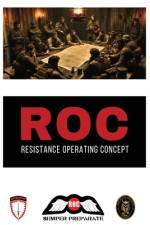
The primary focus of the Resistance Operating Concept (ROC) is developing a nationally authorized, organized resistance capability prior to an invasion and full or partial occupation resulting in a loss of territory and sovereignty. Resistance, as a form of warfare, can be conceived as part of a layered, in-depth national defense. Toward this end, the ROC first seeks to delineate the concept of national resilience in a pre-crisis environment. Second, the ROC seeks to develop resistance requirements, and support planning and operations in the event that an adversary compromises or violates the sovereignty and independence of an allied or partner nation. The ROC attempts to demonstrate both the significance of national resilience and the criticality of maintaining legitimacy during the conduct of resistance operations during the struggle to restore and resume national sovereignty. This publication will serve as a cornerstone of knowledge for strategists, policymakers, researchers, academics, and practitioners involved in furthering resistance capabilities.
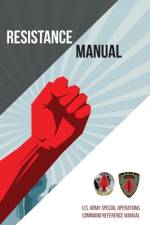
This manual is for the US Army Special Operations Forces (ARSOF) soldier. Whether attending his/her first course at the John F. Kennedy Special Warfare Center and School (SWCS) or already deployed, the ARSOF soldier must be a student-practitioner of his/her craft: providing support to or countering a resistance movement.Although intended as a ready reference for SF personnel advising guerrillas and resistance groups in enemy-held territory, the Resistance Manual has much to teach civilian guerrilla leaders. This rare, full-colour edition is packed with historical case studies and provides a deep enough exploration of the topic of Resistance to allow personnel to get started. With the winds of war beginning to blow across Europe, the Middle East and the Asia-Pacific, now is the time to purchase and read this book.Originally published by the ARIS Project in 2019, decent print copies have been unavailable since the USASOC stocks ran out, so the book is no longer available to ARSOF personnel "through channels". This makes this new full-color edition presented by the Conflict Research Group the prime source for this invaluable handbook.
Various authors have noted that violence is often a double-edged sword within combat settings, particularly those involving a resistance movement fighting an asymmetric conflict against the security forces of a stronger incumbent government, with both sides vying for the sympathies of a local population. Atkinson and Kress noted that "on the one hand violence is needed to fight the other side and perhaps deter individuals in the population from supporting the other side, but on the other hand it can turn the population against the source of that violence."
The modern use of the word resistance was first based on the domestic insurgent movements of Europe against Axis occupying powers in World War Two, especially the French Resistance. The conception of resistance as a domestic effort against an encroaching foreign force had a lasting impact on definitions of the term throughout the US military as communist regimes were understood as politically executed occupations.In the original 1963 publication of the seminal Undergrounds in Insurgent, Revolutionary, and Resistance Warfare (also republished in its entirety by Conflict Research Group in 2024), the Special Operations Research Office (SORO) cited a 1949 text, defining resistance as distinct from revolutions and insurgencies: "operations directed against an enemy, behind his lines, by discontented elements among the enemy or enemy occupied population." This conception of resistance as inherently insurgent in nature remains influential. The 2012 Guide to the Analysis of Insurgency (also republished by Conflict Research Group in 2024) defines resistance as a type of insurgency (distinct from revolutionary, separatist, and other variants) that "seek[s] to compel an occupying power to withdraw from a given territory." The definitions rely on describing resistance as corollary of interstate war and as a product resulting from armed violence.Alternatively, there has also been a broadening strain of thought on the nature of resistance in two regards: first, that resistance does not need to be against a foreign occupier, and second, that it does not need to be carried out through the predominant use of violent tactics. Resistance is a science and The Science of Resistance demystifies that science.
The poignant images in this book reveal the anguish, terror, bewilderment, and happiness of children born into a war that affected their everyday lives. Those who greeted me on jungle trails were happy, frightened, and wary. Barefooted, often balancing a little brother or sister on their hip holding out a hand for anything that we might give them. The ones standing apart, fearful, harboring memories of horrific things endured or witnessed. At the time I knew little of their life realities. It was to come fitfully with time, as they confronted me in the hamlets and villages with disease, illness, and injury.
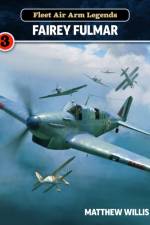
Reliable and rugged with enough firepower to get the job done, Fairey's Fulmar fighter and reconnaissance aircraft was an essential weapon in the Fleet Air Arm's arsenal during the Second World War.The long-range Merlin-powered type carrier-borne type entered service in May 1940 and was well liked by pilots - its broad-track undercarriage offered good handling on deck, its fuel tanks were capacious and its armament of eight Browning machine guns was effective. Most Fleet Air Arm aces scored at least some of their victories while flying a Fulmar and there were at least two Fulmar aces.Fulmars served with distinction during the pursuit of the Bismarck, the North Africa campaign and over Malta before finally meeting their match in the Far East against the Mitsubishi A6M Zero. Even then, with its fighter role inherited by Seafires and Marlets, the Fulmar continued to serve as a trainer and reconnaissance type.Today there is only one known surviving example of this remarkable aircraft - N1854, housed at the Fleet Air Arm Museum in Yeovilton.In this fully illustrated third volume of the Fleet Air Arm Legends series, naval aviation specialist Matthew Willis details the Fulmar's development, its entry into service and its operational history from start to finish.
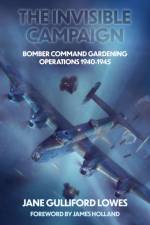
Aerial mining by RAF Bomber Command was a vital part of the Allied war effort - claiming far more tonnage of Axis shipping destroyed than direct attack by either Coastal or Bomber Command itself. Minelaying operations commenced in April 1940 and expanded dramatically as the war progressed, yet today this vital campaign and its wide-ranging achievements against Axis merchant vessels, Kriegsmarine ships and U-boats are virtually unknown.Invisible Campaigns, based on Air Ministry and Admiralty archival material, together with squadron records, veteran accounts and logbooks as well as contemporary publications and press releases, provides the most detailed account of Bomber Command's minelaying operations and their effects ever written.Historian Jane Gulliford Lowes looks at the aims of the campaign and how it was implemented, together with the measure of its success and how it compared against the mining operations implemented by the Luftwaffe and Kriegsmarine. The role of Arthur 'Bomber' Harris in overseeing minelaying operations is assessed and the experiences of the men who delivered the campaign, particularly the hazards they faced, are explored.Invisible Campaigns sheds new light on a little-discussed but important and ultimately highly successful aspect of Bomber Command and is a must-read for anyone interested the RAF's in wartime bombing operations.
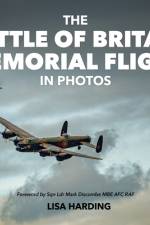
This collection of more than 150 high-quality images offers a unique perspective on the historic aircraft and hard-working personnel of the unique Battle of Britain Memorial Flight based at RAF Coningsby in Lincolnshire.Photographer Lisa Harding has spent many years photographing the flight and now presents some of her finest work - chronicling winter maintenance, when the aircraft undergo extensive checks and repairs if required; out-of-season practice displays and some spectacular 'hot starts'. Ground crew can be seen performing their duties both indoors and out while pilot training provides views rarely seen by the public.A collection of notable displays showcases memorable moments from the past decade, including the gathering of three Lancaster bombers at East Kirkby, the last two airworthy Lancasters flying together down the Derwent Valley, the RAF100 Buckingham Palace flypast and the Dambusters 80th anniversary.The images are presented with commentary from the author, providing both background and technical details on how the shots were taken.The Battle of Britain Memorial Flight in Photos offers a wealth of previously unseen views of the flight in incredible color, detail and clarity - a must for any warbird enthusiast.
Hot on the heels of Half Century, Baby! Fifty Years of the Grumman F-14 Tomcat, authors David Parsons and Mads Bangsø present a second collection of stunning photographs, beautiful profiles, evocative artworks and recollections from a host of Tomcat pilots and RIOs.The spectacular variable-geometry F-14 enjoyed the longest operational career of any US Navy fighter to date and notoriously still serves with the Islamic Republic of Iran Air Force. Navy Tomcats saw action over the Gulf of Sidra, over Lebanon, during Desert Storm, in Bosnia and later in Afghanistan and during Operation Iraqi Freedom.The last American F-14 combat mission took place on February 8, 2006, when two Tomcats dropped bombs over Iraq before landing on the USS Theodore Roosevelt and since then many have been scrapped - though a number survive today as museum and display pieces.As with volume 1, this new book presents unparalleled insights on one of the world's most famous, successful and beloved combat aircraft. Don't miss out on this second treasure trove of F-14 goodness!
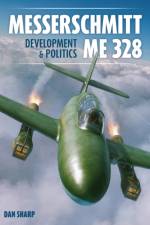
Conceived as a multirole combat aircraft based on promising early data from pulsejet tests, the Me 328 was arguably Messerschmitt's most controversial wartime project. Early projects imagined the compact machine as a fighter, a bomber, a reconnaissance platform or even a parasite aircraft - detaching from large bombers in mid-air to conduct operations before returning to the mothership. Enthusiasm was high, prototypes were built and extensively flight tested, with and without pulsejets, but it soon became clear that the airframe, the pulsejets and even the operational procedures mapped out for the Me 328 were proving far more troublesome than anticipated.The type was canceled - but then revived with a darker purpose: as a suicide bomber. Famous test pilot Hanna Reitsch and her cadre of fanatics chose the Me 328 as their vehicle for 'self-sacrifice' missions, where idealistic young pilots, plied with drugs to remove their inhibitions, would fly the aircraft, laden with bombs, directly into high-value Allied targets such as warships, bridges or command posts.In Secret Projects of the Luftwaffe: Messerschmitt Me 328, German WW2 aircraft development specialist Dan Sharp presents the first ever book dedicated to the type and explores its history and purpose as far as surviving documentation allows.
With a top speed approaching Mach 3 and equipped with both powerful sensors and air-to-air weaponry, the two-seater MiG-31 interceptor has proven to be one of the Cold War's most formidable survivors - finally coming into its own during the Ukraine War. Development began in 1975 with a design based on that of the MiG-25 Foxbat and progressed to the point where, although it bore a superficial similarly to its forebear, it was largely a new aircraft. The MiG-31, NATO reporting name Foxhound, entered service in 1981 and more than 500 were built.Several dozen examples remain in service today with both the Russian and Kazakh air forces - and throughout 2022 and 2023 Foxhounds using R-37M long-range AAMs operated virtually unopposed against Ukrainian fighters, which lacked the speed, range, altitude and firepower to engage them. MiG-31s have also provided a valuable platform from which to launch Kh-47M2 Kinzhal hypersonic missiles against Ukraine while remaining within Russian airspace.Author Sergio Santana details the aircraft's early development, its long operational history and its most recent operations in this all-new look at one of the world's deadliest combat aircraft.
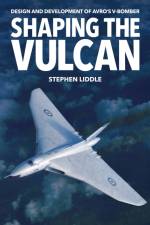
The Avro Vulcan is one of the most striking aircraft ever made - its enormous wing stretching back from an improbably thick leading edge marked by cavernous wing root engine intakes. Perhaps even more incredible, its first flight was made just over ten years after the introduction of the piston-engined Lancaster during the Second World War. Within a decade, technology had taken a giant leap from straight-winged slow-moving conventional bombers to this vast delta designed to carry a nuclear payload.But what led to such a radical configuration and what was the technology that enabled such an ambitious design? What possessed Avro to offer the Air Ministry such a futuristic aircraft and what prompted the Ministry to approve its development and entry into service?Formula 1 racing team aerodynamicist and Vulcan to the Sky trustee Stephen Liddle presents a full history of the Vulcan's development and assesses the technological and engineering breakthroughs which underpinned the construction of this unparalleled aircraft.
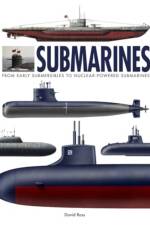
From early submersibles to nuclear-powered subs, Submarines is an accessible guide for those interested in naval history. Submarines features the most significant submarines built, from the German U-9 - which sank three British cruisers on September 22, 1914 - to the huge Japanese I-400 class and the great nuclear-powered submarines of the Cold War, such as USS Los Angeles and the Soviet Oscar class. Also included are the 'undersea cruiser' Surcouf; the highly successful Type VII U-boats of World War II; and the latest attack and ballistic missile submarines, such as HMS Astute, USS Virginia, the Chinese Type 094, and the Russian Yasen class. Each entry includes a brief description of the submarine's development and history, a color profile or cutaway, key features, and specifications.
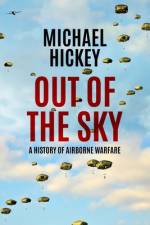
A comprehensive survey of the history of airborne warfare from its modest beginnings in 1794 with the use of a tethered balloon, showing how each significant technical development substantially altered the ways in which wars were fought. Perfect for fans of Will Iredale, Patrick Bishop and Mark Urban. During the Second World War some of the most daring airborne operations were conducted in Crete, Sicily, Normandy, the Philippines and across the Rhine. Yet where did the idea of airborne mobility arise from and how did such strategies develop in the years after the defeat of Nazi Germany and Imperial Japan? Michael Hickey's book utilises thorough research, including interviews with many veterans of the campaigns described, to provide a history of airborne warfare in its widest sense: parachute, glider, helicopter and reconnaissance. Covering from its infancy through to the years after the Vietnam War, Hickey provides insight into one of modern warfare's most powerful asset: air-mobility. 'This is an excellent book ... about total battlefield air-mobility - encompassing both the parachute and the helicopter. As such, it fills the void left in many military histories' Military Review 'The book is especially useful in discussing the development of paradrop operations and takes the story beyond World War II to include Korea, Suez, Israel and Vietnam.' Air University Review Out of the Sky should be essential reading for all interested in the development of air assault tactics.
In the Third Reich, the SS ran the Gestapo, the police and the concentration camps where millions of people were killed. However Nazi Germany still had laws and a legal system which outlawed murder and other criminal acts and SS Investigating Judge and Police Official SS, Major Konrad Morgen, used these laws to investigate and bring individual members of the SS to justice for their crimes against innocent victims. He was a fearless judge and investigator, and when he crossed swords with more powerful forces inside the SS he was demoted and sent by the Reichsführer Heinrich Himmler himself to the Eastern Front as an ordinary soldier in the Waffen SS. But his investigative skills were still needed and he returned to launch a series of criminal investigations in concentration camps. As a direct result of his investigations two concentration camp commandants were shot before the end of the War and he arrested three others. This book describes the cases he investigated and how he was able to pursue some of Nazi Germany's worst murderers from inside the SS.
Asmal, Kader. Shoot to Kill? International Lawyers' Inquiry into the Lethal Use of Firearms by the Security Forces in Northern Ireland. Chairman, Kader Asmal. Cork, Mercier, 1985. 21 cm. 173 pages. Includes: The History of the use of Firearms by the Security Forces in Northern Ireland / Evidence / Plastic Bullets / Analysis of Evidence in the Light of International and Domestic Law / Civilians shot dead in disputed circumstances by members of the security forces in Northern Ireland / Individuals and Organisations who provided written testimony to the inquiry.
本书是文化老兵廖兆暄的采访史实,分为上下二部,对二次世界大战中国战场有详细深刻的纪录。美国飞虎队是一支英勇顽强,机智善战的空中奇兵,以大无畏的精神, 与中国人民并肩作战,共同抗击日本发动的对华侵略战争;此等中美共同合作的历史光辉,作为一座永不褪色的丰碑,长存于中美两国人民以及全球热爱和平的老百姓心中。●推荐序:青山埋忠骨 驼峰载真情/邓明佳青山处处埋忠骨,何须马革裹尸还。落红不是无情物,化作春泥更护花。如果没有深度阅读这篇纪实体文学,有多少中国人了解这段催人泪下的历史,了解美国的热血青年也曾为了中国人民的抗日事业前仆后继、抛尸疆场,甚至有很多人连"马革裹尸"魂归故里的愿望都无法实现。一串串冰冷的数字、一个个悲恸的故事,动天地,泣鬼神。毫无疑问,当年的驼峰航线正是世界战争空运史上持续时间最长、条件最艰苦、付出代价最大的空运航线,其途径高山雪峰、峡谷冰川和热带丛林、寒带原始森林、以及日军占领区;加之这一地区强气流、低气压和冰雹、霜冻,使飞机在飞行中随时面临坠毁和撞山的危险。在长达 3 年的艰苦飞行中,中美飞机共飞行了 8 万架次,美军先后投入飞机 2100 架,共运送了战略物资 85万吨、战斗人员 33477 人。单是美军一个拥有 629 架运输机的第 10 航空联队,就损失了 563 架飞机。而美国军方损失的飞机总数竟然高达 1500 架以上,牺牲优秀军人近3000 人,仅1943年 6月到12月的半年中,就发生 155 起飞行事故,168 名机组人员遇难。而我国仅拥有 100 架运输机的中国航空公司,先后也损失飞机 48 架,牺牲飞行员 168 人,损失率接近 50%!触目惊心哪!足见这条航线的艰难凶险,飞行人员不仅要面对三股湍流交汇形成的恶劣天气,还要随时面对凶恶的日本鬼子阻击杀戮。那么高的事故率还要让他们面对跳伞逃生后原始森林里的毒蛇猛兽、蚊虫水蛭、饥饿伤病。所以我们才会读到很多飞行人员落到敌占区逃生救助的感人故事。相比之下,那些被救出来的人不管经历了多少磨难还都算是幸运的,而数以千计的优秀战士则陨落在了驼峰的荒山野岭中,永远将青春定格在了莽莽雪山、云霭巉岩之间..."暗淡了刀光剑影,远去了鼓角铮鸣..."一个个鲜活的面容,历历在目,永被铭记......记得有一次作者廖兆暄老先生回国,在他苏州的家里我和他聊到了这样的一个话题,我说在当下中美关系吃紧,大国博弈加剧,美国全面围堵中国的大背景下,您却从《情洒太平洋》开始连出三部传播中美友谊的纪实文学,是不是有点不合时宜呢?老人家却义正词严地说,地缘政治也好,大国博弈也罢,那都是特定历史阶段国与国之间的游戏而已,而我们能做的就是书写历史,张扬人性的光辉。政治是用来被当权者操弄的、把玩的,历史是用来被后人借鉴的、传承的,两者性质南辕北辙,给人类留下的遗产也是天壤之别。我信了。2024.2.1 于遵义
With the recent resurgence of interest in declassifying information about what we now call Unidentified Anomalous Phenomena (UAP) it is time to take a fresh look at this 1969 disclosure of bibliographic research on UFOs.This document describes itself as an annotated bibliography on the subject of unidentified flying objects (UFOs) and related topics. Compiled by the Library of Congress for the Air Force Office of Scientific Research, it contains over 1,600 entries including books, journal articles, pamphlets, conference proceedings, tapes, original manuscripts, photographs, cartoons, and films.The bibliography is organized into major categories such as: - UFOs: General references, specific aspects like abductions, Air Force involvement, historical records, and sightings by decade.- Origin of Life: Theories and speculations about the origin of life on Earth and elsewhere.- Mankind: Evolution and origin of humans, including the possibility of extraterrestrial influence.- Solar System: General references and specific information about Mars, Moon, and Venus as potential habitats for life.- Extraterrestrial Life: General references, communication possibilities, implications of contact, and the potential for intelligent life existing elsewhere.- Extraterrestrial Visitors: Accounts of alleged contact with beings from other planets.- Related Subjects: Ball lightning, disc-like aircraft, unidentified submarine objects, Fortean phenomena, UFOs and religion, UFOs and time, gravity and anti-gravity, hollow earth theory, disappearances, and selected fiction.This comprehensive collection serves as a valuable resource for researchers and general readers interested in the UFO phenomenon and its various implications.This annotated edition illustrates the capabilities of the AI Lab for Book-Lovers to add context and ease-of-use to manuscripts. It includes several types of abstracts, building from simplest to more complex: TLDR (one word), ELI5, TLDR (vanilla), Scientific Style, Action Items, and Mnemonics; essays to increase viewpoint diversity, such as Grounds for Dissent, Red Team Critique, and MAGA Perspective; selected Notable Passages; Nutshell Summaries for each page; and a special AI-written essay assessing the delta in UAP disclosures between this 1969 release and its late-2023 training data cutoff.
Abonner på vårt nyhetsbrev og få rabatter og inspirasjon til din neste leseopplevelse.
Ved å abonnere godtar du vår personvernerklæring.