











Gjør som tusenvis av andre bokelskere
Abonner på vårt nyhetsbrev og få rabatter og inspirasjon til din neste leseopplevelse.
Ved å abonnere godtar du vår personvernerklæring.Du kan når som helst melde deg av våre nyhetsbrev.

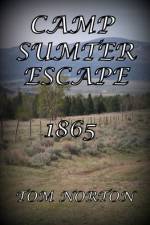
Camp Sumter at Stevensville, Georgia in 1865 was the site of the most hideous occurrence during the Civil War. 30,000 Union prisoners on seventeen acres of hell on Earth. The atrocious conditions the prisoners experienced was the beginning of this fiction story based on actual conditions there and in America. Two emaciated Union captains escaped the camp and were compelled to kill two fellow Union prisoners in order to do so. Upon escaping, they were wanted by the Confederates during the war and then the Union Army after the war. A complicated scenario unfolded whereby the captains became involved with bankers and the captain's fathers when $50,000 dollars was entrusted to them and it was stolen. The thief went west with the money and the captains pursued the thief and the money on horseback all of the way to a gold mine in the Colorado Territory.
Most everyone experiences life-changing events - large or small - that forever shape their view of the world. For me, it was the discovery of my biological parents several years ago and all the blessings that have flowed from that discovery. Social media is rightfully criticized for its negative effects on society, but I credit social media for the rude awakening I received in 2023 when I happened across a social media group dedicated to "Okinawa and Agent Orange". Since I was stationed in Okinawa the group's title caught my eye. Thus began a long journey down a rabbit hole that shattered my conception of military service and exposure to deadly poisons. It was quite a sobering revelation. What I have learned should shock the conscience of every American. I am justifiably proud of my service in the USAF and wouldn't trade my time Okinawa for all the sake in... Okinawa. That said, there are inconsistencies in the documents included here that I found disturbing. Over the years I have developed a keen sense for what we Texans jokingly refer to as "pasture pudding", and I have opined on some of these assertions. In the end, it is my hope that the DoD, the Veterans Administration, the Pentagon, and the citizens of Okinawa will find the information useful.
History Encounters unearths the greatest stories with the major events from The Berlin Wall to expand reader horizons for readers to be best informed. The Berlin Wall was the concrete manifestation of the Iron Curtain, which signified the profound ideological difference between the capitalist, democratic Western powers and the socialist, communist Soviet Union. After WWII ended, the Allied Powers carved up defeated Germany into four blocks. They did the same to Berlin. While Russia had been part of the Allies in the war, tensions soon arose between these old allies, and the Berlin Wall was established to keep the East Berliners from seeking a brighter life in the West. The USSR claimed it was for the moral protection of its East Berlin citizens, but, in reality, it was just to stop East Berlin from hemorrhaging skilled workers to the West. Learning about history will keep you perceptive and make sure to not repeat mistakes that others made in the past. The different stories in this series will show the readers that history should not just be seen from one perspective, but from the different eyes of the groups of people involved. You never know, you might finally understand their choices, their actions and their reactions. In this historical series, you will discover: The history of different countries and culturesThe inner workings of major historical turning points in different countries.Different perspectives of major events in historyThe reasons behind different wars or battles throughout history These historical series are for anyone who wants to learn fun, exciting and influential facts of what happened years before their time. Do you want to learn history through a multitude of different eyes?
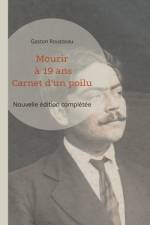
Gaston Rousseau, jeune aspirant de 19 ans tué le 12 juin 1916 à Verdun lors de l'épisode de la "tranchée des baïonnettes", a laissé ce carnet contenant des poèmes, ses états d'âme, et des notes militaires, le tout illustré de ses dessins en couleurs. Y ont été ajoutées les lettres écrites à ses parents sur le front, au cours des derniers jours précédant sa mort.
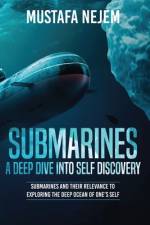
Embark on a journey of personal growth as this book explores resilience and adaptability, drawing parallels to a submarine's design. It emphasizes the importance of cultivating mental strength, rebounding from setbacks, and thriving amid change. Real-world scenarios illustrate the significance of these qualities, making it a guide for navigating life's complexities with resilience in losses and adaptability in change.
Im Westen nichts Neues erschien als Vorabdruck ab dem 10. November 1928 in der Vossischen Zeitung, in Buchform beim Propyläen Verlag am 29. Januar 1929. Innerhalb von elf Wochen erreichte es nach Verlagsangaben eine Auflage von 450.000 Exemplaren. Es wurde noch im selben Jahr in 26 Sprachen übersetzt. Bis heute gibt es Ausgaben in über 50 Sprachen, die geschätzten Verkaufszahlen weltweit liegen bei über 20 Millionen.Bei den Nationalsozialisten hatte sich Remarque mit seinem Roman Feinde gemacht. Als Teil ihrer Rufmordkampagne gegen den missliebigen Autor bezweifelten sie dessen Authentizität und verbreiteten das Gerücht, er habe überhaupt nicht am Ersten Weltkrieg teilgenommen. Während der nationalsozialistischen Bücherverbrennungen 1933 wurden zahlreiche Exemplare von Im Westen nichts Neues vernichtet.Weitere Bekanntheit erreichte das Werk durch die US-amerikanische Verfilmung aus dem Jahre 1930 von Lewis Milestone, die mit zwei Oscars ausgezeichnet wurde. Der Roman wurde 1979 unter gleichem Titel von Delbert Mann als Fernsehfilm inszeniert. Im Jahr 2022 schuf Regisseur Edward Berger die erste deutsche Verfilmung des Buches. Bei der Oscarverleihung 2023 wurde der Film mit vier Oscars ausgezeichnet.
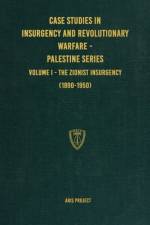
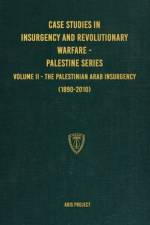
Although most often thought of as a movement, this study will examine Zionism as an insurgency-a form of irregular, revolutionary warfare.This case study presents a detailed account of revolutionary and insurgent activities in Palestine from 1890 through 2010. This first volume examines the conflict with a focus on the Zionist movement and insurgency through the establishment of the State of Israel in 1948 and the Zionists' transition to governance through 1950. Our intent is to provide a foundation for special operations personnel to understand the circumstances, environment, and catalysts for revolution; the organization of resistance or insurgent organizations and their development, modes of operation, external support, and successes and failures; the counterinsurgents' organization, modes of operation, and external support, as well as their effects on the resistance; and the outcomes and long-term ramifications of the revolutionary/insurgent activities. This foundation will allow readers to distill vast amounts of material from a wide array of campaigns and extract relevant lessons, thereby enabling the development of future doctrine, professional education, and training.
Palestine is an area, a country, with a recorded history that stretches back millennia. Many nations of people have lived, farmed, built, warred, and died in the area the world has known as Palestine. Seen as a Holy Land by the Jewish, Islamic and Christian Faiths, the borders of this territory have also shifted over history both ancient and more recent, sometimes stretching north into modern day Lebanon, south into the Sinai Peninsula, and east across the Jordan River deep into the contemporary Hashemite Kingdom of Jordan. Today, Palestine refers to a group of people, a nation, that has long resisted first the formation and later the continued existence of Israel, with undergrounds, guerrillas, terrorists, and governing bodies that have waged a generations-long military and political insurgency against the modern Jewish state which they see as a force militarily occupying Palestinian land.Yet this insurgency, one of the most intractable and notable of both the twentieth and twenty-first centuries, continues to fail to reach either its military or political goals. Why is that? Is it a lack of sufficient external support? Or extremely effective counterinsurgency practices on the part of Israel? Or is it the absence of a strong common identity and narrative for the nascent nation of Palestine?This second volume of the ARIS Project's Case Studies in Insurgency and Revolutionary Warfare - Palestine Series seeks to answer these questions through a deep exploration of the Palestinian insurgencies which have operated in the area over many generations, fighting not only the modern state of Israel, but the Ottoman Empire, the British Empire and mass Jewish migration to Palestine before and immediately following the Second World War.
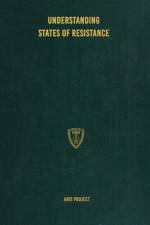
Understanding States of Resistance explores the dynamics of resistance movements and their progression through various stages. It delves into the historical, legal, economic, political science, and social movement theory literature to synthesize a comprehensive framework for analyzing resistance movements.The study draws from early works like Lyford P. Edwards' The Natural History of Revolution and Crane Brinton's The Anatomy of Revolution, which outline stages of revolution from preliminary symptoms to recovery. These works provide a foundational understanding of how resistance movements develop and evolve over time.The study also discusses the legal continuum of resistance, from legal protests to belligerency, as defined by international law. It highlights the importance of intensity, duration, and organization in determining the legal status of a resistance movement and the applicable legal protections.The study examines the economic aspects of resistance movements, particularly focusing on how they finance their activities. It references the various stages of financing, which include predatory, parasitic, and symbiotic fund-raising, reflecting the evolution of a movement's economic strategies.The study delves into the contributions of political science and social movement theory to understanding resistance movements. It discusses the work of scholars like Paul Meadows, Rex D. Hopper, Frederick D. Miller, Sidney G. Tarrow, and the CIA's Guide to the Analysis of Insurgency (also published by Conflict Research Group). These provide insights into the mechanisms, processes, and stages of resistance movements, from preinsurgency to resolution.The study highlights various mechanisms and processes that drive the evolution of resistance movements, such as interpretation, mobilization, diffusion, and demobilization. It also discusses the factors that contribute to the decline of movements, including repression, co-optation, success, and failure.The document proposes a synthesized framework for analyzing resistance movements, incorporating elements from the reviewed literature. This framework aims to provide a comprehensive tool for studying the development and dynamics of resistance movements across different contexts.Understanding States of Resistance offers a multidisciplinary approach to understanding the complex nature of resistance movements, providing a key resource for scholars, policymakers, and practitioners interested in the study of insurgency and revolution.
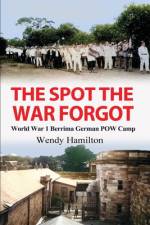
Wolfgang Schmitt and his friend Billy Köster from the freighter the Pfalz, are captured in Melbourne three hours after Britain declares war on Germany, and find themselves packed off to a derelict gaol in the rundown village of Berrima. The gaol, notorious for its sadistic history and ghosts, quickly earns the name Castle Foreboding when eighty-nine mariners have to sleep in cells on the stone floor. But it takes more than a miserable start to daunt these storm weathered sailors. This remarkable story is based on a series of real events that took place during World War One. While the sword devoured Europe, the internees built huts along the river, made boats, had a theatre and orchestra, and turned the surrounding countryside into a Garden of Eden. When six of the wives and their children take up residence in the village, the sailors make toys for Christmas, paint Easter eggs, and decorate the courthouse for the Machotka baby's christening. It is not all fun and games, however, spirits lag as the war drags on and loved ones die. There is a fight, a couple of escapes, and the Battle of Pooh. Through the ups and downs, the moonshiners keep turning their jam rations into booze while others smuggle whisky over the prison wall at night. As the war progresses hatred rises, but in a two-mile spot radiating from the gaol, Australians, Germans, and guards, forget they are enemies. Together they rescue a horse from a cistern, save the village from bush fires, and grow giant tomatoes. One of the few positive stories of the first world war. The Berrima POW Camp gives new meaning to the term the Great War and is a badge of honour on Australia's sleeve.
408 (Goose) Squadron was the second Canadian bomber unit to form in RAF Bomber Command and began its illustrious career in 5 Group in June 1941 operating the twin-engine Handley Page Hampden medium bomber. The squadron remained on the front line, flirting very briefly with the ill-fated Avro Manchester, before concluding its time with 5 Group in September 1942 as the last unit to operate the Hampden. A transfer to 4 Group required conversion to the unpopular Halifax, and this process saw the squadron remain non-operational until the end of the year. The unit became a founder member of the Canadian 6 Group in January 1943, and began Halifax operations shortly afterwards until converting to the Hercules-powered Mk II Lancaster in August. In July 1944 a further conversion returned the squadron to the much-improved Halifax Mk VII variant, and it was this type that took the unit through to the end of hostilities. Chris Ward's revised and expanded series of Bomber Command Squadron Profiles rightly covers the contribution of the many nations supporting Britain in the fight against tyranny. It is fitting that the first in the series to focus on an RCAF unit is the profile of 408 (Goose) Squadron, RCAF.
The first encounter between British armor and the Red Army was not on friendly terms - with the British sending surplus tanks to reinforce the pro-monarchy White Army in the Russian Civil War. When the Reds won, war trophy Mark V heavy tanks as well as medium Mk.A Whippets and Mk.B Hornets entered service with the RKKA. As the political landscape changed during the 1920s, the Red Army assessed British designs available for export and a licensed copy of the Vickers Mk.E entered production in 1931 as the T-26.During the early days of the German invasion of the Soviet Union, armor losses were huge and the Red Army once again looked abroad to acquire new fighting vehicles. A large-scale program of military aid to the USSR began in August 1941, with the US and Britain offering help under separate terms - though not for free. A deal was struck and Convoy PQ-1 with the first 20 British tanks for the Red Army left for Arkhangelsk on September 29, 1941. These tanks arrived in time to take place in the Battle of Moscow and as shipments continued, British armored vehicles would remain in service with the Red Army until the conclusion of the Second World War nearly four years later.A wide range of British vehicles served under the Red flag during the war - ranging from Matildas and Valentines to Churchills and even Tetrarch light tanks.In British Tanks of the Red Army, tank expert Peter Samsonov presents a history of British tanks in the Soviet Union and provides a detailed account of their use on the battlefield, including what the Red Army tankers thought of them.
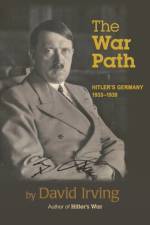
From the third of February 1933, when he told his generals in the secret of his ultimate ambition to invade and conquer the East, to the third of September 1939, when he left the Berlin Chancellery for the Polish front, Adolf Hitler had one obsessive goal - to wage war and achieve German revenge and hegemony.It was, as the world knows, to be a war that would leave forty million dead, lay waste most of Europe and half of Asia, and destroy the Third Reich.As he did in his celebrated and controversial Hitler's War, David Irving sets forth the events from behind Hitler's desk, as it were, to see and understand each episode through his eyes. His use of original and unpublished firsthand material has led him across Europe searching for documents and correspondence.As a result, he rewards his readers with a fuller picture of both the political preparation for the war and the intricate network of personal relationships on which Hitler's Reich eventually foundered. He uncovered extensive records of wiretaps made on British and French embassies in Berlin during 1938-39.In his assiduous detective work, he also located the private papers of Weizsäcker, Ribbentrop's state secretary, and the diaries of Walther Hewel, Ribbentrop's liaison with Hitler. Many pages of photographs from private collections provide new views of Hitler and those who surrounded him.Thus, Irving draws from the journals and letters of Hitler's subordinates, creating an immediate and authentic atmosphere. As a result, what have previously seemed inexplicable actions on Hitler's part are illuminated and new light is shed on Nazi Germany in the six years before the war.
This book tells the Real History of Adolf Hitler's doctors, based on the remarkable secret diary of his physician Professor Dr Theodor Morell and other papers. The Morell Diaries vanished in 1945, but turned up in 1981 in the National Institutes of Health, Maryland, USA, which transferred them to the National Archives. Was Hitler clinically mad? What diseases laid him low in 1941 and 1944 - at crucial moments in his nation's history? British historian David Irving was the first to find, identify, transcribe, translate, and publish these vital records. The extraordinary diaries of Hitler's doctor and the accompanying dossier on his "Patient A" refute many wartime legends about Nazi Germany's dictator.
THIS BOOK tells the Real History of the dramatic flight which Adolf Hitler's deputy Rudolf Hess made in 1941 to Scotland in an attempt to stop the war before the saturation bombing holocaust began. Intercepted before he could reach the King of England, Hess vanished into the maw of MI6, the Secret Service, and was held as Winston Churchill's personal prisoner. British files relate how experts used truth drugs and hidden microphones to try to prise the secrets out of him. Taken to Nuremberg in 1945, Hess outwitted - and eventually outlived - his tormentors. He died mysteriously in 1987 after spending 46 years in jail.
The White Alder, Cuyahoga, and Blackthorn were Coast Guard cutters that were sunk in collisions with other vessels. The White Alder was lost in 1968, the Cuyahoga in 1978, and the Blackthorn in 1980. This book details the cutters and events which led up to, and after, their tragic collisions which sank them and claimed the lives of many of their crewmembers.
John Warner served the nation in multiple capacities. Shortly before his 18th birthday in January 1945, he enlisted in the wartime Navy, discharged at war's end as a petty officer third class. Graduating from Washington and Lee University in 1949, he earned a commission in the Marine Corps Reserve in his senior year. He then entered law school at the University of Virginia, but his studies were interrupted when he was called up for service in the Korean War, where he flew as a bomb damage assessment observer over enemy territory. Returning to law school after the war, he graduated in 1953 and began a successful legal career that included clerking for a chief judge of the U.S. Circuit Court of Appeals in the District of Columbia, serving as a Special Assistant U.S. Attorney, and Assistant U.S. Attorney in the Department of Justice. After joining the campaign staff of then-Vice President Richard Nixon in 1960, he served in private practice until appointed as Under Secretary of the Navy by then-President Nixon in 1969. Subsequently appointed as Secretary of the Navy in 1972, he was the first secretary to have served in uniform in both the Navy and Marine Corps, distinguishing himself by serving as head of the U.S. Delegation which met in Moscow and again in Washington, DC to discuss incidents at sea between U.S. and Soviet naval units, which culminated in his signing on behalf of the U.S. government the Executive Agreement on Incidents at Sea between the United States and Soviet Union on 25 May 1972. Elected as Senator from the State of Virginia, he served with distinction until 2009. His dedicated service in so many important capacities resulted in the Navy naming a Virginia-class submarine after him in 2015, only one of thirteen people so honored while still alive at the time.
During the Polish campaign, SS combat units were seconded to various formations of the Heer. Still considered more parade troops than frontline soldiers, they did not prove a decisive factor in the fighting, but the campaign was important for their transformation into real fighting units. They were criticized for their losses, and the officers were blamed, being considered poorly and inadequately trained. The SS officers in turn accused Heer commanders for sacrificing SS troops in suicidal missions. Himmler became convinced that if his units were used autonomously they could have better demonstrated their full potential, leading him to push for the SS to be considered a separate fighting force.Fully illustrated, this Casemate Illustrated describes the actions of the SS units that fought on the front line in Poland, primarily the Leibstandarte Adolf Hitler, the SS-Verfügungstruppen and the SS-Heimwehr-Danzig.
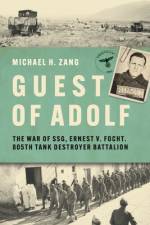
"I was a guest of Adolf!"This was how Ernest Focht responded when asked about his wartime experience.Ernest Virgil Focht was born and brought up in Tyrone, Pennsylvania. He was drafted into the Pennsylvania Army National Guard in April 1941 and assigned to the 105th Infantry Battalion (Anti-Tank). After training he participated in the Carolina Maneuvers. The National Guard unit was redesignated as the 805th Tank Destroyer Battalion, being deployed to North Africa in January 1943.Ernie was captured in his first action in February 1943, remaining a prisoner of war until May 1945 when the Russian Army liberated his camp. During these 27 months he was held in five different POW camps, and was forced to march between camps in the depths of the 1944-45 winter. Using his wartime diaries and letters home, this book offers an insight into the 805th Tank Destroyer Battalion, and the experiences of prisoners of war.
A dramatically underrated publication in 2020 from the US Army War College, a Rosetta's Stone for anyone interested in the dramatic evolution of warfare that has characterized war in the 2020s, with all the technical details and specificity that knowledgeable readers demand, but rarely find, in popular news coverage of war. This study analyzes the likely evolution of threat signatures and corresponding sensor needs for the US Army between 2030 and 2040. By examining modernization plans, defense spending, and strategic goals of major adversaries and global arms exporters, the research identifies 19 key capabilities and 22 unique technical and non-technical signatures. Findings suggest that while no single technical signature emerges as a primary target for sensor exploitation, non-technical signatures like doctrine and order of battle will likely undergo significant changes, providing early warning signs for technical signature shifts.The study identifies four critical signatures - physical, visual, electronic, and non-technical - across seven key capabilities (Cyber, EW, AI, Missiles, Deception, and C4ISR) that are expected to become increasingly difficult to detect due to advancements in deception, electronic warfare, cyber, camouflage, AI, and quantum technologies.Country-specific analysis reveals that China's C4ISR and electronic warfare capabilities, Russia's electronic warfare and deception practices, Iran's cyber and unmanned systems, and North Korea's missile capabilities pose significant detection challenges.To address these evolving threats, the US Army will require a network of multi-functional sensors and systems capable of rapid data fusion from various sources (HUMINT, SIGINT, MASINT, etc.). Advanced radar, electro-optical, and MASINT sensors, coupled with sophisticated algorithms and signal processing software, are identified as crucial components for future detection and targeting systems.The study emphasizes the need for integrated systems that combine weak signals from multiple sensors to achieve accurate identification and countermeasures against increasingly sophisticated and concealed threats.Full color interior with dozens of tables and figures.This annotated edition illustrates the capabilities of the AI Lab for Book-Lovers to add context and ease-of-use to manuscripts. It includes several types of abstracts, ranging from short to lengthy and bland to pithy, including TLDR (one word), ELI5, TLDR (vanilla), Scientific Style, Mnemonic, essays to increase viewpoint diversity, such as Grounds for Dissent, Red Team Critique, and MAGA Perspective; Notable Passages and Nutshell Summaries for each page; and an experimental new feature, the Retrospective Language-Modeled Gap Analysis (RLMGA).
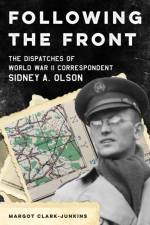
This is a primary source on World War II, which contains the unedited dispatches and personal correspondence of an American reporter embedded with the US Army in Western Europe from 1944 to 1945. His writings capture the human story of the war in Europe in a way that hits on many big themes such as combat, the Holocaust, strategic bombing, the home front, the collapse of the Nazi regime, and the refugee crisis. His firsthand account of the liberation of Dachau is a moving reminder that the world was unaware of the horrors of the holocaust until he and other reporters provided these dispatches.
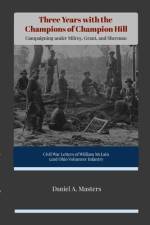
Even to his comrades in the 32nd Ohio, William Mosby McLain was a man with an air of mystery. Born in Washington, D.C. to parents active in the anti-slavery movement, McLain was living in Richmond, Virginia when the Civil broke out in April 1861. Determined to do his part in the war, he returned to his father's native home in Ohio and enlisted in Co. B, 32nd Ohio Volunteer Infantry in August 1861. We know some of what McLain experienced during the Civil War because of the numerous beautifully written letters he sent to the editor of the Urbana Citizen & Gazette. Written under the pen name "Seneachie," McLain's missives told the story of the ill-starred 32nd Ohio, writing poignantly of the many defeats the regiment suffered while in Virginia. Captured at Harper's Ferry in 1862, the regiment was paroled and transferred to the western theater. Greeted as the Harper's Ferry cowards, the regiment proved its mettle at Champion's Hill when it captured a battery. Having solidified its reputation as a fighting regiment, McLain and the 32nd Ohio would go on to fight through the Vicksburg and Atlanta campaign as honored members of the Army of the Tennessee.
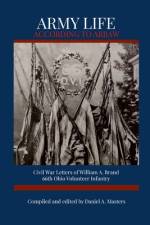
"Army Life According to Arbaw" is a book length Civil War soldier's narrative that presents a well written and insightful view of army life as viewed by William A. Brand of the 66th Ohio Volunteer Infantry. Brand, whose missives were published under the nom-de-plume "D.N. Arbaw" by the Urbana Citizen & Gazette, wrote frequent letters that provide a detailed view of his regiment's experiences with both the Army of the Potomac and the Army of the Cumberland. Eighty-two of his wartime letters are included in this book. Early in the war he was detailed to the quartermaster's department of the regiment to assist his father who was the regimental quartermaster. As such, Brand's military family was the leadership of the regiment, and he described the campaigns and battles in which his regiment participated from this perspective; yet his depictions of combat and life in camp are striking for their power and immediacy.
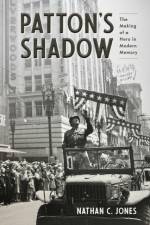
An engrossing account of the myth and legend of George S. Patton and what his reputation illuminates about American culture and hero worshipPatton's Shadow by Nathan C. Jones, a leading authority on George S. Patton, offers a definitive account of the creation of the Patton legend and what it illuminates about American culture and the worship of heroes. Jones traces how the persona of Patton, a brash and brilliant general in the European theater of World War II, transcended the individual man and became a cultural icon and byword for triumphal American might. Patton was a hero lionized and celebrated in his own time. Patton as well as the US Army cultivated his persona during and after the war. His image was used to promote patriotism, commercial goods, and military recruitment. The 1970 Academy Award-winning film starring George C. Scott cemented his iconic image for millions of Americans, further embellishing Patton's persona and introducing him to entirely new generations of young Americans. Patton's Shadow is an intellectually omnivorous tour de force that draws on ideas about heroes from sources as timeless as ancient mythology and as contemporary as Abraham Maslow, Max Weber, and Carl Jung. Jones artfully locates the honored altar that heroes occupy in the human heart and then answers insightful questions about what America's embrace of Patton in particular as a military hero illuminates about the United States, about Patton's generation, and about our own. Jones's engrossing work will fascinate readers interested in American history, military history, and the psychology of heroism.
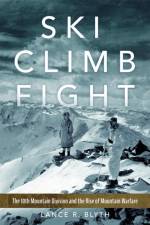
Mountains, Carl von Clausewitz said, introduce a "retarding element" into warfare. To fight in mountains, armies must overcome this challenge via survival and mobility. But the techniques and technologies for doing so are best found in civilian skiing and mountaineering communities, a situation almost unique to mountain warfare. Ski, Climb, Fight looks at how the 10th Mountain Division of World War II met this challenge and how the U.S. military does so to the present day. The first military history of that storied division, often known simply as "soldiers on skis," the book is also the first general history of U.S. mountain warfare. With a focus on strategy and doctrine, Lance R. Blyth explores how the military has adapted civilian gear and skills for surviving and moving in mountainous terrain to effectively conduct operations. He traces the longstanding but largely unexamined relationship between the civilian outdoor recreation industry and the military--a relationship that figures in almost every aspect of military operations in mountainous terrain. Intertwining the history of the World War II 10th Mountain Division and U.S. mountain warfare with the history of American skiing and mountaineering, Ski, Climb, Fight is at once an unprecedented, in-depth account of one of the most celebrated military units of World War II and a fresh look at U.S. mountain warfare from its inception eighty years ago to our own day.
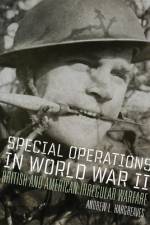
British and American commanders first used modern special forces in support of conventional military operations during World War II. Since then, although special ops have featured prominently in popular culture and media coverage of wars, the academic study of irregular warfare has remained as elusive as the practitioners of special operations themselves. This book is the first comprehensive study of the development, application, and value of Anglo-American commando and special forces units during the Second World War. Special forces are intensively trained, specially selected military units performing unconventional and often high-risk missions. In this book, Andrew L. Hargreaves not only describes tactics and operations but also outlines the distinctions between commandos and special forces, traces their evolution during the war, explains how the Anglo-American alliance functioned in the creation and use of these units, looks at their command and control arrangements, evaluates their impact, and assesses their cost-effectiveness. The first real impetus for the creation of British specialist formations came in the desperate summer of 1940 when, having been pushed out of Europe following defeat in France and the Low Countries, Britain began to turn to irregular forces in an effort to wrest back the strategic initiative from the enemy. The development of special forces by the United States was also a direct consequence of defeat. After Pearl Harbor, Hargreaves shows, the Americans found themselves in much the same position as Britain had been in 1940: shocked, outnumbered, and conventionally defeated, they were unable to come to grips with the enemy on a large scale. By the end of the war, a variety of these units had overcome a multitude of evolutionary hurdles and made valuable contributions to practically every theater of operation. In describing how Britain and the United States worked independently and cooperatively to invent and put into practice a fundamentally new way of waging war, this book demonstrates the two nations' flexibility, adaptability, and ability to innovate during World War II.
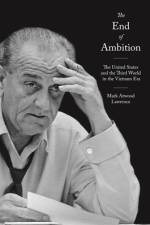
A groundbreaking new history of how the Vietnam War thwarted U.S. liberal ambitions in the developing world and at home in the 1960s At the start of the 1960s, John F. Kennedy and other American liberals expressed boundless optimism about the ability of the United States to promote democracy and development in Asia, Africa, the Middle East, and Latin America. With U.S. power, resources, and expertise, almost anything seemed possible in the countries of the Cold War's "Third World"--developing, postcolonial nations unaligned with the United States or Soviet Union. Yet by the end of the decade, this vision lay in ruins. What happened? In The End of Ambition, Mark Atwood Lawrence offers a groundbreaking new history of America's most consequential decade. He reveals how the Vietnam War, combined with dizzying social and political changes in the United States, led to a collapse of American liberal ambition in the Third World--and how this transformation was connected to shrinking aspirations back home in America. By the middle and late 1960s, democracy had given way to dictatorship in many Third World countries, while poverty and inequality remained pervasive. As America's costly war in Vietnam dragged on and as the Kennedy years gave way to the administrations of Lyndon B. Johnson and Richard M. Nixon, America became increasingly risk averse and embraced a new policy of promoting mere stability in the Third World. Paying special attention to the U.S. relationships with Brazil, India, Iran, Indonesia, and southern Africa, The End of Ambition tells the story of this momentous change and of how international and U.S. events intertwined. The result is an original new perspective on a war that continues to haunt U.S. foreign policy today.
As a child, Robert Howard was taught by his Granny Callie to always face his threats head-on. Some thirty years later, he emerged from the Vietnam War as America's most decorated Green Beret. For the first time, Robert Howard's story is being told in full. Respected military historian Stephen L. Moore takes readers into the heart of the Vietnam War's covert Special Ops jungle warfare in this immersive, suspenseful read. Through family sources, National Archives documents, and dozens of testimonials from the Green Berets who fought alongside him, this "one-man army" will finally be given the recognition he deserves. Robert Howard grew up in poverty in a small town in Alabama, with a strong sense of faith and determination. When he enlisted in the army at age seventeen, his Granny Callie's words echoed in his head, and he pledged to follow them to the bitter end. In the most dire of combat experiences, Howard ran directly toward his opponents, sacrificing his body to protect others and to complete the mission above all else. Time and time again, he survived battles that should have claimed his life, suffering countless bullets, a spinal injury, and shrapnel and blast wounds. Recon commanders who ran missions with him declared him to be the bravest man they had ever met. In return, Howard received a staggering number of awards and ribbons for valor and distinctive service in combat--over fifty in all, including the Medal of Honor, eight Purple Hearts, the Distinguished Service Cross, a Silver Star, and four Bronze Stars. He holds the distinction of being the only soldier nominated for the Medal of Honor three times in only a thirteen-month period. In total, Howard spent a grueling, treacherous forty months in combat duty in Vietnam, including over two years with MACV-SOG's elite covert group.
This title is part of UC Press's Voices Revived program, which commemorates University of California Press's mission to seek out and cultivate the brightest minds and give them voice, reach, and impact. Drawing on a backlist dating to 1893, Voices Revived makes high-quality, peer-reviewed scholarship accessible once again using print-on-demand technology. This title was originally published in 1959.
Abonner på vårt nyhetsbrev og få rabatter og inspirasjon til din neste leseopplevelse.
Ved å abonnere godtar du vår personvernerklæring.