


Gjør som tusenvis av andre bokelskere
Abonner på vårt nyhetsbrev og få rabatter og inspirasjon til din neste leseopplevelse.
Ved å abonnere godtar du vår personvernerklæring.Du kan når som helst melde deg av våre nyhetsbrev.

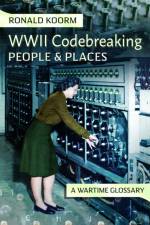
_WW2 Codebreaking People and Places_ is the first volume of a series on a glossary of codebreaking, âEUR¿People and PlacesâEUR(TM), brings to the reader an easily understandable account and listing, of those involved in collecting and analysing military intelligence, principally during the second world war. Whilst some will be well known, such as Alan Turing, many others have made significant contributions to codebreaking but fail to attract the attention of the media for the most part. From an individual named âEUR¿WrenâEUR(TM) who worked at a codebreaking outstation supporting Bletchley Park, to a mathematician who modified a codebreaking machine just prior to D-Day, to a ladies foundationwear factory in Hertfordshire that helped make machine components, these people and places now can be appreciated as to where they fitted-in within the overall picture of gathering, and processing enemy intelligence in wartime. The entries are cross-referenced to enable the reader to research as much or as little as they want, to dip-in to the glossary, to use it as a basis for further study, or just to learn a little more about the people that helped us win the war with our allied friends. .
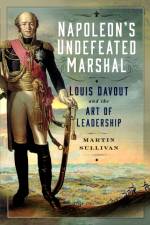
The war of 1809 between France and Habsburg Austria, culminating in the titanic battle of Wagram, has been described often as NapoleonâEUR(TM)s last successful campaign. Napoleon said later that the manoeuvres and actions of the French army and their German allies in the opening two weeks of this conflict were among the most brilliant and skilful of his entire career. But matters might have gone very differently. A series of miscalculations, mistakes and poor communications, both prior to AustriaâEUR(TM)s declaration of war and in the early days of hostilities, might have resulted in a major setback, if not a disaster, for the French Emperor. That they did not is due in large part to the decisions and actions of Marshal Louis Davout, the so-called âEURIron MarshallâEUR?This is the first English study of Marshal Davout's command and leadership in over fifty years. Little known outside of France, Louis Davout was one of the finest generals in Napoleon's army, as evidenced by his comprehensive defeat of the main Prussian force at Auerstadt in October 1806\. A hard, even harsh, disciplinarian, an utterly ruthless opponent on the field of battle, Davout was also a loving family man, meticulously concerned for the health and well-being of his troops, and able to command the loyalty of his divisional commanders for far longer than any of his contemporaries. In this new study, Martin Sullivan describes in detail the decision-making processes and actions of Marshal Davout, and from this analysis illustrates leadership concepts and theories which remain relevant to the world of today. Focusing upon the opening phase of the Wagram campaign, he examines in detail the decisions and actions of the participants, Davout, his opponent the Archduke Charles, and Napoleon himself. By this method the art of leadership may be seen exercised in the heat of an intense and deadly conflict.
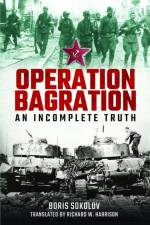
_Operation Bagration_ analyses the great Russian offensive in Belorussia in the summer of 1944 covering the planning of the operation as well as the German plans of the summer campaign of 1944\. In depth research sets out to determine the real ratio of the Soviet and German forces as well as their actual losses during the operation. As well as some good decisions, command on both sides made some crucial mistakes as well as main tactical errors all of which are studied in this book to produce a fully rounded view of the campaign and highlights a connection to Operation Overlord by proving that it was only due to the landing at Normandy that the Soviet forces were able to destroy the German Army Group Centre while the elite mobile forces were concentrated in France.
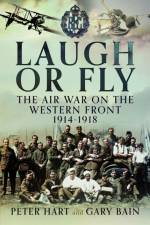
A rip-roaring gallop through the lives of the Royal Flying Corps air crew in the Great War. They lived their lives amidst a strange dichotomy as they moved from safety to dire danger, and back again in a matter of hours. This created a dreadful strain that could soon shred anyone's mental health. On the ground they were cloistered in simple but adequate accommodation several miles behind the lines. Farmhouses, barns and huts were used, but they were all far better than the squalor faced by the infantry scurrying in their muddy trenches. Flying personnel were blessed with beds and blankets. They could set up a decent mess and socialise to their heart's content. A smorgasbord of entertainments, with perhaps an old out of tune piano, access to drink and occasional vigorous games of mess rugby. There were visits to local towns which offered tantalizing glimpses - and sometimes more - of the female of the species. A glimpse was probably never enough for most of these very young men. What more could a chap want?But when they were flying over the front it was no laughing matter. Death lurked in the skies, zooming in its 'winged chariots' out of the sun, or bursting from the clouds. A moment's loss of concentration, or tactical blunder, could consign them to being shot down and falling thousands of feet until the crunching impact of terra firma brought a terrible relief. But better that than a punctured petrol tank, the first flickers of flame, then the roaring inferno and the agonies of incineration. There was little or nothing for them to laugh about in the air. But when back on the ground they tried to put aside their fears.
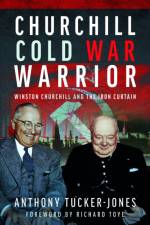
_âEUR¿By focusing attention on a poorly understood but vitally important aspect of ChurchillâEUR(TM)s career, Tucker-Jones has performed an important service. Churchill Cold War Warrior should be read, not only as a commentary on the ironies of history, but also as an essay on the potential and the limits of power.âEUR(TM) -Â _PROFESSOR RICHARD TOYE, AUTHOR OF WINSTON CHURCHILL: A LIFE IN THE NEWSIn Churchill Cold War Warrior, renowned military historian Anthony Tucker-Jones reassesses Winston ChurchillâEUR(TM)s neglected postwar career. He explains how in an unguarded moment Winston inadvertently sowed the seeds for the Cold War by granting Stalin control of Eastern Europe. Famously Churchill, at Fulton, then warned of the growing danger created by this partition of the continent. Winston after the Second World War wanted to prove a point. Shunned by the electorate in 1945, instead of retiring he was determined to be Prime Minister for a second time. Biding his time he watched in dismay as Britain scuttled from India and Palestine and weathered the East-West confrontation over Berlin. He finally got his way in 1951 and took the reins of a country with drastically waning powers. Churchill was confronted by a world in turmoil, with an escalating Cold War that had gone hot in Korea and an unravelling British Empire. Communism and nationalism proved a heady cocktail that fanned the flames of widespread conflict. He had to contain rebellions in Kenya and Malaya while clinging on in Egypt. Desperately he also sought to avoid a Third World War and the use of nuclear weapons.
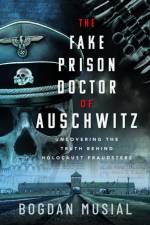
After over half a century of secrecy, a Swiss bank safe was opened, it contained the long-lost research notes of Josef Mengele, as well as those of his chief assistant in Auschwitz. They had been deposited there by the assistant who himself had been a Jewish doctor. Sent to Auschwitz, he was forced to participate in Josef MengeleâEUR(TM)s gruesome human experiments. Following the war, he completely disappeared, assuming a new identity and shrouding himself in silence. He did write his story down, but ordered the documents to be sealed away until decades after his death. With the release date drawing closer, his granddaughter, a well-connected Vatican doctor, wanted to have the documents examined by a professional historian. Thus, a great investigation was launched to track him down and pin down his place in the medical system in Auschwitz and the horrendous medical experiments conducted there. However, after some time, doubts regarding the authenticity of the documents began to emerge. Thus, what promised to be a sensational historical breakthrough, soon turned into a criminal investigation into one of the greatest historical fraud attempts in recent decades. At the end of the second investigation, the person behind the forged documents was brought to trial and sentenced on 22 counts of fraud. This book thoroughly examines the way the fraud evolved over the span of three decades and how it succeeded in convincing so many people, while also comparing it to other historic hoaxes, particularly those concerning the Holocaust.
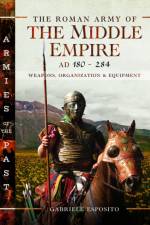
During the Middle Empire period (AD 180-284) the Roman army had to face the terrible âEUR¿Third Century CrisisâEUR(TM), wherein a combination of socio-economic problems and new external threats threatened the Empire with complete collapse. Several provinces became temporarily independent from the central government of Rome, while others were frequently raided by foreign invaders. The Roman army had to fight with all its resources in order to reconquer a good portion of the Empire and preserve its unity. The Romans were forced to modernize and reform their forces to face the new challenges posed by a multitude of warlike enemies, such as the Persians in the Middle East or the Germanic Peoples in Central Europe. The previous military system based on the power of the legionsâEUR(TM) heavy infantry was completely revised, with the introduction of new organizational patterns. Cavalry became much more important than before, together with light troops specialized in skirmishing. The personal equipment of the Roman soldiers changed in a very significant way, with the introduction of new weapons that permitted the development of innovative tactics. Gabriele Esposito follows this evolution of Roman forces from the death of Marcus Aurelius to the rise of Diocletian, reconstructing the major military campaigns and explaining how the Roman military forces were transformed. All the major troop types are covered, with details on the organization and equipment of each contingent. The book is lavishly illustrated throughout with excellent colour photos of reconstructed costume and equipment in use.
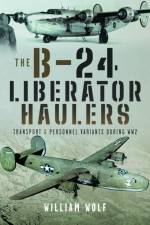
With iconic images depicting it in the skies over Occupied Europe or the Far East, the B-24 Liberator is remembered for its part in the AlliesâEUR(TM) bombing campaigns during the Second World War. But there was another part to this famous four-engine aircraft âEUR" one that is less well known. While the Douglas C-47 Dakota is deservedly celebrated as the most important twin-engine transport aircraft of the war, the early use of the four-engine Consolidated B-24 Liberator bomber as a passenger carrier is virtually unknown but was as important. Since the B-24 had more interior room than the B-17, it could be more easily be converted into a personnel carrier. These early Liberators operated AmericaâEUR(TM)s and BritainâEUR(TM)s early diplomatic missions and then were to be extensively flown by the Atlantic Ferry Organization and the Transport Commands on missions that opened the world to air transport as never before. Several B-24s were converted for VIP personal and diplomatic use, which included HarrimanâEUR(TM)s Moscow and round-the-world diplomatic mission, and those used by Churchill and Eisenhower to âEUR¿get aroundâEUR(TM). To meet the need for a cargo and personnel transport which had longer transoceanic range and improved high-altitude performance than the C-47, in early 1942 the C-87, a hastily designed B-24 derivative, was placed into production. By installing a built-up floor section that replaced the bomb bay doors, the C-87 could carry six tons of cargo loaded through a cargo door cut into the side of its fuselage or through a special hinged door in its nose. Most C-87s were operated by the US Ferrying Command and Air Transport Command; by the late summer of 1943, they were extensively operating regular routes from the United States to the worldâEUR(TM)s most remote areas. To meet this increased requirement for air transport, the ATC was forced to turn to four civil commercial airlines for help operating the system. Of the 287 purpose-built C-87s, 24 were transferred to the RAF under Lend-Lease for RAF Ferry and Transport Command. The C-87 would remain as a prime mover until the dedicated C-54 Skymaster four-engine transport came into service. The 218 C-109s were fuel tanker conversions of completed B-24 bombers which had all armament removed and extra fuel tanks added to carry fuel from India for B-29s based in China. Due to the lack of C-47s after D-Day, conventional B-24s were again converted for transporting vital supplies and bulk fuel to troops in France. Once Allied troops broke out of the Normandy beachhead, converted Liberators flew _Trucking_ supply drop operations delivering emergency fuel and supplies to PattonâEUR(TM)s fuel-starved armies racing across France. Later these B-24s supplied the ill-fated Operation _Market Garden_ at Arnhem.
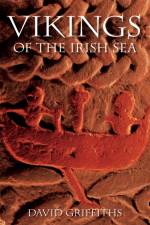
Exploring the military heritage of the Isle of Wight from Viking invaders straight through to the present day.
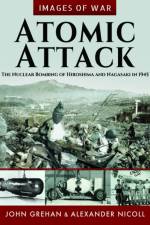
At 08.15 hours on 6 August 1945, one of the most seismic events in human history unfolded over the Japanese city of Hiroshima. An atomic bomb, nicknamed _Little Boy_, exploded about 1,500 feet above the city with a force of 15,000 tons of TNT. Around five square miles of the city were destroyed in seconds and tens of thousands of its citizens and soldiers were killed. Three days later, a second atomic bomb was unleased against Nagasaki with similar devastating results. Less than a week later Emperor Hirohito announced JapanâEUR(TM)s unconditional surrender, bringing the Second World War to an explosive end. The story of the bombing of Hiroshima and Nagasaki begins with the Manhattan Project. From its inception in 1939, the Manhattan Project, which at its height involved more than 125,000 individuals and ultimately cost billions of US dollars, is explored in this book, as is the organisation and training of the bomb crews of 393rd Bombardment Squadron of Colonel Paul TibbetsâEUR(TM) 509th Composite Group. For its attacks on Japan, the squadron was equipped with fifteen dazzling silverplate Boeing B-29 Superfortresses, which had been specially adapted to carry nuclear weapons. It is, of course, the dramatic events of 6 and 9 August 1945, which are featured most prominently in this book. Every step of the attacks, from the arming of _Enola Gay_ and _Bockscar_, which famously carried the two nuclear devices, to their take-off from Runway Able on the tiny island of Tinian, to the flights to the targets and the release of the bombs are revealed. Many are the unmistakable images of the detonation and effects of the two nuclear blasts, portrayed here in graphic contemporary photographs. Portraits of the key individuals are shown, as are the test sites, workshops, aircraft and the weapons themselves to provide a wide-ranging, comprehensive visual study of the steps which led to the first and only deployment of nuclear bombs in warfare.
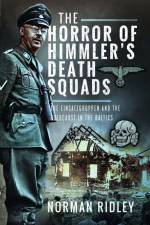
During the Second World War, Lithuania, Latvia and Estonia were occupied on three separate occasions âEUR" twice by the Soviet Union and once by Nazi Germany. The signing of the Ribbentrop-Molotov Pact of 1939 allowed the Soviets to dominate the Baltic states without fear of German reprisals, causing many in the German-Baltic populations to flee to Poland. Soviet rule of the Baltics was brutal with the purging of political elites and deportation of many tens of thousands in a bid to turn them into vassal states. Consequently, when Hitler launched Operation Barbarossa in June 1941, many Balts saw it as a liberation from Soviet cruelties. The reality was, however, that it turned out to be the beginning of something much worse. During their occupation of Poland prior to Barbarossa the Nazis had decimated the Polish political elites, and the Jews there had been herded into ghettos in preparation for deportation to the east where they would serve as slave labour in the Nazi economy after the conquest of the Soviet Union. Similar policies were to be adopted in the Baltics when Reinhard HeydrichâEUR(TM)s murder squads, the Einsatzgruppen, were allowed to move into the newly-occupied territories. Operating behind the advancing German forces Einsatzgruppen A, B, C, and D âEUR" four special mobile killing units, each made up of about a thousand men from the security police and the German intelligence service âEUR" proved to be more than willing to carry out HeydrichâEUR(TM)s orders. He had called for the removal of every vestige of opposition to Nazi rule which primarily meant complete elimination of the âEUR¿inferiorâEUR(TM) races who were unfit for work and the ghettoization of others in preparation for their economic exploitation. On foreign soil, away from scrutiny and free of all constraint, the Einsatzgruppen discovered that through the mass shootings of communists, Jews and gypsies it was possible to accelerate the pace of the Holocaust, slaughtering men, women and children in their tens of thousands. The Einsatzgruppen were assisted by local âEUR¿volunteersâEUR(TM) who helped to identify victims as well as kill them; in places whole Jewish communities were swiftly eliminated. Many of the killers and victims had known one another as neighbours and colleagues. This massive slaughter of civilians convinced Heydrich and Himmler that complete extermination of Jews was within their grasp and before very long, in the death camps, new industrial methods of killing would be devised.
Philip Gould examines nineteenth-century literature in light of the transformation of the federal state's power during the American Civil War. How do literary works engage the subjects of censorship, propaganda, and the reconfigured meanings of "loyalty" and "treason" at a time of political crisis?
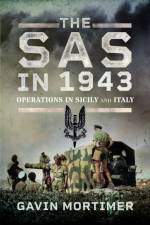
The SAS is the most famous regiment in the world and the subject of countless books, documentaries and TV dramas, including the BBC mini-series Rogue Heroes. Much of the action of the second season of Rogue Heroes is located in Italy, where both 1SAS and 2SAS took part in many daring operations in 1943. The third volume of Gavin MortimerâEUR(TM)s impeccably researched and handsomely illustrated SAS Operations covers their missions in Sicily and Italy. After the derring-do of Desert Warfare, when the SAS raided enemy airfields in heavily-armed jeeps, the operations in Sicily and Italy were more challenging and diverse in nature. Sometimes the SAS inserted by parachute and sabotaged trains or attacked vehicle convoys; at other times they stormed beaches from landing craft and neutralised enemy coastal batteries. Whatever the mission the SAS displayed their characteristic courage, initiative and determination in the vanguard of the Allied invasion of Sicily and Italy. In this book Mortimer describes in detail these operations, embellishing his gripping narrative with first-hand accounts from the scores of SAS veterans he interviewed. Drawing also on personal papers, diaries, private photographs and his many visits to the sites of the action, Mortimer blends the past with the present so that readers can follow in the footsteps of such SAS legends as Paddy Mayne and Roy Farran
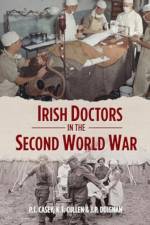
This highly anticipated sequel charts the contributions of Irish doctors in the Second World War, a conflict that demonstrated to the world that the pace of military warfare had changed forever. Advancements in medical care during the inter-war years made field medicine almost unrecognisable compared to 1918, but this was tempered by the vast innovations in the machines of war. From the Maginot Line to the Far East, Irish doctors risked their lives in a terrifying new landscape. Read accounts from Aidan MacCarthy, a Japanese POW present when the atomic bomb was dropped on Nagasaki, and heartrending reports from Irish doctors arriving in liberated concentration camps, exemplifying the unique position they were in as citizens of a neutral country: ' They [Irish people] don't understand the horror of this war because it has not been brought home to them. They have spun their own little cocoon and have been indifferent, to a great extent to the sufferings of humanity.'
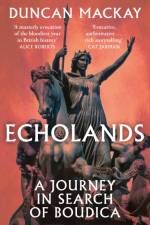
'An engaged, informed companion for the armchair time traveller...captures the thrill and the difficulties of interpreting the past'. TLS'Duncan has written a masterpiece - a journey and an investigation that fuses landscape and history, chasing the echoes of Boudica's rebellion and finding its physical traces that still surround us today.' Nicholas Crane'A brilliant imagining of the past. Mackay's knowledge is profound, but lightly worn, his writing elegant and witty, and his enthusiasm infectious. A joy to read.' Dr Harry Sidebottom, University of Oxford, author or THE MAD EMPEROR'Mackay's journey into the past is hugely enjoyable.' BBC History Magazine'The places that Mackay visits, traverses and dwells in are vividly described as a conscious attempt to revive the past... there are real moments of joy and insight.' History TodayAlmost 2000 years ago, Boudica led the greatest rebellion Britain has ever seen. Within the space of a single blood-soaked year, she united the tribes to deliver blow after devastating blow to the Roman regime, culminating in a brutal, decisive battle.Archaeologist Duncan Mackay has spent a lifetime on the trail of Boudica. Beginning near his home in Norfolk, in the heart of Boudica's tribal territory, he embarks on a journey in the footsteps of Romans and Britons, exploring their villages, towns, forts and roads. The passage of two millennia has buried the world that Boudica knew, but Duncan finds that its echoes and physical traces still surround us - as long as you know where to look. The armies marched along the roads we still use, and died in their thousands in towns, cities and countryside where we still live today. The site of Boudica's last battle was long believed be lost to time, but the threads of the story all pull towards one remarkable, forgotten little corner of the English landscape.From the Breckland of Norfolk to the back streets of Colchester, from the remotest corner of Anglesey to the depths of the London Underground, Duncan takes us back two thousand years to retell the story of Britain's bloodiest year. Fusing ancient history, modern excavation, landscape exploration, and vivid reconstruction, Echolands weaves the long-lost tapestry of Boudica's war.
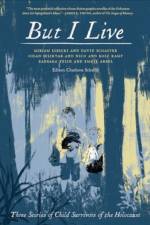
An intimate co-creation of three graphic novelists and four Holocaust survivors, But I Live consists of three illustrated stories based on the experiences of each survivor during and after the Holocaust. David Schaffer and his family survived in Romania due to their refusal to obey Nazi collaborators. In the Netherlands, brothers Nico and Rolf Kamp were separated from their parents and hidden by the Dutch resistance in thirteen different places. Through the story of Emmie Arbel, a child survivor of the Ravensbrück and Bergen-Belsen concentration camps, we see the lifelong trauma inflicted by the Holocaust. To complement these hauntingly beautiful and unforgettable visual stories, But I Live includes historical essays, an illustrated postscript from the artists, and personal words from each of the survivors. As we urgently approach the post-witness era without living survivors of the Holocaust, these illustrated stories act as a physical embodiment of memory and help to create a new archive for future readers. By turning these testimonies into graphic novels, But I Live aims to teach new generations about racism, antisemitism, human rights, and social justice.
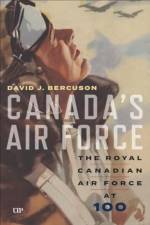
Canada's Air Force tells the full story of the RCAF from its founding to its 100th anniversary.
This book explores the active involvement of Russian exiles in the Second World War, with thousands of émigrés fighting alongside Hitler.
This fascinating collection of personal narratives challenges the view that all Germans knew of the crimes perpetrated by the Third Reich and were complicit. The five accounts recall the lives of individuals born in the 1920s who resisted joining the SS, were horrified by atrocities, or otherwise remained true to their principals. Spanning their early life during the rise of the Nazi Party, through their adolescence in the war, to the early post-war years, they offer a compelling perspective on the diverse experiences and beliefs of Germans of the wartime generation. From Wehrmacht infantrymen to a Luftwaffe officer and a young woman on the home front, the accounts range from the relative comfort of German-occupied territories to the harrowing front lines against the Soviets. Standout stories include Heinz Polke's haunting description of the Warsaw Ghetto Rising, and three accounts of the often-overlooked aspect of being a prisoner of war in the USSR, providing valuable insights into the post-war German experience. Skilfully complied by journalist Klaus Förg and with additional commentary by historian Roger Moorhouse, this is a powerful and worthy addition to World War II literature.
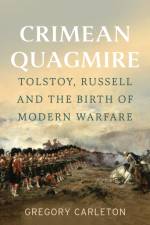
The intriguing story of how two revolutionary writers and their pioneering war reporting changed the way we think about modern conflict.
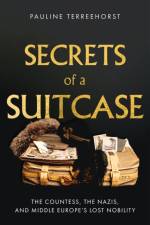
A fascinating portrait of old cosmopolitan Central Europe, and a remarkable woman enduring as evil rises--all through the family belongings hidden in a suitcase.
Abonner på vårt nyhetsbrev og få rabatter og inspirasjon til din neste leseopplevelse.
Ved å abonnere godtar du vår personvernerklæring.