





Gjør som tusenvis av andre bokelskere
Abonner på vårt nyhetsbrev og få rabatter og inspirasjon til din neste leseopplevelse.
Ved å abonnere godtar du vår personvernerklæring.Du kan når som helst melde deg av våre nyhetsbrev.

This book offers an East-West comparative analysis of mediatised terrorism.
This book offers an analysis of the major sources of the Israeli-Palestinian conflict and suggests principles and processes for building a peacemaking platform.
This book analyses the civil war in Yemen and how intervening external actors have shaped the trajectory of the conflict.
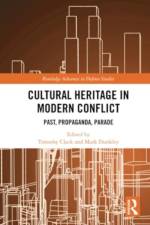
This edited volume offers an in-depth study of heritage and warfare from the perspective of defence studies.
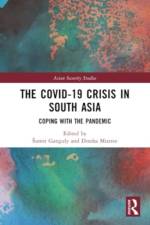
This edited book provides a range of perspectives on the handling of particular aspects of the Covid-19 pandemic across the principal states of South Asia.
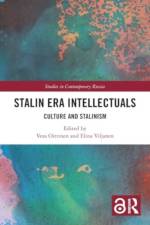
This book focuses on the extent to which Soviet scholars and cultural theoreticians were able to act autonomously during the Stalin era.
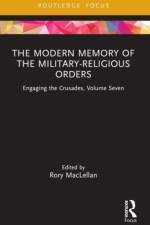
This volume examines the pervasive and persistent appropriations of the military orders across a broad chronology and several regions, including Mexico, Brazil, and Greece, areas beyond the traditional focus of prior research in medievalism.
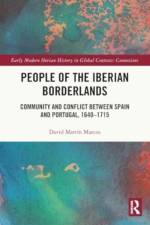
This book is devoted to the inhabitants of the Spanish-Portuguese borderlands during the Early Modern Period.
This book sheds light on the outcomes of social movements in Brazil. It provides an extensive analysis of how and when collective mobilization and protest activities brought about social and political change.
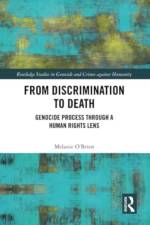
From Discrimination to Death studies the process of genocide through the human rights violations that occur during genocide.
This book examines new and challenging political aspects of cyber security and presents it as an issue defined by socio-technological uncertainty and political fragmentation.
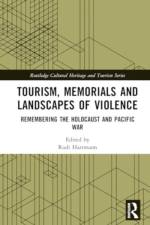
The book focuses on tourism, memorial sites of the Holocaust and the Pacific War and the management practices for the visitors that they attract.It provides an account of landscapes of violence as millions of people in Central and Eastern Europe, China, Japan and the United States were affected by wars, conflicts and crises.
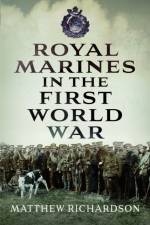
The Royal Marines had the distinction of serving in every major land campaign of the First World War, as well as participating in most minor ones. They also served afloat as an element of the Royal Navy. For the greater part, the morale and esprit de corps of the formation was second to none, wherever its men found themselves and whatever challenges they faced. This new history examines the participation of the corps in actions such as the Defence of Antwerp, the Gallipoli landings, the Battle of the Somme, the Zeebrugge Raid and the Allied intervention in North Russia. It covers the Marines in action aboard ship at the Dardanelles and Jutland, and throws a spotlight on the little-known Royal Marines presence in the West Indies. Flying Marines operated with the Royal Naval Air Service and Royal Flying Corps, often with noted bravery. Wherever possible the words used are those of the men who were there, and these eye-witness accounts (some never before published) offer an immediacy and freshness to this story.
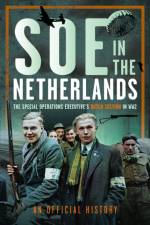
Until 1943 there was little effective resistance to the German occupation of The Netherlands. Though numerous small opposition groups had formed immediately after the German invasion in 1940, there was no concerted movement or over-arching organisation. Gradually, though, as the Germans introduced harsher measures against certain groups, opposition grew, particularly in the urban areas. These met with very limited success due to poor security which was to plague the Dutch resistance movement in general. As is made clear in this official account, individuals were often members of more than one resistance group at the same time. This inevitably meant that when one cell was compromised others quickly met the same fate. Nevertheless, in 1941 the Netherlands, or N, Section of the Special Operations Executive under Major Seymour Bingham started sending trained agents to The Netherlands. These operatives were dropped by parachute or infiltrated into the country from France or Belgium. Unfortunately, poor discipline continued to hamper the resistance movement. Preparation was poor, security was lax, and codewords were forgotten or ignored. As a result, fifty-four of N SectionâEUR(TM)s agents were captured by the Germans; fifty of these were subsequently executed. Despite its egregious failings, SOEâEUR(TM)s N Section, could count on some successes. Its agents were able to coordinate the various groups and help maintain communications with the UK. They also undertook valuable weapons training and gave instruction on demolition techniques. The people the agents assisted in active resistance were usually ordinary Dutch citizens, often working in respectable jobs under the very noses of the Germans, their only precaution being the adoption of a false name while operating undercover. The SOE agents themselves had to adopt the cover occupations of those professions which would not be subjected to conscription, such as teachers, medical personnel, or police. Usually, they would take the identity of brave individuals who had volunteered to have their information duplicated. In addition, the agents would be thoroughly briefed on their adopted personas so that they could provide convincing accounts of their movements if stopped and interrogated. This official account of the development and activities of SOEâEUR(TM)s Dutch Section was written by a Staff Officer prior to SOE being disbanded in 1946\. It was based on information, reports and documents provided by those involved in the campaign. It details how SOE agents were recruited and trained in the UK and gives information on safe houses, contact addresses, secret telephone exchanges, training premises and methods of communications in The Netherlands and externally to London. In essence, it provides all the apparatus and procedures used in the establishment of the underground movement which sought to obstruct and oppose the Germans at every turn.
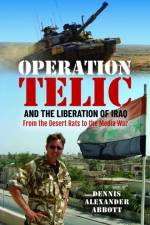
_Operation Telic and the Liberation of Iraq_Â is an anecdote-packed daily diary recounting the authorâEUR(TM)s experiences as a reserve officer and media handler with 7 Armoured (the Desert Rats) and 19 Mechanized Brigade during Operation TELIC in Iraq in 2003. A journalist in uniform, Abbott provides an insider-outsider account of British Army media ops in southern Iraq during the immediate post-conflict phase. With a sharp eye for detail, Abbott provides a behind-the-scenes account of the highs and lows of serving two âEUR¿mastersâEUR(TM) âEUR" his demanding military commanders on one hand and a voracious press on the other. One of his first missions is dealing with a barrage of media questions following the brutal murder of six Royal Military Police by a crazed mob in Majar-al-Kabir. Abbott recalls the adrenalin-filled atmosphere when the British Army garrison at Basra Palace is surrounded by a crowd firing mortars and unleashing hundreds of rounds from their AK-47s. ItâEUR(TM)s only after a tense stand-to that the nervous troops discover that they are not under attack: the crowd is celebrating the demise of Saddam HusseinâEUR(TM)s sons. There are plenty of lighter and un-woke moments, too, as Abbott tells stories that fortunately didnâEUR(TM)t make the news at the time. The author admits how criminal thoughts might just have crossed his mind over the $30 million flown in by the US government each week and stored feet from his camp-bed. Above all this is a vivid account of a controversial operation that cost many lives and severely tarnished the reputation of British Prime Minister Tony Blair. Unconvinced of the merits of military action before arriving in theatre, Abbott ends his tour in a positive mindset despite the failure to locate WMD. His diary is more SOS than SAS, with little of the derring-do of an Andy McNab adventure. Yet it's just as un-put-downable. More in the tradition of Leslie Thomas' Virgin Soldiers than Bravo Two Zero, itâEUR(TM)s an honest, authentic and often funny read which has the potential to appeal beyond a niche audience. There has been no account of the British in Iraq quite like this.
This book analyzes how the cultural memory of women's participation in the Yugoslav People's Liberation Struggle (1941-1945), especially female soldiers, was treated in socialist Yugoslavia's popular printed press, and how it contributed to the creation of the figure of the Yugoslav New Woman.
This book examines Latin narratives produced in the aftermath of the First Crusade and challenges the narrative of supposed brutality and amorality of warfare in this period - instead focusing on the moral and didactic concerns surrounding warfare and violence with which medieval authors wrestled.
This book is the first study of the mentality of anti-Communist underground fighters and presents, detail, their thinking, ideals, stereotypes and customs.
Abonner på vårt nyhetsbrev og få rabatter og inspirasjon til din neste leseopplevelse.
Ved å abonnere godtar du vår personvernerklæring.