







Gjør som tusenvis av andre bokelskere
Abonner på vårt nyhetsbrev og få rabatter og inspirasjon til din neste leseopplevelse.
Ved å abonnere godtar du vår personvernerklæring.Du kan når som helst melde deg av våre nyhetsbrev.

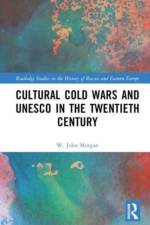
This book addresses the now considerable interest in the concept of cultural cold war as a means of advancing ideologies. It will appeal to academics, postgraduate researchers, advanced undergraduates, and others interested in recent international history and the comparative politics of ideas.
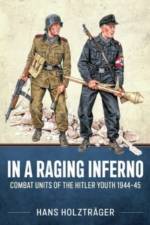
In a Raging Inferno is the first English-language book ever to recount the story of the Hitler Youth and its combat role at the end of World War II. During the desperate final months of the Third Reich boys (and girls) as young as ten were thrown into action against the advancing British, American and Soviet armies, frequently fighting with a fanatical and suicidal fury.The author spent many years collecting material and interviewing veterans of the Hitler Youth combat units. The result is a fascinating - and sometimes disturbing - account, packed with eyewitness accounts and rare photographs. In addition, well-known military artist Stephen Andrew has produced 4 superb pages of color uniform plates.
A hundred and fifty years of conflict. What does that do to a person's soul, to the spirit of a nation? To both the occupied and the occupier?International Booker Prize winning Israeli novelist David Grossman has spent decades campaigning for peace in Israel and Palestine. But after October 7th 2023, a day marking the biggest loss of Jewish life in this century, he retreated inwards to ask himself difficult and necessary questions about his beloved nation:How could this massacre have happened?How could the Netanyahu government, tangled in its web of scandals, fail to protect its citizens?And did October 7 and the war that followed take with it their last hope of a two-state solution?In eleven essays David Grossman traces the years leading up to that day and the ensuing war through a string of failures by a morally bankrupt party clinging to power. He documents the struggle being fought on both sides between those committed to conflict, and the many who simply want to live in peace.Ultimately, Grossman arrives at the most important question of all: Will there ever be a lasting peace in the region?
Major Alexander Sanderson DSO, MC & Bar, MiD was one of the ablest and most experienced mining engineers to serve on the Western Front in the First World War. Following on from his early, adventurous life in the outback, in this biography, written by his grandson, we reveal the full story of the highly technical war he waged below, and above, No ManâEUR(TM)s Land near Lens in France as part of the 3rd Australian Tunnelling Company. As a young New Zealand-born student of the West Australian Engineer-in-Chief, he attended the School of Mines and became an underground goldmine manager alongside H.C. Hoover, the future US President. After a construction business venture with his friend John Monash (later General Sir), he undertook camel treks across the harsh Ashburton desert, sinking artesian wells and gold prospecting, before joining the Army, having abandoned his claim to a million-acre cattle station to do so. Enrolling as a Captain (HQ staff), as a Mining Corps expert Sanderson was tasked with listing all the equipment, such as winches, fans, generators etc., necessary for speeding up a war underground. SandersonâEUR(TM)s first Military Cross was awarded for his role during the Battle of Fromelles in July 1916, during which he was wounded by shellfire while repairing an explosive charge in No ManâEUR(TM)s Land. Sent to Hill 70 at Loos, his Company was at once pitched into a silent, deadly underground âEUR¿cat and mouseâEUR(TM) war of nerves with German pioneers. SandersonâEUR(TM)s rapid survey of the galleries and his alert listenersâEUR(TM) acuity soon pinpointed the tunnels of the out-manoeuvred enemy miners. Hit by three huge camouflets, the enemy ceased mining. SandersonâEUR(TM)s second MC and wound stripe were awarded after a successful night-time raid to destroy enemy shafts. When his CO was killed by a sniper, he took over command. We also read how the Australians constructed a vast network of defensive subways for the infantry from La BassÃ(c)e to Hill 70\. SandersonâEUR(TM)s defensive Hythe Tunnel, constructed in 1918, complete with pivoting bascule doors and sliding internal walls, was considered one of the finest tunnels on the Western Front. During the Blitz in the Second World War, Sanderson was put in charge of repairs to the bomb-damaged London Underground. Such was his tunnelling skills, he was also a consultant structural engineer for both the Cabinet War Rooms and ChurchillâEUR(TM)s underground bunker, following which Winston presented him with a box of his cigars as a token of the Prime MinisterâEUR(TM)s appreciation. Such was SandersonâEUR(TM)s technical ability, in 1942 he submitted secret revolutionary âEUR¿Tilt-wingâEUR(TM) and âEUR¿Vertical Take OffâEUR(TM) aeronautical designs to the Air Ministry, all of which are revealed in this biography of one manâEUR(TM)s service in two world wars.
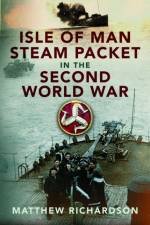
Names like Ben-My-Chree, Tynwald and Lady of Mann are synonymous with the Isle of Man Steam Packet Company, the worldâEUR(TM)s oldest shipping line that is still in existence. In its long history, there can have been no greater test of the companyâEUR(TM)s ships or its men than the Second World War. As well as maintaining a crucial link to the Isle of Man (in spite of U-boats and mines), the vessels and their compliments saw vital service as troop carriers at Dunkirk, on D-Day and elsewhere. For the first time, this book explores what it was really like to crew these ships, often under fire, and frequently in danger. Using previously unreleased archive material, and sometimes forgotten personal accounts, this book weaves a gripping narrative of what was arguably the Isle of ManâEUR(TM)s greatest contribution to victory in the Second World War âEUR" its fleet.
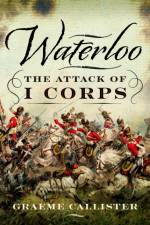
This book provides a detailed analysis of the attack of the Comte dâEUR(TM)ErlonâEUR(TM)s French I Corps, and the subsequent allied counterattack, at the Battle of Waterloo. This assault by 20,000 men and eighty guns in the early afternoon of 18 June 1815 came as close as any to winning the battle for Napoleon. It was eventually repulsed âEUR" just âEUR" by two stretched Allied infantry divisions and two brigades of cavalry and was, in the words of the Duke of Wellington himself, âEURone of the most serious attacks made by the enemy.âEUR? Until now, there has been surprisingly little in-depth analysis of this crucial moment in the battle âEUR" something that this book seeks to remedy. Graeme Callister combines a detailed narrative with a thorough analysis of how the event unfolded. All aspects of the attack are covered; from the grand tactics to the human experience of being in the firing lines, considering the soldiersâEUR(TM) experience, morale, leadership, condition and cohesion. Using rarely before analysed material from the French regimental registers, it examines the service records of individuals involved in the action, alongside the first-hand accounts and reminiscences of those who left them. The book begins with an assessment of the background of each of the forces: their composition, command structures, and the condition of their men. It then discusses how they found themselves to be in their positions on the battlefield, exploring the grand tactics, terrain, and wider strategic situation. The main part of the analysis focuses on the attack itself, looking at the formations and direction of the attacking forces (the four divisions of Quiot, Donzelot, Marcognet, and Durutte, plus the grand battery and supporting cuirassier brigade) and the tactical approach of the men set to meet them. Based on a wide range of primary sources, including those in French, English, Dutch and German, this book offers fresh perspectives on a crucial part of the Waterloo story, and helps us to understand why men advanced or stood, fought or ran, and lived or died amidst the maelstrom of battle.
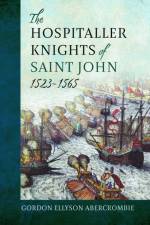
The sequel to _The Hospitaller Knights of Saint John at Rhodes 1306-1522_, this volume covers the period 1523âEUR"1565. This volume opens with the relocation from Rhodes to Malta during the years following the OrderâEUR(TM)s heart-rending loss of Rhodes to Ottoman Sultan Suleiman. This loss was also that of 4,000 non-belligerent Christians choosing to abandon their homes and livelihoods and to accompany the Order in its search for a new home. Volume II further deals with the first thirty-five years of Hospitaller residence at Malta including operations from there along the coast of North Africa, with major sieges of Tripoli, Tunis, and Algiers, with penetrating exposÃ(c)s of corsair admirals such as Kheir-ed-Din Barbarossa and Dragut, and with giants of Christian history such as Andrea Doria. Finally, this volume deals with the Ottoman EmpireâEUR(TM)s 1565 attempt to eradicate the Order with that yearâEUR(TM)s Great Siege of Malta. The author draws on the work of the OrderâEUR(TM)s official historians, Giacomo Bosio and his successor Bartolomeo dal Pozzo. He transcribes their writings for the modern reader, while also presenting new information revealed in the 400 years of scholarship since BosioâEUR(TM)s death in 1627. While initial chapters focus on Philippe Villiers de lâEUR(TM)Isle-Adam, 44th Grand Master of the Hospitaller Knights of Saint John, this history also brings to light the contributions of properly identified lieutenants, allies and opponents. This Volume is believed to be the only continuous history since Bosio of the Hospitallers during the period 1523 through 1565, and is certainly the only such history in English.
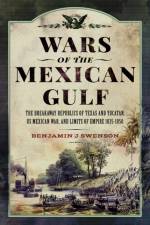
One nation in turmoil, another seeking aggrandizement, smaller states jostling for security, mercenary expeditions, and political and racial armed struggles breaking out. In 1835 the northern Mexican state of Texas declared its independence and won it after defeating General Santa AnnaâEUR(TM)s forces at the Battle of San Jacinto. A few years later, as a larger and looming war with the United States approached, the gulf state of Yucatan did the same by claiming itself a separate republic. For Mexican authorities, the existence of breakaway republics on its periphery represented an existential crisis and an opportunity for U.S. and European interests. For many on both sides, the US-Mexican war officially beginning in 1846 after the Republic of Texas was annexed to the United States was merely a continuation of a conflict that began ten years earlier. Adding to the turmoil, the uprising in Yucatan by indigenous Maya against a criollo minority in 1847 and the contemplated military intervention and annexation of that republic by American leadership towards the end of the war sheds light on a conflict with ethnic, national, and international dimensions. In his second transnational history of the Mexican-American War, historian Benjamin J. Swenson examines the breakaway republics of Texas and Yucatan and demonstrates how the war was not only a manifestation of American expansionism and internal Mexican disunion, but a geostrategic contest involving European states seeking to curtail a nascent imperial powerâEUR(TM)s dominance in North America.
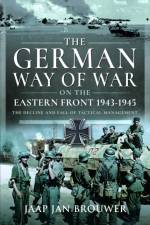
Early 1943 marked a turning point in the battle on the Eastern Front. After the devastating defeat at Stalingrad, the German army was no longer able to take the initiative and control the battle. In the following years, despite tactical victories, the German army would be gradually pushed back until Soviet units eventually reached Berlin and captured the Reichstag. In the meantime, both enemies had learned a great deal and new weapons were rapidly introduced onto the battlefield. On 8 May 1945, this bloody confrontation between the two giants ended in the unconditional surrender of Germany and a new geopolitical equilibrium was created. This titanic battle is illustrated with witness accounts from generals, soldiers and civilians. Attention is not only paid to the course of the battle, but also to the tactics and organisational dimensions of the armies involved, the challenges of the vastness of the country, the dilemmas for civilians caught between the fighting parties and the flight of millions of Germans to the West in an attempt to escape from the atrocities of the Soviet army. The book also considers the role of the Reichsbahn in the field of logistics, and the importance of the innovation and production capacity of both armies. In also pays attention to the origins of the Cold War that was to follow this confrontation and which would last until 1989.
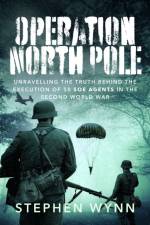
Englandspiel Nordpol, or Operation North Pole, was a successful Second World War counterintelligence operation conducted by Germany's military intelligence (the Abwehr) between 1942 and 1944. On the night of 6-7 November 1941 two SOE agents, Huub Lauwers and Thys Taconis were parachuted into the Netherlands and dropped over Stegerveld, near Ommen. Lauwers was captured on 6 March 1942, whilst Taconis was captured 3 days later on 9 March. Lauwers was persuaded to send messages back to London by the Germans, in which he intentionally left out two security checks. This should have automatically sounded 'alarm bells' with those who received the messages, but for some inexplicable reason, it did not. Whether this was just a genuine mistake or something more sinister has never been fully ascertained. After all, security checks were in place to ensure that messages received from agents in the field were genuine and were part of the SOE's own transmission protocol.âEUR'âEUR'âEUR'As no one in London realised messages being received from SOE agents in the Netherlands were being sent under the control and direction of German military intelligence, more and more agents and equipment followed unabated for more than 18 months. Of the 54 SOE agents sent to the Netherlands from England during Operation North Pole, 50 died or were executed whilst being held prisoner by the Germans.
"First edition published by Harcourt Brace College Publishers 1999"--T.p. verso.
For as long as humanity has ventured on the seas, naval warfare has been an integral part of their activities and the focal point for many histories and ideas of heritage. This book presents a rarely explored aspect: the long-term impact of those battles on shorelines, seas, and oceans.
During the Second World War over 200,000 British prisoners of war were detained by the Third Reich. A large proportion of these PoWs were members of the Royal Air Force, or airmen who served in it. A number of them have been immortalized in the many books and movies that have portrayed their valiant exploits and escapes, none more so than the events surrounding the Great Escape in 1944.The names of camps such as Stalag Luft III, at Sagan, and Colditz Castle are well known to the general public, the prisoners incarcerated there often being held in high regard. But there were a few PoWs whose loyalty to the cause and their fellow prisoners might not have been as strong.The names of Pilot Officer Railton Freeman, Sergeant Jack Alcock and Sergeant Raymond Hughes are among those found in that inglorious group of alleged traitors, for all three men betrayed their colleagues and the nation. The trio assisted the Nazi regime in making radio broadcasts, or even joining the British Frei Korps, a unit of the dreaded SS. One gave information about the Monica radar system to the Luftwaffe, and others got fellow prisoners to divulge information on fake Red Cross forms.Other prisoners such as Flight Lieutenant Julius Zuromski and Squadron Leader Robert George Carpenter also came under suspicion when reports began to arrive at MI9 in London. Inquiries were subsequently undertaken by the RAF Special Investigation Branch and MI5 - investigations that would ultimately lead to the imprisonment of some and the release of others.What these men did and why some were prosecuted, and others were released without charge, is examined by the author. Why one man in particular, an ardent Nazi and traitor, was not sentenced to death, having liaised with the likes of the infamous William Joyce, also known as 'Lord Haw Haw', and even Josef Goebbels, is a mystery to this day.Sadly, not all our aviators were heroes. But there has long been debate that some of them might have actually been working for the Security Services. So, were these men traitors who collaborated with Hitler's Third Reich, or agents working for the British State?
Fabian Colonial Essays (1945) brings together a host of leading thinkers to discuss different aspects of colonialism. It examines socialism and imperialism, colonial development, economics and colonialism, social services amongst other issues, all through the lens of 1940s British progressive politics.
Dual Legacies in the Contemporary Caribbean (1986) is a comparative and systematic study of the legacies bequeathed by British and French colonial rule in the Caribbean. These essays offer provocative insights and report intriguing parallels between the British and French experiences in the region.
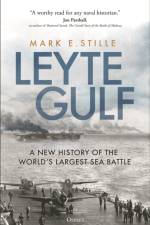
A re-examination of the battle of Leyte Gulf, the largest naval encounter in history and probably the most decisive naval battle of the entire Pacific War, and one that saw the Imperial Japanese Navy eliminated as an effective fighting force and forced to resort to suicide tactics.
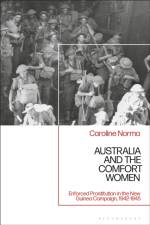
In the aftermath of WWII Australia undertook a number of war crime trials, and yet despite detailed records about Japanese military sexual slavery during the New Guinea Campaign, 'enforced prostitution' was not among the crimes prosecuted. This book asks why, when enforced prostitution was listed as a war crime, and both Australian and civilian authorities had reported the Japanese 'comfort women' scheme of military sexual slavery, its perpetrators were never called to justice.Bringing unpublished evidence to light, and employing both English and Japanese archival sources, this book describes the nature and extent of the trafficking and sexual slavery of women in the Pacific theatre of war, and connects it to sexual exploitation and violence in post-war Japan, Korea, Vietnam, Afghanistan and Australia. Highlighting the ways in which cultural assumptions about Asian women influenced the perception and treatment of the so-called 'comfort women' by Australians, it argues that this prevented the prosecution of perpetrators for war crimes, and contends that these cultural assumptions have continued to influence the business, and tolerance, of sexual slavery in Australia today.
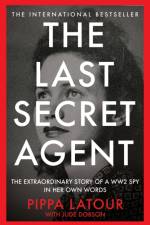
An incredible story of courage, peril, secrecy and resistance.'You know you can change your mind, don't you? Even now. Even when you are halfway across the English Channel. Any time before you jump.''Yes, I know,' I quickly reassured her, 'and I won't.'In June 1940, a covert new force - the Special Operations Executive (SOE) - was set up to wage a secret war. Its agents were tasked with sabotage and subversion behind enemy lines, and over the course of the next five years, 470 special agents would be sent into France. Only 25 female SOE agents would return. None before have told their story in their own words.This is the astounding true story of Phyliis "Pippa" Latour, one of the last female SOE agents to get out of France alive after its liberation in WWII. Born in 1921, Pippa's was an unusual childhood, followed by an even more extraordinary early adult life as she was parachuted into France aged 23. Incredibly brave, she travelled around the rural French countryside, concealing her codes in a hair tie and her Morse key underneath her bicycle seat, and sending crucial information back to Britain in the lead-up to D-Day. More than once she came frighteningly close to being discovered.For decades, Pippa told no one - not even her family - of her incredible feats. Now for the first time, her story can be told in full.
This book highlights how resource constraints and client agency impact China's patronage policy in their pursuit of regional geopolitical power.
The book will be of interest to scholars working in art history, World War II history, and film studies.
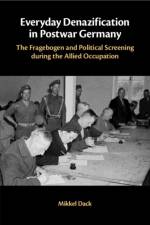
In the wake of the Second World War, the victorious Allied armies distributed twenty million political questionnaires, or Fragebögen, to anxious Germans who hoped to prove their non-Nazi status and gain employment. This grassroots history illuminates the Allied screening campaign and offers an original and comprehensive history of denazification.
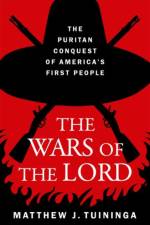
Matthew J. Tuininga tells the epic yet tragic story of the Puritan conquest of New England from the perspective of those who lived it, both colonists and Native Americans. Religion, he argues, was the central driving force of both peaceful efforts to convert Native Americans to Christianity and the brutal slaughter of Native Americans in wartime.
This book offers a thoroughly researched and detailed account into the formation and development of Na Fianna Éireann in Cork city during the bloody fight for Irish Independence.
Abonner på vårt nyhetsbrev og få rabatter og inspirasjon til din neste leseopplevelse.
Ved å abonnere godtar du vår personvernerklæring.