







Gjør som tusenvis av andre bokelskere
Abonner på vårt nyhetsbrev og få rabatter og inspirasjon til din neste leseopplevelse.
Ved å abonnere godtar du vår personvernerklæring.Du kan når som helst melde deg av våre nyhetsbrev.

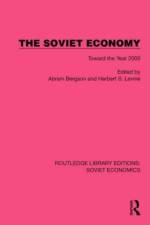
The Soviet Economy (1983) examines the long-term prospective growth of the USSR's economy. It looks at the Soviet economy's growth process at an advanced stage of development, and assesses how it would evolve in the period ahead.
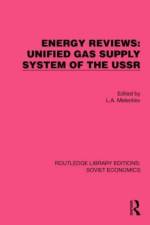
Energy Reviews: Unified Gas Supply System of the USSR (1985) explores some important aspects of the development and operation of the unified gas system of the Soviet Union.
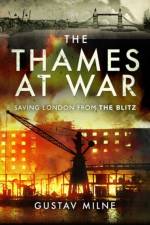
Highlights the overlooked importance of, and threat to, the River Thames during the Blitz, WW2. Had the Thames' defences been damaged, catastrophic flooding would have occurred.
This study examines the origins, evolution, and goals of Polish and Estonian diaspora communities in Sweden during the Cold War. The author analyzes their links with both their host and homeland societies and investigates their clandestine efforts to undermine the communist regimes of their homelands.
From the ranks of Hitler's select few grew the SS, a modern praetorian guard which developed into a massive and efficient military-style force with tentacles spreading into all elements of German life. Hitler appointed leaders upon whom he could rely. Many names remain obscure, but this large book highlights who they all were and how they appeared.
The year 2025 marks the 75th anniversary of final demobilisation of the Women's Land Army in 1950. The employment of over 200,000 land girls on British farms, replacing male farm labourers who joined the armed forces, contributed to the nation's ultimate successes in both the world wars. WLA was, though, regarded as the 'Cinderella' service, receiving far less appreciation than other wartime organisations. Land girls received lower pay, were billeted away from home, had hard physical work to perform, suffered harsh winter weather, and often had inadequate clothing. Hampshire's contributions were substantial; it might have been the first county to embrace the need for women farm workers, to have more members per head of population, Sparsholt College devoted almost its entire curriculum to training women and girls for employment on British farms, and both First World War ministers of Agriculture came from the county.
Fully revised and expanded for a new Third Edition, this book traces the Greek origins of torsion catapults, describes the machines used from the time of Sulla and Caesar, the Roman improvements in their design and power, and their importance in the defence of the Roman Empire.
Three detailed studies consider British naval and military, diplomatic and commercial activity in the eastern Adriatic during the Napoleonic wars, drawing on original research in various British archives.
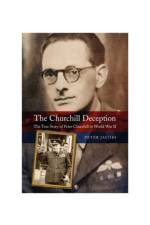
To carry out one clandestine mission required courage, but to do it four times required courage on a quite extraordinary scale. Yet, that is exactly what Peter Churchill did. Peter Morland Churchill was born in Amsterdam in 1909 to British diplomat William Churchill and his wife Violet. A particularly gifted linguist, upon graduating from university, Churchill followed in his fatherâEUR(TM)s footsteps and entered into the British diplomatic service before eventually joining the Home Office Advisory Committee. Following the outbreak of the Second World War, ChurchillâEUR(TM)s professional exploits and linguistic prowess led him to the Special Operations Executive (SOE) âEUR" a secret British organisation formed in 1940 to carry out subversive warfare against the enemy in Nazi-occupied Europe. Churchill was among the early volunteers for the SOE, and joined as an Intelligence Officer in the French Section in 1941\. Throughout his time in the organisation, Churchill made it into France on four separate missions. Each of these assignments were hazardous, requiring courage, resourcefulness and tireless hard work. Churchill was successful in his first three missions, but these hazards caught up with him and he was captured at the beginning of his fourth deployment to France. He endured torture, solitary confinement and the everyday horrors of the concentration camps as a result. He eventually made it back home at the end of the war and was awarded the Distinguished Service Order for his outstanding courage. The story of Peter Churchill and his time in the SOE is an incredible one. This remarkable history truly does justice to these experiences and will captivate any reader interested in the SOE or in the Second World War in general.
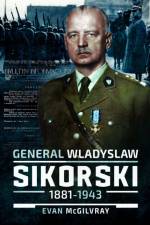
General WÅ'adysÅ'aw Sikorski was the Head of the wartime Polish Government and Polish Commander-in-Chief, 1939-1943\. Sikorski rose to prominence in Poland between 1910 and 1918 as part of the movement towards Polish independence, achieved in 1918\. In 1920 Sikorski was largely responsible for the defeat of the Red Army. In 1926 he fell from favour following a military coup. During this fallow period, 1926-1939, Sikorski travelled, mainly in France. He also wrote influential military-science treatises. In September 1939 Germany and the Soviet Union invaded and annexed Poland. Sikorski, his military offices refused by the Polish Government, fled to Romania. There he was intercepted by the French ambassador to Poland and taken to Paris where he established a Polish Government-in-Exile and rebuilt the Polish Army. In May 1940 France was overrun by Germany. Sikorski removed himself and his government to London. There he began to re-build the Polish army largely lost in France. Following the German invasion of the Soviet Union, Sikorski was forced by the British Government to accept the Soviets as allies. This led to a larger Polish army being formed in the Soviet Union and sent to the Middle East, commanded by General Anders who was to become a thorn in SikorskiâEUR(TM)s side. By 1943, the two men were clearly enemies. Sikorski died in an air crash off Gibraltar. The cause has never been satisfactory established.
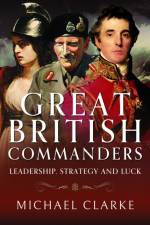
Military commanders matter. They win or lose battles, determine the outcomes of wars and often shape the history of nations. But they are also human individuals. This study of thirty-four British commanders, from Boudica to Bomber Harris, reflects on their personal stories, as individuals and warriors; as husbands and wives, libertines and lovers, strategists and shapers of British history over almost two thousand years. Short biographical essays, by military analyst Michael Clarke, cover a sweep of British history from the epic story of Queen Boudica in Roman Britain, to the generals, admirals and air marshals of the First and Second World Wars. Their styles of leadership, their strategies âEUR" or in some cases lack of them âEUR" are examined as they throw themselves on fortune. And the Gods of War decide whom will be lucky, and whom not. Some commanders described here were obvious shapers of British history, like King Alfred, William the Conqueror, Henry V, Cromwell, Marlborough, Wellington or Montgomery. Some were unlucky and seemed beset by failure, like Walter Raleigh, Sir John Moore or General John Gort. Others are less well-known as significant commanders; like Lady Aethelflaid of Mercia, the Empress Matilda, the âEUR¿greatest knightâEUR(TM), Sir William Marshal, or Cuthbert Collingwood who served with Nelson at Trafalgar. All have fascinating stories. Their experiences are compared in two final chapters that draw from unique interviews with a number of living British commanders who reflect on the âEUR¿eternal veritiesâEUR(TM) of command but also the new conditions of twenty-first century warfare.
2024 Independent Publisher Book Awards Winner - Silver Medal, World HistoryNadia Comaneci is the Romanian child prodigy and global gymnastics star who ultimately fled her homeland and the brutal oppression of a communist regime. At the age of just 14, Nadia became the first gymnast to be awarded a perfect score of 10.0 at the 1976 Montreal Olympic Games and went on to collect three gold medals in performances which influenced the sport for generations to come, cementing Nadia's place as a sporting legend. However, as the communist authorities in Romania sought an iron grip over its highest-profile athletes, Nadia and her trainers were subjected to surveillance from the Securitate, the Romanian secret police. Drawing on 25,000 secret police archive pages, countless secret service intelligence documents, and numerous wiretap recordings, this book tells the compelling story of Nadia's life and career using unique insights from the communist dictatorship which monitored her.Nadia Comaneci and the Secret Police explores Nadia's complex and combustible relationship with her sometimes abusive coaches, Béla and Marta Károlyi, figures who would later become embroiled in the USA Gymnastics scandal. The book addresses Nadia's mental struggles and 1978 suicide attempt, and her remarkable resurgence to gold at the Moscow Olympics in 1980. It explores the impact of Nadia's subsequent withdrawal from international activity and reflects on burning questions surrounding the heart-stopping, border-hopping defection to the United States that she successfully undertook in November 1989. Was the defection organised by CIA agents? Was it arranged on the orders of President George Bush himself? Or was Nadia aided and abetted by some of the very Securitate officers who were meant to be watching the communist world's most lauded sporting icon? What is revealed is a thrilling tale of endurance and escape, in which one of the world's greatest gymnasts risked everything for freedom.
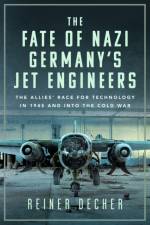
In April 1945, American forces were sweeping eastwards toward Berlin, in part advancing across territory that would eventually become part of the Soviet Occupation Zone. As they advanced, US troops uncovered major parts of the manufacturing facilities and the people associated with the engines that powered GermanyâEUR(TM)s last generation of miliary aircraft: the jet fighters and bombers. Understandably, the engine technology involved in powering these aircraft, such as the Messerschmitt Me 262 and the Arado Ar 234, was of great interest to the Allied nations. Among the many questions that needed to be answered was whether the Germans had made important breakthroughs in their successful use of these engines. Having made these discoveries and seizures, the American authorities needed to decide exactly what they would do with them. Would they share the bounty with the other Allies? American collaboration with the British was a fact. The French, while Allies, were, in American eyes, militarily unimportant in realizing the defeat of Nazi Germany. Sharing technology with them was not of great interest. The Soviets were far behind, but nevertheless ambitious and keen to catch up to western military capability. The Americans knew their relation to the Soviets was tense and confrontational: no sharing was likely there. From their perspective, HitlerâEUR(TM)s jet engineers faced not only a lost war, but the economic and intellectual realities that work in Germany would not be available. They had technical knowledge and experiences that were undeniably valuable to the Allied victors. These nations would be engaged in a new competition for control of world affairs that would be called the Cold War. While the major technical interests were atomic bombs, guided missiles, and jet engines, it is the last of these that is explored here. What happened to the people and to the institutions they would staff? This is the story of some who found homes and work in the US and in France and some who were brutally abducted to the Soviet Union. This is also the story of American decisions made regarding the German jet engineers and the consequences for them as people and propulsion technology for American, French, and Soviet aviation. The competitive stance between the Soviet Union and the Western Allies was one of the key elements of the Cold War that followed. It led to a brutal Russian view and execution of war reparations that elevated the Soviet Union into a powerful position to challenge the West.
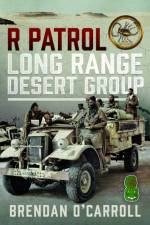
This is the story of the New Zealand R Patrol, Long Range Desert Group, who within their ranks had some very distinguished icons such as Jake Easonsmith, Don Steele, Dick Croucher Tony Browne, Bluey Grimsey, and Buster Gibb. Their stories are told, including that of many others, mostly in the words of the participants themselves by way of wartime operational reports, diaries, personal letters, and post war interviews. This provides a human touch to the narrative, examining the thoughts and observations of those who served. The work also explains the formation of the unit, including its early missions and of the vehicles, supplies, weapons, and equipment used. In addition, serving as a âEUR¿Taxi ServiceâEUR(TM) for behind the line missions carrying agents, commandos, military observers, rescuing downed airmen and escaped PoWs. Chapters are also devoted to working with the SAS and Free French, supporting the Eighth Army, and undertaking the Road Watch. This includes dramatic accounts of air attacks and ground actions against enemy convoys and engagements with Axis forces. This is all supported by 288 images including maps and art.
_Battle of Monte Natale_ brings together contemporary accounts showing war, not only at the strategic level involving Corps, Division, Brigade and Battalion, but also the individual level, by extensive use of War Diaries, personal accounts, missing person reports and the inspiring stories of heroism and the sacrifices made which were recognised by the awards for valour. It is the story of those individuals who fought and died in the Battle of Monte Natale. Minute by minute, hour by hour, day by day, by words, pictures, and maps it shows what happened in the three weeks from 17th January to 7th February 1944 in an area of just nine square kilometres. It is a unique glimpse of an important battle from both sides of the conflict and includes personal German and British views of the battle. Few books about World War II show a battle in such detail.
As the war progressed Hitler did not need obedient bureaucrats like Keitel, failures like Paulus and was paranoid about having military leaders who were loyal. The three field marshals in this book were amongst the best. Field Marshal Kesselring gained a reputation in Italy as an expert in defence, and his Allied code name was The Emperor. Kesselring was diplomatic, charming, known as Smiling Albert, but convicted as a war criminal which may not have happened had it not been for the bitter partisan war. Field Marshal Rommel is surrounded by myths which need disentangling. He possessed exceptional qualities of command and leadership, with personal courage and determination, but had problems caused by two major reasons. The first was his relentless ambition, which prevented him from self-criticism and self-evaluation. The second was his meteoric rise in command, and like many other commanders driven by ambition. Field Marshal Model when on the battlefield led his men so well it is surprising that little is known of him. He fought defensive battles in a way hardly matched by any other German general. He had the immense capability of keeping his nerve, but his skills as a commander, were not matched by the sort of personality which may have given him a similar status as with Rommel, and not helped by challenging Hitler. Model had a reputation of being so tough even Hitler claimed he would not want to serve under him, he was known as the Frontschwein (front-line pig).
The first days of the Battle of the Bulge saw tactical defeats for several formations of the US army. The Saint-Vith sector was particularly hard hit by the surprise attack that prevailed on the morning of 16 December 1944\. Two American units, the 106th Infantry Division and the 14th Cavalry Group, were crushed in front of this small town, which was of vital importance to the German offensive in the Ardennes. To the north-west of Saint-Vith is a small hamlet consisting of a few houses: Poteau. The area is well known to military history enthusiasts thanks to a series of photographs taken by a German Propaganda Kompagnie, which were later captured by the US Army and have since become famous the world over. Although this series of photographs was a staging point for a propaganda battle, their frequent appearance in history books on the Ardennes offensive prompted the author to investigate what really happened in this small village on the border between the Ardennes and the German-speaking cantons of Belgium, and how its history is closely linked to the drama of the Battle of Saint-Vith.
This is a study of the officers who were promoted to the rank of general and who were also awarded the KnightâEUR(TM)s Cross during the early period of HitlerâEUR(TM)s assault upon the Soviet Union. This takes us from the great onslaught of Operation _Barbarossa_, through to HitlerâEUR(TM)s decision to abandon his attempt to capture Moscow and adopt a temporary defensive stance due to the early onset of winter. Such was the scale of operations during these momentous first six months of the war on the Eastern Front there were endless opportunities for officers to display courage and leadership. This resulted in a total of 178 generals âEUR" twenty-six _Generalmajors_; fifty-six _Generalleutnants_, eighty-four full _Generals_, eleven _Generalobersts_ and one _Generalfeldmarschall_ âEUR" being awarded the KnightâEUR(TM)s Cross in this period alone. One such recipient was _General der Artillerie_ Erich Marcks who personally directed the fire of his guns against enemy bunkers at very close range. On the day he was notified of his award of the KnightâEUR(TM)s Cross he was seriously wounded and had to have his left leg amputated. Despite this he returned to service in March 1942 and was later awarded the KnightâEUR(TM)s Cross with Oakleaves. _General der Infanterie_ Ernst Schroth, the Commanding General of the XII Army Corps, was awarded the KnightâEUR(TM)s Cross for his part in the attack on the Brest-Litvosk Fortress in June 1941\. Considered a staunch supporter of Hitler, he was appointed to the Court of Honour which investigated those members of the Wehrmacht who had participated in the 20 July 1944 _Valkyrie_ plot to kill the Fÿhrer. Hermann-Heinrich Behrend was just a Major when he was awarded the KnightâEUR(TM)s Cross on 15 July 1941\. This was for his actions while commanding I. Battalion of the 489th Infantry Regiment in its successful breakthrough of the enemyâEUR(TM)s heavily defended lines southeast and east of Tauroggen in Lithuania on 22 June 1941\. Behrend continued to display great courage and resourcefulness, which saw him rise to the rank of _Generalmajor_ and the later awards of both the KnightâEUR(TM)s Cross with Oakleaves, and the KnightâEUR(TM)s Cross with Oakleaves and SwordsWith each of these 178 entries there is a detailed description of how and where the KnightâEUR(TM)s Cross was won and in the case of the higher awards, such as the Oakleaves, Swords and Diamonds, who presented the award, where and when. This study provides details of their rank and command at the time of the award as well as also detailing their career during the war and after, with investigations into their fate and post-war life. The book is completed with a considerable number of photographs of many of these officers.
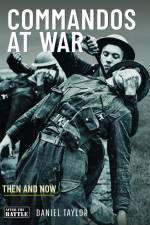
The Commandos stand out as an iconic and fascinating formation who will always be of interest to the reading public. Created in June 1940, just after the fall of France, the commandos were established as a small, elite raiding and reconnaissance force with the express intention of hitting back at the Germans when few alternatives were available. During the war the formation grew in size and complexity, taking part in the most dangerous and compelling actions, and making themselves indispensable.
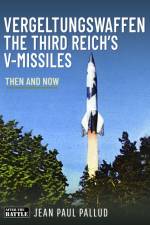
Whether it is their innovative technical development or the Nazi propaganda harping them as revolutionary wonder weapons, readers interested in World War II find the research on 'German secret weapons' very interesting. The V1, a flying bomb we would now call a cruise missile, opened in June 1944 and soon dozens of them were hitting England day and night. Churchill was so worried that he issued a memorandum proposing to drop poison gas on German cities. To strengthen the faith of the German people in the final victory, despite an increasingly desperate military situation, Nazi propaganda gave the name to this new weapon, V1 for Vergeltungswaffe 1, weapon of revenge number 1. The first V2s, a large liquid-fuelled rocket, were fired against Paris and London on September 8. The V1s and V2s, but also jet engines, were produced by slave workers in the underground factory of Mittelwerk. Inmates from nearby Dora concentration camps provided the labour force, the usual gruesome methods were employed, and over 20,000 of the forced laborers of the Mittelwerk perished. The SS finally seized power not onlye of the production of V-Weapons but also of their operational command. The last months of World War II, when Germany was on the defensive on all fronts and desperately looking for 'wonder weapons', saw a number of ineffective, albeit innovative, technical developments. Among them were the HDP and the Rheinbote, the third and fourth V-Weapons, which were launched into battle in small numbers. V-weapons were indeed inventive weapon concepts, but it must be remembered that Nazi Germany failed to realize that the real super-weapon was going to come from nuclear technology. The only real superweapon of World War II, the atomic bomb, was developed by the Western Allies. The Allied powers had recognized the technical potential of the V2s and to learn German technique of launching long-range rockets, an Operation 'Backfire' was conducted in the summer of 1945 with captured German personnel supervised by British technical experts. Three V2s were launched in October. The United States wasted no time in acquiring 120 top rocket scientist Germans and the first test of a V2 on American soil took place on March 3, 1946\. The Russians also captured German rocket technicians who quickly resumed their work in Russia.
This book is a primary source collection of thirty speeches of the Cold War from 1917 to 1991, representing a cross section of leaders on all sides of the conflict from North America, the Caribbean, Europe, and Asia.
Leveller Manifestoes (1944) is a collection of primary manifestoes issued by the Levellers, the group which played an active and influential role in the English revolution of 1642-49. This book collects together rare pamphlets and tracts that are seldom available, and certainly not in one place for ease of research.
This book examines the evolution of military design thinking, which is an emergent discipline within the field of military and defence studies.
Abonner på vårt nyhetsbrev og få rabatter og inspirasjon til din neste leseopplevelse.
Ved å abonnere godtar du vår personvernerklæring.