













Gjør som tusenvis av andre bokelskere
Abonner på vårt nyhetsbrev og få rabatter og inspirasjon til din neste leseopplevelse.
Ved å abonnere godtar du vår personvernerklæring.Du kan når som helst melde deg av våre nyhetsbrev.

How democratic regimes should engage with authoritarian regimes, or self-proclaimed authorities in states under occupation, has long been a subject of debate. The work examines Canada's relations with member-states of the Warsaw Pact during the Cold War. Central and East European communist states were nominally independent but established under occupation. Canadian leaders explored whether engaging in foreign relations with these countries would encourage liberalization or embolden dictatorships. Over time, Canada's position evolved as a policy of encouraging bilateral and multilateral diplomacy, while calling for the respect of human rights. However, Canada's economic relationship with East European states was at times at cross-purposes with its democratic principles. Andrea Chandler concludes that while Canada did play a role in encouraging democratization, the country's leaders did not sufficiently consider the impact of these policies on the citizens of Warsaw Pact countries. This book treats Canada's engagement with Hungary, Poland, the German Democratic Republic, Romania, Bulgaria and Czechoslovakiaduring the Cold War, in which the Western countries of the North Atlantic Treaty Organization (including Canada) had an adversarial relation with the Soviet bloc nations.
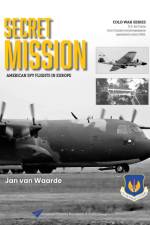
Secret Mission tells the tale of the secretive reconnaissance units assigned to the United States Air Forces in Europe that flew covert reconnaissance aircraft and specialized jet aircraft from bases in West Germany during the Cold War, keeping an eye on communist developments behind the Iron Curtain. A glimpse of this intriguing history is compiled by Jan van Waarde with the help of John Bessette, 7499th Group Association Historian.
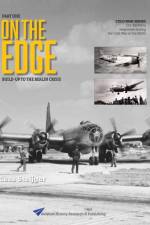
During the postwar era, the Soviet Union emerged as America's sole threat, rendering the U.S. Army and Navy impotent against its vast military power. The anticipation of war stemmed from a potential Soviet invasion of Western Europe, supported by the Soviet Union's substantial military capabilities. Acknowledging the impossibility of stopping the Soviet Union in a conventional war, the U.S. developed a series of war plans outlining scenarios of massive nuclear retaliation. The U.S. Joint Chiefs of Staff released the war plan Pincher in June 1946, calling for land and sea forces to retreat before a Soviet offensive. Simultaneously, the Army Air Forces would drop atomic bombs on twenty Soviet industrial, government, and military centers from bases mainly in England. After strategic bombing damaged the Soviet Union, U.S. forces would be mobilized for a counteroffensive. In August 1947, the war plan Broiler reflected an increasing reliance on the atomic bomb, hoping the nuclear air offensive would stabilize the war in the first six months and possibly convince the Soviets to surrender. However, these plans remained theoretical due to the inadequacy of the U.S. atomic stockpile. The Strategic Air Command (SAC), reliant on B-29s, faced limitations. Because of the B-29's limited range, SAC depended on overseas bases. Additionally, only a single group was able to deliver the atomic bomb. Soviet awareness of American shortcomings prompted their expansion in Eastern Europe and escalated the discord among the Allies over Berlin. The Soviet blockade of Berlin in July 1948 and the Western reaction marked a turning point in the Cold War. Cees Steijger explores the circumstances that brought the world close to a third world war. Throughout the Cold War, humanity lived on the edge of collapse, narrowly avoiding apocalypse multiple times.
Der Rückblick auf die Jahre des Ersten Weltkrieges würde unvollständig bleiben, wenn man das Landvolk, das damals noch überall die Bevölkerungsmehrheit ausmachte, nicht berücksichtigen würde. Diesem Thema widmet sich der vorliegende Sammelband, der aufzeigt, wie sehr sich die Lebensumstände der ländlichen Bevölkerung drastisch änderten und eine Fülle von Emotionen aufkommen ließen. Der Schwerpunkt der Beiträge liegt auf dem Alpen-, Donau- und Karpatenraum, doch kommt auch die Westfront (Frankreich/Belgien) zur Sprache.
The book will provide the first substantial study of Israeli national intelligence culture, based on elite interviews with acting and former national security practitioners.
This book examines hybrid threats within the broader context of a security crisis in Europe.
This book examines hybrid threats within the broader context of a security crisis in Europe.
Muslim Eurasia (1995) looks at the Muslim states that came into being on the ruins of the Soviet Union, and their complex legacies of Russian colonialism, russification, de-islamicization, centralization and communism - on top of localism, tribalism and Islam.
The Soviet Economy on the Brink of Reform (1988) is a collection of essays in honour of Alec Nove and covers such topics as Leon Trotsky, Navrozov, Soviet Investment criteria, Soviet Agricultural, and economic politics under Andropov and Chernenko.
The Soviet Far East (1990) examines the largest economic region in the Soviet Union, the Far East. The region is explored in all its geographical and economic complexity, including its development, history, analysis of its environment, and of the region's vital strategic significance to the Soviet Union.
The Disintegration of the Soviet Economic System (1992) examines in detail the collapse of the Soviet economic system, and is set in its political context, both international and domestic. The collapse is looked at from a macroeconomic point of view, both real and financial, as well as from a mesoeconomic viewpoint.
Abonner på vårt nyhetsbrev og få rabatter og inspirasjon til din neste leseopplevelse.
Ved å abonnere godtar du vår personvernerklæring.