










Gjør som tusenvis av andre bokelskere
Abonner på vårt nyhetsbrev og få rabatter og inspirasjon til din neste leseopplevelse.
Ved å abonnere godtar du vår personvernerklæring.Du kan når som helst melde deg av våre nyhetsbrev.

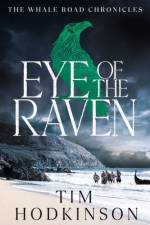
PREORDER EYE OF THE RAVEN, THE EXCITING NEW WHALE ROAD CHRONICLES VIKING ADVENTURE FROM TIM HODKINSON, NOW!Alone in a foreign land, Viking warrior Einar must choose his loyalties in the face of warfare. The gripping new instalment in the Whale Road Chronicles. For the first time, Einar and the Wolf Coats find themselves divided as circumstances mean they end up on opposing sides: the Wolf Coats in Ireland, and Einar in the lands of the English. With war brewing and a great battle on the horizon, can Einar and his comrades reunite in time - or will the horrors of war make their split a permanent one?
Nazi Euthanasia on Trial 19451953. Analyzes the Nazi euthanasia campaign against the mentally ill and the postwar quest for justice.
The Berlin Airlift of 1948-1949 was the monumental Allied response to the Soviet blockade, sustaining Berlin with vital supplies via an unprecedented airlift operation.It was a time of high drama. The tension mounting with each passing day, with each new restriction, each demonstration of strength. Berlin was the battleground, located within the Soviet sector of Occupied Germany. The Western Allies were determined to maintain their rights of access to the German capital; the Soviets were equally determined to isolate Belin. The result was that in the summer of 1948 the Soviets severed all over-ground links. This meant the only way by which the Allies could to deliver the vital supplies of food and fuel to the beleaguered Berliners was by air. So began the greatest logistical air operation in history.On 24 June 1948, the Berlin airlift began. Aircrews from the USAF, RAF, Royal Canadian Air Force, Royal Australian Air Force, Royal New Zealand Air Force and South African Air Force flew more than 1,500 flights every twenty-four hours, delivering up to 8,893 tons of necessities each day.As it became clear that the Allies were both willing and able to continue the airlift indefinitely, in the spring of 1949 the Soviets announced that they were prepared to negotiate an end to the blockade of Berlin. It was finally lifted on 12 May that year.In total 2,326,406 tons of materials and products were delivered to Berlin on 278,228 flights. Some 692 aircraft were engaged in the Berlin Airlift, more than 100 of which belonged to civilian operators, flying nineteen different types of aircraft, including flying boats which landed on Berlin's Spree and Havel rivers.The result of the Soviet blockade was the formation of the state of West Germany, and the introduction of its new currency, the Deutschmark.
This book tells the story of the supposed Wunderwaffen - miracle weapons - that Hitler claimed would win them the war: Nazi flying the V-1 flying bomb, the V-2 rocket, the V-3 heavy gun and much besides. Was he simply boasting out of desperation, or were these weapons projects a real threat to Allied victory? Michael FitzGerald investigates.
The Hitler Youth was founded in 1922 as the youth organisation of the German Nazi Party in Germany. After Hitler became Chancellor in 1933, the organisation gained importance as a route to indoctrinating German youth with the ideals espoused by the Nazis. As war approached it became partially a paramilitary organisation and as war broke out and Germany came under greater pressure, many very young boys saw military action, fighting and dying for the country. Featuring contemporary photographs, The Hitler Youth tells the story of the origins of the movement in more innocent aims, and how its aims morphed over time to become a powerful way to disseminate Nazi ideas to an undiscerning audience.
The book seeks to reframe debates on the conflicting scientific and spiritual traditions that underpinned Nazi worldview, and shows how despite the multitude of tensions and rivals among its adherents, it provided a coherent conceptual grid and possessed its own philosophical consistency.
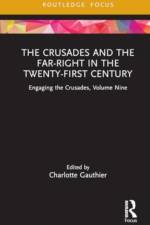
This volume explores how crusading rhetoric, iconography, and historiography have been purposed by far-right, nationalist, and related groups in the recent past.
The first edition, translation, and commentary on previously unknown medieval sermons written to defend the Catholic religion against heresy in the early thirteenth century, set against the historical backdrop of the crusade against Albigensian heretics in south-western France and during campaigns to push back heresy in northern France.
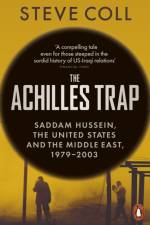
The Achilles Trap masterfully untangles the people, ploys of power and geopolitics that led to America's disastrous war with Iraq and, for the first time, details America's fundamental miscalculations during its ruinous, decades-long relationship with Saddam Hussein.Beginning with Saddam's rise to power in 1979 and the birth of Iraq's secret nuclear weapons programme, Steve Coll traces Saddam's motives through understanding his inner circle. He brings to life the diplomats, scientists, family members and generals who had no choice but to defer to their leader - a leader directly responsible for the deaths of hundreds of thousands of Iraqis, as well as the torture or imprisonment of many more. This was a man whose reasoning was impossible to reduce to a simple explanation, and the CIA and successive presidential administrations failed to grasp critical nuances in his paranoia, resentments and inconsistencies - even when the stakes were incredibly high.Using unpublished and underreported sources, interviews with surviving participants, and Saddam's own transcripts and audio files, The Achilles Trap is a remarkable picture of a dictator who was convinced the world was out to get him and acted accordingly. A work of great historical significance, it is the definitive account of how corruptions of power, lies of diplomacy and vanity - on both sides - led to avoidable errors of statecraft: ones that would enact immeasurable human suffering and forever change our political landscape.
This book dives into the histories of nation-state-building and curriculum formation to explore the ways that they intertwine, form and inform each other.
Although the literature on terrorism is vast, there are many gaps in it. This book helps to fill these lacunae with entries from top terrorism scholars and counterterrorism practitioners in the world.
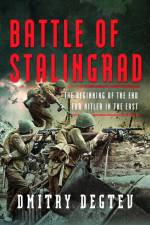
A ground-breaking study of the Battle of Stalingrad containing unpublished materials detailing branches of the armed forces and the important contribution of the Russian river flotilla.The Battle of Stalingrad was the bloodiest battle of the Second World War. An estimated 2 million individuals, military as well as civilian, became casualties in a savage struggle which lasted for more than five months.Stalingrad's strategic position on the River Volga in southern Russia meant that whoever controlled the city controlled access to the oil fields of the Caucasus. Without that oil, the Germans were ultimately destined to fail on all fronts. The Battle of Stalingrad was, therefore, arguably, the most important conflict of the entire war. Yet, the author argues that both Hitler and Stalin lost sight of the real objectives of the campaign, with the capture of Stalingrad becoming seen as the end in itself. Stalingrad was not specified as a particular objective of the Germans in the original plan of Operation Blau. But when the defenders of Stalingrad unexpectedly stood in the way of the Germans, it became the focal point of the German effort.Hitler and his generals were naively sure that after the capture of Stalingrad, victory in the war was a certainty. Stalin and his generals thought that since the Wehrmacht stubbornly fought over the city's ruins, regardless of the losses it suffered, it meant that the Germans knew more about its importance than they did, and so were determined to hold it at all costs. In fact, the strategic importance of Stalingrad was greatly exaggerated.The scale of the German operation to seize the Caucasus was immense, with an operation stretching for 1,500,00 kilometres (approximately equal to the distance between Berlin and Moscow). This involved laying routes for tank and infantry divisions through areas of virtual desert where there was an almost complete absence of railways and highways. No consideration was given to the needs of troops in fuel, ammunition, food or even water. At the same time, the unrealistic plan to capture the Caucasus did not provide any alternative options in case the main operation failed, which it was doomed to do.As for the Soviets, frightened and broken by the military disasters near Kerch and Kharkov, when entire armies were captured, Stalin authorized the retreat of the Red Army to the Volga, which turned into a stampede. But then the Soviet leader abruptly changed his mind and issued the famous order 'Not a step back!' While historians state that this order inspired the Soviet troops to resist and strengthened discipline, it in fact led to an increase in the number of defectors and collaborators.This ground-breaking study of the Battle of Stalingrad is a highly graphic chronicle of the fighting, shown from two sides, written by a Russian historian using much material previously unpublished in the West. It details the efforts of all branches of the armed forces; tanks, artillery, infantry, aviation and, for the first time, the important contribution of the Russian river flotilla.
Studies rebellion as historical phenomenon and literary construct in early Islamicate contexts.
At the height of the Russian Civil War in 1919 Britain poured in thousands of troops and vast amounts of munitions to assist the White Russian opponents of Lenin's Communist forces. This was despite exhaustion following the Great War and the Spanish flu epidemic.One man involved was 23-year-old Royal Marines officer, Thomas Henry Jameson. His mission took him and his men on a journey of 5,000 miles from Vladivostok to the battlegrounds not far from Moscow. As part of a White Russian Flotilla they steamed down the huge Kama River and fought a series of successful battles against superior Bolshevik gunboats. Later they were forced to retreat and, becoming cut off behind enemy lines, had to fight their way out knowing that, if captured, they faced summary execution. Eventually after a long and hazardous journey they made it back to their parent ship.Jameson and his Marines faced a multitude of hazards in this cruel civil war including disease which he described as 'the biggest challenge of all." In some other British units there were reports of mutiny due to terrible conditions. Yet, as this fascinating book describes, remarkably he succeeded not only to keep his men alive but inflict significant damage on a ruthless enemy.
Battle of Britain Spitfire Ace is the story of a young Canadian who in a short time, and for a brief time, mastered Britain's most legendary war machine, the Spitfire. It is also the story of a young English woman who was for a short time his wife, and for a long time his widow, and of their son who for much of his life knew little about his father and is still learning about him. Their stories, based on their letters, diaries, and photos, unfold in richly detailed context as the setting moves from Montreal in Nelson's youth, England in the last years of peace, the first (and largely forgotten) months of the air war against Nazi Germany, Canada during the war, and finally to post-war England.William Henry Nelson was a first-generation Canadian Jew whose family name was originally Katznelson. Like many young Canadians in the 1930s, he wanted to fly. Nelson began work in Montreal's aircraft industry, but in 1936, at the age of nineteen, he left a humdrum life on the ground to go to England, intent on becoming a pilot in the Royal Air Force. A year later he was posted to a bomber squadron. Willie (as his family and friends called him) was also a fine athlete. He was captain of his squadron's team in Britain's Modern Pentathlon competitions in 1938 and 1939. While stationed in Yorkshire, he met Marjorie McIntyre. Instantly smitten, they married days before the war began. Nelson was one of the first Canadians to fly in combat over Germany, only days after the war began. The award of a Distinguished Flying Cross a few months later made him an instant hero to the Jewish community across Canada. In Britain's desperate situation in June 1940 Nelson volunteered to retrain as a fighter pilot. Within weeks he destroyed five enemy aircraft, so becoming the only Canadian Spitfire ace in the Battle of Britain. Few fought as both bomber and fighter pilot during the Second World War, even fewer managed to excel at both.Willie Nelson was shot down on the first day of November, 1940, near the English Channel. He never saw his adversary, who may have been one of Nazi Germany's most decorated fighter pilots. Nelson was 23 years old, and by then the father of a two-month old boy, William Harle Nelson. Marjorie took her infant son to Canada in 1941, seeking to meet her late husband's family and provide little Bill the opportunity for a better life. She was one of the first war brides to do so. Marjorie was unprepared for the gulf in culture and class with Willie's mother, and she was shocked by the antisemitism she encountered in Montreal. She left the city after a few months to begin her life anew, alone in a strange country. Marjorie soon remarried a Canadian, Ted McAlister. In 1957 they moved to England where Bill, having taken his stepfather's surname, would become a prominent figure in Britain's cultural life. Only in his thirties, however, would Bill come to learn of the family and origins of the father he never knew. On the 80th anniversary of the Battle of Britain, the Royal Air Force Museum in London featured Nelson in its exhibit about the 'hidden heroes, ' the Jews who volunteered to fight in the RAF in the Second World War. Nelson had said little about his Jewish identity, though it was consequential to him and to others during his life and afterwards. Over the course of his four years in England, Willie Nelson refashioned himself. But who had he become? Who was the man behind the iconic portrayals, what had been his formative influences and his guiding lights? How did he come to do what he did and what, in those last few years in England, did he live and die for?
The atom bombs dropped on Japan opened the door to the nuclear age. In an ambitious programme, the US Navy paired missiles with nuclear-powered submarines resulting in the Polaris fleet of forty-one deterrent submarines with the first leaving on patrol in 1960. Agreement was later reached to supply the missiles to the Royal Navy.
This book explores the emergence of Yugoslav globalism and how it was influenced by the early Cold War, the changes once Yugoslavia established itself as a nonaligned leader, and what the decline of Yugoslav globalism reveals about the waning Cold War and the history of internationalist diplomacy.
This Handbook provides the first comprehensive and global analysis of medieval military strategy, covering the period from the sixth to the seventeenth century.
As a young girl Brooke Randel knew little about the Holocaust—just that it was a catastrophe in which millions were murdered, and that her grandma Golda Indig barely escaped that fate. But her Bubbie never spoke about what happened, and the two spent most of their time together making pleasant memories: baking crescent roll cookies, playing gin rummy, and watching Baywatch. Until an unexpected phone call when Golda said, out of the blue: “You should write about my life. What happened in the war.”What results is a fascinating memoir—about one woman's harrowing survival, and another's struggle to excavate the story from under the sands of time, and her grandma's illiteracy. Chronicling the darkness of the past and the difficult (and occasionally comic) challenges of bringing it to life in a sunny Florida condo, this book offers an insightful look into the relationship between grandparents and grandchildren,and the impossible pull of both silence and remembrance.
Abonner på vårt nyhetsbrev og få rabatter og inspirasjon til din neste leseopplevelse.
Ved å abonnere godtar du vår personvernerklæring.