
















Gjør som tusenvis av andre bokelskere
Abonner på vårt nyhetsbrev og få rabatter og inspirasjon til din neste leseopplevelse.
Ved å abonnere godtar du vår personvernerklæring.Du kan når som helst melde deg av våre nyhetsbrev.

Can true love win the day?Hetty Affleck is working as a maid at the prestigious Beach Hotel in Littlehampton. Her beau, Lorcan, is away at war and has recently stopped replying to her letters but she is determined to keep her spirits up. When she meets wealthy shipbuilder's son Victor Perryman, they pass the time of day and they both feel a connection but she can't allow herself to think anything more of it - not only does she have Lorcan to think of, but she and Victor are divided by wealth and class. Yet they meet again and Hetty is charmed and intrigued by Victor and his openness towards her. It becomes harder to ignore the attachment growing between them. When Lorcan comes back on leave, Hetty is forced to face her true feelings. Who does she really love, and can that love conquer everything in its path?An uplifting, emotional WW1 saga perfect for fans of Ginny Bell and Jean Fullerton
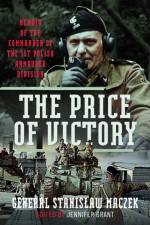
General Stanislaw Maczek's stirring memoir captures the élan, the sacrifice and the disappointed hopes of the Polish soldiers who fought alongside the Allies during the Second World War. As Commander of the 10th Motorised Cavalry Brigade in the September 1939 campaign, his men played a crucial role in resisting the German advance before crossing into Hungary with orders to rebuild the Polish Army on French soil. Fighting a further rearguard action during the 1940 Allied retreat, he and his men escaped to Britain. In February 1942, Maczek assumed command of 1st Polish Armoured Division, created out of the Polish forces which had been training in Scotland since 1940. In July 1944 the Division landed in Normandy and was responsible for closing the Falaise Gap at Mont Ormel and Chambois. Thereafter it fought on through Belgium and Holland, ultimately accepting the surrender of the German Navy at Wilhelmshaven. The Price of Victory is an inspiring tale of bravery and skill in the face of overwhelming odds, and of determination to fight for Poland on foreign soil. Having been welcomed as liberators in so many towns across Europe, it was the ultimate irony that the terms of the Yalta Agreement meant the Poles' aim of liberating their country was denied them.
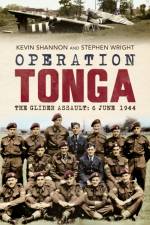
From training for the operation to the evacuations after D-Day, this is the story of the Glider Pilot Regiment's role in the first stage of the airborne assault in the Normandy landings on 6 June 1944. Operation Tonga was vital to the success of D-Day. It included the famous attacks on the Merville Battery and the bridges over the Orne River and Caen Canal, as well as the lesser-known, though equally important provision of an anti-tank screen to protect the southern and eastern flanks of the invasion beaches from German counterattacks. This account, the product of several years of research, is told through the eyes of those who were there-glider pilots, paratroopers, pathfinders, tug crews and passengers. It includes the stories of the crews that evaded capture by the Germans and pays tribute to the help they received from local resistance fighters. The contribution of the nine gliders that took part in the 'Coup de Main' landings has been well documented, but little has been written of the other eighty-nine gliders that participated. Operation Tonga - The Glider Assault: 6 June 1944 tells the full story.
This book explores ideologies, conflicts and ideas that underpinned art historical writing in Ukraine in the 20th century. Disciplinary beginnings testify both to its deep connection to Krakow, Saint Petersburg and especially Vienna with its school of art history and originality of theoretical thought.
The four volumes of The Complete Medal of Honor present the full citations of the 3,537 awards granted to 3,517 men (nineteen were double recipients) and one woman between the start of the Civil War in 1861 and the withdrawal of US troops from Afghanistan in 2021.This first volume gives the citations of the 1,522 men and one woman whose courageous exploits during the American Civil War between 1861 and 1865 were deemed worthy of their country's highest award for bravery.
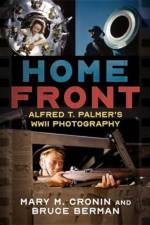
As Americans prepared for-and then entered-World War II, the nation was awash with government propaganda. Armed with his Graflex, Speed Graphic, and 35mm cameras, Alfred Palmer shot many of the images that appeared in these patriotic appeals. His photographs were used by the National Defense Advisory Commission, the Office of Emergency Management, the Office of War Information, the War Production Board, the War Shipping Administration, and the US Maritime Commission.Palmer's photographs were seen by millions of Americans and Europeans. His work reveals his technical prowess. He was masterful in his use of lighting and was a pioneer in the use of color photography. He brought a visual weapon to America's arsenal to counter Nazi propaganda. His images portray a country transformed into an economically wealthy, socially coherent, and energetic nation whose citizens-including women and ethnic minorities-were depicted as vitally important to the war effort.
Based on newly available information, the son of famed U-2 pilot Francis Gary Powers presents the facts and dispels misinformation about the Cold War espionage program that turned his father into a Cold War icon..One of the most talked-about events of the Cold War was the downing of the American U-2 spy plane piloted by Francis Gary Powers over the Soviet Union on May 1, 1960. The event was recently depicted in the Steven Spielberg movie Bridge of Spies. Powers was captured by the KGB, subjected to a televised show trial, and imprisoned, all of which created an international incident. Soviet authorities eventually released him in exchange for captured Soviet spy Rudolf Abel. On his return to the United States, Powers was exonerated of any wrongdoing while imprisoned in Russia, yet, due to bad press and the government's unwillingness to heartily defend Powers, a cloud of controversy lingered until his untimely death in 1977. Now his son, Francis Gary Powers Jr. and acclaimed historian Keith Dunnavant have written this new account of Powers's life based on personal files that had never been previously available. Delving into old audio tapes, letters his father wrote and received while imprisoned in the Soviet Union, the transcript of his father's debriefing by the CIA, other recently declassified documents about the U-2 program, and interviews with the spy pilot's contemporaries, Powers and Dunnavant set the record straight. The result is a fascinating piece of Cold War history. This is also a book about a son's journey to understand his father, pursuing justice and a measure of peace.Almost sixty years after the fact, this will be the definitive account of one of the most important events of the Cold War.
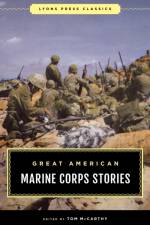
Great American U.S. Marine Stories is a magnificent collection of gripping accounts of Marines in action.
The Official U.S. Army Guerrilla Warfare and Special Forces Operations Field Manual offers guidance and training in Special Forces and unconventional warfare, including concepts, organization, methods, and operations.
A fascinating history of the great summer offensive launched by the Red Army in 1944 which turned the tide of the war.Throughout the war on the Eastern Front, there were two consistent trends. The Red Army battled to learn how to fight and win, while involved in a struggle for its very survival. But by 1944 it had a leadership that was able to wield it with lethal effect and with far more effective equipment than before. By contrast, the Wehrmacht had commenced a slow process of decline after the invasion of the Soviet Union. Hitler became increasingly unwilling to delegate decision-making to commanders in the field which had been crucial to earlier success. The long years of fighting had also taken a heavy toll. Thousands of irreplaceable junior officers and NCOs were dead, wounded or prisoners.Renowned Eastern Front expert Prit Buttar expertly brings these contrasting fortunes to life, trends which culminated in the huge battles of Bagration. As this masterful study conclusively shows, in 1944 the Red Army finally put together a campaign that utterly destroyed the German Army Group Centre. The Wehrmacht suffered the loss of over 300,000 men killed, wounded or taken prisoner and the Red Army rolled forward across Belarus to the outskirts of Warsaw. The end of the war was still many months away, and the Germans managed to reconstruct their line on the Eastern Front, but final victory for the Soviet Union was now only a matter of time as a direct consequence of Bagration.
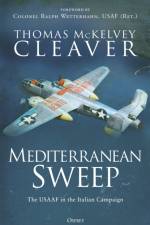
Filled with personal accounts of the action, this book details the USAAF's tactical and strategic campaigns in the skies over Italy in World War II.With the defeat of the Germans and Italians on Sicily in mid-July 1943, all eyes turned towards the battle for the Italian mainland itself. This campaign has been called "forgotten" by many, with many of the best units from the North African and Sicilian campaigns withdrawn to prepare for the coming invasion of France, while those units that remained had a lower priority for replacements of men and material.Despite these difficulties, the air war in the Italian campaign is a study in the successful application of tactical air power. Mediterranean Sweep describes how USAAF forces, alongside Free French, Italian co-belligerent forces, British and Commonwealth units and even a squadron of the Brazilian Air Force, took the war to the Axis in both the fighter-bomber war as well as Operation Bingo, the successful bombing campaign to strangle supplies to the German forces fighting on the Gothic Line.Building on the story of the USAAF in North Africa and over Sicily told in his previous work Turning the Tide, renowned aviation expert Tom Cleaver uses a wide range of first-hand accounts form American, Allied, German and Italian pilots and other aircrew to bring to life the bitter struggle in the skies over Italy from mid-1943 through to the end of World War II.
A fascinating account of the decline of an army from the triumph of victory in 1918 to defeat in 1940 and why this happened. A salutary warning for modern Britain.
Originally published in 1929, this volume discusses the early effects of the industrial revolution - the condition of the cotton spinners, the hardships for labouring children, the overcrowded prisons and other brutal punishments.
Originally published in 1929, this volume discusses the early effects of the industrial revolution - the condition of the cotton spinners, the hardships for labouring children, the overcrowded prisons and other brutal punishments.
In the 1980s concern throughout the world was growing about the use of the oceans by nuclear-powered naval vessels and naval vessels carrying nuclear weapons. Originally published in 1986, this book presents a worldwide survey of the state of the nuclear use of the oceans and assesses the prospects for denuclearisation at the time.
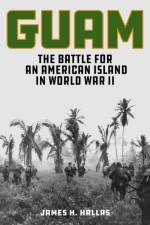
James H. Hallas reconstructs the full panorama of the Battle of Guam. In its comprehensiveness, attention to detail, scope of research, and intimate focus on the men who fought and won the battle, this will stand as the definitive history of the battle for years to come.
Through discussion of historical battles and leaders, James Ellman describes how the history of the United States at war, from the American Revolution through Korea, is the story of tenacity in the wake of defeat, of flexibility and adaptability on the path to victory.
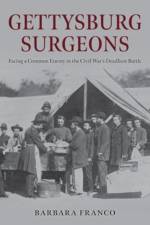
Surgeons of Gettysburg narrates the shocking but inspiring story of courageous surgeons facing some of the worst situations imaginable. In the midst of Civil War, they faced a common enemy of death and disease and ultimately saved many thousands of lives.
During the first year of the Civil War, engineer and inventor Hiram Berdan proposed the creation of a unit of marksmen armed with Sharps rifles, and thus were born the 1st and 2nd U.S. Sharpshooters. Thunderbolt to the Rebels tells the story of these Civil War deadeyes on battlefields from Antietam to Gettysburg and beyond.
The inspiring and deeply moving true story of how one girl survived the Nazi occupation of Holland by hiding in plain sight - a testament to courage and hope in the darkest times.
In a vivid narrative traveling from London to Paris, from Copenhagen to Havana, from Washington to Tokyo, Ship of Five Nations brings to life the incredible true story of the Stonewall, one of the first ironclads built during the Civil War.
A fundamental component of Britain's early success, naval impressment not only kept the Royal Navy afloat-it helped to make an empire. In total numbers, impressed seamen were second only to enslaved Africans as the largest group of forced laborers in the eighteenth century. In The Evil Necessity, Denver Brunsman describes in vivid detail the experience of impressment for Atlantic seafarers and their families. Brunsman reveals how forced service robbed approximately 250,000 mariners of their livelihoods, and, not infrequently, their lives, while also devastating Atlantic seaport communities and the loved ones who were left behind. Press gangs, consisting of a navy officer backed by sailors and occasionally local toughs, often used violence or the threat of violence to supply the skilled manpower necessary to establish and maintain British naval supremacy. Moreover, impressments helped to unite Britain and its Atlantic coastal territories in a common system of maritime defense unmatched by any other European empire. Drawing on ships' logs, merchants' papers, personal letters and diaries, as well as engravings, political texts, and sea ballads, Brunsman shows how ultimately the controversy over impressment contributed to the American Revolution and served as a leading cause of the War of 1812.Early American HistoriesWinner of the Walker Cowen Memorial Prize for an Outstanding Work of Scholarship in Eighteenth-Century Studies
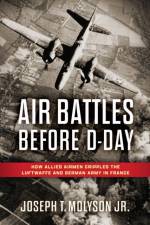
D-Day, June 6, 1944, was one of the largest and most complicated undertakings in military history. During the first twenty-four hours of Operation Overlord, the Allies landed some 150,000 men by sea and air, secured a beachhead in France, and began the campaign that would liberate Western Europe and help defeat the Third Reich eleven months later. How did the Americans and British lay the groundwork for this massive and momentous invasion?In Air Battles Before D-Day, Joseph Molyson charts the year-long effort that made D-Day possible. By May 1943, the tide of the Battle of the Atlantic had turned toward the Allies, opening up the flow of American men and materiel (including vital landing craft) to Britain and accelerating the buildup required for the invasion. It also enabled the ramping up of the ongoing bombing of Germany-the British at night, the Americans by day-to destroy its industrial base, weaken civilian morale, and damage the Luftwaffe's ability to take to the skies and defend against the invasion. As D-Day approached, aerial attacks began to target roads and railways in France. Under the direction of commanders including Dwight Eisenhower, Bernard Montgomery, and Carl Spaatz-who didn't always see eye to eye-planners pieced together the jigsaw puzzle of amphibious landings, airborne drops, naval support, air attacks, and intelligence, the last of which included a fictitious army group under George Patton.In Molyson's telling, the air campaign is the centerpiece of Allied efforts before D-Day, the essential foundation for success on June 6 and after, but his narrative connects all the events that preceded "the longest day" and covers the Germans' Atlantic Wall, Erwin Rommel's barrier of pillboxes, beach obstacles, and artillery that stood in the Allies' path. Air Battles Before D-Day is essential reading for understanding the greatest operation of World War II.
This book introduces non-specialist readers to the history of how human societies have sought to control, use and exploit our oceans, seas and shorelines over time in different geographical and cultural contexts.
This is one of the few critical examinations of the war on the Second World War's Eastern Front that includes both perspectives and looks at the war as a multifaceted effort.
Abonner på vårt nyhetsbrev og få rabatter og inspirasjon til din neste leseopplevelse.
Ved å abonnere godtar du vår personvernerklæring.